Walgreen gets a modern makeover; CEO Greg Wasson is expanding the retailer’s mission and taking it global.
August 1, 2013 Leave a comment
Walgreen gets a modern makeover
By Geoff Colvin, senior editor-at-large @FortuneMagazine July 31, 2013: 12:24 PM ET
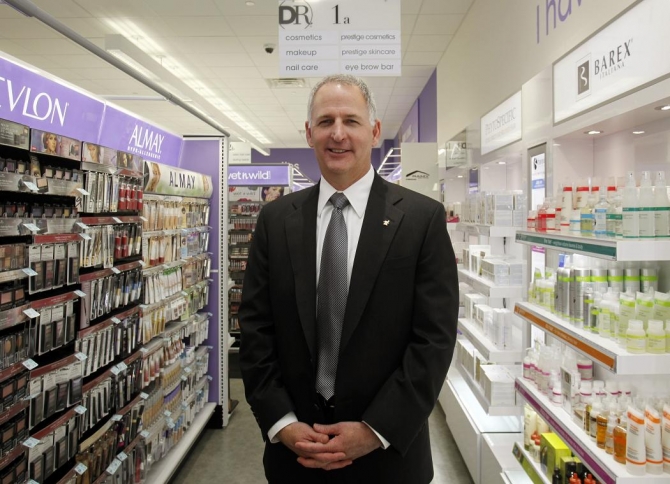
Greg Wasson wants Walgreen to offer more — and better — services.
As the digital revolution remakes retailing and the Affordable Care Act transforms health care, drugstores need fresh thinking.Walgreen (WAG, Fortune 500) CEO Greg Wasson, 54, is bringing it to America’s largest retail pharmacy chain, with some 8,300 locations (as Walgreens, Duane Reade, and a few other names regionally). Last summer he bought 45% of the U.K.’s Alliance Boots, becoming the first U.S. drug chain to expand abroad, and in March he signed a distribution deal with AmerisourceBergen, a drug wholesaler. He’s also reimagining his stores. Sushi bars? Beauty consultants? He’s trying them out. Wasson spoke recently with Geoff Colvin about turning drugstores into primary-care providers, serving more economically strapped customers, selling groceries, and much else. Edited excerpts:
Q: You’re changing the very meaning of the corner drugstore. How come?
A: There’s an opportunity for the corner drugstore to play a much greater role. Pharmacists have been extremely well respected — they’re one of the top two or three most-trusted professionals in opinion polls year after year. There’s an opportunity for the pharmacist to play a much greater role in health care, especially with what we have going on in this country with the shortage of primary-care physicians. Plus, we can also involve the front of our store, being the first source for health and daily living, continuing to make sure we’re relevant in today’s society.
From a health care perspective, what can you do in a Walgreens store that hasn’t traditionally been done?
A good example would be flu shots. Five years ago or so, a pharmacist was not certified to give immunizations and vaccinations. In Denver one of our pharmacy supervisors decided to get his pharmacists certified to do that. And we found quickly that the public values and trusts the pharmacist to do more than just dispense their medications, so we can do immunizations and vaccinations, health screenings, cholesterol testing, blood pressure — everything that’s focused on wellness. Today we’re No. 2 to the U.S. government in the number of immunizations and vaccinations we administer.
Now just about every other community pharmacy has since certified their pharmacists. The industry has stepped forward. And today people absolutely believe that the community pharmacy is the place to go for immunizations and vaccinations.
Walgreens CEO on Obamacare
The Affordable Care Act is going to give millions of people access to medical insurance. How are you preparing?
First is making sure that our pharmacists are positioned to provide the additional prescriptions that 30 million to 40 million people who now have access are going to be able to get. Probably the most important thing a pharmacist can do is make sure that patients take their medications properly. Something like $300 billion to $350 billion in annual medical-related costs are due to nonadherence to prescription drugs. So we’re positioning our pharmacists to be ready for that.
Second, we’re adding nurse practitioners to many of our stores, co-locating them with our pharmacists. We have about 350 stores across the country now where we have a nurse practitioner positioned in an office next to the pharmacist that extends our services beyond pharmaceutical services to acute care, episodic care such as earaches and sore throats, that she can take care of. We’ve extended into primary care. So between our pharmacists extending their services and adding nurse practitioners, we think we can help with affordable care and provide greater access.
Drugstore chains have generally not been well differentiated. You’ve described how you’re innovating in the pharmacy. What’s going to be new and different in the front of the store?
We have a tremendous opportunity to differentiate ourselves and step out of the traditional drugstore format and create something completely new and unique. In the past we were a pharmacy with a front end that was convenience goods. We don’t want to lose that. We’re on the best corners of America for that reason. But we can move from just convenience to more health, daily living, and beauty.
For example, we’re extending our fresh-food offering. Today’s society has changed; shopping habits for groceries and consumables are completely different. I love the statistic that 60% of the people in this country responsible for tonight’s meal do not know what it is at 10 a.m. So if we’re already trusted to provide medications and we’ve been selling milk, bread, and eggs, there’s no reason we can’t extend into fresh food — tonight’s meal. It’s being very well accepted.
Consumers are going to walk into a much expanded, enhanced beauty department. We’ve been a destination of choice for ladies who know the shade of lipstick or eye color they’ve been using, and they stop in our convenient store to pick that up. But we also think we can move more into prestige beauty and begin to add additional lines and help provide upscale beauty, with beauticians playing a greater role.
Walgreens: More fresh groceries to come
Recently you reported that front-end traffic was down for the 20th consecutive month. What’s going on there?
A couple of years ago, for solid, strategic reasons, we began to shift our marketing dollars from predominantly paper to take advantage of digital media and to help us launch our loyalty program. That’s not an easy migration, to move from your traditional marketing medium to new areas of reaching customers. We had some bumps along the way. That’s not unusual in retail. What we’ve done over the last couple of quarters is begin to invest more prudently and intelligently to drive traffic, but not throw money at trying to drive traffic that’s not going to move the needle.
When you bought a 45% interest in Alliance Boots last year, you became the first global retail pharmacy chain. How does that create value for shareholders?
In several ways. First and foremost, it combines the best practices of both companies. For example, Boots is the leading beauty retailer in all of the U.K., and as I’ve said, we’re on a journey to enhance our beauty department. I think it can really accelerate our journey.
Second, we’re creating the world’s largest pharmaceutical supply chain, which drives scale, efficiencies, and innovation, which can create value for a lot of stakeholders — pharmaceutical companies, patients, payers — around the globe. Third, it gives us a platform to grow into the emerging markets, eventually with a foothold in Asia and Latin America.
Now combine that with your deal with AmerisourceBergen, which gives you access to its buying power with pharmaceutical companies. Is this a sector where size and superior economies of scale are going to be mandatory?
I think they will be. In most countries — the U.K., Canada, China — the wholesale and retail pharmaceutical industries are integrated. In the U.S. they have been two separate industries. What we’ve done with AmerisourceBergen (ABC, Fortune 500) is form a collaborative integrated wholesale-retail model to accomplish much, if not all, of what Alliance Boots creates in a wholly integrated model in the U.K.
This also brings innovation. Pharmaceutical companies are looking for ways to deliver new, innovative products to patients around the globe, and [with AmerisourceBergen and Alliance Boots] we’ve created a one-stop shop where we can help them bring products to the marketplace and develop new ways of working with patients and payers around the globe.
Walgreens: Beauty is area of opportunity
What consumer trends over the past months have you particularly noticed?
A significant trend we’ve seen over the past year or two is a much tighter spend related to the paycheck cycle. The two, four, six days after people have been paid, we’ve got a real focus on making sure we’re ready as a retailer in that window of time.
Second, people are really focused on value for the money. I don’t think we’re ever going back. Whether it’s a high-income community or a lower-income community, people are looking for value. That’s why over the past several years we’ve really accelerated our private-brand offering. We think we have an opportunity to provide real value, especially with the quality of our brand and the trust that people have in our brand.
The Leadership series: This is the latest interview with a top executive by Fortune senior editor-at-large Geoff Colvin. See video excerpts of this interview atfortune.com/leadership — plus find Colvin interviews with Charles Schwab, the team of Jeff Immelt (GE) and A.G. Lafley (P&G), Pimco’s Mohamed El-Erian, Novartis CEO Joe Jimenez, Whole Foods co-CEO Walter Robb, and many more.
 About bambooinnovator
 Bamboo Innovator