Japan’s culture warriors enlist an emblem of the imperial past; Controversy over a new film highlights the change in Japanese attitudes since the 1990s
August 18, 2013 Leave a comment
August 16, 2013 7:34 pm
Japan’s culture warriors enlist an emblem of the imperial past
By David Pilling
Controversy over a new film highlights the change in Japanese attitudes since the 1990s
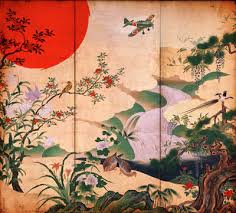
In the entrance hall of Tokyo’s Yushukan war museum, a temple to Japanese revisionism, the first thing you notice is the dark green livery of the legendary Mitsubishi A6M Zero fighter aircraft, in its day the world’s most advanced carrier-based fighter. More manoeuvrable than the British Spitfire and with an astonishingly long range, it greatly aidedJapan’s war effort before the Allies developed the technology and tactics to beat it. Deployed in the 1941 attack on Pearl Harbor, three years later, when Japan’s defeat had become inevitable, the Zero was being sent out on desperate kamikaze missions.The aircraft has become an icon for Japan’s small – but vocal – ultra-rightwingers, the scowling types who man the sinister black vans that circle Japanese cities barking xenophobic slogans and harking back to the imperial “glory days”. For these men, who bemoan Japan’s postwar loss of dignity as a US “client state”, the aircraft is an exquisite evocation of engineering prowess and fighting spirit in an era before the Americans had stripped the emperor of his divine status.
It is something of a surprise, then, that Hayao Miyazaki, the world-renowned director of children’s animated films with pacifist, even socialist, leanings, should have chosen to make his latest film about the Zero. Mr Miyazaki’s films, including the delicately beautiful My Neighbour Totoro and the Oscar-winningSpirited Away, enthral with their depiction of wide-eyed childhood and the hidden Shinto world of wood spirits and river gods. Flight and machinery – in all its Heath Robinson-hissing wonder – figure prominently, and The Wind Rises , which came out in Japan last month, is a tribute to what Mr Miyazaki calls “the extraordinary genius” of the Zero’s designer Jiro Horikoshi.
Though the fighter was the same size as contemporary models, it could fly faster and farther. “Why?” Mr Miyazaki asks in an interview with the newspaper Asahi Shimbun. “Because Horikoshi intuitively understood the mystery of aerodynamics that nobody could explain in words.” For him, the Zero represents “one of the few things that we Japanese could be proud of” in our “humiliating history”.
You might have thought Japanese conservatives would be delighted. In fact, Mr Miyazaki has received an outpouring of hatred, and been labelled as “anti-Japanese” and a “traitor” on rightwing chat sites. The cause of such ire, in addition to the pacifist tone of The Wind Rises, which portrays the war as a pitiful waste of human life, is an essay he published at the time of the film’s launch in July. There, in an eccentric and somewhat rambling style, he strongly opposes revision of the pacifist constitution, which forbids Japan from waging war, and chides politicians such as Shinzo Abe, the hawkish prime minister, for airbrushing history. Mr Miyazaki urges proper compensation for the “comfort women”, young women from Korea, China, Japan and elsewhere who were often tricked or forced into working in military brothels. (Japan’s rightwing insists they were all volunteers.) More controversially, he suggests dividing or sharing with China the Japanese-administered islands that are the subject of a nasty stand-off between Tokyo and Beijing. In the Asahi interview, he said the ultraright had adopted the genius of Horikoshi, the Zero’s creator, as an “outlet for their patriotism and inferiority complex”. In making the film, he said: “I hope to have snatched Horikoshi back from those people.”
The argument over The Wind Rises matches shifting domestic opinions about Japan’s obligations to the past and its relations with its neighbours, particularly towards amore assertive and militarily powerful China. According to a recent Pew poll, 63 per cent of Japanese think Japan has apologised enough for the war, a figure that rises to 73 per cent of those aged 18-29. How, say defenders of Japanese youth, can they be expected to feel guilty about events that happened more than half a century before they were born? (David Cameron, the UK prime minister, said something similar when he issued a non-apology about the British massacre of Indian civilians in Amritsar in 1919.)
Japanese attitudes have shifted from the 1990s, when polls suggested the majority thought Japan had not apologised or atoned enough. Mr Abe, for one, has rejected the so-called “apology diplomacy”; successive leaders have issued variants of the famous Murayama apology – named after former prime minister Tomiichi Murayama – in which he expressed “his profound remorse for these acts of aggression, colonial rule, and the like [which] caused such unbearable suffering and sorrow for so many people”. Such statements have been routinely dismissed as insincere by neighbours, particularly in northeast Asia. The Pew survey found that only 2 per cent of Koreans and 6 per cent of Chinese accepted Japan’s apology, compared with 48 per cent and 35 per cent respectively in the Philippines and Indonesia, countries that also suffered the brutality of Japanese invasion.
Mr Abe this week sent an offering to the Yasukuni shrine, where the “souls” of 2.5m war dead, including 14 convicted class-A war criminals, are enshrined. He refrained from visiting himself to limit the diplomatic fallout. He said the Japanese would “deeply engrave the lessons of the war in our hearts”, but skipped the usual references to Japan’s invasion and its pledge never to wage war again.
These days, the Japanese left is being shouted down more regularly, yet the views of people such as Mr Miyazaki are more common than is immediately apparent. According to Pew, 56 per cent of Japanese still oppose constitutional revision. True, that is down from 67 per cent in 2006. Yet when Toru Hashimoto, mayor of Osaka, sought to justify the use of “comfort women”, three-quarters of Japanese rejected hisstance, destroying his political career.
There is still a fairly strong bulwark against constitutional change, which requires not only a two-thirds majority in parliament but ratification in a public referendum. Even Mr Abe admitted last month that he did not have the numbers. And despite the rightwing attacks on Mr Miyazaki, much of the public is backing him in the only way it can: since its release four weeks ago, The Wind Rises has consistently been number one at the box office.
 About bambooinnovator
 Bamboo Innovator