Wine Consultant Charles Curtis on Spotting a Wine Fake
August 30, 2013 Leave a comment
August 28, 2013, 6:59 p.m. ET
Wine Consultant Charles Curtis on Spotting a Wine Fake
The Signs a Wine Isn’t What Its Label Says It Is
JASON CHOW
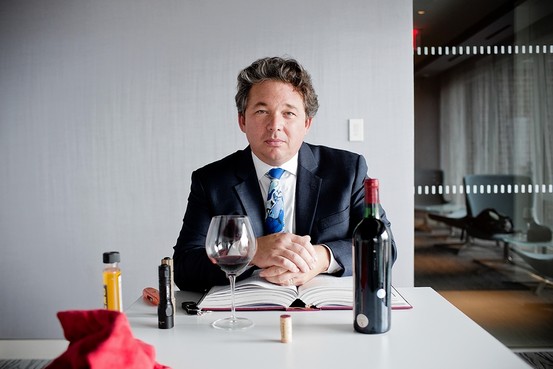
As the market for fine wine grows, so does the opportunity for making money from passing off a cheap blend as pricey aged Bordeaux. Wine counterfeiters “are getting really sophisticated,” says Charles Curtis, a New York-based wine consultant who, through his company Wine Alpha, offers a service that checks for fakes in the cellars of wealthy collectors throughout the world. “People are reusing old bottles, reapplying labels and corks—it’s complex.” Few wine collectors have seen as many old bottles as Mr. Curtis, a former head of wine for Christie’s auction house in Asia and the Americas. He now advises private clients on how to start or sell a collection as well as verifying the wines they own.How You Know Him
Former head of wine for auction-house Christie’s in both Asia and the Americas 2008 until 2012
The 50-year-old Minnesota native spends his time traveling in the U.S., Europe and Asia as an independent wine consultant.
Holds a Master of Wine title—an academic qualification bestowed to only 303 people in the world.
Writes a blog about wine at winealpha.com.
The problem of fakes is particularly acute in Asia, where the market for fine wine has boomed thanks to the rise of a new wealthy class amid strong economic growth in the region in recent years. Hong Kong now rivals New York and London as the world’s most active center for wine auctions.
“They’re acquiring faster than they’re drinking or selling in Asia, whereas they’re acquiring less in the West,” he said, adding that because of the shift of demand eastward, the fakes often end up there, too. China, where many like to show off the expensive label rather than savor the drink inside, has become a major destination for fakes.
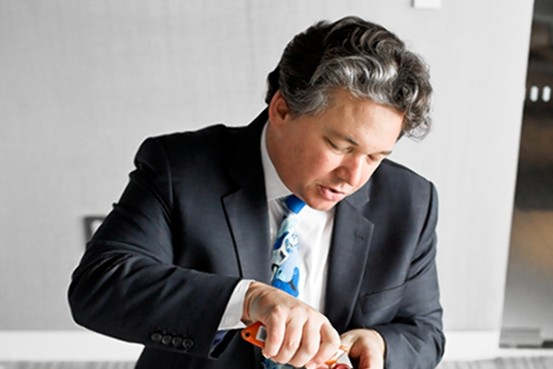
Start at the top: Check the capsule, or foil, at the top of the bottle. It should show signs of age and the design should match the winery’s style at the time of bottling.
During his days at Christie’s, Mr. Curtis developed his own checklist to verify a wine: “Capsule, cork, label, glass and finally, the wine.”
He checks to see if the capsule, the protective foil sleeve affixed atop the bottle, matches the label. It should show signs of age and the foil design should match the château’s style at the time of bottling. A sloppy fake will often have a new foil capsule on a purported old bottle.

Shine a light: Mr. Curtis uses a flashlight to inspect the cork. If there’s a hole in the middle, it may have been in another bottle. If there are indents on the side, it may be have been previously removed.
Next, he’ll remove the capsule to examine the cork. He’ll shine a small, powerful flashlight at the neck of the bottle and examine the cork through the glass with a jeweler’s loupe, a small magnifying glass. A cork with a hole in the middle is a sign it has been reused from another bottle. Mr. Curtis also will look for indent marks on the side of the cork to see if it was previously removed with two-prong openers. “Sometimes they’ll sand down the sides of the cork, or re-apply ink on it,” he said.

Does the label make the grade? He often checks the bottle’s label with photos of past examples. Spelling errors or design mistakes are signs the bottle isn’t the real deal.
Then he checks the label. Fakes might include spelling errors or design mistakes that are inconsistent with the original. Mr. Curtis will often cross-reference a bottle with photos of past examples since labels, especially old ones, often vary from year to year. Still, there are times he gets fooled. He recently encountered a 3-liter bottle from a 1993 Rousseau Chambertin Clos de Beze, a Burgundy wine, that stumped him. Unsure, he sent a photo of the label to the French winery, which confirmed it was real. It had made a special label that year for the large bottles.
As for the glass, or bottle, it should reveal age, if it purports to be old. Since wine is typically stored on its side, there should be sediment on one side of the bottle. “If it’s an older bottle of wine that looks new, it’s probably not 50 years old,” he says.

The bottom line: He examines the glass, or bottle, for signs of age. He uses a light to look at the wine’s color. Older wines are different colors on the edge and in the middle. New ones are dark all around.
Finally, Mr. Curtis examines the wine itself. With his light and the loupe, he looks at the color. “Older wines are turning orange on the edge of the wine and in the middle, it’ll be a plumy dark color. A new wine will be just dark all around.”
Mr. Curtis says he can now sample a wine without removing the cork, using a new gadget called a Coravin, which sticks a thin, hollow needle through the cork so the wine can be poured. The most obvious fakes will pass off a Chilean Cabernet or Australian Shiraz as an aged wine from a renown Bordeaux producer.
The difficult-to-spot fakes involve similarly aged vintages of wines from the same producer “like a 1964 Bordeaux that is being labeled as a 1961 Bordeaux—1961 was a great year, but 1964 is about the same age. If you’re not used to tasting the 1961, how are you going to know?”
For novices, Mr. Curtis says one sign a wine isn’t the real thing is if the deal is too good to be true. “If it’s half the price at normal auction, it’s probably not real.”
Second, he recommends asking the seller where the wines were last bought and stored. Auction houses should have a confident answer; if they don’t, he recommends not bidding.
Finally, a careful inspection of the label will often reveal the most blatant fakes—spelling mistakes or design irregularities are the tipoffs. If you still aren’t sure about a wine, seek an expert. Mr. Curtis says auction houses have their own or can suggest an independent consultant. He adds collectors can contact the Appraisers Association of America for a certified wine appraiser. “If you’re spending the amount of a small car on a bottle of wine, you should ask someone who knows,” he says.
 About bambooinnovator
 Bamboo Innovator