Of 15 popular measures of equity valuation, CAPE (which compares share prices to a 10-year moving average of real earnings) was the only one that made stocks look expensive

The CAPE of Less Hope

August 13, 2013 6:31 pmby John Authers

Cyclically-adjusted price/earnings multiples (CAPEs), as made famous by Yale’s Professor Robert Shiller, are growing inconvenient for the brokerage community. Last week, BofA Merrill Lynch’s Savita Subramanian pointed out that of 15 popular measures of equity valuation, CAPE (which compares share prices to a 10-year moving average of real earnings) was the only one that made stocks look expensive. Read more of this post

NYU President’s Exit Signals Shift From High-Spending Era

NYU President’s Exit Signals Shift From High-Spending Era

New York University’s announcement that President John Sexton will leave in three years could signal a shift from an era of bold plans and big spending in U.S. higher education.

Sexton, under fire from the faculty amid criticism of a campus expansion and college administrators’ pay and perks, will step down after his term ends in 2016, when he will be 74. The school will also stop lending hundreds of thousands of dollars to executives and faculty for vacation homes, the board of trustees said in a letter this week.

Under Sexton, New York University has become symbolic of colleges’ focus on expansion and prestige with little regard to cost, and the school’s announcement may suggest the start of a change, said Richard Vedder, an Ohio University economics professor. The university costs $64,000 a year to attend, making it among the most expensive colleges in the nation. Read more of this post

Hundred-Dollar Stocks Double as U.S. CEOs Dismiss Splits

Hundred-Dollar Stocks Double as U.S. CEOs Dismiss Splits

Stock splits are losing their allure with American executives amid one of the broadest rallies ever, sending the number of shares trading above $100 to a record and showing the rising dominance of institutions in equity markets.

Gains of 20 percent or more pushed Boeing Co. (BA) and Amgen Inc. past $100 in 2013, joining 64 companies in the Standard & Poor’s 500 Index above the threshold, twice the level in 2010, according to data compiled by Bloomberg. Nine companies have split their stock this year, compared with 42 annually since 1996, data from S&P show, helping send the average share price to $65.96 last quarter, the highest on record. Read more of this post

Free Work Entices Businesses to Hire Long-Term Unemployed

Free Work Entices Businesses to Hire Long-Term Unemployed: Jobs

After conducting almost 10,000 job interviews during 10 years as a human resources manager, Tom Kaminski says he thought he knew enough about the labor market to keep his own bout of unemployment short.

Instead, he wound up out of work for three years before enrolling in Platform to Employment, or P2E, a privately-funded Connecticut program to help long-term unemployed workers land jobs. The attraction for employers: A fully paid-for audition of as long as eight weeks for job applicants who complete the five-week program. Read more of this post

Fidelity Asks How Long Can Draghi’s Bond-Buying Bluff Hold?

Fidelity Asks How Long Can Draghi’s Bond-Buying Bluff Hold?

Tyler Durden on 08/15/2013 12:59 -0400

Authored by Michael Collins, Investment Commentator at Fidelity,

Capitalist banking systems are built on the confidence trick that people can get their money back at any time. Of course, if everyone sought their money at once, no one would get anything because the financial system would collapse.

The eurozone is being held together by a more-fragile bluff. This is the European Central Bank’s “outright monetary transactions” scheme that was announced in September last year. The scheme pledges to buy unlimited amounts of bonds of distressed sovereigns, a plan that was enacted by Mario Draghi to back up his comments two months earlier that the ECB would “do whatever it takes” to save the euro. Read more of this post

Deflating housing bubble at heart of Netherlands’ economic blues

August 15, 2013 3:58 pm

Deflating housing bubble at heart of Netherlands’ economic blues

By Matt Steinglass in Haarlem

Haarlem, officially the best shopping city in the Netherlands, looks like many picturesque Dutch towns: a medieval church surrounded by a hedonistic cornucopia of pedestrian shopping streets. Normally those streets are filled with confident window-shoppers, but these are not normal times, and Dutch consumers are feeling anything but confident. Household spending has been falling for three straight years, and it dropped again 2.4 per cent year on year in the second quarter, dragging the entire economy down with it. Read more of this post

How To Decide Whether A Company Is Valuable Or Vulnerable; Gandhi once said you can measure the civilization of a people by how they treat their animals. Translated into corporate terms: you can measure how ideas are given arms and legs so they can move forward

How To Decide Whether A Company Is Valuable Or Vulnerable

MICHELLE KERRIGANWORKPLACE CONFIDENCE 41 MINUTES AGO 0

Gandhi once said you can measure the civilization of a people by how they treat their animals. Translated into corporate terms: you can measure the success of leaders by how they value teamwork and day-to-day operations. Recently, a law firm partner who specializes in joint ventures and venture capital transactions asked me what I look for in workplace success. It was an operational due diligence exercise to help investors determine “am I on a winner?” I gave her a list of questions to consider when assessing quality, whether you’re an investor or a CEO wondering about your own operation. Here are four to get you started:

The management: are they leaders?

The team: are they organized and primed to execute?

What happens when people ask questions?

Is there an overall sense of unity and positive energy?

Most people might just focus on the first question. Totally understandable. But, if you’re investing in a company with a growing or changing operation, you may want to take a closer look at the day-to-day workplace. That’s where the magic happens. Where the vision you’re investing in comes to life, in the form of people, process, and teamwork. It’s where ideas are given arms and legs so they can move forward. The value in any company depends on it, and so does the value of leadership. Answers to the bottom 3 questions will tell you a lot about the #1. Read more of this post

Ogilvy & Mather Has Launched A Behavioral Science School

Ad Agency Launched A Behavioral Science School

JESSICA DAVIESTHE DRUM AUG. 15, 2013, 9:30 AM 185

Ogilvy & Mather’s behavioural sciences practice #ogilvychange has launched its first summer school, giving students the chance to work on live marketing briefs. The school has chosen six university students from 70 applicants, all of whom have proven they are well-read in behavioural sciences literature and can apply their knowledge beyond the theory and outside their own laboratories. The course, which kicked off this week, will begin with a crash-course in applying behavioural science, before moving on to work on live behaviour-change marketing briefs with specialist teams from across the Ogilvy Group businesses. The will work alongside leading advocates of behavioural economics, including Ogilvy’s vice chairman Rory Sutherland and Dr Nichola Raihani from UCL. Ogilvy & Mather UK’s vice chairman Rory Sutherland said the advertising and marketing industry would benefit from having more psychologists and behavioural economists. “The new media world, and the new behavioural tasks we are being required to solve, make this an imperative. “But there is another reason, too. I would like them to explain why in God’s name the marketing function has for 50 years assumed it has absolutely nothing to learn from academic psychology,” he said. The positions were publicised at “top-tier” universities that offer psychology and behavioural sciences degrees, across social media sites and the IPA student careers website. Ogilvy & Mather launched #ogilvychange earlier this year.

Apples losing their crunch to global warming: study

Apples losing their crunch to global warming: study

POSTED: 15 Aug 2013 10:41 PM
Global warming is causing apples to become less crunchy, but sweeter. PARIS, France: Global warming is causing apples to lose some of their crunch but is also making them sweeter, a study said Thursday. Analysing data gathered from 1970 to 2010 at two orchards in Japan, a research team said there was clear evidence that climate change was having an effect on apple taste and texture. “All such changes may have resulted from earlier blooming and higher temperatures” during the growth season, they wrote in the journal Nature Scientific Reports. About 60 million tonnes of apples are produced every year, making it the world’s third most popular fruit. Previous studies had shown that global warming was causing apple trees to flower earlier, and that harvests were also affected by changes in rainfall and air temperature. The orchards used in the study produce the Fuji and Tsugaru apples, the two most popular kinds in the world. The farms are located in Japan’s Nagano and Aomori prefectures, which had seen a mean air temperature rise of 0.31 and 0.34 degrees Celsius (0.5 and 0.6 degrees Fahrenheit), respectively, per decade. The orchards were chosen because there had been no changes in cultivars or management practices for extended periods, thus ruling out non-climate factors like technological improvements in the apple change. The data collected over the years included measures of acid and sugar concentration, fruit firmness and watercore — a disease that causes water-soaked areas in the flesh of an apple. The analysis showed a decrease in acidity, firmness and watercore, but a rise in sugar concentration over time. “We think that a sweeter apple is a positive thing and a loss of firmness is a negative thing,” study co-author Toshihiko Sugiura of the National Institute of Fruit Tree Science in Fujimoto told AFP. “We think most people like sweet and firm apple fruits, although everyone has his own taste. A soft apple is called ‘Boke’ in Japanese which means a dull or senile fruit.” The study said that the results “suggest that the taste and textural attributes of apples in the market are undergoing change from a long-term perspective, even though consumers might not perceive these subtle change.” The research claims to be the first to measure changes in the taste and texture of food as a result of climate change.

‘Alternative’ Investments Draw Flak;Individual investors are pouring tens of billions of dollars into a new generation of complex investment products, and regulators are raising concerns that not all buyers understand the costs and risk

August 15, 2013, 8:49 p.m. ET

‘Alternative’ Investments Draw Flak

Investors Flock to New Risky Products, and Regulators Are Raising Concerns

JAMES STERNGOLD

MI-BX897_ALTINV_NS_20130815183602

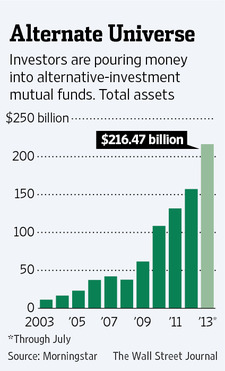
Individual investors are pouring tens of billions of dollars into a new generation of complex investment products, and regulators are raising concerns that not all buyers understand the costs and risks. Outside scrutiny is intensifying on securities firms’ sales practices and whether so-called alternative products—ranging from certain types of mutual funds to vehicles that invest in highly indebted companies—are suitable for all of the Americans flocking to them. Some state securities regulators are focusing their examinations on alternative-product brokers, while officials at Wall Street’s self-funded watchdog, the Financial Industry Regulatory Authority, say they are planning to file civil enforcement actions by year-end. Read more of this post

Do Brokers of Insiders Tip Other Clients?

Do Brokers of Insiders Tip Other Clients?

William J. McNally, Andriy Shkilko, Brian F. Smith*

September 2012

Abstract

This paper finds evidence that brokers who execute insider trades on the Toronto Stock Exchange engage in tipping and insider trading. We find that on the day when insiders buy (sell), there is a significant increase in the proportion of non-insider client buying (selling) handled by the insider’s brokerage firm. Since there is normally a multi-day delay in the publication of these insider trades, this finding is consistent with brokers tipping their other clients. Furthermore, we find that executing brokers double their market share of principal buying (selling) on the day of insider buys (sales).

Share Repurchase Motives by Taiwanese Firms

Share Repurchase Motives by Taiwanese Firms

Shih-Chin Lee Chihlee Institute of Technology

Jen-Chang Liu Takming University of Science and Technology – Department of Banking and Finance

March 27, 2013

Abstract: 
Taiwanese firms must follow strict regulations when implementing repurchase programs. The mean (median) of completion rates is 69.2% (82.7%) for the purpose of cancelling and 68.0% (80.0%) for the purpose of transferring. We try to identify the factors determining the completion rate of a repurchaser. We find that OTC firms tend to be younger and are on the stage of expansion; hence they are less likely to write off its shares. In contrast, TSE firms are more mature and are more ready to cancel the shares when they decide to buy back shares. Besides, a repurchaser is characterized by higher ratio retained earning to total equity, lower leverage. There exist a complementary relation between dividends and repurchases. It is highly unlikely to find a firm buying back shares without history of paying dividends. Finally, we find no evidence supporting the free cash flows hypothesis; that is, the ratio of cash to total assets has no association with the repurchase decision.

Informed Trading and False Signaling with Open Market Repurchases

Informed Trading and False Signaling with Open Market Repurchases

Fried, Jesse M.

Abstract

Public companies in the United States and elsewhere increasingly use open market stock buybacks, rather than dividends, to distribute cash to shareholders. Academic commentators have emphasized the possible benefits of such repurchases for shareholders. However, little attention has been paid to their potential drawbacks. This Article explains that managers currently are able to use open market repurchases and misleading repurchase announcements to enrich themselves at public shareholders’™ expense. Managers, aware their stock is underpriced, frequently use repurchases to indirectly buy stock for themselves at a bargain price. Managers have also been able to boost stock prices by announcing repurchase programs they did not intend to execute, perhaps to unload their own shares at a high price. Such bargain repurchases and inflated-price sales systematically transfer significant amounts of value from one set of shareholders (public investors) to another (managers). Low-price buybacks are also likely to reduce aggregate shareholder value by distorting managers’ payout and investment decisions, further reducing public shareholder returns. The Article concludes by proposing a new approach to regulating open market repurchases: requiring managers to disclose specific details of the firm’s buy orders in advance. This pre-repurchase disclosure rule would undermine managers’ ability to use repurchases for informed trading and false signaling, thereby reducing the resulting distortions and costs to shareholders. Moreover, it would achieve these objectives without eroding any of the potential benefits of repurchases.

Coin Star/Outerwall’s Redbox video-rental kiosks could surprise short sellers and others betting on the DVD’s extinction. The owner of Redbox video-rental kiosks now controls 50% of the market

| SATURDAY, AUGUST 10, 2013

A Box Full of Money

By DAVID ENGLANDER | MORE ARTICLES BY AUTHOR

Outerwall’s Redbox video-rental kiosks could surprise short sellers and others betting on the DVD’s extinction. Why the shares could rally 20%.

DVD, R.I.P.? Think again. Outerwall’s Redbox video-rental business could surprise legions of skeptics.

BA-BC639_SmCaps_DV_20130810012016

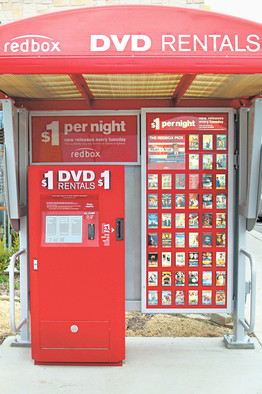
Outerwall, formerly known as Coinstar, has emerged as the king of video rentals. The owner of Redbox video-rental kiosks now controls 50% of the market, having benefited from the demise of traditional video stores and a decline in the DVD business atNetflix (ticker: NFLX). Redbox’s low daily rental rate of $1.20 per video has made it a hit with cost-conscious consumers. Many on Wall Street think this movie will end badly, as viewers migrate to video on demand delivered by cable TV and the Internet. Investors betting on the DVD’s eventual extinction have sold short 40% of Outerwall’s public stock float. Read more of this post

It is Independence Day in India, a holiday during which the national flag is raised on everything from the ramparts of Delhi’s monuments to the bonnets of Mumbai’s battered black cabs

The Indian rupee

Dependence day

Aug 15th 2013, 8:23 by P.F. | MUMBAI

INDIA-POLITICS-INDEPENDENCE-FLAGS

IT IS Independence Day in India, a holiday during which the national flag is raised on everything from the ramparts of Delhi’s monuments to the bonnets of Mumbai’s battered black cabs. This year it may be remembered for India’s enslavement to global capital markets. Yesterday evening, August 14th, after most people had left work, the central bank imposed new capital controls to try to stem a balance-of-payments crisis. Psychologically the manoeuvre feels like a step back in time, to India’s pre-reform era of the 1980s, when Indians were fenced off from the rest of the world by their government, entrepreneurs had to beg pompous officials for foreign exchange and the rich had to ask their servants to buy malt whiskey from the black market.

Read more of this post

E-ppointments: Will patients shop around online for a doctor as tourists do for a hotel on TripAdvisor?

Online healthcare

E-ppointments

Aug 13th 2013, 22:11 by C.S.-W.

RIGHT after 8.30am is a busy time for the ill in Britain. Many medical surgeries do not allow patients to pre-book appointments with their doctors: people must call up in the morning to book an appointment later in the afternoon. Come opening time, the phone lines are jammed with hacking, spluttering sick people trying to beg an audience with their doctor. Being able to book appointments online and outside of office hours not only makes life easier for patients, but gives them more choice. Zesty, a start-up based in London, has signed up 200 dental practices across ten London boroughs since launching at the end of April. Further healthcare sectors, such as surgeries, physiotherapists and osteopaths, will be implemented into its online booking system later this month. Co-founder Lloyd Price is banking on medicine being the next sector to take advantage of e-commerce. He wagers an online interface to make appointments and to compare doctors and dentists against each other, similar to the hotel-booking and rating model perfected by TripAdvisor and Expedia, will replace the engaged-tone at surgeries up and down the land. Read more of this post

Crowded skies, frustrated passengers: Military control of airspace and a risk-averse culture threaten to cripple China’s rapid growth in aviation

Crowded skies, frustrated passengers: Military control of airspace and a risk-averse culture threaten to cripple China’s rapid growth in aviation

Aug 10th 2013 | BEIJING |From the print edition

20130810_CNC186

ON AN average day, more than 1,500 planes take off and land at Beijing’s Capital International Airport, the second-busiest in the world (by passenger traffic) after Atlanta. Many of those take-offs and landings are late. According to FlightStats, a travel industry monitor, China’s big airports have the worst delays in the world, with only 18% of flights from Beijing departing on time in July (arrivals fared better). The strain is showing, especially on the faces of delayed passengers. Tales of airport rage are frequent media and online fodder; most popular are videos of officials or other bigwigs punctuating their impatience with invective and spittle. Planes pull away from gates on time without clearance to take off and remain on the tarmac for up to 30 minutes, just so the flight can say it is not delayed. Such tricks explain why official figures state that 75% of all arrivals and departures were on time in 2012. Independent estimates put the figure closer to 30%. Airline staff often give no reason for delays. Read more of this post

A new generation of synthetic drugs is presenting novel legal problems; “The bad guys know what we do and they just tweak another molecule. They’re changing faster than we can write our names.”

August 14, 2013, 7:52 p.m. ET

‘Bath Salts’ Pose a Hurdle for Prosecutors

Chemical Tweaks Can Keep Synthetic Drugs From Being Linked to Banned Substances

DEVLIN BARRETT

A new generation of synthetic drugs is presenting novel legal problems, according to law-enforcement agents and prosecutors, who say the shifting chemistry behind the products makes it difficult to win convictions. The synthetic drugs are typically sold in retail shops in small packages labeled “bath salts,” which investigators say is a ploy to hide their true purpose. When smoked, snorted or injected, they can cause a range of reactions, from increased energy and euphoria similar to cocaine or ecstasy, to hallucinations, similar to LSD. Users who have had bad reactions report feeling extreme paranoia, or the sensation that their skin is burning, leading them to tear off their clothes. Read more of this post

How LeapFrog’s CEO Built the Educational Toy Company; Mike Wood Left the Legal Profession to Focus on Plastic Toy Letters; Glitches Early On Delayed Production

Updated August 14, 2013, 8:59 p.m. ET

How LeapFrog’s CEO Built the Educational Toy Company

Mike Wood Left the Legal Profession to Focus on Plastic Toy Letters; Glitches Early On Delayed Production

ADAM JANOFSKY

MK-CF565_SBHIBI_G_20130814191012

Mike Wood, creator of educational toy company LeapFrog, at his office in San Rafael, Calif., on Tuesday.

Mike Wood had been practicing law for about 11 years when he encountered a challenge that would change his life: teaching his 3-year-old son to read. His son Mat had memorized the letters of the alphabet, but struggled to learn the sounds that the letters represented. Over the next five years, Mr. Wood researched marketing and phonics, a teaching method that focuses on the correlation between letter groupings and sounds, while holding down his partnership at a technology law firm. He decided to take sound chips—like the ones used in singing greeting cards—and put them in plastic toy letters. When a child pushed down on a letter, it would make the sound that the letter represented. Mr. Wood designed a prototype, left his job and set up focus groups with mothers. He then found a buyer at Toys “R” Us Inc. and a manufacturer in China. In 1995, he started LeapFrog Enterprises Inc., LF +0.57% an educational toy company. By 2002, LeapFrog had $520 million in annual revenue, and its best-selling product, a hand-held learning device called LeapPad, was in nine million homes. The Emeryville, Calif., company’s stock soared almost 99% after it went public that July, making it the top-performing IPO of the year. Read more of this post
The Entire History Of The World In One Chart

The Entire History Of The World In One Chart

SLATE AUG. 14, 2013, 1:37 PM 10,499 9

The Vault is Slate’s history blog. Like us on Facebook, follow us on Twitter @slatevault, and find us on Tumblr. Find out more about what this space is all about here.

This “Histomap,” created by John B. Sparks, was first printed by Rand McNally in 1931. The David Rumsey Map Collection hosts a fully zoomable version here. This giant, ambitious chart fit neatly with a trend in nonfiction book publishing of the 1920s and 1930s: the “outline,” in which large subjects (the history of the world! every school of philosophy! all of modern physics!) were distilled into a form comprehensible to the most uneducated layman. The 5-foot-long Histomap was sold for $1 and folded into a green cover, which featured endorsements from historians and reviewers. The chart was advertised as “clear, vivid, and shorn of elaboration,” while at the same time capable of “holding you enthralled” by presenting: the actual picture of the march of civilization, from the mud huts of the ancients thru the monarchistic glamour of the middle ages to the living panorama of life in present day America. The chart emphasizes domination, using color to show how the power of various “peoples” (a quasi-racial understanding of the nature of human groups, quite popular at the time) evolved throughout history. It’s unclear what the width of the colored streams is meant to indicate. In other words, if the Y axis of the chart clearly represents time, what does the X axis represent? Did Sparks see history as a zero-sum game, in which peoples and nations would vie for shares of finite resources? Given the timing of his enterprise—he made this chart between two world wars and at the beginning of a major depression—this might well have been his thinking. Sparks followed up on the success of this Histomap by publishing at least two more: the Histomap of religion (which I’ve been unable to find online) and the Histomap of evolution.

histomapfinal.jpg.crop.article920-large

Buffett’s Berkshire Discloses Suncor, Dish Stakes

Buffett’s Berkshire Discloses Suncor, Dish Stakes

Berkshire Hathaway Inc. (BRK/A) reported a stake in Suncor Energy Inc. (SU) and added to a holding in General Motors Co. as billionaire Chairman Warren Buffett and his deputies spent the most on stocks in a quarter since 2011. Buffett’s firm owned 17.8 million Suncor shares on June 30, a stake valued at more than $500 million in the Calgary-based heavy-oil producer, Berkshire said today in a regulatory filing. The company also added to its holdings in U.S. Bancorp and Wells Fargo & Co. (WFC) The filing omitted some data that was reported confidentially to regulators. Read more of this post

Harnessing the Power of Surprise for Business Breakthroughs

Harnessing the Power of Surprise for Business Breakthroughs

Aug 14, 2013

we’re wired to appreciate positive surprises. our brains are set up to appreciate the way they challenge assumptions while adding value to things we care about

Think about the first time you picked up an iPod, iPhone or iPad and experienced the touch screen as an extension of your fingertips. Reflect back on the first time you played the Nintendo Wii, drove a Toyota Prius, used Purell hand sanitizer, discovered the trendy design of Method soap, visited Starbucks, or saw Cirque du Soleil. The list of the usual suspects of breakthroughs could go on and on. Though these things are all quite different from one another, they tend to produce similar feelings of positive surprise—with a hint of delight, wonder, and intrigue—when we first encounter them. Read more of this post

The New CTO: Chief Transformation Officer

The New CTO: Chief Transformation Officer

by Daniel Burrus  |  11:00 AM August 14, 2013

We all know that if you put a frog in water and slowly heat it to the boiling point, the frog will stay put and die. But if you throw the frog into already boiling water, it will quickly jump out. Today’s IT leaders have known about the exponential growth of processing power, storage, and bandwidth, but like the frog, they didn’t notice the boiling point approaching because the change has happened over so many decades. These three change accelerators are what lie behind today’s avalanche of business transformation, and they are directly affecting the roles of CIO and CTO.  Read more of this post

A Formula for Fixing the Hardest Problems

A Formula for Fixing the Hardest Problems

by Frank Weil  |  10:00 AM August 14, 2013

For many years I have been asking friends and colleagues, “What frustrates you the most in modern society?” I’ve received many, varied answers but at their core, so often, was a common root — another question: “How can citizens and government accomplish what modern life requires of them to improve the world in which they coexist?” As the three basic sectors of U.S. society — government, business, and nonprofit,each of which have their own culture, language, and mentality — attempt to solve our most-pressing challenges, we seem to be sinking into a bottomless black hole. Even simple problems elude solutions, and the ones that do exist — regulation in government, competition in business, and the work of nonprofits to fill gaps — frequently fall short. How can we find some way out of this mess? Read more of this post

Fearing Obsolescence, a Company Charts Its Reinvention; When a Web marketing and communications company discovered its hardware system was out-of-date, it set out on the giant — and ultimately successful — task of remaking the company

August 14, 2013

Fearing Obsolescence, a Company Charts Its Reinvention

By STACY PERMAN

15sbiz-articleLarge

It may be the most terrifying moment a business owner can face: the realization that what you have been doing successfully, possibly for years, no longer works. For Clint Smith, co-founder and chief executive of Emma, a Web-based marketing and communications company, that moment came three years ago when his team attended the annual South by Southwest Music and Media conference in Austin, Tex. Started in 2002 and based in Nashville, Emma had grown quickly. By 2010, it had 90 full-time employees and 30,000 clients. It had recently passed $10 million in sales, but an awareness had begun to set in that its hardware system — built before the cloud even existed — was showing signs of strain. Capacity was running low and programmers had to navigate several layers of the system to update existing features or introduce new ones. These concerns crystallized at the conference when the Emma executives listened to Google employees discuss their plans for Gmail. Read more of this post

Troubled Teens Make More Successful Entrepreneurs

August 14, 2013, 2:19 PM

Troubled Teens Make More Successful Entrepreneurs

By Khadeeja Safdar

Smart, rule-abiding teenagers are less likely to become successful entrepreneurs than equally intelligent teens who engage in illicit activities, according to new research. In a working paper published by theNational Bureau of Economic Research, economists Ross Levineand Yona Rubinstein examine what it takes to become an entrepreneur and whether entrepreneurship pays off in terms of wages. Using data from the March Supplements of the U.S. Census Bureau‘s Current Population Survey and the National Longitudinal Survey of Youth, they look at the cognitive, noncognitive and family traits of self-employed individuals who have incorporated businesses and compare it to the characteristics of salaried workers and the self-employed who don’t have incorporated businesses. Read more of this post

How One Employee And One Consulting Firm May Be Singlehandedly Responsible For The Stunning Pay Gap Between CEOs And Workers

How One Employee And One Consulting Firm May Be Singlehandedly Responsible For The Stunning Pay Gap Between CEOs And Workers

MAX NISEN AUG. 14, 2013, 4:35 PM 8,319 13

screen shot 2013-08-14 at 12.29.53 pm

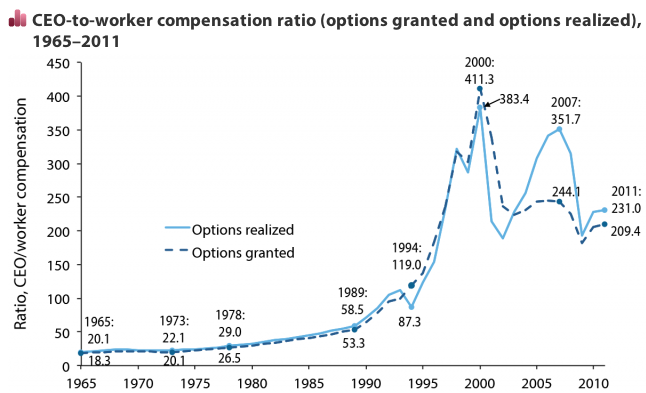
McKinsey is the world’s largest and most profitable management consulting firm, as well one of the most difficult places to get hired. Over its 87-year existence it’s had a massive impact on the U.S. economy according to “The Firm,” a forthcoming book by Duff McDonald. In a New York Observer column, pointed out by Mike Dang at The Billfold, McDonald argues that the massive modern-day gap between executive and worker pay has its origin with the consulting firm. Read more of this post

Beautiful Pathologies: Medical-school students sometimes get carried away by their enthusiasm for the science of disease and forget the human suffering that comes with it

AUGUST 14, 2013, 8:39 PM

Beautiful Pathologies

By NATHANIEL P. MORRIS

At our medical school, we have something called the organ transplant observation program, which allows students to shadow the doctors who transfer functional organs from deceased or living donors into the bodies of dying patients. It’s pretty great. When it’s your turn, you might go to a nearby hospital and watch surgeons put in a heart, or hop on a private plane and fly to another state to get a kidney. The program is wildly popular and often a highlight of the medical school experience. This year, over half of my class signed up as soon as the forms went online.

Read more of this post

Study Shows BMW Drivers Are The Rudest On The Road

Study Shows BMW Drivers Are The Rudest On The Road

RICHARD READTHE CAR CONNECTION AUG. 14, 2013, 5:51 PM 2,075 14

Rude drivers come in all shapes and sizes, and they drive a wide variety of cars. We’ve been cut off by soccer moms in minivans, sound-blasted by bass-powered hoopties, and nearly t-boned by more muscle cars than we can count.  But for some reason, the rudest drivers on the road often seem to be those in luxury cars. Maybe that’s just us projecting: we see a nice car, and we feel a tinge of jealousy, which creates an instant dislike for the driver. Or perhaps it’s something we’ve picked up from movies: we see a Mercedes-Benz AMG zooming down the road and think, “Here comes another hedge-fund manager.” Or perhaps it’s because the wealthy people who drive those cars really are jerks. For folks who buy that last argument, there’s now a bit of proof to back it up. According to the New York Times, a paper published in The Proceedings of the National Academy of Sciences suggests that the rich really do drive differently than the rest of us. The paper — entitled “Higher social class predicts increased unethical behavior” — was written by Paul K. Piffa, Daniel M. Stancato, Stéphane Côté, Rodolfo Mendoza-Denton, and Dacher Keltnera. The researchers carried out a total of seven separate studies, each of which looked at the linkage between affluence and altruism. Read more of this post

Dragonfly: Nature’s Drone, Pretty and Deadly; African lions roar and strut and act the apex carnivore, but they’re lucky to catch 25 percent of the prey they pursue

April 1, 2013

Nature’s Drone, Pretty and Deadly

By NATALIE ANGIER

African lions roar and strut and act the apex carnivore, but they’re lucky to catch 25 percent of the prey they pursue. Great white sharks have 300 slashing teeth and that ominous soundtrack, and still nearly half their hunts fail. Dragonflies, by contrast, look dainty, glittery and fun, like a bubble bath or costume jewelry, and they’re often grouped with butterflies and ladybugs on the very short list of Insects People Like. Yet they are also voracious aerial predators, and new research suggests they may well be the most brutally effective hunters in the animal kingdom. Read more of this post