Low growth, high return: How men’s commerce site Svbscription has thrived by taking things slow

Low growth, high return: How men’s commerce site Svbscription has thrived by taking things slow

BY ERIN GRIFFITH 
ON AUGUST 14, 2013

The tech community’s natural reaction to a company like Svbscription is one of skepticism. You want to charge guys $300 for a box of surprises? And send it on a quarterly basis? Who’s going to buy that? Plenty of people, as it turns out. A year in and Svbscription has sold out of almost every one of its parcels. The company has succeeded by taking the precise opposite approach of most ecommerce sites: make it exclusive, limited, expensive, and high quality. Sure, that technique doesn’t make for insane startup-style growth numbers. But it resonates with a core audience, following the approach of Brian Chesky of Airbnb: “It’s better to have a hundred people who love you than a million people who kinda like you.” Read more of this post

IBM to acquire Israeli data security company Trusteer for up to $1 billion; IBM’s 13th Israeli acquisition has an estimated $100 million in yearly revenues

IBM to acquire Israeli data security company for up to $1 billion

August 15, 2013 6:25am

JERUSALEM (JTA) — IBM, the American multinational technology and consulting corporation, has agreed to acquire an Israeli data security company for an undisclosed sum, believed to be up to $1 billion. Trusteer, which has locations in both Tel Aviv and Boston, develops software to help businesses protect themselves against financial fraud and security threats. Upon the official closing of the deal, Trusteer will join the IBM Security Systems organization, IMB announced Thursday. IBM is forming a cybersecurity software lab in Israel where Trusteer and IMB researchers will work on advanced software to address more complicated cyber threats. This is IBM’s largest ever acquisition in Israel, according to the Israeli business daily Globes. The purchase price is believed to be between $800 million and $1 billion. Read more of this post

Will Robots Take All Our Blue-Collar Jobs?

Will Robots Take All Our Blue-Collar Jobs?

By the Editors  Aug 13, 2013

Imagine you’re a young worker, pondering your job prospects in the economy of the future. Your grades weren’t exactly stellar, and you realize a four-year college isn’t for you. What kind of career should you look for?

Your options are narrowing. Many traditional working-class jobs — from truck driving to administrative work to retail to tending bar — are being replaced by automated technology. The trend seems likely to accelerate. How do we ensure that the kids of tomorrow can do something useful? And how do we help today’s working class transition to the economy of the future? Read more of this post

Welcome to the golden age of activist investors

Welcome to the golden age of activist investors

CNBC.com | Wednesday, 14 Aug 2013 | 3:37 PM ET

Carl Icahn moves stocks with tweets now.

Yesterday Icahn tweeted that he had taken a position in Apple. The stock immediately was bid upward. This much is clear: we’re living in the golden age of activist investors. Almost every day there’s a new story that runs like this: hedge fund manager “X” has purchased a stake in an iconic American company that he thinks will be worth more—if only the company will follow his plan. It’s now a familiar part of the Wall Street landscape. The names are familiar to anyone reading the financial headlines: David Einhorn of Greenlight Capital. Nelson Peltz of Trian Partners. Dan Loeb of Third Point. Paul Singer of Elliot Management. Bill Ackman of Pershing Square.  Read more of this post

Old Economies Rise as Emerging Markets’ Growth Falters

August 14, 2013

Old Economies Rise as Emerging Markets’ Growth Falters

By NATHANIEL POPPER

The balance of world economic growth is tipping in another direction. Just as economists have begun lowering their forecasts for China and many other developing economies, the American economy is bouncing back. Japan appears to have turned a corner and is ending almost two decades of grinding deflation. Economic data out of Europe on Wednesday provided the first solid indication that many countries in the euro zone may be escaping the clutches of recession. Read more of this post

Germany Fights Population Drop

August 13, 2013

Germany Fights Population Drop

By SUZANNE DALEY and NICHOLAS KULISH

SONNEBERG, Germany — At first glance, this town in central Germany, with rows of large houses built when it was a thriving center of toy manufacturing, looks tidy and prosperous. But Heiko Voigt, the deputy mayor here, can point out dozens of vacant homes that he doubts will ever be sold.

The reality is that the German population is shrinking and towns like this one are working hard to hide the emptiness. Mr. Voigt has already supervised the demolition of 60 houses and 12 apartment blocs, strategically injecting grassy patches into once-dense complexes. Read more of this post

Bullet Trains Attract Customers From Chinese Airlines

Bullet Trains Attract Customers From Chinese Airlines

For two decades, Liu Yueping flew first class on China Southern Airlines Co. (1055) between Changsha and Shenzhen. This year, she took a bullet train and spent a fifth of the 2,000 yuan ($327) she would have paid to fly.

Money wasn’t the issue. The 3 1/2-hour ride on the high-speed rail between Changsha in central China and Shenzhen in the south is never late and allows phone calls unlike on a plane, she said. “Now that we have the bullet train, who will take flights?” said Liu, 50, who owns a property investment company and travels eight to 10 times a year between the cities. Read more of this post

Finance: Balance sheet battle; Regulators are reviving an old measure to gauge banks’ ability to withstand a crash but bankers are crying foul

August 14, 2013 7:18 pm

Finance: Balance sheet battle

By Tom Braithwaite and Patrick Jenkins

Regulators are reviving an old measure to gauge banks’ ability to withstand a crash but bankers are crying foul

When Anshu Jain finally buckled in April and agreed to raise €3bn of newDeutsche Bank shares, he was rewarded with a surge in the stock price. The market took heart that the bank was now one of the best capitalised of its peer group, instead of one of the worst. Burnished with new equity, Deutsche even leapfrogged JPMorgan Chase, which has long boasted of a “fortress balance sheet”. But the victory of Mr Jain, co-chief executive of Germany’s largest lender, was shortlived. Within weeks it became clear that Deutsche’s capital raising had been overtaken by a new regulatory agenda. Read more of this post

EM decoupling story was always over-hyped

August 14, 2013 9:51 am

EM decoupling story was always over-hyped

By John Plender

Fed taper talk reaction shows EMs still linked to developed world

Emerging market equities have not had a congenial summer. Since Ben Bernanke, chairman of the Federal Reserve, broached the subject of tapering the Fed’s asset purchasing programme back in May, they have notably underperformed developed world equities. It looks suspiciously as though the emerging market growth story is tarnished.

The story was, in truth, over-hyped. The suggestion that emerging markets could somehow decouple from the developed world and deliver self-sustaining high growth rates for the foreseeable future was always a nonsense. With the developed world now experiencing mediocre sub-trend growth the nonsense has become palpable, most notably in Europe where the travails of the eurozone have hurt the emerging market economies of central and eastern Europe, together with Turkey. Read more of this post

Britain has ‘Alice in Wongaland’ economy; Britain has an “Alice in Wongaland” economy in which people are taking out payday loans and raiding their savings to fuel shopping sprees

Britain has ‘Alice in Wongaland’ economy

Britain has an “Alice in Wongaland” economy in which people are taking out payday loans and raiding their savings to fuel shopping sprees.

piggy-bank_2644422b

Britain has an “Alice in Wongaland” economy in which people are taking out payday loans and raiding their savings to fuel shopping sprees. Photo: Alamy

By Steven Swinford, Senior Political Correspondent

9:58AM BST 15 Aug 2013

Retail figures, published by the Office for National Statistics this morning, showed that people are returning to Britain’s High Streets. Sales rose at their fastest annual rate in over two years in July, official data showed on Thursday. Volumes rose 1.1pc on the month, almost twice as fast as expected to give an annual rise of 3pc and the highest since January 2011. The Office for National Statistics said feedback from supermarkets suggested the sunny weather had boosted sales of food, alcohol and clothing. Experts have said that the warm weather, increased consumer confidence and the “feel good factor” created by the Royal Wedding stimulated growth. Read more of this post

Which Institutional Investors are More Effective Monitors, Domestic or Foreign? Evidence from International Earnings Management

Which Institutional Investors are More Effective Monitors, Domestic or Foreign? Evidence from International Earnings Management

Incheol Kim University of South Florida

Steve Miller Saint Joseph’s University

Hong Wan State University of New York at Oswego

Bin Wang University of South Florida

July 27, 2013

Abstract: 
We study the impact of domestic and foreign institutional investors on earnings management in 37 non-U.S. countries from 2000 to 2009. We find that domestic institutions are more effective than foreign institutions at constraining earnings management. Further, the deterrence effect on earnings management is larger when institutions are more independent, when firms have higher levels of asymmetric information, or when the firms’ countries are characterized by greater information asymmetry and stronger investor protection. Our results are consistent with the argument that geographic proximity enhances monitoring effectiveness. Our paper shows that monitoring effectiveness is impacted by a plethora of factors and offers a nuanced view on the subject, which suggests that different institutions have comparative advantages in performing different monitoring tasks.

Famed piano maker Steinway sold for $512 million to Paulson

Famed piano maker Steinway sold for $512 million

Kevin McCoy, USA TODAY10:22 a.m. EDT August 14, 2013

enerable piano maker Steinway is being sold in a $512 million deal after hedge fund manager John Paulson made sweeter music for investors by topping a tentative July agreement with from Kohlberg & Co. The Waltham, Mass.-based company announced Wednesday it had terminated the $35-per-share deal with Kohlberg and reached a definitive merger agreement with entities of Paulson & Co. at $40 per share. Steinway shares were up more than 5% to $40.30 in premarket trading Wednesday. Under terms of the cash transaction, a Paulson affiliate will commence a tender offer within five business days to acquire all outstanding shares of Steinway’s common stock in preparation for taking the instrument company private. The company’s board of directors unanimously recommended that stockholders tender their shares. Steinway said it would pay Kohlberg a termination fee totaling approximately $6.7 million. “The company’s proven business model and highly skilled employees provide a strong foundation on which to expand,” Paulson said in a formal statement. “We fully intend to maintain the superb quality of Steinway’s musical instruments, which are the finest in the world.” Read more of this post

Diageo to Qatar Pouncing on India as Debt Woes Weigh on Sellers

Diageo to Qatar Pouncing on India as Debt Woes Weigh on Sellers

India’s economy is growing at the slowest pace in a decade, companies are burdened by record debt and governance is so bad that even local cement billionaire Kumar Mangalam Birla is reluctant to invest in the country. Yet some foreign entities, from Diageo Plc (DGE) to Qatar’s government, are undaunted, finding buying opportunities as Indian firms look to shed assets to free up cash. Inbound acquisitions of Indian assets reached $9.9 billion in the first half, the most for a six-month period in two years, data compiled by Bloomberg show. A tumbling Indian currency and falling valuations have made deals cheaper for overseas companies, who are drawn by the long-term promise of rising consumption by a swelling middle class. More transactions may come as Indian companies from Reliance Communications Ltd. to DLF Ltd. (DLFU) prepare to sell assets. “This is a good time for international companies to look at India,” said Ajay Saraf, head of investment banking at ICICI Securities Ltd. in Mumbai. “Indian corporate owners are more open to dialogue than before.” That was the case with liquor baron Vijay Mallya, who sold a stake in United Spirits Ltd. (UNSP), the maker of Bagpiper whiskey, to London-based Diageo. Mallya had been under financial pressure after his Kingfisher Airlines Ltd. (KAIR) had racked up more debt than it could repay. The transaction gave Diageo, the world’s biggest distiller, effective control of United Spirits. Read more of this post

India Restricts Foreign-Exchange Outflows

India Restricts Foreign-Exchange Outflows

India announced restrictions on foreign-currency outflows by local companies and individuals after measures to contain a record current-account deficit and attract overseas investors failed to steady the rupee.

The Reserve Bank of India reduced the amount that companies can invest overseas without seeking approval to 100 percent of their net worth from 400 percent, according to an e-mailed statement today. Residents can remit $75,000 in each financial year, from a previous limit of $200,000. The rupee erased losses in the offshore market after the announcement. Read more of this post

“Worthless, Impossible, And Stupid” Investing in Media Companies in Asia and Europe. Bamboo Innovator is featured in BeyondProxy.com, where value investing lives

Bamboo Innovator is featured in BeyondProxy.com, where value investing lives:

  • “Worthless, Impossible, And Stupid” Investing in Media Companies in Asia and Europe, Aug 14, 2013 (BeyondProxy)

Media

Buffett drew a top offer of $118,000 for an all-you-can-eat tour of a See’s Candies factory; “It’s an opportunity to see the iconic Oracle of Omaha in an unconventional setting,”

Buffett Tops Reese Witherspoon as Charity Auction Draw

iqjeVj6D3anE

Warren Buffett, the billionaire chairman of Berkshire Hathaway Inc. (BRK/A), drew a top offer of $118,000 for an all-you-can-eat tour of a See’s Candies factory, with less than 3 hours left in the charity auction. Bidding has climbed from less than $50,000 earlier today and $17,000 when it began on July 25. Buffett is among celebrities who are supporting auctions to benefit Communities in Schools of Los Angeles, a high school dropout-prevention program. The top offer for lunch with actress Reese Witherspoon was $6,000. Bidding is scheduled to end today at 4:20 p.m. in New York for the lunch and two minutes later for the candy tour. Buffett, 82, has committed most of his wealth to charity and encouraged others to increase giving. He helped raise more than $15 million over 14 years for San Francisco’s Glide Foundation through an annual auction in which he joins the winner for lunch. Bidders for the See’s auction are vying for a half-day tour for four people at the Los Angeles factory. “It’s an opportunity to see the iconic Oracle of Omaha in an unconventional setting,” Coppy Holzman, chief executive officer of Charitybuzz.com, which hosts the auction, said today in an interview. “Anytime Warren Buffett agrees to lend his name, and his time to a charity, it’s a really great thing.” Buffett, the world’s third-richest man, will sign an autograph for the winner, who can take a photo, according to the website. The billionaire won’t be guiding the tour. “Before or after your tour, Mr. Buffett will demonstrate the only acceptable way to eat a bonbon,” Charitybuzz.com said on its website. Buffett bought See’s in 1972 at the urging of Berkshire (BRK/B) Vice Chairman Charles Munger. Omaha, Nebraska-based Berkshire announced plans in May to expand operations of the 92-year-old candy maker to new markets in the Midwest, South and East in the coming years.

To contact the reporter on this story: Megan Hickey in New York at mhickey18@bloomberg.net

Beating the Market for 20 Years: David Herro of Oakmark International scours the globe for undervalued, unloved stocks

TUESDAY, AUGUST 13, 2013

Beating the Market for 20 Years

By SARANYA KAPUR | MORE ARTICLES BY AUTHOR

David Herro of Oakmark International scours the globe for undervalued, unloved stocks.. Here are his best investment ideas in Japan, Australia, and, of all places, Europe.

A few money managers manage to beat their benchmark in any given year, and a select group string together longer periods of outperformance, but not many have taken the index out into the woods and thrashed it as severely – over two decades – as David Herro. A $10,000 investment in his fund, Oakmark International (ticker: OAKIX), in 1992 is now worth about $88,000, versus $34,000 for the MSCI EAFE index. Over the past year, his 43% return has doubled that of the index. His performance has not gone unnoticed: In 2010, Morningstar named him manager of the decade, and Barron’s has written about Herro’s market-beating returns (see Interview, “Driven by a Vision of Global Growth,” Feb. 19, 2007). Despite running an international fund, Herro eschews a geography-specific approach and focuses instead on company’s valuation and quality. His favored measures are free cash flow yield, business structure, and how efficiently management allocates capital. Sometimes Herro’s bottom-up approach looks a lot like a great macro call. Late last year he started loading up on Japanese stocks right before they began a furious rally that took the Nikkei 80% higher in six months. In keeping with his value orientation, he was already dialing back his exposure before the rally faded in late spring. Read more of this post

Buffett-Style Dinner Auctions Lure Chinese Seeking Just Society

Buffett-Style Dinner Auctions Lure Chinese Seeking Just Society

Wei Qian perked up at work on a Monday in May when she stumbled across an ad for an online auction offering dinner in Beijing with her favorite political-science author. She decided to dump her long-planned beach holiday in Thailand with her three best friends and use the money to make a bid instead. The 29-year-old bank employee was determined to finally meet her idol, Liu Yu, a Columbia University PhD graduate she calls the Goddess of Democracy. That afternoon Wei logged into the site, called the Meat Shop, and waited until 26 minutes were left before placing her first bid. The price jumped rapidly as 17 people sparred for the dinner. With 58 seconds to go, Wei put up 11,300 yuan ($1,846) – – more than two months’ salary and her whole summer travel budget. Her heart raced until the clock ticked down and she won. With that last click, Wei joined a novel online cause in China, known as the “meal delivery” program. Proceeds from the Meat Shop go to support human rights activists and the families of jailed political dissidents, a gesture that could be considered an affront to the ruling Communist Party. Wei says she wasn’t deterred when she noticed the shop’s goals, especially given Liu Yu’s participation. “It’s a very expensive dinner, even if it was with Warren Buffett,” the pony-tailed Wei says in an interview at a cafe in Ningbo, eastern China, referring to the billionaire investor’s annual charity lunch auction. “But for Liu Yu, it’s worth it.” Read more of this post

Damn the cynics and embrace the positive

August 13, 2013 3:52 pm

Damn the cynics and embrace the positive

By Luke Johnson

Optimism is a crucial characteristic for entrepreneurs and confidence is easy to justify

Acouple of weeks ago three young entrepreneurs visited me and asked: “What was your biggest challenge?” In replying, I realised that after 30 years in business the greatest risk was not that I would fail. Instead, my most frequent worry has always been that I would become mired in complacency, boredom and cynicism. So how does one ward off these creeping evils? One of the best solutions was epitomised by my meeting: engaging with younger people, who have a natural enthusiasm, inquisitiveness and optimism. They are a wonderful antidote to the constant threat of ending up a jaded old man who’s seen it all before, thinks everything is getting worse and spends his time breeding pessimism – I know a few of that type. So, I speak at lots of events for enterprising students and start-ups partly because I find their energy and zest both infectious and exhilarating. Read more of this post

Money-Hungry Religious Celebrities Spark Anger

Money-Hungry Religious Celebrities Spark Anger

By Dessy Aswim on 8:37 am August 13, 2013.
A backlash is building against Muslim TV clerics who aren’t afraid to use their religion to garner business investors or demand hefty speaking fees. An example cited by critics is Yusuf Mansur, a popular ustadz (Islamic teacher) who frequently appears in religious TV broadcasts. Yusuf has recently attracted unfavorable attention because of claims he has been soliciting investors in a luxury hotel, without holding the required licences. The ustadz’s joint business venture aims to establish a condo-hotel in Jakarta focused on serving hajj and umrah pilgrims. The celebrity cleric claims to have more than 2,000 investors in the business, and says he has managed to accumulate funds worth Rp 24 billion ($2.3 million) from his followers in less than a year, since a call for investments began in July 2012. Read more of this post

Penny-Stock Fraud Operators Mastered The Art Of Cross-Selling

13 Aug 2013 at 1:37 PM

Penny-Stock Fraud Operators Mastered The Art Of Cross-Selling

By Matt Levine

Today the Justice Department indicted nine people for operating “one of the largest international penny stock frauds and advance fee schemes in history” and as you’d expect from that description it was a very professional multinational operation.1 I mean, y’know, it was a penny-stock pump-and-dump scheme, one involving “distributing false press releases, announcing non-existent business ventures and fake mergers, posting false information on social media sites and bribing stock promoters and brokers,” but it was a penny stock pump-and-dump scheme that made $120 million, so that’s impressive.2

So, fine. Here you are having successfully executed a pump-and-dump scheme. You pumped, then you dumped. You have $120 million, other people have worthless stock. You could stop there and call yourself a pretty successful criminal. But then you get to thinking: the people you defrauded have something else, in addition to their worthless stock. They have something that is actually extremely valuable. They have: an abnormal willingness to piss away money on terrible ideas! They have a complete lack of common sense! And you know who they are! Read more of this post

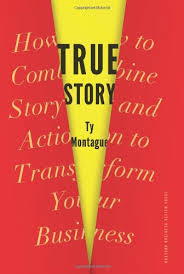
True Story: How to Combine Story and Action to Transform Your Business

True Story: How to Combine Story and Action to Transform Your Business Hardcover

by Ty Montague  (Author)

TrueStory

Is your company a storyteller—or a storydoer?
The old way to market a business was storytelling. But in today’s world, simply communicating your brand’s story in the hope that customers will listen is no longer enough. Instead, your authentic brand must be evident in every action the organization undertakes.
Today’s most successful businesses are storydoers.
These companies create products and services that, from the very beginning, are manifestations of an authentic and meaningful story—one told primarily through action, not advertising. In True Story, creative executive Ty Montague argues that any business, regardless of size or industry, can embrace the principles of storydoing. Indeed, our best-run companies—from small start-ups to global conglomerates—organize around a coherent narrative that is then broadcast through every action they take (from product design to customer service to marketing). Montague shows why storydoing firms are nimble, more adaptive to change, and more efficiently run businesses.
Montague is a founder of the growth consultancy co:collective and the former president and CCO of J. Walter Thompson, the largest advertising agency in North America. He brings his depth of creative business experience to the book and provides a clear framework and proven process for bringing you and your customers together in the creation of your brand story.
Montague introduces five critical elements—what he calls the “the four truths and the action map”—that are the foundation of storydoing:
• the participants (your customers, partners, and employees)
• the protagonist (your company today)
• the stage (the world around your business)
• the quest (your driving ambition and contribution to the world)
• your action map (the actions that will make your story real for participants)
The book is filled with examples of how forward-thinking organizations—including Red Bull, Shaklee, Grind, TOMS Shoes, and News Corporation—are effectively using storydoing to transform their organizations and drive extraordinary results. Read more of this post

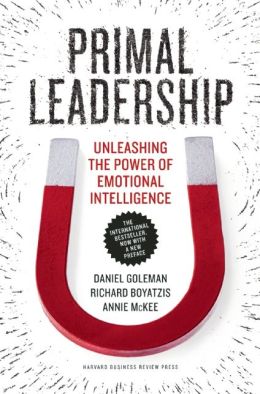
Primal Leadership, With a New Preface by the Authors: Unleashing the Power of Emotional Intelligence

Primal Leadership, With a New Preface by the Authors: Unleashing the Power of Emotional Intelligence Paperback

by Daniel Goleman (Author) , Richard Boyatzis (Author) , Annie McKee (Author)

9781422168035_p0_v1_s260x420

This is the book that established “emotional intelligence” in the business lexicon—and made it a necessary skill for leaders.
Managers and professionals across the globe have embraced Primal Leadership, affirming the importance of emotionally intelligent leadership. Its influence has also reached well beyond the business world: the book and its ideas are now used routinely in universities, business and medical schools, and professional training programs, and by a growing legion of professional coaches.
This refreshed edition, with a new preface by the authors, vividly illustrates the power—and the necessity—of leadership that is self-aware, empathic, motivating, and collaborative in a world that is ever more economically volatile and technologically complex. It is even timelier now than when it was originally published.
From bestselling authors Daniel Goleman, Richard Boyatzis, and Annie McKee, this groundbreaking book remains a must-read for anyone who leads or aspires to lead. Read more of this post

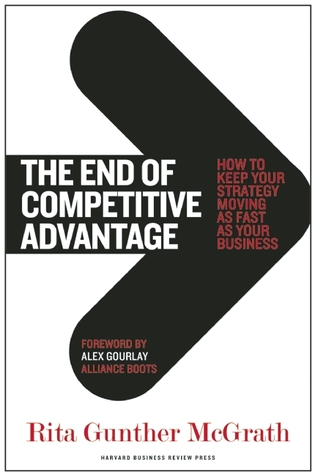
The End of Competitive Advantage: How to Keep Your Strategy Moving as Fast as Your Business

The End of Competitive Advantage: How to Keep Your Strategy Moving as Fast as Your Business Hardcover

by Rita Gunther McGrath  (Author) , Alex Gourlay (Foreword)

15824360

Are you at risk of being trapped in an uncompetitive business?
Chances are the strategies that worked well for you even a few years ago no longer deliver the results you need. Dramatic changes in business have unearthed a major gap between traditional approaches to strategy and the way the real world works now.
In short, strategy is stuck. Most leaders are using frameworks that were designed for a different era of business and based on a single dominant idea—that the purpose of strategy is to achieve a sustainable competitive advantage. Once the premise on which all strategies were built, this idea is increasingly irrelevant.
Now, Columbia Business School professor and globally recognized strategy expert Rita Gunther McGrath argues that it’s time to go beyond the very concept of sustainable competitive advantage. Instead, organizations need to forge a new path to winning: capturing opportunities fast, exploiting them decisively, and moving on even before they are exhausted. She shows how to do this with a new set of practices based on the notion of transient competitive advantage.
This book serves as a new playbook for strategy, one based on updated assumptions about how the world works, and shows how some of the world’s most successful companies use this method to compete and win today.
Filled with compelling examples from “growth outlier” firms such as Fujifilm, Cognizant Technology Solutions, Infosys, Yahoo! Japan, and Atmos Energy, The End of Competitive Advantage is your guide to renewed success and profitable growth in an economy increasingly defined by transient advantage Read more of this post

SPAC: A Thriving Financial Product, Despite a Record of Failure; Promoters of SPAC often make bad choices, earning almost no returns for investors

AUGUST 13, 2013, 4:38 PM

A Thriving Financial Product, Despite a Record of Failure

By STEVEN M. DAVIDOFF

On Wall Street, strange financial products sometimes exist not because they are good for investors or companies, but because they offer their promoters a way to profit. One of those products may be the Silver Eagle Acquisition Company, which just completed a $325 million initial public offering. Silver Eagle is a special purpose acquisition company, or SPAC, which raises money through an I.P.O. and then casts a wide net in search of a private company to buy. Silver Eagle’s I.P.O. is the largest in the past seven years for a SPAC and sure to earn its promoters millions, but the outcome is not so clear for its investors or even the company itself. Read more of this post

How does a purveyor of comfortable shoes to middle-aged Britons bec¬ome one of the fastest-growing retailers in India? By listening to the shop staff, says Stuart Paver, managing director of Paver Shoes.

August 13, 2013 4:27 pm

The shoe seller who stepped up

By Andrew Bounds

India ShoesPaver

A good fit:  says being a middle child gave him the skills to lead the company

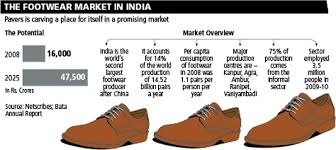
How does a purveyor of comfortable shoes to middle-aged Britons bec­ome one of the fastest-growing retailers in India? By listening to the shop staff, says Stuart Paver, managing director of Paver Shoes. The business, which began with his mother selling footwear door-to-door and in village halls and spread across the north of England to reach annual sales of more than £60m, has continued to keep it simple while listening to what customers want. The UK stores are crammed with long racks of shoes and boxes displaying all the stock in order to keep staff costs down. But in India, which accounts for a quarter of group sales, spacious Paver shops are plastered with Union Jacks and ooze glamour and bling (see box). Mr Paver, whose appearance puts him in the smart, comfortable-clothes-wearing-Brit category, credits his Indian staff with helping to get the product right. Read more of this post

Keeping the mighty honest: A new wave of press barons should not allow newspapers to become niche products

Keeping the mighty honest: A new wave of press barons should not allow newspapers to become niche products

Aug 10th 2013 |From the print edition

20130810_USD000_0

THIS summer Lexington visited William Randolph Hearst’s castle at San Simeon. For a reporter it was a bittersweet moment: a reminder of an age when newspapers threw off profits so vast that an American press magnate could scavenge the globe for endangered treasures, prising heirlooms from Old World nobles before shipping them by the ton to his Californian lair. Today, all is stood on its head. Once-profitable journals are bleeding money and readers. America’s grandest media dynasties seem as embattled as inter-war European aristocrats, and the endangered relics being snapped up are newspapers, as 21st-century tycoons dream of playing the press baron. Read more of this post

Extra, Extra! Newspaper Crisis Hits Germany; It came to Germany almost a decade later than America, but the newspaper crisis is sweeping the country, with plummeting circulations and revenues. The German news media must reinvent itself in order to retain readers.

08/13/2013 05:00 PM

Extra, Extra! Newspaper Crisis Hits Germany

By Cordt Schnibben

It came to Germany almost a decade later than America, but the newspaper crisis is sweeping the country, with plummeting circulations and revenues. The German news media must reinvent itself in order to retain readers.

image-530755-galleryV9-ayrr

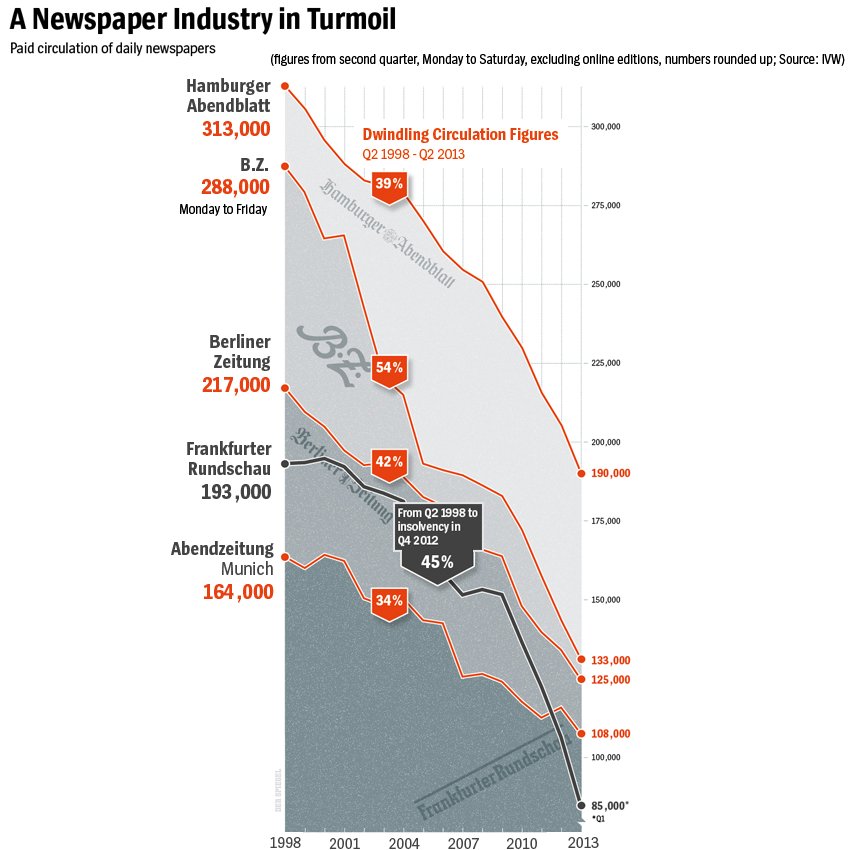
Three decades ago, the editors of the Munich daily Abendzeitung produced a newspaper each day for 300,000 buyers. Fast forward 30 years and its circulation has declined to 107,634. One of of three desks in the large newsroom next to his office is now unoccupied, so when Editor in Chief Arno Makowsky uses a ballpoint pen to add a sharp upward curve into the next year on the chart in front of him, all he can do is laugh. Read more of this post

Why startup culture is such a fragile and precious thing

Why startup culture is such a fragile and precious thing

BY FRANCISCO DAO 
ON AUGUST 13, 2013

tumblr_lw67hgbyci1r7cfndo1_500

Have you ever wondered what creates startup culture? Most people associate it with words like “scrappy” and “passion” but never explain what drives people to be scrappy or passionate in the first place. It has become one of those terms that everyone tosses around and pretends to understand while nobody comes clean because they don’t want to be the first to admit they don’t know what they’re talking about. People assume all startups are naturally endowed with some kind of pixie dust that makes everyone love what they’re doing so much that they’re willing to work 80-hour weeks, yet it’s never explained where this magical culture comes from. Read more of this post

Why we love to crunch; With the texture of food almost as important as the taste, companies are scrutinizing the way we eat

August 13, 2013, 6:51 p.m. ET

Why Food Companies Are Fascinated by the Way We Eat

Texture Is Almost as Important as Taste in New Products

ANNE MARIE CHAKER

Texture is an area of increasing focus among food companies aiming to zero in on that perfectly crispy crunch or silky smoothness. Christine Kalvenes, vice president of innovation for Frito-Lay, and WSJ’s Anne-Marie Chaker, join Lunch Break. 

PJ-BP906A_TEXTU_G_20130813232411

Are you a cruncher? Or a “smoosher”? Some people crave the perfectly crispy crunch of a cracker or a salty chip. Others yearn for the silky smoothness of a chocolate mousse. Food companies are paying closer attention to consumer’s texture preferences as they drill down on attributes that make new products stand out on store shelves. Food developers are putting specific textures at the top of the list of traits they want to achieve, and they are emphasizing “mouth feel” in descriptions on packaging. Texture “is just as important as taste or flavor, in many cases,” says Jack Fortnum, president of the North American business at Ingredion Inc.,INGR -1.37% a Westchester, Ill., food-ingredient processor that holds hundreds of consumer taste tests a year. It says the tests can, for example, help clients calibrate the precise amount of crunch in a new product. There were 20,790 new food packages world-wide making a texture claim in 2012, roughly double the number in 2008, according to Netherlands-based Innova Market Insights. Read more of this post