China’s largest village corruption case explodes in Zhejiang

China’s largest village corruption case explodes in Zhejiang

Staff Reporter 

2013-08-29

Ten officials in Xinqiao, a small village in easterns China’s Zhejiang province, have whipped up what has been deemed the nation’s biggest collective corruption case on record for village-level governance in the history of the People’s Republic of China. The alleged crimes involve the illicit seizure of 316 resettlement houses, worth 1.8 billion yuan (US$294 million), reports the Beijing-based Economic Observer. Read more of this post

China’s top anti-corruption agency is investigating Jiang Jiemin, head of the commission overseeing the country’s biggest state-owned enterprises

China State Assets Head Jiang Under Investigation

By Nerys Avery  Sep 1, 2013

(Corrects month of Jiang’s appointment in third paragraph.)

China’s top anti-corruption agency is investigating Jiang Jiemin, head of the commission overseeing the country’s biggest state-owned enterprises, the official Xinhua News Agency reported today. Jiang, 57, head of the State-Owned Assets Supervision and Administration Commission, is being probed by the Communist Party’s Central Commission for Discipline Inspection over “suspected serious disciplinary violations,” Xinhua said in a one-paragraph report today. No further details were given. Jiang, who was appointed to the commission in March, is the latest senior official to come under investigation after Xi Jinping pledged to root out corruption when he took over as head of the party in November. Liu Tienan, vice chairman of the country’s planning agency, was expelled from the party in August after being fired in May after a probe began and Li Chuncheng, a deputy party secretary of Sichuan province was put under investigation in December, Xinhua reported at the time. The South China Morning Post said Aug. 30 that party leaders have agreed to investigate retired Politburo Standing Committee member Zhou Yongkang on corruption allegations, citing people it didn’t identify. Leaders made the decision because of rising anger inside the party at the scale of corruption and the vast fortune amassed by his family, it said. News of Jiang’s investigation comes a week after the trial of ousted Politburo member Bo Xilai, who was charged with bribery, embezzlement and abuse of power.

To contact the reporter on this story: Nerys Avery in Beijing at navery2@bloomberg.net

 

150 tonnes of pork ribs made from diseased pigs sold in Shenzhen

150 tonnes of pork ribs made from diseased pigs sold in Shenzhen

Staff Reporter

2013-09-01

C316X0450H_2013資料照片_N22F_2013資料照片_N71_copy1

An inspector checking pork on a truck in Shanghai. (File photo/Xinhua)

Although the Chinese government has implemented measures to prevent pork made from diseased pigs from entering the market, police in southern China’s Guangdong province busted a factory that sold over 150 tonnes of pork ribs made from diseased pigs to stores in Shenzhen city, according to our Chinese-language sister newspaper Want Daily. Read more of this post

Billions wiped from blue-chips as carbon tax hits Australia’s top companies

Billions wiped from blue-chips as carbon tax hits Australia’s top companies

STEVE LEWIS AND STEPHEN MCMAHON

NEWS LIMITED NETWORK

AUGUST 30, 2013 1:07PM

Virgin Australia CEO John Borghetti said the carbon tax had added nearly $50 million to the company’s 2012/13 expenses. Source: News Limited

VIRGIN Airlines has blamed the carbon tax for contributing to a $98 million full-year loss, adding to corporate concerns that Labor’s climate change scheme is wiping billions of dollars off blue-chip profits. Australia’s second biggest airline on Friday morning announced the carbon tax had added nearly $50 million to its 2012/13 expenses – around half the amount booked by Qantas, which said the green impost added $106 million. Read more of this post

China’s internet giants planning new online to offline services

China’s internet giants planning new online to offline services

Staff Reporter

2013-09-01

After Baidu, China’s largest search engine, spent US$160 million to buy a 59% stake in the group purchasing website Nuomi, other leading internet companies, such as Alibaba and Tencent, have also started planning an online to offline service. As an increasing number of companies entered the market, the online to offline service was expected to reach a trillion yuan (US$163.25 billion) in market scale, a source told the National Business Daily. Read more of this post

Big Chinese Internet Companies Busy Building Online Education Platforms

Big Chinese Internet Companies Busy Building Online Education Platforms

By Tracey Xiang on August 29, 2013

Say it once again: China’s education market is huge and is moving online. While local startups are building online education services by modeling western ones or improving the must-criticized existing education system in China (they have raised so much money in the past half a year alone), local Internet giants are building platforms to accommodate all of them. Read more of this post

Baidu, AutoNavi Fighting for Navigation Market Share, Offering Apps for Free

Baidu, AutoNavi Fighting for Navigation Market Share, Offering Apps for Free

By Emma Lee on August 29, 2013

Baidu

Baidu (NASDAQ:BIDU) announced yesterday that it would offer Baidu Navigation for free ever after. The company promised today to refund the users who purchased their navigation services on both Android and iOS platforms. AutoNavi (NASDAQ:AMAP), a leading map service in China, followed suit shortly afterwards, declaring that its navigation software will also be offered for free. These moves will undoubtedly overhaul the navigation market. Compared with dedicated navigation machines usually priced at over 300 yuan ($48.67), Baidu and AutoNavi navigation apps once priced at 30 yuan and 50 yuan respectively are much cost-effective choices. Let alone the services are free now. AutoNavi Navigation has been pre-installed or downloaded for more than 70 million times, according to financial report of the company. Read more of this post

New WeChat Payment app to spur competition in China’s mobile payment market

New WeChat app to spur competition in mobile payment market

Staff Reporter

2013-09-01

The debut of the new version of edition 5.0 WeChat, a mobile messaging communication service developed by Chinese internet company Tencent, has sparked concerns among major e-commerce companies that the mobile payment segment will now be dominated by Tencent, the Guangzhou-based Southern Metropolis Daily reported. Last week, Tencent’s online service, Yixun, announced that its website will now support WeChat Payment, a new feature included in the latest version of WeChat. This has made it the first business to consumer website to be fully connected with the WeChat Payment interface. Read more of this post

Xbox Spinoff Seen More Likely With Ballmer Exit

Xbox Spinoff Seen More Likely With Ballmer Exit: Real M&A

After 13 years of declining value, some Microsoft Corp. (MSFT) investors want Steve Ballmer’s replacement to take bolder steps to reverse the slide at the world’s largest software maker. That could mean spinning off the Xbox video-game business. Ballmer’s retirement as chief executive officer may clear the way for a potential spinoff of the Xbox unit to unlock shareholder value. While a consumer success with $7 billion in annual sales, it’s one of Microsoft’s lower-margin divisions and doesn’t drive sales of the company’s core business services and software. Xbox may be worth at least $17 billion on its own, based on Nintendo Co. (7974)’s revenue multiple, according to data compiled by Bloomberg. Its value should be even higher given that Nintendo has operating losses, Wedbush Inc. said. Read more of this post

The Acxiom Corporation is to open a Web site that will allow individual consumers to see some of the information that the company has collected about them

August 31, 2013

A Data Broker Offers a Peek Behind the Curtain

By NATASHA SINGER

01-ACXIOM-JP-articleLarge

“You have to make things visible,” says Scott Howe, who demonstrated a Web site that will let consumers see some of Acxiom’s data about them. IT can be disconcerting to learn what, not to mention how much, marketers know about us. Consider a consumer like Scott E. Howe. The Acxiom Corporationa marketing technology company that has amassed details on the household makeup, financial means, shopping preferences and leisure pursuits of a majority of adults in the United States, knows that Mr. Howe is 45, married with children, the owner of a house in the 2,500-square-foot range, and is interested, among other things, in tennis, domestic travel, cooking, crafts, sweepstakes and contests. Those intimate details, Mr. Howe says, are entirely accurate. Read more of this post

Technology ‘Moat’ : Oil Patch Follows Smartphone Makers in Patent Defenses

Oil Patch Follows Smartphone Makers in Patent Defenses

Battles for supremacy in the $680 billion oil and gas industry are moving from the hardhats and steel-toed boots of the drilling rig to the Brooks Brothers suits of law firms representing the biggest patent holders. Schlumberger Ltd. (SLB), Halliburton Co. (HAL) and Baker Hughes Inc. (BHI), the world’s largest oil service providers, secured a total of 1,257 patents last year, more than twice the annual number of a decade earlier. In the past three years, Exxon Mobil Corp. (XOM) doubled its revenue from technology it licenses to others. Read more of this post

Pay-TV Dinosaurs Study Evolution; Web TV Is a Threat to Pay TV—but the Old School Can Adapt

Updated August 30, 2013, 7:23 p.m. ET

Pay-TV Dinosaurs Study Evolution

Web TV Is a Threat to Pay TV—but the Old School Can Adapt

MIRIAM GOTTFRIED

BF-AF680_PAYTVH_G_20130830180303

Even if pay-TV providers are getting pushed around the living room, they can do more to keep a grip on the remote control. Cable and satellite companies find their margins attacked on one side by rising programming costs and on the other by more consumers dropping video subscriptions in favor of cheaper online options. Meanwhile, a new generation of consumers is being raised on services like Netflix NFLX -1.37% . And Big Tech companies angling to deliver TV over the Internet may be starting to make more serious inroads, as evidenced by recent news of Google‘s GOOG -1.00% talks with the National Football League and Sony‘s SNE -1.09% preliminary deal with ViacomVIA +0.03% to carry its channels. Read more of this post

How Google can avoid becoming the next Microsoft, as told by an insider with knowledge of both

How Google can avoid becoming the next Microsoft, as told by an insider with knowledge of both

By Christopher Mims @mims August 30, 2013

The deeper you dig into the causes of Microsoft’s decade of stagnation and the departure of CEO Steve Ballmer, the more apparent it is that the problems Microsoft faced affect all large companies, to one extent or another. Fortunately for the world (and unfortunately for Microsoft) the company’s dysfunction drove away so many talented engineers and managers that they are practically climbing over one another to recount what went wrong in Redmond. Quartz has already written about how Microsoft veterans who left the company see its problems, and what they think needs to be done to fix them. But the observations of one of the veterans we spoke with are worth writing about separately—because of their implications for Google, the company’s most visible competitor. This person, who requested to remain anonymous, has inside knowledge of the workings of Google as well. Here are some of our key takeaways from talking with them.

1. Too many cooks in the kitchen will kill innovation every time

As a rule, decision-making grows exponentially harder with the number of people involved. In Microsoft’s early days, it was, like most young organizations, fairly flat in structure. A general manager oversaw 50-300 people, and decisions only needed his or her blessing. But in part because graduating into management is the only route to a promotion at Microsoft, the company added more and more layers of management. Read more of this post

From Example to Excess in Silicon Valley

August 31, 2013

From Example to Excess in Silicon Valley

By JENNA WORTHAM

01-BITS-articleLarge

I CAN remember a time when technology, and the people behind it, routinely filled me with a sense of wonderment — like the first time I logged into a chat room and, later, the first time I swiped open an iPhone. Another memorable moment for me happened roughly six years ago, when I tried Goog-411, an experimental phone service from Google. At a time when smartphones were far from ubiquitous, the service allowed people to call a toll-free number and obtain business listings by using voice commands. It was partly an effort to improve Google’s own internal software, but it left me marveling at its combination of technological brilliance and public service — completely in keeping with the company’s motto of “Don’t be evil.” Read more of this post

After Animal Crossing, Pokemon is Key for Nintendo

Aug 30, 2013

After Animal Crossing, Pokemon is Key for Nintendo

By Daisuke Wakabayashi

OB-YS668_pokemo_D_20130830053929

A man sits by a huge poster of Pokemon characters in Tokyo, in this July file photo.

A lot is riding on Pikachu’s little yellow shoulders. With a growing number of consumers playing videogames on smartphones and tablet computers, Nintendo’s biggest weapon in enticing gamers to buy its hardware is to create appealing games that can’t be played anywhere else. Sequels of proven hit franchises like “Animal Crossing” are central to that strategy.  Perhaps no franchise is as important to the success of its portable game systems as the “Pokemon,” or Pocket Monsters, series, a long-running favorite among young children who collect and train cute-looking monsters for head-to-head battle. Read more of this post

Japan’s Public Pension Fund Suffers Biggest-Ever Bond Losses

Japan’s Public Pension Fund Suffers Biggest-Ever Bond Losses

Japan’s Government Pension Investment Fund, the world’s largest manager of retirement savings, posted its smallest gain in three quarters in the period ended June on record domestic bond losses. GPIF, which has 121 trillion yen ($1.24 trillion) in assets, earned a 1.9 percent return last quarter compared with a 6.9 percent gain in the prior three months, according to a statement on its website today. Market investments in Japanese bonds fell 1.5 percent while domestic stocks jumped 9.7 percent, the fund said. Losses on local bonds were wider than the previous record quarterly decline in 2008, said Tokihiko Shimizu, director general of the research department at GPIF. Read more of this post

AGS Transact Technologies: From Dispensing Paints to Money

AGS Transact Technologies: From Dispensing Paints to Money

by Pravin Palande | Aug 31, 2013

topimg_22369_ravi_goyal_600x400 AGS Transact Technologies_Final.indd

The banks may be the face but AGSTT is the muscle behind at least 25,000 ATMs in India

AGS Transact Technologies (AGSTT), the brainchild of Ravi Goyal, is the leading provider of touch point technology solutions to the banking industry. It derives 70 percent of its turnover from the supply and maintenance of ATMs for banks. The remaining 30 percent is generated by providing similar dispensing technology solutions to the petroleum, retail and paints industries. It operates on an outsourced transaction-based model where the machines are built and maintained by the company instead of the bank. Or, simply put, AGSTT takes care of leasing, building and managing the cash lifecycle of the ATMs, and charges the bank based on the transactions that take place on the machines.  Read more of this post

Wal-Mart Prepares New India Venture

August 30, 2013, 11:23 a.m. ET

Wal-Mart Prepares New India Venture

Retailer Expected to Formally Request Approval to Operate Supermarkets

RAJESH ROY

NEW DELHI—U.S. retail giant Wal-Mart Stores Inc. WMT +0.76% is expected to submit soon a formal proposal to the Indian Trade Ministry to operate supermarkets in the country, a senior government official said on Friday. ‎ Scott Price, Wal-Mart’s Asia chief executive officer, met with officials at the Department of Industrial Policy and Promotion, said an official familiar with the matter. Read more of this post

S Chand: India’s Fastest-Growing Educational Publisher; A strategy to acquire and grow is set to elevate the 76-year-old educational publishing veteran to domestic market leader

S Chand: India’s Fastest-Growing Educational Publisher

by Udit Misra | Aug 29, 2013

topimg_22363_himanshu_gupta_600x400 S Chand-FINAL.indd

A strategy to acquire and grow is set to elevate the 76-year-old educational publishing veteran to domestic market leader

The beginnings of the S Chand Group were steeped in nationalism. Started by Shyam Lal Gupta in 1937, its mission was to publish Indian authors unable to find a voice in colonial times. S Chand has evolved into one of the biggest domestic publishers and exporters of textbooks. It publishes all types of educational books: Higher education, technical and management education, school books (they account for 60 percent of its revenues). Read more of this post

E-Cigarette Makers’ Ads Echo Tobacco’s Heyday

August 29, 2013

E-Cigarette Makers’ Ads Echo Tobacco’s Heyday

By STUART ELLIOTT

Adco2-popup (1)

Electronic cigarettes may be a creation of the early 21st century, but critics of the devices say manufacturers are increasingly borrowing marketing tactics that are more reminiscent of the heady days of tobacco in the mid-1900s. With American smokers buying e-cigarettes at a record pace — annual sales are expected to reach $1.7 billion by year’s end — e-cigarette makers are opening their wallets wide, spending growing sums on television commercials with celebrities, catchy slogans and sports sponsorships. Those tactics can no longer be used to sell tobacco cigarettes, but are readily available to the industry because it is not covered by the laws or regulations that affect the tobacco cigarette industry. The e-cigarette industry is also spending lavishly on marketing methods that are also still available to their tobacco brethren, including promotions, events, sample giveaways and print ads. Read more of this post

Aluminum Industry Seen by JPMorgan Unprofitable on LME Rule

Aluminum Industry Seen by JPMorgan Unprofitable on LME Rule

Two-thirds of aluminum producers would be losing money because of lower premiums paid on top of exchange benchmarks if the world’s biggest metals bourse approves rules to cut waiting times at its warehouses, according to JPMorgan Chase & Co. Premiums to obtain the metal will drop 60 percent to about $100 a metric ton as a result of the new rules the London Metal Exchange is expected to approve in October, Benjamin Defay, an analyst at the bank in London, wrote in a report e-mailed today. The LME proposed to oblige warehouses where waits extend for 100 days or more to let more metal out than they take in. Read more of this post

Jitters over high public debt in Malaysia

Jitters over high public debt in Malaysia

Saturday, Aug 31, 2013

Yong Yen Nie

The Straits Times

MALAYSIA – With the Indonesian rupiah and Indian rupee plunging and economies in turmoil as foreign funds flee, economists are wondering if Malaysia is next. Malaysia, whose bond market now has a record level of foreign holdings, has not been spared as foreign funds return to dollar-denominated assets. As it is, the ringgit has already depreciated 7 per cent against the US dollar this year, to RM3.33 to the greenback. Read more of this post

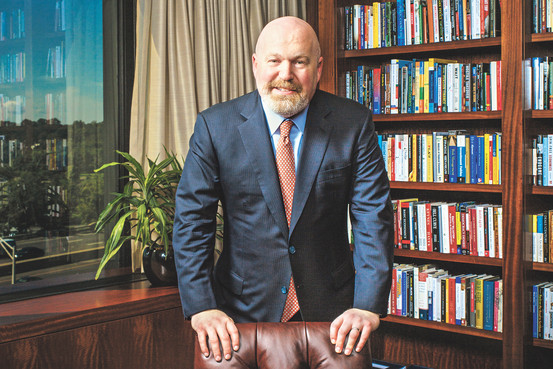
Quant pioneer Clifford Asness thinks bonds are expensive but don’t constitute a bubble, and stocks are a little pricey, too. So what’s the best course?

SATURDAY, AUGUST 31, 2013

The Big Danger: Overreliance on Stocks

By LAWRENCE C. STRAUSS | MORE ARTICLES BY AUTHOR

BA-BC762A_qap_p_G_20130831015222

Quant pioneer Clifford Asness thinks bonds are expensive but don’t constitute a bubble, and stocks are a little pricey, too. So what’s the best course?

Armed with an M.B.A. and a doctorate in finance from the University of Chicago, Clifford S. Asness can talk about the arcane workings of the markets with the best of them. One of his key points, however, is very simple: Many investors place too big a bet on stocks and lack sufficient diversification in their portfolios. Asness, who co-founded AQR Capital Management (the name stands for applied quantitative research) in 1998 after working at Goldman Sachs in quantitative research, is a big believer in variations of four of his firm’s key strategies: value, momentum, defensive, and “carry” (which includes shorting lower-yielding assets and investing in higher-yielding ones). He calls these the “big four” and argues that, because they have low or negative correlations with one another, they provide protection in all markets. Read more of this post

With Huge War Chests, Activist Investors Tackle Big Companies

AUGUST 30, 2013, 9:01 PM

With Huge War Chests, Activist Investors Tackle Big Companies

By MICHAEL J. DE LA MERCED and JULIE CRESWELL

Microsoft executives faced an unusual challenge in April when a $12 billion hedge fund, ValueAct, announced that it had bought a nearly $2 billion stake in the company with the intention of shaking things up. To many analysts, the possibility that ValueAct, with less than 1 percent of Microsoft’s stock, could succeed seemed improbable at best. The firm buys shares in companies, hoping to fight for board seats and change the targets’ corporate strategies. Read more of this post

The End of the Emerging-Market Party; in Atlas of Economic Complexity, when economies began producing more complex products, a harbinger of sustainable growth followed

The End of the Emerging-Market Party

Ricardo Hausmann, a former minister of planning of Venezuela and former Chief Economist of the Inter-American Development Bank, is a professor of economics at Harvard University, where he is also Director of the Center for International Development.

30 August 2013

CAMBRIDGE – Enthusiasm for emerging markets has been evaporating this year, and not just because of the US Federal Reserve’s planned cuts in its large-scale asset purchases. Emerging-market stocks and bonds are down for the year and their economic growth is slowing. To see why, it is useful to understand how we got here. Between 2003 and 2011, GDP in current prices grew by a cumulative 35% in the United States, and by 32%, 36%, and 49% in Great Britain, Japan, and Germany, respectively, all measured in US dollars. In the same period, nominal GDP soared by 348% in Brazil, 346% in China, 331% in Russia, and 203% in India, also in US dollars. Read more of this post

Losses Stalk Bond Investors in August as Europe’s Economy Grows

Losses Stalk Bond Investors in August as Europe’s Economy Grows

Corporate bondholders in Europe forfeited 0.2 percent in August, the fourth month of losses in a year that’s poised to generate the worst returns since 2008. Investment-grade debt in euros is returning 0.8 percent so far this year compared with 9 percent in the same period of 2012, Bank of America Merrill Lynch index data show. Average yields on the securities jumped nine basis points this month to 2.04 percent, near the highest in seven weeks, while yields on junk-rated bonds climbed 14 basis points to 4.9 percent, according to Bloomberg index data. Read more of this post

Goldman Sachs bought gold from clients after issuing a SELL call

Guess Which “Bearish” Bank Bought A Record Amount Of GLD In Q2

Tyler Durden on 08/30/2013 21:32 -0400

In early April, the status quo was exuberant when none other than Goldman Sachs issued a “sell” on the barbarous relic that has become so indicative of the exuberance of central planning. At the time, we were skeptical (to say the least) and, just for extra Muppetting, the bank also suggested its clients buy Treasuries. Well, now that the full details of holdings changes have been released for Q2, it is perhaps clearer than ever before that as the bank was telling its clients to “sell, sell, sell” it was itself “buy, buy, buy”-ing the Gold ETF (GLD) with both arms and feet. In Q2, Goldman Sachs added a stunning (and record) 3.7 million ‘shares’ of GLDAs Paulson dumped his GLD, Goldman lapped it up to become the ETF’s 7th largest holder. Goldman was the largest adding holder for GLD… buying what its clients were selling in size…

20130830_GLD1_0


Fed ‘taper’ is dicey game of dominoes

August 30, 2013 4:51 pm

Fed ‘taper’ is dicey game of dominoes

By Ralph Atkins in London

Lining up dominoes is a hazardous game, as any child knows. A small slip can result in the whole lot falling prematurely and chaotically. Investors may wonder whether Ben Bernanke, the US Federal Reserve chairman, is attempting a similar feat. Talk about Fed “tapering” – the central bank’s plans to scale back asset purchases, or “quantitative easing” – has driven US Treasury yields sharply higher since May. In response, investors have pulled out of riskier assets in emerging markets, sending share and bond prices spiralling downwards in countries such as India. Read more of this post

As a credit crisis hangover ebbs, company debt costs to rise

As a credit crisis hangover ebbs, company debt costs to rise

11:13am EDT

By Richard Leong

NEW YORK (Reuters) – It’s taken nearly five-years, but one of the most persistent bond market dislocations left behind by the financial crisis has finally dissipated, likely signaling that the days of super-cheap corporate borrowing costs are numbered. In the latest signal of the slow normalization process playing out in U.S. financial system, the 30-year swap spread closed above zero earlier this week for the first time since January 2009. Read more of this post