What’s Left of Nokia? Microsoft Deal Changes Nokia’s Focus; Remaining Business Largely Focused on Network Equipment; Nokia handsets sale reveals revamped networks value

September 3, 2013, 10:15 a.m. ET

Deal Changes Nokia’s Focus

Remaining Business Largely Focused on Network Equipment

SAM SCHECHNER

What’s left of Nokia NOK1V.HE +33.94% Corp.? The Finnish company’s proposed $7 billion deal to sell its unprofitable cellphone business to Microsoft Corp MSFT -5.48% . will leave behind 56,000 employees and a collection of businesses focused mainly on making network equipment for cellphone operators. But it will also hold on to a lucrative patent portfolio and a mobile-mapping business that competes with Google Inc. GOOG +1.11% and Apple Inc. If a deal is sealed, Nokia will emerge about half the size it is today, by revenue, but profitable. Read more of this post
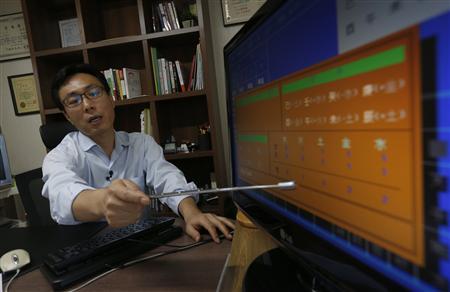
Nokia’s Stephen Elop: Next Microsoft CEO? Having Left the Software Giant After Running the Company’s Profitable Business Division, Elop Returns a Bit of a Hero

Updated September 3, 2013, 10:37 a.m. ET

Nokia’s Stephen Elop: Next Microsoft CEO?

Having Left the Software Giant After Running the Company’s Profitable Business Division, Elop Returns a Bit of a Hero

JOHN D. STOLL

After three years of trying to repair businesses that proved to be unfixable, Nokia Corp.NOK1V.HE +33.94% Chief Executive Stephen Elop is back at Microsoft Corp.MSFT -5.60% to help shape the legacy of the software giant’s longtime boss, and potentially take his job. Nokia on Tuesday announced the $7 billion sale of an ailing handset business to Microsoft, ending several months of discussions between Mr. Elop and Microsoft Chief Executive Steve Ballmer. The negotiations were the subject of dozens of boardroom deliberations on both sides of the Atlantic. Read more of this post

Analysts: Microsoft Bought Nokia Because Nokia Was Going To Stop Making Windows Phones

Analysts: Microsoft Bought Nokia Because Nokia Was Going To Stop Making Windows Phones

NICHOLAS CARLSON SEP. 3, 2013, 7:25 AM 9,018 8

Last night Microsoft bought the smartphone division of Nokia for ~$7 billion. Nokia will present the deal to is shareholders in November, and both companies expect the transaction to close in the first quarter of 2014. So, why did Microsoft do this deal? Two analysts, Ben Thompson of Stratechary and Benedict Evans, assume that Microsoft had to buy Nokia because Nokia was going to stop making Windows Phones very soon.

Read more of this post

South Koreans hope fortune-tellers point way to top of the class

South Koreans hope fortune-tellers point way to top of the class

Fortune teller Song Byung-chang looks at a child's fate, or Saju in Korean, at his office in Seoul

8:13am EDT

By Jane Chung

SEOUL (Reuters) – Byun Mi-kyong sat quietly with her hands in her lap as she listened closely to every word the fortune-teller said about her daughter’s chances of getting into the right university. Dealing with intensely competitive college entrance exams has driven South Korean students to despair, and sometimes to suicide, as they fight for the few places in the best programs that are seen as the key to a successful career. Anxious parents have long sought hints from fortune-tellers about how well their children will do in school. But now Byun and others are turning to divination for specific guidance on picking the most promising activities, courses and colleges. Read more of this post

China bans officials from buying mooncakes with public funds

China bans officials from buying mooncakes with public funds

8:30am EDT

BEIJING (Reuters) – China is banning officials from using public funds to buy mooncakes, pastries offered as gifts during the Mid-Autumn Festival, as part of President Xi Jinping’s fight against corruption, the government said on Tuesday. Officials cannot use public money to send mooncakes as gifts or to arrange banquets that are not related to official duties during the festival, which falls on September 19 this year, the ruling Communist Party’s Central Commission for Discipline Inspection said on its website. Read more of this post

For Rich Mainlanders, Hong Kong Loses Luxury Luster

September 3, 2013, 6:22 PM

For Rich Mainlanders, Hong Kong Loses Luxury Luster

By Jason Chow and Chester Yung

Has Hong Kong lost its perch as China’s preferred luxury hub? Mainland Chinese passport holders account for 78% of all visitors to Hong Kong, and they have an outsize presence on the city’s shopping scene. The sheer number of Chinese visitors is huge: Last year saw 34.9 million arrivals from China, equal to about five times’ Hong Kong’s population. But while mainlanders continue to arrive in the city in droves – more than 3.7 million entered the territory in July, up 15.7% from a year before – they seem to be spending less than they used to, and veering away from big-ticket items in particular, according to Hong Kong government figures released on Monday. Read more of this post

Citigroup has shed more than $6 billion in private-equity and hedge-fund assets in the past month in order to comply with new regulations limiting banks’ holdings of “alternative” investments

Updated September 2, 2013, 9:28 p.m. ET

Citigroup Dialing Back Its ‘Alternative’ Holdings

SHAYNDI RAICE

Citigroup Inc. C +2.13% has shed more than $6 billion in private-equity and hedge-fund assets in the past month, according to people familiar with the transactions, in order to comply with new regulations limiting banks’ holdings of “alternative” investments. The nation’s third-largest bank by assets last week sold a $4.3 billion private-equity fund called Citi Venture Capital International for an undisclosed price to Rohatyn Group, a private-equity fund run by Nick Rohatyn, son of financier Felix Rohatyn, said people familiar with the matter. It couldn’t be determined what price the fund fetched. On Aug. 9, Citigroup sold a $1.9 billion emerging-markets hedge fund to the fund’s managers, the people said. Read more of this post

China’s Struggle Sessions; A messy leadership transition suggests the return of ideology

September 3, 2013, 1:10 p.m. ET

China’s Struggle Sessions

A messy leadership transition suggests the return of ideology.

When the trial of Bo Xilai, the former Communist Party boss of Chongqing, ended last week, most observers assumed that Chinese politics would settle into its usual monotonous patterns. But the power plays continue. On Tuesday, Jiang Jiemin was removed as head of the State-Owned Assets Supervision and Administration Commission (SASAC), a post he had held for only a few months. Read more of this post

Buying a Frontier Market Fund? This Theater’s Got a Teeny, Tiny Exit

September 3, 2013, 10:26 A.M. ET

Buying a Frontier Market Fund? This Theater’s Got a Teeny, Tiny Exit

By Brendan Conway

It’s been a rotten year for one of yesteryear’s favorite investing categories: iShares MSCI Emerging Markets ETF (EEM) is down 13% on the year. But iShares MSCI Frontier 100 ETF(FM), which tracks stocks from tiny, less trodden markets that are too underdeveloped for EEM, is up more than 10%. If you guessed frontier markets are even less liquid than emerging markets and, thus, harder to exit in a panic, Joe Light of the Wall Street Journal has some data you should see. Namely, Vanguard Group estimates the one hour it takes to liquidate $100 million in emerging-markets expands to more than 10 days when you’re on the frontier. Being so small can have bad consequences, says Chris Philips, senior analyst at Vanguard Group, which doesn’t offer a frontier-market fund. For one thing, it can take funds a long time to move into and out of stocks. Mr. Philips calculated that a frontier-market fund would need more than 10 days to liquidate a $100 million position. Read more of this post

Europe’s Workers Flock to Norway for Better-Paying Jobs

Europe’s Workers Flock to Norway for Better-Paying Jobs

Pedro Dias cut his workday almost in half and tripled his pay after leaving his native Portugal for a job as a software developer in Oslo. The 27-year-old, who escaped 15-hour days as a researcher at New University of Lisbon and now rarely works past 5 p.m., landed his job at Metafocus AS, a producer of web-based software, at a career fair in the Portuguese capital in February. “In Portugal, with an average salary you will struggle and have to work longer hours,” he said as he looked at the waters of the Oslo Fjord from a patio outside his office in the capital. Dias says he enjoys his new job and his free time, during which he is preparing for his first half-marathon run. Read more of this post

Philippine netizens have voiced outrage over a plan to spend 7.8 million pesos (about US$177,000) to replace a flagpole at a national park in Manila, accusing the government of misusing state funds

Outrage over multi-million peso flagpole

By Christine Ong
POSTED: 04 Sep 2013 12:35 AM
Philippine netizens have voiced outrage over a plan to spend 7.8 million pesos (about US$177,000) to replace a flagpole at a national park in Manila, accusing the government of misusing state funds.

MANILA: There is uproar in some quarters of the Philippines over a plan to spend millions of pesos on replacing a flagpole in a national park. The government is allotting 7.8 million pesos (about US$177,000) to replace the current 30-metre high pole standing in front of a monument of the country’s national hero, Jose Rizal, at Rizal Park in Manila. The new flagpole to be imported from China, will be 52 metres high and will include the installation of a mechanically-assisted pulley and a new marble base. Read more of this post

Predicting Financial Markets with Google Trends and Not so Random Keywords

Predicting Financial Markets with Google Trends and Not so Random Keywords

Damien Challet Ecole Centrale Paris – Laboratory of Mathematics Applied to Systems

Ahmed Bel Hadj Ayed Ecole Centrale Paris – Laboratory of Mathematics Applied to Systems

August 14, 2013

Abstract: 
We check the claims that data from Google Trends contain enough data to predict future financial index returns. We first discuss the many subtle (and less subtle) biases that may affect the back-test of a trading strategy, particularly when based on such data. Expectedly, the choice of keywords is crucial: by using an industry-grade back-testing system, we verify that random finance-related keywords do not to contain more exploitable predictive information than random keywords related to illnesses, classic cars and arcade games. We however show that other keywords applied on suitable assets yield robustly profitable strategies, thereby confirming the intuition of Preis et al. (2013)