Panda Express: a Chinese couple’s US success story
September 14, 2013 Leave a comment
Panda Express: a Chinese couple’s US success story
Staff Reporter
2013-09-13
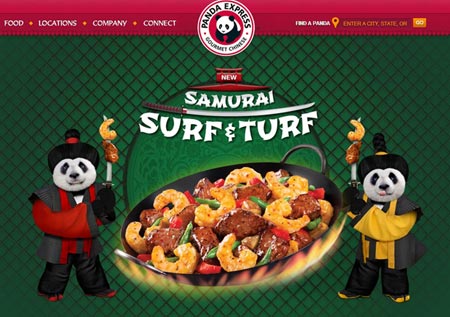
Chinese nationals in the United States have a long history of making a living through opening restaurants serving Chinese food, however the number has grown rapidly over the last decade. Figures showed that there were about 28,000 Chinese restaurants in the US, which is equivalent to the total number of McDonald’s stores in the global market, reports the New Champions magazine. Panda Express — a Chinese fast food restaurant chain founded by a man with a master’s degree in mathematics and a woman with a PhD in electronic engineering — opens three new branches in the US almost every week.Cheng Zhengchang, the founder of Panda Express, started out in the US restaurant industry in 1973, targeting the average American to help his company expand faster.
Panda Express’s first store opened in California in 1983 and its ninth store opened in 1985. The company’s stores rose to 254 in 1997 with sales of US$178 million and the restaurant chain achieved its goal of US$1 billion in sales in 2010.
What is it that makes Panda Express successful in its operational management and what is it that sets it apart from other Chinese restaurants and fast-food brands that opened during the same period?
The participation of Cheng’s wife Jiang Peiqi allowed Panda Express to have a more systematic management approach. Jiang said that the company needed an easier ordering system, so she designed software that could monitor the inventory at all of its chain stores and purchase ingredients automatically. With Jiang’s patented Panda Automated Work Station, Panda Express became one of the first restaurants to embrace technology during the 1980s and the only Chinese restaurant to do so.
To emulate the experience offered by an American restaurant, Cheng hired several non-Chinese staff as senior executives and recruited talented individuals to accelerate the company’s development. In addition, given the nature of Chinese food in which the materials and dishes are varied, Panda Express chose to offer a simpler menu.
Cheng pointed out that it was important to standardize its flavor but simultaneously maintain the distinguishing features of Chinese food. Panda Express continues to sell orange chicken, one of the most popular dishes at the restaurant, but adds two new dishes every month in order to keep its menu fresh.
Moreover, the sauce and seasoning served at the restaurant has been standardized in order to achieve a unified taste. As for the processing of the ingredients it uses, the company’s suppliers are in charge of cleaning, cutting and shipping them to other stores to achieve further standardization.
Despite its considerable success, Panda Express has been relatively conservative about expanding outside of the US, only venturing into the markets in Japan and Mexico, the report said. Meanwhile, Cheng believes that the restaurant’s presence in the US market has not yet reached a saturation level.
 About bambooinnovator
 Bamboo Innovator