Mr Fix-It’s big job: Malaysia’s economy
September 25, 2013 Leave a comment
Mr Fix-It’s big job: Malaysia’s economy
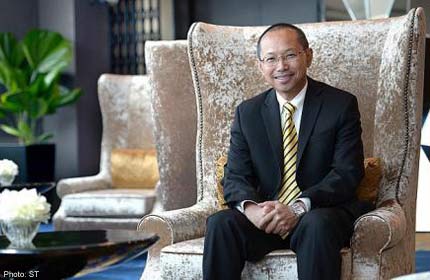
Wednesday, September 25, 2013 – 04:10
Yong Yen Nie
Malaysia Correspondent In Putrajaya
The Straits Times
MALAYSIA – FOR over two decades, Senator Abdul Wahid Omar has been known as “Mr Fix-It”, turning Malaysian giants such as Maybank and Telekom Malaysia into regional players. On May 15, just 10 days after the Barisan Nasional coalition led by Prime Minister Najib Razak won the general election, Mr Wahid was summoned to Mr Najib’s office to take on what could be his biggest repair job – fix the economy. The challenges are daunting. For 15 years, the government has spent more than it has taken in, and public debt has ballooned to 53.5 per cent of gross domestic product, the highest in the region. Exports are dwindling due to the weak demand from Europe, the United States and China. Its current account surplus, at RM2.6 billion (S$1 billion) in the second quarter of this year, is the narrowest since 1997.“I said ‘Yes’ right away,” Mr Wahid, 49, told The Straits Times in an interview recently. “But I made my intentions clear that I will not be made a politician. I simply have no aspirations for that.”
Mr Wahid, then the chief executive of Maybank, was appointed a minister in the Prime Minister’s Office, in charge of the Economic Planning Unit (EPU), which spearheads public projects and advises the government on its finances.
He follows in the footsteps of former Maybank chief executive Tan Sri Amirsham Abdul Aziz, who was EPU chief in 2008, appointed by then prime minister Abdullah Ahmad Badawi. Tan Sri Amirsham was replaced in 2009 when Mr Najib became Prime Minister.
Economists said Mr Wahid is expected to crack the whip, as rating companies have raised the alarm over Malaysia’s weakened public finances.
“External pressure will help him convince the government to accelerate its structural reforms as any back-pedalling will result in credit downgrades from now on,” said Dr Yeah Kim Leng, chief economist of RAM Holdings.
Born in Johor Baru, the son of a clerk at the British naval base in Singapore and a housewife, Mr Wahid won government scholarships to study at a Malays-only boarding school and then to Britain for the A levels and a diploma in accounting at Luton College of Higher Education. He stayed on and was certified as a chartered accountant.
In joining the government, Mr Wahid took a huge paycut. As Maybank chief, his compensation was worth more than RM4 million a year. As minister, Mr Wahid draws an annual salary of about RM180,000 and another RM49,000 as senator.
Within his first 100 days in office, the government reduced fuel subsidies and made it clear that the goods and services tax will be implemented within the next two years to raise revenue and cut the budget deficit to 3 per cent in 2015, from 4.5 per cent last year.
Mr Wahid said he and a team of advisers, including Central Bank governor Tan Sri Zeti Akhtar Aziz and Pemandu chief Datuk Seri Idris Jala, pushed for the reforms. Pemandu is the state agency overseeing economic reforms.
But not before Fitch Ratings, a ratings company, downgraded the country’s outlook to negative from stable and warned of a possible recession because of poor debt management.
The government is also delaying public projects that are dependent on imports and foreign investments. The cut in fuel subsidies will save the government RM3.3 billion annually and some of this will be channelled to needy groups, said Mr Wahid.
Just as the public uproar over the fuel price hike died down, Mr Najib expanded affirmative action programmes for the majority ethnic Malays and Sabah and Sarawak natives – known as Bumiputera. These include giving them priority in bidding for certain works contracts as well as in buying property and stocks.
The Bumiputera Economic Empowerment Plan, unveiled last week, is a reversal of Mr Najib’s earlier pledges to roll back such policies, which have been blamed for fuelling corruption and cronyism.
Mr Wahid says he is supportive of the move. More than 40 years after the introduction of affirmative action, the average Malay still earns 40 per cent less than other races, he said.
Government aid changed his own family’s fortune, said Mr Wahid. The ninth of 11 children, his parents struggled to pay his school fees.
But, he stressed, any aid must be based on need.
“My children, for instance, do not deserve any government help in studies or work because we are not poor,” he said. “We shall not even ask for it.”
 About bambooinnovator
 Bamboo Innovator