Rip Curl founders step down from the board and might hail a bigger exit; the businesses of Australia’s wealthy entrepreneurs are going through a challenging period of generational change
September 25, 2013 Leave a comment
James Thomson Editor
Rip Curl founders step down from the board and might hail a bigger exit
Published 25 September 2013 11:23, Updated 25 September 2013 14:07
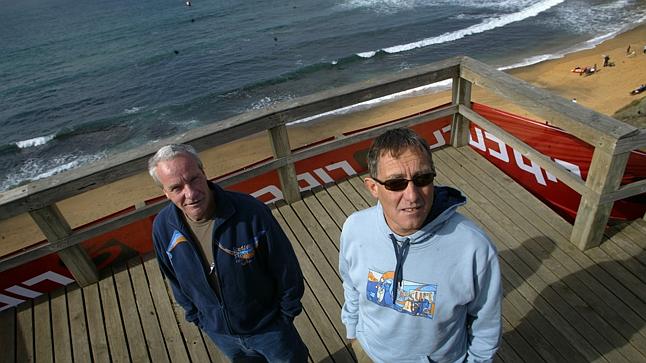
Founders of Rip Curl Brian Singer and Doug Warbrick at Bells Beach. Photo: Paul Harris
It’s no secret that the businesses of Australia’s wealthy entrepreneurs are going through a challenging period of generational change. At Westfield, the transfer of operational power to Frank Lowy’s sons Peter and Steven is all but complete. At Seven Group, Kerry Stokes is carefully managing the rise of son Ryan. At David Hains’s Portland House Group, his sons are firmly in control. It’s the same story on Linfox, where Lindsay Fox hasn’t attended a board meeting in 20 years. Now, two of the coolest men to grace the Rich 200, Rip Curl founders Doug “Claw” Warbrick and Brian “Sing Ding” Singer, are facing up to their moment of generational change. According to a report from Business Day, the pair has stepped down as directors of the company they founded in the late 1960s and turned into a global giant in the surfwear industry.The move is hardly surprising given both men are in their 70s, but it does come after an interesting year for Rip Curl.
The business was put on the market in September last year. Initial reports suggested a price tag of between $400 million and 500 million.
However, the difficult retail conditions for surfwear brands, starkly highlighted by the troubles at rival group Billabong, forced the sale to be pulled in March.
At the time, Singer described public markets as a “a bit of a cesspit”. But Rip Curl has had its financial issues, with the company disclosing a $536.6 million half-year loss in February.
Singer and Warbrick will, of course, retain their 72 per cent shareholding in Rip Curl and plenty of influence over its future.
They will also face a big decision at some stage in the coming years.
But unlike Frank Lowy, Kerry Stokes or Lindsay Fox, there is no second generation of family members coming through to run the business. That means that some sort of trade sale or float will need to be examined again.
Indeed, removing the founders from the board could make that process easier, as a buyer might be less concerned they are getting a business intrinsically linked to its founders.
Stepping down from the board might be precursor to a bigger exit.
 About bambooinnovator
 Bamboo Innovator