What books do Chinese leaders read? Zeng Guofan, author of “Icy Discernment”
September 27, 2013 Leave a comment
What books do Chinese leaders read?
Thomas Friedman’s 2005 work “The World Is Flat” is the only foreign title on the top 10 list
Friday, 27 September, 2013, 3:17am
Amy Lichunxiao.li@scmp.com
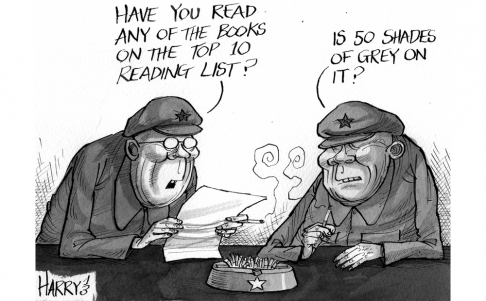
A top 10 reading list published by the State Organs Work Committee of CPC Central Committee offers a rare glimpse into one of the intellectual pursuits of China’s ruling elite.. The books voted to the top 10 list were chosen from among 103 titles, mostly non-fiction, recommended to party leaders and high government officials by the State Organs Work Committee over the past five years, a Beijing News report revealed on Thursday. The top 10 list is dominated by domestic authors discussing Chinese history, economics and politics. The only book by a foreign author to make the top 10 was American journalist and writer Thomas Friedman’s international bestseller The World Is Flat, A Brief History of the Twenty-First Century. Published in 2005, it was ranked seventh.The only other book among the top 10 not devoted to a China-related topic is the fifth-ranked The Rise and Fall of a Superpower by a group of Chinese authors. The book examines the history of the former Soviet Union and its collapse.
Among the newest batch of books recommended to leaders this year that seem to be gaining popularity are those on new technology, such the new international bestsellers Big Data by Oxford professor Viktor Mayer-Schnberger and Fabricated: The New World of 3D Printing by Hod Lipson and Melba Kurman.
Some present and former Chinese leaders, including Mao Zedong, are known to have been or be avid readers. Former Premier Wen Jiabao once said he had read Roman Emperor Marcus Aurelius’ Meditations over 100 times. The book became a national bestseller after his comment.
His successor and current Premier Li Keqiang has recommended The Third Industrial Revolution by American economist Jeremy Rifkin to top officials in Beijing. Li, according to Chinese media, prefers to read books by English-language authors in English.
The top 10 list:
Pain and Glory, by Jin Yinan, on contemporary Chinese history and how the Communist Party rose to power
The Historic 30 years, by Wu Xiaobo, on China’s experiments with capitalism between year 1978-2008 after Deng Xiaoping launched economic reforms
Zeng Guofan, by Tang Haoming, on the life of eminent Chinese official, military general, and devout Confucian scholar of the late Qing Dynasty
The Reading Life of Mao Zedong, by Gong Yuzhi, Feng Xianzhi, Shi Zhongquan et al.
The Rise and Fall of a Superpower: A Study of Historic Issues of the Soviet Union (1917-1991), by Shen Zhihua
Comments on Chinese Economics, by Justin Lin Yifu
The World is Flat, A Brief History of the Twenty-First Century, by Thomas Friedman
History of the Communist Party of China 1949-1978, book 2, by CPC Central Committee party history research centre
China Shock: The Rise of a “Civilized Country”, by Zhang Weiwei
The Track of History, Why is Communist Party Capable of Success?, by Xie Chuntao
 About bambooinnovator
 Bamboo Innovator