With Tastes Growing Healthier, McDonald’s Aims to Adapt Its Menu; fast-food chain said it would increase its offerings of fruits and vegetables and promote more nutritional options to children
September 27, 2013 Leave a comment
September 26, 2013
With Tastes Growing Healthier, McDonald’s Aims to Adapt Its Menu
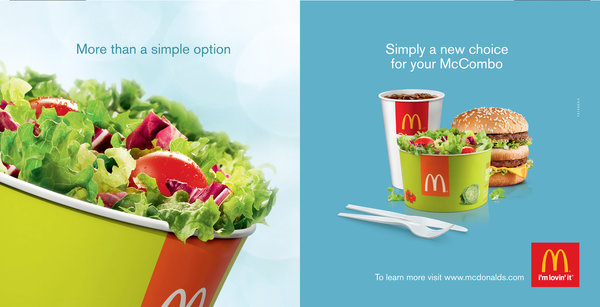
The company is working with its supply chains to ensure access to enough produce. The chain said it would use its arsenal of marketing tools to help customers understand the nutritional choices available. Under pressure to provide healthier meals, McDonald’s announced on Thursday that it would no longer market some of its less nutritional options to children and said it also planned to include offerings of fruits and vegetables in many of its adult menu combinations.It plans to make the changes to its menu in 20 of the company’s largest markets, which account for more than 85 percent of its overall sales, including overseas. But it will take three years or more to put them into place in about half the restaurants in those markets, and the remainder may not have the changes until 2020.
The offerings, which were announced in conjunction with the Clinton Foundation’s campaigns to reduce childhood obesity, are part of McDonald’s efforts to compete for health-conscious customers by featuring food choices that are lower in fat, salt or sugar content than its more traditional burger-and-fries options.
Although it has added salads, fruits and cut raw vegetables to its menu in recent years, the chain has experienced flat sales across much of its business in the United States and Europe, and forecast earlier this summer that little would alter the company’s financial picture anytime soon. The millennial generation, a key demographic that is being wooed by fast-casual restaurants like Panera Bread and Chipotle, in particular has not become a loyal patron of McDonald’s.
As part of the new menu changes, the company said it would use its arsenal of marketing tools, from menu boards to national television advertising campaigns, to help customers understand the nutritional choices available.
“Companies like McDonald’s play a powerful role in shaping the culture and environment that influences the health-related behaviors of young people,” said Howell Wechsler, chief executive of the Alliance for a Healthier Generation, an organization set up by the Clinton Foundation and the American Heart Association to reduce obesity in children, which has reached epidemic levels in the United States and is growing globally.
McDonald’s new campaign was featured at the Clinton Global Initiative on Thursday in New York. Former President Clinton noted that similar agreements with the big soda companies to curb the sales of sugary drinks in schools were aimed at reducing the amount of sugar children consume.
“If we want to curb the catastrophic economic and health implications of obesity across the world, we need more companies to follow McDonald’s lead and step up to the plate and make meaningful changes,” Mr. Clinton said in a news release.
This latest move by McDonald’s, which it estimated would cost about $35 million, is one in a series of steps it has taken toward changing its menu to suit contemporary tastes and to try to address health concerns raised for years by nutritionists and other critics about the fat and caloric content of its food.
It has added calorie counts to its menu boards in advance of a federal requirement for such labeling that goes into effect next year, and now sells options like egg-white McMuffins and premium wraps, which offer a choice of grilled rather than fried chicken rolled into a flour tortilla with lettuce, tomatoes and cucumbers.
The company also has faced rising competitive pressure from Subway, which has courted women aggressively with marketing promoting its healthier options, as well as from other chains. This week, Burger King unveiled a new way of making fries that reduced fat and calories, and earlier this year, that chain added a turkey burger to its menu.
“We’ve been trying to optimize our menu with more fruits and vegetables and giving customers additional choices when they come to McDonald’s,” said Don Thompson, McDonald’s chief executive.
He ticked off some of those additions, like smoothies, salads and whole grains in oatmeal. “This is a particular opportunity to partner with the Clinton Foundation and the alliance to leverage our scale and size and marketing prowess to be able to influence more purchases of fruits and vegetables,” Mr. Thompson said.
He said McDonald’s would be working with its supply chains to ensure it had access to enough produce and to add different types of produce to its lineup. “We don’t go down to the grocery stores,” he said with a chuckle. “It does put some strain on the supply chain, but one of the great things about this partnership is that we have some time to make sure there are ample fruits and vegetables for us to use.”
Customers choosing one of its “value meals,” which typically include a sandwich or wrap, French fries and a drink, will have the option of having a side salad or a piece of fruit or a vegetable in lieu of the fries.
On its menu boards and in-store promotions, and through advertising campaigns, McDonald’s said it would promote juice, low-fat milk and water as the drink choices for its Happy Meals for children, although customers would still be able to buy soda.
It also plans to promote fruits and vegetables in “fun ways” on its Happy Meals packaging, with advertising aimed at children to include messages about nutrition and well-being.
McDonald’s said its compliance with these commitments would be verified by a third-party institution.
 About bambooinnovator
 Bamboo Innovator