James Packer’s former money man shares the billionaire’s top tips: You only need one or two very good ideas per year
September 28, 2013 Leave a comment
Matthew Smith Reporter
James Packer’s former money man shares the billionaire’s top tips
Published 27 September 2013 10:13, Updated 27 September 2013 10:14
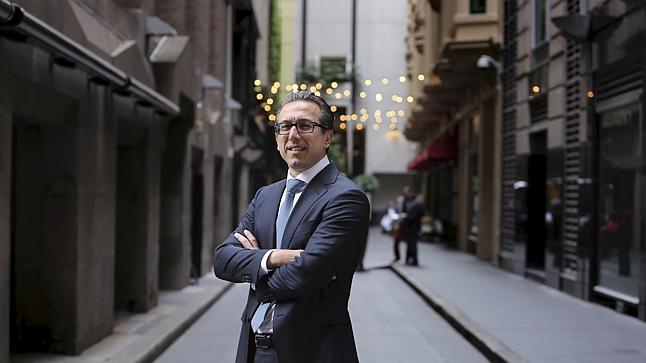
Paul Skamvougera: You only need one or two very good ideas per year
It’s been a rapid rise for Paul Skamvougeras, who took over from Perpetual’s star fund manager John Sevior in July 2011. Despite his background in managing money for James Packer, investors weren’t immediately convinced with the replacement. “He might be good but is he Sevior good?” they asked. Fast forward two years and its “John who?” after “Skamma” notched up a 31.2 per cent return to July 31. Now he’s been asked to step into the breach once more following the departure of Charlie Lanchester. Today Skamvougeras talks about his three biggest positions and what he learnt from James Packer. MS: You run three funds at Perpetual, two with a long/short strategy. How do you manage different styles?
PS: The philosophy is the same across all the funds. If I’m doing work on a particular company and buy shares, I typically buy it across all the funds; whether it’s a long-only or a long/short fund, doesn’t matter. The difference is on the short side and how you set your portfolio: usually you can take a bit more active risk on your long/short portfolio because you have the ability to mitigate some of the risk taken with the short book.
What’s your approach to short positions?
We approach shorting from a fundamental viewpoint, while trying to ascertain an angle on a stock based on a bottom-up approach. I think a lot of our competitors are event-driven on the short side. We take a longer-term view on shorts. I think managing the short portfolio is very important because, when a short goes against you, it becomes a larger part of your portfolio, so it’s very important.
You started betting against mining services companies a year-and-a-half ago, has your view changed about that segment?
We don’t usually look at sectors and say “that’s a short”, but in mining services we have been early, and in the past 12 to 18 months we’ve seen a de-rating of those companies. We think mining investment has peaked in Australia and so this trend will continue for a while. I think any supplier of services to BHP, Rio, Fortescue, Anglo, Glenstrata, is going to feel the pinch. It reminds me of the grocery chains Woolworths and Wesfarmers and how successful they have been at extracting value from their suppliers; I think the mining companies are going to continue to do the same.
So mining services remains your biggest short?
It has been over the past 12 months. Yes, we feel there is some risk still and, therefore, opportunities for us on the short side among some of the higher private equity names.
The top 10 positions in your concentrated fund are dominated by large cap banks and mining companies. What do you think of large caps in this portfolio?
Our investors expect an above-benchmark return, so with a stock like BHP, which is something like 10 per cent of the index, you need to have a really strong conviction view not to hold it. The risk of not holding it and it performing can really affect portfolio performance.
The way I look at the portfolio is my relative weights versus the index. On the concentrated equities fund, if you look at my active bets versus the index, you see a very different portfolio. My tilts are: I’ve been very long IAG; very long Crown; long on Oil Search. And when I say long, I mean a much more active weight versus the benchmark.
You managed money for the Packer family’s investment company CPH. Any special insights into Crown?
A couple of things stand out about Crown: they’ve got great management, and you can see that in the most recent results: they’ve managed costs extremely well and produced a good result in what is a tough economic environment for their Australian casino business. Their growth potential in NSW is very interesting, also the overseas exposure to the Macau market is very attractive.
What about Crown in terms of its local development opportunities relative to Echo?
I also own Echo Entertainment, but nowhere near to the same extent as I own Crown. I think Echo has six years to get its act together and to become a better competitor before the arrival of Crown at Barangaroo.
For Crown, the interesting next data point is how much is Barangaroo going to cost, and then from there, working out where they are going to capture their business. When you look at the figures, you would argue there is a big untapped market in Sydney that Echo hasn’t really taken advantage of and I think that’s what Crown is eyeing; not just the international VIP players, but also the premium players in NSW and Sydney.
Is there anything you learnt from James Packer you’ve brought with you to Perpetual?
One of the things I’ve learnt is that you only need one or two very good ideas per year, and if you can uncover those ideas, don’t be afraid to invest the capital. You only need one or two very good ideas to drive performance, and every year I think you can find those good ideas. Also, in terms of setting a portfolio: yes, it’s about stock picking but it’s also about strategy. Particularly in the last couple of years what you leave out of the portfolio is as crucial as what you include.
What’s been your best idea this year?
IAG has been a spectacular performer this year. At the start of the year they were very unloved; we thought they had a great management team. The market was focusing on the UK business; at the time it was making losses and the market wasn’t impressed with that and I think the market overly focused on that part of the business and missed the part that drives the value within IAG, and that’s the Australia/New Zealand direct insurance business.
It’s been two years since you stepped into legendary investor John Sevior’s shoes, do you feel like you’ve made the position your own?
Well, I’m thankful for the opportunity first and foremost. At the start there were a lot of people who were concerned because they hadn’t heard my name and they didn’t know what kind of investor I was. I think interaction with investors now and with new investors is a little better given the couple of years of performance. I came back to Perpetual because I kept in contact with John and Matt [Williams] who is now head of equities. I think it’s an environment that suits me because it’s a good team environment and no egos. At the time I took it over I was a bit apprehensive taking over, but I’m starting to enjoy the opportunity now.
 About bambooinnovator
 Bamboo Innovator