Negotiation Tactics: The 10 Minute MBA Course On Negotiation

SEPTEMBER 9, 2013 by ERIC BARKER

Negotiation Tactics: The 10 Minute MBA Course On Negotiation

Want to learn the negotiation tactics of an MBA? I’ve cleaned up and distilled notes from the excellent negotiating course I took in MBA school taught by MIT lecturer John Richardson.

Preparation

Always, do your homework. Success in negotiation is strongly correlated with time spent preparing. Preparing in a group helps; others will come up with things you didn’t. Be ambitious. There’s usually a connection between aspiration level and what people get. (Obviously, you can go too far, so look at your benchmarks.) It’s very valuable to have things you don’t want in a negotiation so you can give them away for things you do. Read more of this post

Retailers Paul Zahra and Mark McInnes among Australia’s ‘least narcissistic’ CEOs according to an analysis of speech patterns by the Macquarie Graduate School Of Management

Michael Bailey Deputy editor

Retailers Paul Zahra and Mark McInnes among Australia’s ‘least narcissistic’ CEOs. Which sector has the biggest egos?

Published 11 September 2013 11:44, Updated 12 September 2013 07:32

They might operate at the more glamorous end of the economy but David Jones chief Paul Zahra, and his predecessor turned Premier Investments boss Mark McInnes, are among the 10 least narcissistic CEOs of ASX-listed large companies, according to an analysis of speech patterns by the Macquarie Graduate School Of Management. The MGSM measured the personal pronoun use of 100 CEOs, among Australia’s 140 largest listed companies, in the Q&A sessions of analyst briefings used to discuss their company’s earnings during the reporting season just past. The narcissism score for each CEO was the ratio of first person singular pronouns to total first person pronouns used in their speech. To avoid embarrassment and lawsuits, the MGSM has not named Australia’s most narcissistic CEOs, but have named the least egotistical bosses. In ascending order they are: Read more of this post

ASX100 CEOs: Their path to the corner office

ASX100 CEOs: Their path to the corner office

24 September 2012 Myriam Robin

Want to be a CEO? Being an executive is a crucial first step, but not all leadership roles are likely to lead to the corner office. LeadingCompany analysed the backgrounds of the ASX100 CEOs, and discovered most were promoted after delivering results in their own little fiefdom. The rest of them were chief operating officers and chief financial officers, leaving other C-suite positions out in the cold. Australia’s top boards are opting for leaders who’ve either already demonstrated leadership success, or who bring operational mastery to the chief role. Read more of this post

The product as market research: The lower cost of digital prototyping helps innovators test lots of ideas simultaneously

September 11, 2013 5:25 pm

The product as market research

By Ian Sanders

In a set of studios close to London’s Old Street roundabout, Stef Lewandowski and his team are working on changing how digital products are built and tested. What sets Mr Lewandowski, co-founder of Makeshift, apart from many of his neighbours in London’s tech community is that his business releases a new product each month, a rate that it achieves by developing multiple ideas simultaneously rather than focusing on one single product. Read more of this post

Scientists create reprogrammable mouse in stem cell breakthrough, opening a new way to regenerate failing tissues in patients with diseases ranging from heart failure to diabetes

September 11, 2013 6:04 pm

Scientists create reprogrammable mouse in stem cell breakthrough

By Clive Cookson, Science Editor

Scientists in Spain have produced the world’s first embryonic stem cells within a live animal rather than in a laboratory dish. The experiment with mice at the National Cancer Research Centre in Madrid could open a new way to regenerate failing tissues in patients with diseases ranging from heart failure to diabetes. Therapeutic applications – for example to repair damaged spinal cord or make new insulin-producing cells – are distant. Even on the most optimistic assumptions clinical trials in people are unlikely to start in less in than five years, according to Dr Serrano. Read more of this post

Vietnam Property Market Struggles

September 12, 2013, 7:02 AM

Vietnam Property Market Struggles

By Nguyen Pham Muoi

HANOI — Vietnam’s property market is sluggish, reflecting a rise in inventory because of slow sales of newly built apartments Hanoi, Ho Chi Minh City and other big cities. That is the conclusion of  former Deputy Minister Dang Hung Vo of National Resources and Environment, the office responsible for land management in the country. The sluggishness coincides with some financial help from the government for low-income and other buyers to try to stimulate the market. But, property specialists say, the government incentives are too small to make a difference. And other problems – such as Vietnam’s traffic jams, high taxes, and governmental policies that discourage foreign investors – have meant that foreign buyers haven’t been rushing in to pick up property at discount prices. Read more of this post

Patent Fight Erupts Over Kids’ Fad; Amid a Bracelet-Crafting Craze, a Legal Battle Has Begun Over a Tiny Plastic Clasp

September 11, 2013, 7:51 p.m. ET

Patent Fight Erupts Over Kids’ Fad

Amid a Bracelet-Crafting Craze, a Legal Battle Has Begun Over a Tiny Plastic Clasp

SARAH E. NEEDLEMAN And ADAM JANOFSKY

MK-CG204_SBRAIN_G_20130911191946 MK-CG203_SBRAIN_G_20130911185946

Rainbow Loom says it has sold more than 1 million bracelet kits. Rainbow Loom’s creator, Cheong Choon Ng, has been mired in legal disputes over his bracelet-crafting kit.

Just 6 millimeters wide, a plastic C-shaped fastener enables kids around the U.S. to connect loops of colored rubber bands to form bracelets. Now, that clasp is at the center of a legal dispute among the entrepreneurs and retailers cashing in on the hottest crafting craze in years. In August, the founder of three-year-old Rainbow Loom—a rubber-band jewelry-making kit that is a blockbuster seller this fall—sued rival Zenacon LLC, claiming it copied the “distinctive trade dress” of Rainbow Loom’s “unique” C-shaped clips with its competing FunLoom product. Read more of this post

Teaching Entrepreneurship Is in the Startup Phase; Students are clamoring for instruction, but it’s hard. There are no algorithms for success

September 11, 2013, 7:29 p.m. ET

Teaching Entrepreneurship Is in the Startup Phase

Students are clamoring for instruction, but it’s hard. There are no algorithms for success.

BILL AULET

Forget medical school or law school. These days, record numbers of high-school and college students say they aspire to be entrepreneurs. At Yale University, for example, over 20% of the undergraduates indicate that they are interested in pursuing entrepreneurship as a career. Compare that with 1980, the year I graduated from Harvard. I didn’t know what the word “entrepreneur” meant—and neither did any of my friends. There is good reason for this trend. Traditional career paths no longer offer the security they once seemed to guarantee, and startups promise young people independence, control and the possibility of making good money. Read more of this post

Vinod Khosla: 70-80% Of VCs Add Negative Value To Startups; In The Next 10 Years, Data Science Will Do More For Medicine Than All Biological Sciences Combined

Vinod Khosla: 70-80% Of VCs Add Negative Value To Startups

KIM-MAI CUTLER

posted 11 hours ago

Vinod Khosla, one of the co-founders of Sun Microsystems who later went on to create Khosla Ventures, says that the vast majority of VCs aren’t in a position to offer decent advice to startups. In fact, most of them probably hurt startups, he argued. TechCrunch founder Michael Arrington prodded Khosla to single out VCs that were horrible on boards. “Who is the VC who is the most full of shit that you’ve ever heard?” Arrington asked. “I would be offending too many people,” Khosla retorted. “Maybe some percentage that’s substantially larger than 95 percent of VCs add zero value. I would bet that 70-80 percent add negative value to a startup in their advising.” He said that most VCs “haven’t done shit” to know what to tell startups going through difficult times. “I don’t know a startup that hasn’t been through tough times,” he said. He said that founders should listen politely and just do what they want to do anyway. He said of his approach toward helping entrepreneurs: “I give them advice, but I tell them what I’m uncertain about. I’m confident that I screwed up more often than most people in this room. Hopefully, I can advise entrepreneurs to avoid mistakes. But you can never be sure if you’re trying something new and unreasonable.”  Read more of this post

“The C in 5C does not mean ‘cheap’ as I had hoped. It means clueless, as in clueless about how the vast majority of new smartphone users are paying for their phones.”

FRED WILSON: Apple Is ‘Clueless’

JAY YAROW SEP. 11, 2013, 2:49 PM 10,453 44

Influential venture capitalist Fred Wilson is not happy about Apple’s iPhone 5C. In a post he writes, “The C in 5C does not mean ‘cheap’ as I had hoped. It means clueless, as in clueless about how the vast majority of new smartphone users are paying for their phones.” For the past few months, Wilson has been saying Apple should release a low-cost iPhone to slow the ascent of Google’s Android operating system. Android is now powering 80% of smartphones on the planet, and Wilson isn’t comfortable with one company having such a dominating influence over a key technology like mobile phones. There were a lot of rumors that Apple was preparing to go for market share with a cheaper phone. Obviously, that didn’t happen. It didn’t change anything about its pricing plans. The iPhone 5C is $99 with a two-year contract, or $549 without a contract in the U.S. In China, where the smartphone market is booming (and Apple is getting whooped) the iPhone 5C will cost over $700. “The reality of much of the world is that people don’t sign two year contracts like we do here in the US,” says Wilson. “They buy pre-paid sim cards and stick them into unsubsidized phones. And on that basis, the 5C is a big disappointment.” Read more of this post

Nice startups finish last: what happens when VCs don’t want you

Nice startups finish last: what happens when VCs don’t want you

BY CARMEL DEAMICIS 
ON SEPTEMBER 11, 2013

Matt Cooper is not your typical founder. He dropped out of high school when he was sixteen and joined the circus life. He started juggling at parties and festivals to make money and developed his own act: escaping a straight jacket wearing thirty pounds of chains. One act led to another, and he eventually traveled across Europe performing his variety show. Decades later, Cooper (who goes by Coop) now runs a bootstrapped startup called Addroid which is on target for a two million run rate this year. Get this: he makes video banner ads. The dreaded, boring banner ad, but sub out the static JPEG for a commercial. It’s about as far from the life of a nomadic street performer as one could get. “If there’s anything less sexy than a banner ad let me know,” Coop says. Read more of this post

Google’s Uber investment an insight into its future

Google’s Uber investment an insight into its future

PUBLISHED: 1 HOUR 42 MINUTES AGO | UPDATE: 0 HOUR 57 MINUTES AGO

In cities such as New York, there have been ongoing regulatory battles between tech ­start-ups and taxi regulators. Now we know why. Technology threatens to upset the taxi business age old business model in more ways than one.  Photo: Bloomberg

MATTHEW YGLESIAS

Google’s eye-popping $258 million investment in the car-hailing app company Uber made headlines recently. It’s the search giant’s biggest-ever venture capital investment, and it gives a much-discussed but rather small-scale company a delirious $3.5 billion valuation. But so far, the commentary on the deal – which has been mostly focused on bubble speculation and start-up mania – has missed the real story. Read more of this post

Anatomy app gives users a better understanding of the human body

Anatomy app gives users a better understanding of the human body

BY TOMOKO OTAKE

STAFF WRITER

SEP 10, 2013

Back in highschool, I was in the middle of basketball practice, when I suddenly felt an acute pain in my knee. I had no idea what had happened to me. After visits to several different clinics, none of which could identify the problem, I finally found an orthopedist who accurately guessed the cause of my pain: The anterior cruciate ligament — one of four major ligaments of the knee, which controls anterior movements of the tibia — had been severed. Read more of this post

Family offices talk a lot about club deals, but are they really happening, or just figments of fund managers’ imaginations?

CLUBBING TOGETHER

ARTICLE | 11 SEPTEMBER, 2013 05:07 PM | BY JEREMY HAZLEHURST

Club deals are all the rage. At least in theory. Many families are sick of paying fees to asset managers who stick their money in a black box, wave a magic wand over it and then, well, find that the money has vanished in a puff of smoke. People with burned fingers are, predictably, keen to cut out the middleman and invest directly. The idea of teaming up with other like-minded family offices to make direct private equity-style investments has an evident appeal. But club deals are not happening as fast as you might expect. “They are a bit like sex,” says David Barbour, co-head of private equity at Fleming Family & Partners, “it’s talked about more than it actually happens.” He points out that it’s hard to know how many deals are getting done, because they are off-market, which is after all “one of the attractions of doing club deals for family offices”, but suspects that the reality doesn’t match up to the desire. Read more of this post

Students Learn Better From Professors Outside Tenure System

September 11, 2013, 1:31 PM

Students Learn Better From Professors Outside Tenure System

By Khadeeja Safdar

Tenured professors at higher education institutions are certainly given more prestige than other lecturers. But are they better teachers? In a new working paper published by theNational Bureau of Economic Research, researchers David N. Figlio,Morton O. Schapiro and Kevin B. Soter find quite the opposite — that is, tenured professors or those on their way to tenure don’t enhance student learning as much as lecturers outside the tenure system. Read more of this post

SocGen said to explore sale of Asia private bank for $600 million (or valuation of 3.8-4.6% of its $13-16 billion AUM vs valuation of 1% of AUM for fund managers

SocGen said to explore sale of Asia private bank

12:53am EDT

By Saeed Azhar and Denny Thomas

SINGAPORE/HONG KONG (Reuters) – Societe Generale, France’s No. 2 listed bank, is exploring the sale of its Asia private banking arm, people familiar with the matter told Reuters, seeking to exit a market where small managers are getting hit by rising costs and competition. The Singapore-based division could fetch around $600 million, the people familiar said, though the actual sale price has yet to be determined and may exceed that figure. The sources declined to be identified as the discussions are confidential. Read more of this post

Southeast Asia is becoming China’s version of Florida for retirees

Southeast Asia is becoming China’s version of Florida for retirees

By Gwynn Guilford @sinoceros September 11, 2013

Since last year in China, people have been retiring faster new workers are entering the workforce. Fourteen percent of the population is now at least 60 years old, and at this pace, China’s total population will start to decline in 2030. And now even some of those retirees are contributing to population loss, increasingly spending their twilight years in Thailand, Malaysia and the Philippines, according to a recent report in China’s state-run Global Times (GT). Thailand is already a big favorite among Chinese people; it was China’s fourth most-popular tourist destination in 2012, while Malaysia and the Philippines came in at #10 and #20, respectively. Read more of this post

Rampant IV use leads to 390,000 deaths a year in China

Rampant IV use leads to 390,000 deaths a year in China: report

Staff Reporter

2013-09-12

CC08X0350H_2012資料照片_N71_copy1

Sick children with intravenous drips in a hospital in Beijing. (Photo/Xinhua)

Over 390,000 deaths in China are caused by unsafe intravenous therapy each year, with 200,000 of them being caused by fatal reactions to drugs delivered, the China Alliance for Safe Injection estimated. At least 100,000 persons died in the country each year after receiving IV fluid infusion, they added. Read more of this post

Shanghai violin maker uses ‘secret formula’ to produce quality instrument

Shanghai violin maker uses ‘secret formula’ to produce quality instrument

Staff Reporter

2013-09-12

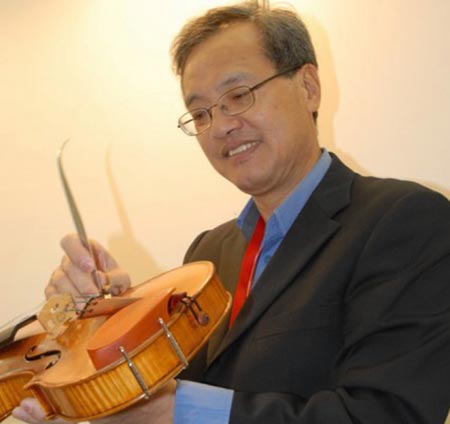
淩震華-161528_copy1

Ling Zhenhua adjusts the strings on one of his violins. (Internet Photo)

Although painting violins is a dying art, it has not stopped 59-year-old Chinese violin maker Ling Zhenhua producing top-quality instruments. Ling’s weapon is his own “secret paint formula,” which he refuses to disclose, reports the Shanghai-based Oriental Morning Post. At his workshop in Shanghai’s suburban Qingpu district, Ling shuts himself off from the outside world while making paint for his violins. It normally takes him one to two months to make one pot of paint and takes the craftsman six months to produce a complete violin. Ling said that a good violin needs to be coated with at least 30 layers. Read more of this post

Chinese Lenders Contribute 1/3 of Global Banking Profits: Ma Weihua

Chinese Lenders Contribute 1/3 of Global Banking Profits: Ma Weihua

09-11 16:54 Caijing

Chinese banks contributed 95.5 percent of indirect financing a decade ago, and the proportion fell to around 60 percent at the end of June.

Chinese banks are among the most profitable in the world, said Ma Weihua, Chairman of Wing Lung Bank Limited on the sidelines of the Davos Forum in Dalian. China is home to 100 of the world’s 1000 biggest banks last year, contributing one third of global profits in the banking sector, according to Ma, who was also former governor of China Merchants Bank. He warned at the same time, though, with new challenges ahead, Chinese banks should “have a sense of crisis” and be ready to embrace reforms. Financial markets excluding banks have developed quickly, he said. The bond market is booming, for example, second only to banks in size. Money has been flowing out of the banks through the financial system, making its way towards wealth management products, which amount to several trillions yuan, and trust loans at nearly 10 trillion yuan, as well as private capital market, which is reportedly worth 4-5 trillion yuan, according to Ma. The challenge of so called financial “disintermediation” is even more severe, Ma said, noting third-part payments. The number of companies with a third-part payment licenses has risen to over 100 in a market worth 2 trillion yuan, eroding the position of banks as a platform for payment, he said. Banks contributed 95.5 percent of indirect financing a decade ago, and the proportion fell to around 60 percent at the end of June.


Chinese insulin maker Gan & Lee investigating allegations it paid 800 million yuan in bribes

China drug firm Gan & Lee investigating allegations it paid 800 million yuan in bribes

Wednesday, 11 September, 2013, 6:50pm

Reuters in Shanghai

Sales representative claims bribes were to raise sales ahead of planned initial public offering

Chinese insulin maker Gan & Lee Pharmaceuticals said on Wednesday it was investigating allegations published in a newspaper that it spent around 800 million yuan (US$130.72 million) to bribe doctors to promote the firm’s drugs over five years. A sales representative for the privately held company, identified by the pseudonym Wu Dejiang, told China’s 21st Century Business Herald the bribes were aimed at raising sales ahead of a planned initial public offering in Shanghai. Read more of this post

China’s Banks Try to Curtail Alibaba’s Online Lending Ambitions

China’s Banks Try to Curtail Alibaba’s Online Lending Ambitions

By Lulu Yilun Chen – Sep 10, 2013

Banks in China aren’t going to make it easy for Internet upstarts like Alibaba Group Holding to break into financial lending. After fruitless attempts by the e-commerce giant to court China’s biggest lenders, the traditional banks say they’re now planning to expand their own online banking operations before Alibaba can get a foothold in the market. China Construction Bank tried to set up a pure Internet bank with Alibaba about five years ago, even finalizing a name and shareholder structure, Zhang Jianguo, CCB’s president, said at an analyst conference in Hong Kong on Aug. 26. That venture failed to bear fruit, he said. Beijing-based CCB didn’t immediately respond to an e-mailed query about the status of the Internet bank and why it failed to take off. Read more of this post

At Sina Weibo’s censorship hub, China’s Little Brothers cleanse online chatter

At Sina Weibo’s censorship hub, China’s Little Brothers cleanse online chatter

8:24pm EDT

By Li Hui and Megha Rajagopalan

TIANJIN, China (Reuters) – In a modern office building on the outskirts of the Chinese city of Tianjin, rows of censors stare at computer screens. Their mission: delete any post on Sina Weibo, China’s version of Twitter, deemed offensive or politically unacceptable. But the people behind the censorship of China’s most popular microblogging site are not ageing Communist Party apparatchiks. Instead, they are new college graduates. Ambivalent about deleting posts, they grumble loudly about the workload and pay. Read more of this post

The IPhone’s Secret Flights From China to Your Local Apple Store

The IPhone’s Secret Flights From China to Your Local Apple Store

By Adam Satariano  Sep 11, 2013

As Apple CEO Tim Cook unveiled new iPhones yesterday, a complex operation had already kicked into gear behind the scenes to send millions of the handsets to store shelves worldwide. The process starts in China, where pallets of iPhones are moved from factories in unmarked containers accompanied by a security detail. The containers are then loaded onto trucks and shipped via pre-bought airfreight space, including on old Russian military transports. The journey ends in stores where the world’s biggest technology company makes constant adjustments based on demand, said people who have worked on Apple’s logistics and asked not to be identified because the process is secret. Read more of this post

NQ Mobile: it pays to be less Chinese

NQ Mobile: it pays to be less Chinese

Sep 12, 2013 3:00am by Peter Vanham

“How many Chinese brands can you name?”, a Chinese host asked at the beginning of the WEF session on ‘Rebranding China’. His American interviewee, Richard Edelman, knew only three: Huawei, Air China, and Lenovo. But this isn’t Edelman’s problem. The limited awareness about Chinese brands is mostly due to the faulty branding strategy by Chinese companies going abroad themselves. What then, can they do about it? Read more of this post

Entrepreneurial internet users in China are taking full advantage of the massive garssroots user base of microblog giant Sina Weibo

Entrepreneurs cashing in on Sina Weibo

Staff Reporter

2013-09-12

Entrepreneurial internet users in China are taking full advantage of the massive garssroots user base of microblog giant Sina Weibo, reports the Guangzhou-based Nanfang People Weekly magazine. Sina Weibo, which turned four on Aug. 28, currently has more than 500 million users, including 46.2 million active daily users. In April this year, Chinese internet juggernaut Alibaba acquired an 18% stake in the company for US$586 million, placing Sina Weibo’s total market value at a staggering US$3.3 billion. The company’s stock has also risen from around US$40 to as high as US$140, forcing former critics who claimed that the microblog has no value to eat their words. Read more of this post

Apple Won’t Go for Broke in China

Updated September 11, 2013, 6:09 p.m. ET

Apple Won’t Go for Broke in China

The Company Is Trying to Maintain Its Industry-Leading Profitability

AARON BACK

MI-BY405_CHINAH_NS_20130911173308

Apple AAPL -5.44% still isn’t going all out for growth in China, preferring instead to protect its high profit margins. Its new devices simply aren’t priced to sell there—so much for the ballyhooed cheap iPhone targeted at consumers in emerging markets. China matters to Apple because, as developed markets become saturated with smartphones, the country stands out for its size and growth potential. Research firm Canalys estimates that total smartphone sales in China will reach 421 million units next year, and Apple has only 5% of the market. Read more of this post

Why Marks & Spencer has just 24 minutes to save itself; Marc Bolland has 24 minutes to save Marks & Spencer. That is the amount of time the average customer spends in the 129-year-old retailer’s stores

Why Marks & Spencer has just 24 minutes to save itself

Marc Bolland has 24 minutes to save Marks & Spencer. That is the amount of time the average customer spends in the 129-year-old retailer’s stores, according to new research the company has conducted.

The M&S Leading Ladies ad – many of the ‘chosen’ women model the retailer’s latest range of coats

By Graham Ruddick

6:03PM BST 10 Sep 2013

It is therefore the time that under-pressure M&S and its chief executive Mr Bolland has to persuade female shoppers to buy clothing from its new autumn and winter womenswear collection. The new range has received much attention during the summer months, including positive reviews of the clothing and the new marketing campaign titled “Britain’s Leading Ladies”, which is headed by Oscar-winning actress Dame Helen Mirren and Olympic gold medal boxer Nicola Adams. Read more of this post

Why Dollarama still won’t accept credit cards in its stores

Why Dollarama still won’t accept credit cards in its stores

Hollie Shaw | 13/09/11 | Last Updated: 13/09/11 3:17 PM ET
TORONTO – Dollarama executives are not convinced they should allow customers to shop with credit cards at Canada’s biggest dollar store chain. The company, which introduced debit cards as a payment option in 2008, has run pilot tests of credit card shopping through some of its point of sale terminals, but chief executive Larry Rossy said Wednesday he is not sold on accepting the debt-funded plastic. Read more of this post

Campari’s repositioning of its Aperol brand

September 9, 2013 6:19 pm

Campari’s repositioning of its Aperol brand

By Paolo Aversa

The story

In recent years, Italians have steadily reduced their spending on meals in restaurants, with a corresponding decrease in drinking spirits with their food. In addition, increasingly health-conscious Europeans were drinking less alcohol and doing so on fewer occasions. They were also interested in buying high-quality products generally.

The challenge

What sounds like good news for health indicators represented a threat to spirits producers, including Italy’s Gruppo Campari, one of the world’s leading makers of premium spirits. In 2005, 47 per cent of its sales were in Italy and 19 per cent were in Europe overall. Read more of this post