| Dear Friends and All,
Institutional Imperative and Differentiating Between the Tech Innovators, the Imitators, and Swarming Incompetents in Asia (Part 2)
“If I had asked people what they wanted, they would have said faster horses.”
– Henry Ford
“Good is not the absence of evil” was the common insight that value investors share as the Bamboo Innovator met up over coffee last week with two successful fund managers who run their own asset management firms when they flew in from London and India to the Omaha of Singapore at the Singapore Management University.
The emerging market meltdown in the last two weeks of January 2014 has prompted many quant-based value investors to do the usual screenings of stocks which crashed the most or those with the highest beta, with the expectation that they will bounce back the hardest on any market recovery. The stock screens usually display the small midcap companies. This can be a flawed tactical strategy since there is no “reversion to the mean” to correct mispricing and realize stock returns as the “insiders” and syndicates of these relatively less-liquid stocks of small midcap companies have already exited and there is no more underlying support for companies with propped-up financial numbers. Furthermore, as the stocks stay cheap when the business model hit a stall point due to the lack of an economic moat and reinvestment opportunities into the core business, Asian entrepreneurs and managers are often tempted to stray into other private businesses outside of the listed vehicles. And they would then tunnel out assets from the listed company to fund these private activities and interests from accounting money-go-round related-party transactions. In Asia, frauds and misgovernance are not static data to be uncovered but rather dynamic cases of unearthing early on the temptations and incentives that lead to the opportunities for acts of accounting manipulations and asset expropriations.
Yet, while the western-based accounting fraud detection techniques and tools in abnormal accruals or financial ratios analysis break down when it comes to Asian companies and one can adapt a fraud framework suitable for Asian stocks, the value investor can only eliminate the “evil” ones to limit downside risks – and still neglect and overlook the “good” compounders. And each time round when there is a credit crisis punctuating the markets, there is an increasing premium on valuation for wide-moat business models in Asia as the Innovators stood apart from the Imitators and the swarming Incompetents as was highlighted in Part 1 of the article in June 2013. As the thoughtful Indian-based fund manager commented, value investors in Asia need to take the leap to become more Munger-like in selecting companies with wide moats that can generate compounding returns rather than dwell with a false sense of security in the realm of statistically cheap stocks that turn out to be either fraudulent or value traps. The London fund manager commented that he had even profited from investing in some of these Chinese and Asian stocks that unravel later on in scandals by exiting fast after diligently uncovering information that makes him uncomfortable about the companies. Even though he made money, he still has the nagging feeling on whether there can be a systematic and consistent process to identify the genuine compounders, stocks that one can feel proud of and have peace of mind to put in the portfolio. And we all express interest to collaborate and write together the book Compounders Vs Extractors about value investing in Asia with friends and partners highlighting our experiences and cases with a usable and resilient framework of investing. Hopefully, the flames of the Bamboo can keep burning so that the Bamboo will belong, economically and emotionally, to the co-creators and friends and partners.
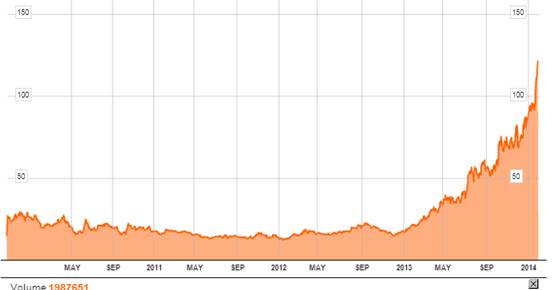
In Part 1 of the June 2013 article “Institutional Imperative and Differentiating Between the Tech Innovators, the Imitators and Swarming Incompetents in Asia”, we discussed about our trips to HK in November 2012 and June 2013 presenting to the CEO and top management of an Asian-listed tech company about “industry trends and business model innovations in the technology, media and telecom (TMT) sector”. At the Nov 2012 workshop, the Bamboo Innovator discussed about Wangsu Science & Technology (网宿科技) (300017 CH, MV $3bn) which disrupted the local content delivery network (CDN) services industry with their breakthrough value-added services in the open APIs platform that changed the long manual processes (usually taking one to two days) with changes to customer configuration to one that require only three to five minutes to enable such changes to take effect in the entire network to easily distribute mass content in a fast, secure and stable way. The painful transition in 2011 to a cloud-based infrastructure introducing premium value-added services greatly increases customer stickiness and switching cost to break apart from the rivals who are mainly “box” sellers competing on price. Since November 2012, Wangsu is up 620% to a market value of $3 billion while the Shanghai Composite index is down as the shadow banking crisis worsens.
Wangsu Science & Technology (300017 CH) – Stock Price Performance, 2009-2014
After our November 2012 workshop, the Bamboo Innovator stayed over in HK for a few more days to visit several HK innovators in our Bamboo Innovator Index amongst the over two thousand listed firms. One of them was…
<Article snipped>
Innovation is hard to predict when it will reach the tipping point for the business to take off and scale up… The common thread amongst these innovators is an observation that was made earlier by the Bamboo Innovator in last week’s article on Qualcomm’s Dr Jacobs and also by Paul Graham, the computer programmer entrepreneur who started Viaweb, a company acquired by Yahoo in 1998 to become the Yahoo Store, and a partner of Y Combinator, an accelerator for startup entrepreneurs. Graham said he “can tell after one minute if he has the next Zuckerberg or this guy is useless, and it is because they are open-minded, they’re flexible and they love, they are excited, they have a childlike interest.” Tapping into this childlike fascination with ideas and childlike energy into translating the ideas into reality is important since building a company will inevitably confront you with unexpected challenges, and your ability to adjust your path to deal with those surprises is critical – and we like to sense this in the entrepreneurs and companies whom we see to differentiate from the imitators and swarming incompetent value traps.
<Article snipped>
To read the exclusive article in full to find out more about the story of the other two HK-listed tech innovators, please visit:
- Institutional Imperative and Differentiating Between the Tech Innovators, the Imitators, and Swarming Incompetents in Asia (Part 2), Feb 3, 2014 (Moat Report Asia, BeyondProxy
|
“Bamboo Innovators bend, not break, even in the most terrifying storm that snap the mighty resisting oak tree. It survives, therefore it conquers.” |
|
| BAMBOO LETTER UPDATE | February 3, 2014 |
| Bamboo Innovator Insight (Issue 21) |
|
Dear Friends and All,
Institutional Imperative and Differentiating Between the Tech Innovators, the Imitators, and Swarming Incompetents in Asia (Part 2)
“If I had asked people what they wanted, they would have said faster horses.”
– Henry Ford
“Good is not the absence of evil” was the common insight that value investors share as the Bamboo Innovator met up over coffee last week with two successful fund managers who run their own asset management firms when they flew in from London and India to the Omaha of Singapore at the Singapore Management University.
The emerging market meltdown in the last two weeks of January 2014 has prompted many quant-based value investors to do the usual screenings of stocks which crashed the most or those with the highest beta, with the expectation that they will bounce back the hardest on any market recovery. The stock screens usually display the small midcap companies. This can be a flawed tactical strategy since there is no “reversion to the mean” to correct mispricing and realize stock returns as the “insiders” and syndicates of these relatively less-liquid stocks of small midcap companies have already exited and there is no more underlying support for companies with propped-up financial numbers. Furthermore, as the stocks stay cheap when the business model hit a stall point due to the lack of an economic moat and reinvestment opportunities into the core business, Asian entrepreneurs and managers are often tempted to stray into other private businesses outside of the listed vehicles. And they would then tunnel out assets from the listed company to fund these private activities and interests from accounting money-go-round related-party transactions. In Asia, frauds and misgovernance are not static data to be uncovered but rather dynamic cases of unearthing early on the temptations and incentives that lead to the opportunities for acts of accounting manipulations and asset expropriations.
Yet, while the western-based accounting fraud detection techniques and tools in abnormal accruals or financial ratios analysis break down when it comes to Asian companies and one can adapt a fraud framework suitable for Asian stocks, the value investor can only eliminate the “evil” ones to limit downside risks – and still neglect and overlook the “good” compounders. And each time round when there is a credit crisis punctuating the markets, there is an increasing premium on valuation for wide-moat business models in Asia as the Innovators stood apart from the Imitators and the swarming Incompetents as was highlighted in Part 1 of the article in June 2013. As the thoughtful Indian-based fund manager commented, value investors in Asia need to take the leap to become more Munger-like in selecting companies with wide moats that can generate compounding returns rather than dwell with a false sense of security in the realm of statistically cheap stocks that turn out to be either fraudulent or value traps. The London fund manager commented that he had even profited from investing in some of these Chinese and Asian stocks that unravel later on in scandals by exiting fast after diligently uncovering information that makes him uncomfortable about the companies. Even though he made money, he still has the nagging feeling on whether there can be a systematic and consistent process to identify the genuine compounders, stocks that one can feel proud of and have peace of mind to put in the portfolio. And we all express interest to collaborate and write together the book Compounders Vs Extractors about value investing in Asia with friends and partners highlighting our experiences and cases with a usable and resilient framework of investing. Hopefully, the flames of the Bamboo can keep burning so that the Bamboo will belong, economically and emotionally, to the co-creators and friends and partners.
In Part 1 of the June 2013 article “Institutional Imperative and Differentiating Between the Tech Innovators, the Imitators and Swarming Incompetents in Asia”, we discussed about our trips to HK in November 2012 and June 2013 presenting to the CEO and top management of an Asian-listed tech company about “industry trends and business model innovations in the technology, media and telecom (TMT) sector”. At the Nov 2012 workshop, the Bamboo Innovator discussed about Wangsu Science & Technology (网宿科技) (300017 CH, MV $3bn) which disrupted the local content delivery network (CDN) services industry with their breakthrough value-added services in the open APIs platform that changed the long manual processes (usually taking one to two days) with changes to customer configuration to one that require only three to five minutes to enable such changes to take effect in the entire network to easily distribute mass content in a fast, secure and stable way. The painful transition in 2011 to a cloud-based infrastructure introducing premium value-added services greatly increases customer stickiness and switching cost to break apart from the rivals who are mainly “box” sellers competing on price. Since November 2012, Wangsu is up 620% to a market value of $3 billion while the Shanghai Composite index is down as the shadow banking crisis worsens.
Wangsu Science & Technology (300017 CH) – Stock Price Performance, 2009-2014
After our November 2012 workshop, the Bamboo Innovator stayed over in HK for a few more days to visit several HK innovators in our Bamboo Innovator Index amongst the over two thousand listed firms. One of them was…
<Article snipped>
Innovation is hard to predict when it will reach the tipping point for the business to take off and scale up… The common thread amongst these innovators is an observation that was made earlier by the Bamboo Innovator in last week’s article on Qualcomm’s Dr Jacobs and also by Paul Graham, the computer programmer entrepreneur who started Viaweb, a company acquired by Yahoo in 1998 to become the Yahoo Store, and a partner of Y Combinator, an accelerator for startup entrepreneurs. Graham said he “can tell after one minute if he has the next Zuckerberg or this guy is useless, and it is because they are open-minded, they’re flexible and they love, they are excited, they have a childlike interest.” Tapping into this childlike fascination with ideas and childlike energy into translating the ideas into reality is important since building a company will inevitably confront you with unexpected challenges, and your ability to adjust your path to deal with those surprises is critical – and we like to sense this in the entrepreneurs and companies whom we see to differentiate from the imitators and swarming incompetent value traps.
<Article snipped>
To read the exclusive article in full to find out more about the story of the other two HK-listed tech innovators, please visit:
- Institutional Imperative and Differentiating Between the Tech Innovators, the Imitators, and Swarming Incompetents in Asia (Part 2), Feb 3, 2014 (Moat Report Asia, BeyondProxy)
|
| The Moat Report Asia |
|
“In business, I look for economic castles protected by unbreachable ‘moats’.”
– Warren Buffett
The Moat Report Asia is a research service focused exclusively on competitively advantaged, attractively priced public companies in Asia. Together with our European partners BeyondProxyand The Manual of Ideas, the idea-oriented acclaimed monthly research publication for institutional and private investors, we scour Asia to produce The Moat Report Asia, a monthly in-depth presentation report highlighting an undervalued wide-moat business in Asia with an innovative and resilient business model to compound value in uncertain times. |
|

 About bambooinnovator
 Bamboo Innovator