How I built Roses Only, why I sold it, and what’s next: founder James Stevens; Roses Only: The $30 million reason Jack Singleton is looking forward to Valentine’s Day
February 19, 2014 Leave a comment
Caitlin Fitzsimmons Online editor
How I built Roses Only, why I sold it, and what’s next: founder James Stevens
Published 13 February 2014 11:56, Updated 14 February 2014 09:07+font-fontprintEmail page
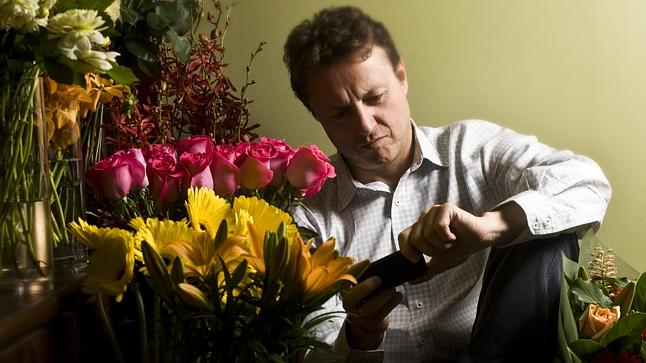
RosesOnly founder James Stevens is “bullish about Asia”. Photo: Nic Walker
For James Stevens, the sale of Roses Only in Australia and New Zealand to Jack Singleton’s FlowersCorp is only the end of the beginning.
Stevens retains the right to the Roses Only brand and owns the associated domain name in every market outside Australia and New Zealand and he has big growth plans for Asia.
This Friday will be the second Valentine’s Day for Roses Only Singapore and by the evening of February11, the business already had 50 per cent more orders than the previous year. “I’d like to think we may triple our revenues of last year,” Stevens says. “Of course it’s a new market so that’s not dissimilar to the trading history we had in the Sydney market when Roses Only started.”
Stevens says Hong Kong is the next port of call and he is also exploring opportunities in New York.
“I am very proud of founding the business in Australia but I also think it’s got significant legs outside Australia,” Stevens says. “I’m very bullish about Asia and in the future, plan to be investing a lot more in Asia. We’re partnering a company based in Singapore, Hong Kong and Kuala Lumpur [in a 50-50 joint venture].”
Roses Only also has a UK business and partners Moyses Stevens, which runs concessions in Harrods, but Stevens describes this as “peanuts” compared with Singapore. He has maintained a go-slow policy in the UK because of the sluggish economy there and in Europe more generally.
Stevens says he is also open to opportunities in Australia, even in the flowers business. He declined to comment on BRW’s estimate that the price tag for Roses Only Australia and New Zealand was around the $30 million mark.
“I really can’t talk to that at all,” Stevens says. “We’re not into talking about money – we’ve always been a private business, a private family and that didn’t matter to us,” Stevens says.
FlowersCorp, which is partly owned by John Singleton’s son Jack Singleton, plans to run Roses Only alongside 1300Flowers and Fast Flowers.BRWrevealed the news about the sale and Singleton’s plans for the business on Thursday.
Generational change
The reason for the sale was personal. Stevens had started the business with his father, who died from cancer in November after 11 months of illness.
“My father sadly passed away on 10 November last year, which is really one of the main reasons the business was sold,” Stevens says. “When we were approached by Jack and FlowersCorp, my advice to my father as a shareholder was to accept the offer, so my father prior to his passing knew exactly what his shareholding was worth, which was very important to me. We just wanted to know that there was a line in the sand, because in business you just keep going and going and going.”
Stevens and his father established Roses Only in 1995 but the family association with floristry goes back another 30 years. Stevens was going to the flower markets and helping with the buying from the age of five.
“Dad had started the Town Hall Florist back in 1964, so it was a family business that started in Town Hall station from very humble beginnings and had a number of flower shops in railway stations over the years,” Stevens says. “In 1995 I established Roses Only and brought Dad into that as well. Being a close-knit family, we didn’t look at the finances too much but I had his infrastructure support, there were flower shops already there and buying power already there.
Stevens did a degree in accounting and finance at the University of New South Wales but always worked in holidays, throughout school and university. He always knew he wanted to be involved in business but did not know that it would be in the flower industry until he spotted the opportunity.
“I lived and breathed flowers from the age of five and there wasn’t an outing or a meal around the table that wasn’t about the business, whether it was staff issues, or quality issues, or landlord-tenant issues. That’s what I grew up with.”
How RosesOnly became an online brand
Roses Only started with a store in Chifley Plaza in Sydney in 1995 and had a few other stores, some of them his father’s florists with new branding. But bricks-and-mortar retail expansion was never the long-term plan.
“We wanted to create a brand that would never be at the mercy of landlords,” Stevens says. “It predates internet, so it wasn’t for me about being an internet business, it was about being a brand. Let’s assume the internet had never been created, we would today be a business with a huge call centre taking telephone calls and executing work in the same fashion that we did in years past.”
Roses Only set up online in 1999 because Stevens saw advantage in being an early mover into e-commerce. It was the height of the dotcom boom and the brand benefited from the market exuberance about the internet.
“It was an exciting time but by virtue of being there and wanting to be a part of it, you naturally got a leg up because other big brands like telcos were all looking to use other brands to get their brand up,” Stevens says. “I recall a television campaign from Optus back in the late ’90s that had ourselves, a company called dStore, a company called Wine Planet and a company called Wishlist. It would have cost a bomb but Optus funded it to showcase brands they had on their portal. We got a lot of marketing and publicity for free just by being around at the beginning.”
It was all upside for Roses Only – the dotcom bubble burst in 2001, but it had no effect on the company because it had outside investors and was profitable. Consumers didn’t stop using the internet just because the sharemarket was in the doldrums.
Stevens’s ambition was to build a big consumer brand known for quality and he likes to describe Roses Only as “the Tiffany’s of flowers”. The quest for quality – including the longest stems and biggest heads – led the company to start importing product from Ecuador, Columbia and Kenya. He also points out that roses are a seasonal in Australia and are only grown year-round in a few places with altitude near the equator.
Diversifying beyond roses
The original plan was literally roses only, with at most fine Champagne or chocolates to be sold alongside. The first diversification came with other flowers because Stevens realised that if you could pack roses in dozens, then you could do the same with gerberas or tulips.
“What I liked about this business was that it was measurable and you knew that if you got 50 orders of a dozen roses, you had to buy 600 roses or perhaps you had to buy 650 to allow for quality control,” Stevens says. “Whereas with a traditional flower shop, you went along and just bought and hoped for the best and hoped that customers would come along and buy what you thought would sell. You were typically stuck with a lot of product and wastage.”
In 2005, the business created Fruit Only because they spotted a gap in the market and had systems already in place given that it was already in the business of perishable goods.
“Fruit is not as personal a gift as flowers; you can give it to a man, you can send it to a hospital, it can be a corporate gift, whatever,” Stevens says. “The other big thing is that our biggest spikes were Valentine’s Day and Mother’s Day for flowers … but Fruit Only gave us the opportunity to leverage off the Christmas spike for the first time.”
Hampers Only started a few years later to help increase the Christmas spike and then expanded into pampering and baby ranges. Stevens says he had received hampers as a corporate gift beforehand but was unimpressed by the quality and frequently left the contents out on the kitchen bench for his staff to take home.
Stevens says he does not plan to develop Fruit Only and Hampers Only outside Australia. He says brands like Harry and David in the United States and Harrods or Fortnum and Mason in the UK already serve that niche well.
“It would be arrogant for me to think I could go and replicate that overseas but what I do think we can do well is roses,” Stevens says.
Despite his business expansion overseas, Stevens has no interest in relocating.
“This is home, I’m a proud Australian, my children are growing up here and are schooled here and I’ve got no desire to domicile myself elsewhere in the world,” he says. “I’m also open to opportunities here.”
Advice for entrepreneurs
1. Don’t under-estimate: “I recently said to someone that it costs three times as much and takes three times as long to do what you think you’re going to do,” Stevens says. “So whatever you think you need in capital or time, think three times more.”
2. Don’t be arrogant: “One of the things I like to think I’m not is complacent or arrogant about the marketplace, because a lot of people think it’s a lot easier than it is. People I’ve seen come and go have invariably been arrogant; arrogant towards their suppliers, arrogant towards their staff, and arrogant about their ability.”
3. Remain independent: Stevens and his father retained a 50 per cent shareholding each up until the time of the sale. The business was funded out of cash flow and, on occasion, debt and Stevens believes this is preferable to taking on equity investment.
“I truly believe that if you can’t fund things yourself then don’t do them. I think you need to be able to start things on your own first and not be looking for other people’s money,” Stevens says. “It’s fraught with danger – I’ve seen too many people getting diluted and diluted and diluted and getting their direction swayed by the other people’s money because [the investors] want to have their input.”
4. Give back: He believes supporting a good cause also makes good business sense. Roses Only, and Stevens personally, have supported the Leukaemia Foundation and more recently the Australian Breast Cancer Foundation, both through in-kind support for fundraising events and donations of time and money.
“One of the proudest things the business did under my stewardship, and I hope these guys, maintain it, is that it’s always been a charitable brand,” he says. “That to me is our legacy and people would come into our board room and nothing made me prouder than having a thousand certificates of appreciation. And that’s also how we grew because we were a feel-good brand not only from receiving it but also because we were gave it away.”
5. Look after staff: “We were a family business and we managed to find jobs for everyone who wasn’t kept on. It was good dealing with our people.”
Caitlin Fitzsimmons Online editor
Roses Only: The $30 million reason Jack Singleton is looking forward to Valentine’s Day
Published 12 February 2014 12:08, Updated 15 February 2014 20:21
The purchase of Roses Only for an estimated $30 million means Valentine’s Day is set to be a bigger deal than usual for Jack Singleton, the eldest son of well-known businessman John Singleton.
BRW can reveal that FlowersCorp, owner of the 1300 Flowers and Fast Flowers brand, bought Australia’s biggest floral gifting business Roses Only in January. Singleton is a co-founder, director and the biggest shareholder of the privately owned FlowersCorp, slightly increasing his stake to about 25 per cent after a recent capital raising from existing shareholders.
“We’ve been surprised that no one’s picked up on it but we haven’t minded – we’ve been so frantic in the lead up to Valentine’s Day,” Singleton told BRW. “We’ve been waiting for someone to call.”
Roses Only, which also included sub-brand Hampers Only, was owned 50 per cent by entrepreneur James Stevens and 50 per cent by his father. Singleton says Flowers Corp has bought the Australian and New Zealand business, but Stevens retains the rights to the brand overseas and is still running Roses Only UK and Singapore with plans for expansion.
ALSO READ: How I built Roses Only, why I sold it, and what’s next: founder James Stevens
Singleton was reluctant to reveal the transaction size, but industry sources believe it was around the $30 million mark.
“I can’t disclose that but it was a lot of money,” Singleton says. “We’re not talking hundreds of millions but we’re talking enough that the previous owners would probably never have to work again.”
FlowersCorp, is headed by chief executive Alvin Ng who once ran the Dick Smith brand for Woolworths. The company founded the 1300 Flowers brand in 2005 but it has been on a serious growth trajectory since 2009. In 2010 the company bought Fast Flowers, founded by entrepreneur Jonathan Barouch who now runs social media software company Local Measure.
Founded in 1995, Roses Only is by far the biggest of the three brands. Singleton says FlowersCorp overall expects close to $50 million in sales this calendar year, Roses Only would account for about half that.
Singleton says the plan is to run a portfolio of brands, with efficiencies coming from integration at the back-end. The company has already migrated the Roses Only website and mobile site to its own IT systems, is leveraging its buying power with flower suppliers to secure better quality and faster delivery, and might combine fulfilment and warehouse facilities.
“Apart from a more efficient back end, no,” Singleton says. “We bought Roses Only because it’s the best-known floral gifting brand in Australia by a long way. It’s got a great group of customers and the product has been the best in Australia by a long way, from the quality of roses to the packaging. We’ll always be aiming to make it better but it’s just incremental improvement.”
Singleton says Fast Flowers caters for a younger crowd and is fairly Sydney-centric, while the 1300 Flowers brand is “the Myer of flowers” with broad appeal and a good regional presence.
“Both 1300 Flowers and Fast Flowers tend to be about birthdays, anniversaries and births, whereas Roses Only is more skewed towards romance,” he says. “They’ve got different customers and serve different needs.”
The romance angle makes this Friday, February 14, a particularly big day for the company, with many people using Roses Only as the default
“The Roses Only brand being very much romance-centric [makes] this is by far the biggest day and biggest week,” Singleton says. “Our other brands always had big Valentine’s Days but for Roses Only it’s a massive spike.”
Interestingly about 10 per cent of Roses Only’s customer base is offshore. Singleton says flowers and hampers tend to be long-distance gifts but the proportion is much higher for Roses Only than the other brands, partly because it was founded in the mid 1990s and won early brand recognition with customers later becoming expats.
 About bambooinnovator
 Bamboo Innovator