Some of the world’s largest banks are suffering from financial gangrene

Some of the world’s largest banks are suffering from financial gangrene

By Jason Karaian @jkaraian 5 hours ago

image001-8

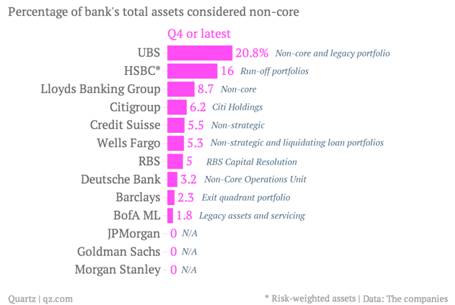
For critics of the financial industry, just about every big bank is a “bad bank.”

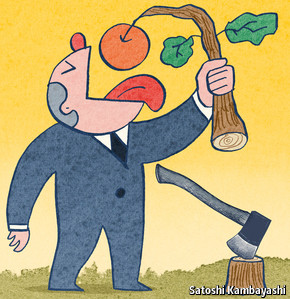
But a so-called bad bank is also a semi-technical term that describes a special division at a financial institution that happens to be packed with toxic assets, unwanted loans or entire business units hived off from a banking group’s “core” operations. Banks euphemistically dub these units “non-core,” “non-strategic” or a host of other names, steering investors away from considering them part of a bank’s future (and generating increasingly impenetrable earning reports in the process). This is how Lloyds Banking Group recently described its internal bad bank: Read more of this post

Henry Paulson: Why cities are the key to China’s success

Henry Paulson: Why cities are the key to China’s success

February 10, 2014: 5:00 AM ET

The world’s second-largest economy may have seen extraordinary growth, but that can’t continue without giving more of China’s rural workforce a stake.

By Henry M. Paulson

FORTUNE — China’s growth model is unsustainable. The costs of that growth are readily apparent in the country’s cities. Most pronounced are the stifling smog and serious water pollution. But vast energy consumption, health problems, density of population, and social stress are emerging problems exerting new pressures. Yet with a shrinking rural, agriculture sector — under 40% of the population — that’s now only about 10% of the Chinese economy, urbanization is both at the heart of China’s future growth and prosperity and posing a vexing challenge. If the country continues along the same path, the migration of another 300 million people into cities over the next couple of decades will impose a terrible price — not just on the Chinese people but on the rest of the world. Read more of this post

Controversial Malaysia state boss due to “retire”, but keep influence

Controversial Malaysia state boss due to “retire”, but keep influence

Monday, February 10, 2014 – 14:34

Reuters

KUALA LUMPUR – The chief minister of Malaysia’s Sarawak is expected to announce his resignation on Monday after 33 years in charge of the resource-rich state that have been key to keeping the national coalition in power but marred by corruption allegations and deforestation. Read more of this post

Online games go local for Southeast Asia’s booming market

Online games go local for Southeast Asia’s booming market

Sun, Feb 9 2014

By Brian Leonal

SINGAPORE (Reuters) – It was while hunting for monsters in a virtual cave that Bend Henmoko Madio met his community and realized why companies are adapting online video games to suit the different languages, tastes and mobile devices in Southeast Asia. Read more of this post

Toyota exit heralds end of Australia’s auto industry

Toyota exit heralds end of Australia’s auto industry

By Charles Riley  @CRrileyCNN February 10, 2014: 3:02 AM ET

HONG KONG (CNNMoney)

Toyota said Monday that it will close its factories in Australia by the end of 2017, a move that will cost thousands of jobs and leave the country without a major automobile manufacturer.

The decision to stop building Camry, Camry Hybrid and Aurion models in the country will result in approximately 2,500 lost jobs, the company said. Read more of this post

We were just doing our jobs: Pioneers; Older Singaporeans share about how they got involved in nation building

We were just doing our jobs: Pioneers

Older Singaporeans share about how they got involved in nation building

The Straits Times – February 10, 2014
By: Maryam Mokhtar

MR GOH LYE CHOON: The retired SAF colonel, 73, started the first national service battalion in 1967.

Among the more than 1,000 members of Singapore’s pioneer generation who were at the Istana yesterday morning was an army officer who trained the first SAF regulars and NS men, a hotelier who raised millions for the Community Chest, a teacher, and a prison warden who touched many lives. Read more of this post

Turmoil in financial markets: Goldilocks and the bears; Investors have been forced to reassess their rosy view

Turmoil in financial markets: Goldilocks and the bears; Investors have been forced to reassess their rosy view

Feb 8th 2014 | From the print edition

image001-7

EQUITY markets started 2014 in a buoyant mood, after 30% gains for American shares in the previous year. Investors seemed to believe that the worst of thefinancial crisis was at last over and that the global economy was returning to “Goldilocks” mode, with growth neither so strong as to cause inflation nor so weak as to squeeze profits, but “just right”.

However, markets have been hit by a classic one-two punch in the opening weeks of the year. First, emerging-market currencies came under pressure, with the Argentine peso and Turkish lira, among others, falling sharply and several countries opting toincrease interest rates. To add to the concern, Chinese economic data showed signs of weakness, with the purchasing managers’ index for manufacturing dropping to 50.5 in January, its lowest level in six months.

The second sandbagging came from America, where the purchasing managers’ index for manufacturing slumped to 51.3 in January from 56.5 in the previous month. That was accompanied by a 3.1% decline in vehicle sales in January compared with a year earlier and followed a surprise 4.3% fall in durable-goods orders in December. The news prompted a 2.3% fall in the S&P 500 index on February 3rd. Most analysts had dismissed weak employment numbers for December as an aberration due to exceptionally cold winter weather, but the run of disappointing statistics seems to have stirred second thoughts. Payroll data for January, which were due to be released after The Economist had gone to press, may assuage or amplify these misgivings.

Underlying all this is a third potential worry. The Federal Reserve’s policy of “quantitative easing” (creating money to buy assets) is widely credited with propping up equity markets as well as depressing bond yields. Now that the Fed is “tapering”—that is, gradually reducing—its asset purchases, will the markets come under prolonged pressure?

As always, psychology plays a big role. The Fed is still buying $65 billion of assets a month, a significant level of support. The “forward guidance” it is giving suggests that an increase in short-term interest rates is far from imminent. Nevertheless, if investors expect the eventual withdrawal of monetary stimulus to prompt a decline in markets, it makes sense for them to sell in advance so as to reduce their potential losses. Indeed, the strong returns achieved from stockmarkets in 2013 may be reinforcing this process; investors are happy to lock in their profits.

The profit-taking trend seems well under way in Japan, even though the Bank of Japan is expected to maintain monetary easing (see article). The broadly based Topix index fell by 4.8% on February 4th, having risen by 51% last year.

image002

Profit-taking is not really the problem in emerging equity markets, since they have been underperforming stockmarkets in the rich world for the past three years (see chart). The worst-hit countries in recent weeks have been those with specific problems: political turmoil (Ukraine), a wide current-account deficit and high inflation (Turkey) or simply poor economic policy (Argentina).

But Raghuram Rajan, a prominent economist who is now governor of India’s central bank, has raised a broader issue. In the wake of the financial crisis of 2007-08, capital flooded into emerging markets, in part because their economies lacked many of the problems seen in the developed world and in part because central banks in rich countries had slashed rates so far that investors went abroad in search of juicier returns. As this money flows back again, emerging-market currencies (including the Indian rupee) are coming under pressure. That presents the countries concerned with a dilemma: let the exchange rate slide and risk inflation, or increase interest rates to defend the currency and risk a recession. “The US should worry about the effects of its policies on the rest of the world,” Mr Rajan says.

Judging by the behaviour of markets in recent weeks, many investors have been consumed by the opposite concern: will the difficulties in emerging markets infect the developed world? Analysts at Macquarie, an investment bank, point out that five of the countries that have seen their currencies fall the most (Argentina, Brazil, India, Russia and Turkey) comprise 12% of the global economy. Around 18% of European corporate revenues derive from emerging markets, according to Goldman Sachs, and that rises to 24% for Britain and 31% for Switzerland.

About 15% of the profits of S&P 500 companies come from emerging markets. As yet, there is no sign of problems in corporate results. Bank of America Merrill Lynch estimates that, as is the custom, most American companies have beaten earnings forecasts for the fourth quarter. With 70% of companies in the S&P 500 having reported, earnings per share have risen at an annual rate of 7%.

But Wall Street does not have much margin for error. Profits are close to a post-war high as a proportion of GDP. Meanwhile, equities look expensive by two of the best long-term valuation measures, which are calculated in quite different ways. Price-equity ratios, which relate share prices to a ten-year average of profits, are now around 25, far above their long-term average of 16. Shares look equally expensive when measured against the cost of replacing companies’ assets, a metric known as the q-ratio.

Bad news for equities has proved positive for government bonds, even though the Fed is buying fewer of them. The yield on ten-year Treasuries dropped from 3% at the start of the year to 2.59% on February 3rd, and yields on ten-year German bonds fell from 1.94% to 1.56% over the same period. Whereas sentiment on equities may have been overoptimistic at the end of 2013, it may have been too pessimistic about bonds; inflation is lower than it was a year ago in America, Britain and the euro area. The Economist’s commodities index has dropped by 13.9% over the past year and copper, often seen as especially sensitive to economic conditions, is down by almost 15%.

The wobbles in financial markets so far this year can be explained as a timely reassessment of what had been an excessively rosy investor outlook. For the sell-off to turn into something more serious, it will probably need clearer evidence of a new economic slowdown, in either China or the developed world, or a significant hit to corporate profits.
 

I want Zendesk to be truly great. To revolutionise and democratise how customer service is done.

CEO Q&A: Michael Hansen, vice-president and Asia Pacific managing director at Zendesk

Published 10 February 2014 11:04, Updated 10 February 2014 12:09

image003-1

Michael Hansen admires General Sir John Monash as a leader.

What was your first job? Read more of this post

Advice for struggling businesses from Lisa Ho’s administrator

Michael Bailey Deputy editor

Advice for struggling businesses from Lisa Ho’s administrator

Published 07 February 2014 12:24, Updated 08 February 2014 03:44

image001-5

Gray’s Online, which sold Lisa Ho’s last 32 dresses, is also about to sell the fallen fashion empire’s rolls of vintage fabric – including rayon, which is no longer manufactured. Tamara Dean Read more of this post

10 Tips For Raising Happy Kids

10 Tips For Raising Happy Kids

ERIC BARKERBARKING UP THE WRONG TREE
FEB. 9, 2014, 8:53 AM 2,908

When you ask parents what they want for their kids, what’s usually the most common reply? They want their children to be happy.

Via Raising Happiness: 10 Simple Steps for More Joyful Kids and Happier Parents:

the well-being of children is more important to adults than just about anything else–health care, the well-being of seniors, the cost of living, terrorism, and the war in Iraq. More than two-thirds of adults say they are “extremely concerned” about the well-being of children, and this concern cuts across gender, income, ethnicity, age, and political affiliation. Read more of this post

‘Purple ocean’ strategy works for big Korean retailers; Some develop private brands or introduce unique products.

‘Purple ocean’ strategy works for big retailers

Some develop private brands or introduce unique products.

BY MOON BYUNG-JOO [angie@joongang.co.kr]

Feb 10,2014

image002-4

Park Bo-kyung, a 39-year-old homemaker, sighed deeply when she recently received the family’s electricity bill for December. It was 15,500 won ($14.40) higher than the previous month’s 46,760 won bill. She was convinced the bigger bill was a result of the government’s electricity rate hike that came into effect on Nov. 21. Read more of this post

Tan Sri Andrew Sheng: China’s credit boom raises flags on risk levels

China’s credit boom raises flags on risk levels

BY ANDREW SHENG AND XIAO GENG

FEB 9, 2014

Credit in China is growing at a breakneck pace, having increased from 125 percent of GDP in 2008 to 215 percent in 2012. Local-government debt has soared by 70 percent since 2009, reaching almost $3 trillion last June. This is raising serious concerns about the level of risk in China’s financial system. Read more of this post

Half of bankrupt sole proprietors in S. Korea in the 50s

Half of bankrupt sole proprietors in S. Korea in the 50s

2014.02.10 16:13:59

Nearly one out of two self-employed in South Korea who went bankrupt last year was in their 50s, data showed.
This largely came as a growing number of baby boomers (born from 1955 to 1963) start their business after retirement, but most of them went bankruptcy due to lack of preparation. This means more people are leading a gloomy life over the remaining years after establishing a business.  Read more of this post

KT ENS may file for bankruptcy if it fails to settle damages from a large-scale loan fraud committed by one of its workers in collusion with its subcontractors

2014-02-09 16:26

Loan scam too big for KT affiliate

By Kim Rahn
KT ENS may file for bankruptcy if it fails to settle damages from a large-scale loan fraud committed by one of its workers in collusion with its subcontractors.
With loans from banks and savings banks being estimated at 300 billion won ($279 million), the company with 57 billion won paid-in capital may not be able to repay the money if courts find it wholly responsible for the fraud. Read more of this post

Wikipedia vs. the Small Screen; Wikipedia, the online encyclopedia that depends on readers to create and edit its articles, is concerned about whether they will continue to do so on mobile devices

Wikipedia vs. the Small Screen

By NOAM COHEN

FEB. 9, 2014

The Wikipedia entry for the actor Philip Seymour Hoffman, who died this month, is edited on an iPhone. Wikipedia has been especially slow to adapt to a mobile world. Sara Krulwich/The New York Times Read more of this post

Intel wants to be inside mobile devices, too

Intel wants to be inside mobile devices, too

[CEO interview] ‘Nobody knows until a product is released to the market. Intel does hope to work with an influential customer, but nothing is confirmed so far.’

BY MOON GWANG-LIP [joe@joongang.co.kr]

Feb 10,2014

image002-3
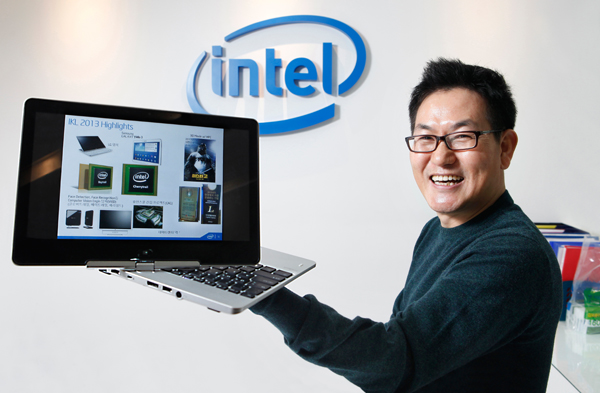
Lee Hee-sung, Intel Korea’s country manager, shows the company’s latest products at his office in Yeouido, Seoul. By Park Sang-moon

The decline of the global personal computer market appears to be more rapid than its emergence. On Thursday, Sony announced the sale of its PC unit, led by the well-known Vaio brand, to an investment fund from Japan.  Read more of this post

Massive open online forces: The rise of online instruction will upend the economics of higher education

Massive open online forces: The rise of online instruction will upend the economics of higher education

Feb 8th 2014 | From the print edition

image001-3

UNIVERSITIES have not changed much since students first gathered in Oxford and Bologna in the 11th century. Teaching has been constrained by technology. Until recently a student needed to be in a lecture hall to hear the professor or around a table to debate with fellow students. Innovation is eliminating those constraints, however, and bringing sweeping change to higher education. Read more of this post

Share options: The law of unintended consequences; When bosses take the short view

Share options: The law of unintended consequences; When bosses take the short view

Feb 8th 2014 | From the print edition

image001-2

EXECUTIVE share options were created in an attempt to align the interests ofmanagers and shareholders. In the 1970s and 1980s many investors had feared that executives were more interested in empire-building (in order to justify higher salaries and lavish expenses) than in generating returns for shareholders. Granting options was supposed to allow executives to benefit alongside investors from rises in the share price. Read more of this post

Fees for hedge funds and private equity: Down to 1.4 and 17; The cost of investing in alternative assets is falling-slowly

Fees for hedge funds and private equity: Down to 1.4 and 17; The cost of investing in alternative assets is falling—slowly

Feb 8th 2014 | From the print edition

image001

PHOENICIAN merchants kept a fifth of the profits generated from their seafaring adventures and paid out the rest to their financiers. So claimed Alfred Winslow Jones, the manager of the first modern hedge fund, who in the 1950s used the (perhaps apocryphal) precedent to finagle a 20% cut from his backers. Other managers subsequently added a 2% annual charge on the assets they invested to arrive at the “2 and 20” formula that became the standard for both hedge funds and private equity. Investors, who have long suspected that this arrangement enriches managers faster than their clients, are belatedly fighting back. They have succeeded in amending the formula to something more like “1.4 and 17”, at least for newcomers to the business (see chart). Read more of this post

When Linda Farrow founded her eponymous sunglasses brand in 1970 she quickly became one of the hippest names in fashion. Farrow shelved her business in the mid-1980s but since 2003 her son and daughter-in-law have been taking the resurrected label

THE FUTURE’S SO BRIGHT…I GOTTA WEAR SHADES

ARTICLE | 7 FEBRUARY, 2014 11:14 AM | BY TESS DE LA MARE

In their early 20s young couple Simon Jablon (left) and Tracy Sedino had the extraordinary good luck of stumbling across a hoard of vintage glasses – a mixture of Linda Farrow, Jablon’s mother’s former label, and other designer stock. Trainee fashion designer Sedino ditched her plans for further study so she and Jablon could bring the Linda Farrow brand back to life. Read more of this post

Japan’s trading houses look to new markets

February 10, 2014 3:04 am

Japan’s trading houses look to new markets

By Ben McLannahan in Tokyo

In the coastal town of Kushimoto, on the southern-most tip of Japan’s main island of Honshu, Mitsubishi Corp is rearing tuna.

The Tokyo-based company used to buy every bluefin it sold, fished out of the Atlantic or Mediterranean or closer to home. But last August it started selling its own, raised from juveniles artificially hatched three or four years earlier. Read more of this post

Why We Can’t Afford to Not Care About Politics

Why We Can’t Afford to Not Care About Politics

By Josua Gantan

 on 6:32 pm February 9, 2014.
Bad leaders are elected by good citizens who don’t vote. Sixteen years after the reformation in 1998, political apathy remains a threat to Indonesia’s democracy. The number of non-voters is on the rise. In 2004, the number of absent voters was at 23.3 percent, during the 2009 presidential election it increased to 39 percent. When probed deeper, disenchantment with the government underlies the political apathy that prevails among the people. Yet, there are strong reasons why Indonesians need to be politically engaged despite all the reasons to think otherwise. Read more of this post

Chinese credit crackdown felt overseas

February 9, 2014 7:21 pm

Chinese credit crackdown felt overseas

By Henny Sender in New York

China’s vast development bank has begun asking some international clients to postpone drawing down previously committed credit lines, in moves that highlight how strains on the country’s financial system are reverberating abroad. Read more of this post

US Biotech IPO fever stokes bubble fears

Last updated: February 9, 2014 1:35 pm

US Biotech IPO fever stokes bubble fears

By Arash Massoudi in New York and Andrew Ward in London

The fastest start to a year for US biotechinitial public offerings is stoking fears of a bubble amid concerns investors are taking risks on companies at the earliest stage of medical research.

Another eight biotech companies raised a combined $502m in US listings last week, setting a weekly record for the sector and continuing a boom that has seen the Nasdaq biotech index rise more than two-thirds in the past year. Read more of this post

China to Create Unified Pension System

China to Create Unified Pension System

Plan Looks to Provide More Central Government Funding to Poorer Regions

LIYAN QI

Updated Feb. 7, 2014 10:07 a.m. ET

BEIJING—China pledged Friday to create a unified pension system to boost consumption and encourage labor mobility, a step toward empowering its vast rural poor.

China’s State Council, or cabinet, said it planned to create a unified pension system for residents in both rural and urban areas. Funding would come from contributions from individuals, the central government, local governments and social institutions, the State Council said on the central government’s website. Read more of this post

Move Over, Rickshaw: Cambodia Launches Public Buses

Move Over, Rickshaw: Cambodia Launches Public Buses

By Suy Se

 on 2:17 pm February 9, 2014.

Phnom Penh. Motorcycles, cars, tuk-tuks and the humble rickshaw dominate its traffic-clogged roads, but now the Cambodian capital Phnom Penh is launching a new weapon in the fight against chronic congestion: its first public buses in over a decade. Read more of this post

Lessons in success from Eton and the Tiger Mother

February 9, 2014 4:17 pm

Lessons in success from Eton and the Tiger Mother

By Lucy Kellaway

Now we know why so many dyslexics and people who lost a parent young make it to the top

Ten days ago my husband went to a reunion at Eton College for the leavers of 1974. About 150 men crowded into the 15th-century chapel to belt out a quick “Praise my Soul the King of Heaven” before settling down to eat, drink and reminisce about schoolboy pranks while quietly trying to work out who had done best in the 40 years since then. Read more of this post

New Regulations Leave Buyout Shops Out on Their Own

February 9, 2014, 6:06 p.m. ET

New Regulations Leave Buyout Shops Out on Their Own

By Ryan Dezember

Most private-equity firms have to raise funds by sending executives around the world to drum up interest from investors. For years, executives at Ridgemont Equity Partners never had to leave Charlotte, N.C., home to both the buyout firm and its lone backer: Bank of America Corp. Read more of this post

Let weak banks die, says eurozone super-regulator

February 9, 2014 7:00 pm

Let weak banks die, says eurozone super-regulator

By Claire Jones, Sam Fleming and Alice Ross in Frankfurt

The eurozone’s new chief banking regulator has warned that some of the region’s lenders have no future and should be allowed to die, heralding a far tougher approach to the supervision across the currency bloc. Read more of this post

George Soros picks up $5.5bn as Quantum Endowment fund soars

February 9, 2014 10:00 pm

George Soros picks up $5.5bn as Quantum Endowment fund soars

By James Mackintosh

George Soros’s Quantum Endowment fund had its second-best year ever in dollar terms in 2013, adding $5.5bn to the billionaire’s fortune and putting Quantum back in top place among the most successful hedge funds of all time. Read more of this post