From Sick Man of Europe to Economic Superstar: Germany’s Resurgent Economy

From Sick Man of Europe to Economic Superstar: Germany’s Resurgent Economy
Christian Dustmann, Bernd Fitzenberger, Uta Schönberg and Alexandra Spitz-Oener
In the late 1990s and into the early 2000s, Germany was often called “the sick man of Europe.” Indeed, Germany’s economic growth averaged only about 1.2 percent per year from 1998 to 2005, including a recession in 2003, and unemployment rates rose from 9.2 percent in 1998 to 11.1 percent in 2005. Read more of this post

When Ideas Trump Interests: Preferences, Worldviews, and Policy Innovations

When Ideas Trump Interests: Preferences, Worldviews, and Policy Innovations
Dani Rodrik
Ideas are strangely absent from modern models of political economy. In most prevailing theories of policy choice, the dominant role is instead played by “vested interests”—elites, lobbies, and rent-seeking groups which get their way at the expense of the general public. Read more of this post

An Economist’s Guide to Visualizing Data

An Economist’s Guide to Visualizing Data
Jonathan A. Schwabish
Once upon a time, a picture was worth a thousand words. But with online news, blogs, and social media, a good picture can now be worth so much more. Economists who want to disseminate their research, both inside and outside the seminar room, should invest some time in thinking about how to construct compelling and effective graphics.

Winter 2014 Journal of Economic Perspectives’ Symposium on Manufacturing: US Manufacturing: Understanding Its Past and Its Potential Future

THURSDAY, FEBRUARY 6, 2014

Winter 2014 Journal of Economic Perspectives is Live!

The Winter 2014 issue of the Journal of Economic Perspectives is now freely available on-line, courtesy of the publisher, the American Economic Association. Indeed, not only this issue but all previous issues back to 1987 are available. (Full disclosure: I’ve been the Managing Editor since the journal started, so this issue is #107 for me.) I’ll probably blog about some of these articles in the next week or two. But for now, I’ll first list the table of contents, and then below will provide abstracts of articles and weblinks.

Symposium: Manufacturing
US Manufacturing: Understanding Its Past and Its Potential Future
Martin Neil Baily and Barry P. Bosworth Read more of this post

5 ways China’s WeChat is more innovative than you think

5 ways China’s WeChat is more innovative than you think

February 7, 2014

by Josh Horwitz

Tech in Asia has been covering WeChat, China’s most popular mobile message app, before it even had an English name. Meanwhile, international tech media outlets (including ourselves) have also been following the evolution of other messaging apps such as WhatsApp, Line, Facebook Messenger, and many, many others. Over the past year or so there’s been lots of talk about how these messengers are maturing into “platforms” – or, apps that users will use to buy things, and that business and organizations can use to reach an audience. Read more of this post

It’s a continent, actually: China’s external imbalances are as nothing compared with its internal ones

Feb 8th 2014 | HONG KONG AND YINCHUAN | From the print edition

image001

It’s a continent, actually: China’s external imbalances are as nothing compared with its internal ones

NINGXIA, an autonomous region inChina’s north-west, is home to 6.3m people. About a third of them are Muslims, descendants of travellers along the Silk Road. The region is keen to revive the kind of trade networks that created its unique ethnic mix, so that it can diversify an economy which relies too much on coal, metals and chemicals. Read more of this post

Learning to spin: At a Communist Party training school, functionaries learn how to handle more aggressive news media

Learning to spin: At a Communist Party training school, functionaries learn how to handle more aggressive news media

Feb 8th 2014 | SHANGHAI | From the print edition

IT WAS not a typical government press conference. A journalist had asked a mayor some pointed questions about the safety of a paraxylene chemical factory planned for her city—the same type of plant that has prompted environmental protests around China. The mayor dodged the question in standard government-speak when the reporter, a portly man in a checked shirt and blue jeans, rudely interrupted her: “Please answer my question directly.” The room erupted with laughter. Read more of this post

Vietnam’s biggest telco wants to acquire KakaoTalk for $5 billion

Vietnam’s biggest telco wants to acquire KakaoTalk for $5 billion

February 6, 2014

by Anh-Minh Do

According to an article in VNExpress today, the vice president of Viettel, Vietnam’s biggest telco, wants to acquire Korea-based messaging app KakaoTalk for $5 billion. Read more of this post

A different Bill Gates is returning to Microsoft

A different Bill Gates is returning to Microsoft

World | Nick Wingfield, The New York Times | Updated: February 06, 2014 20:14 IST

Seattle:  The last time Bill Gates played an active role at Microsoft, as chief software architect, he witnessed the company muffing its earliest efforts to become a major player in search, smartphones and tablet computers.  Read more of this post

Six Steps To Salvaging An Unproductive Day

Six Steps To Salvaging An Unproductive Day

LISA EVANSENTREPRENEUR
FEB. 5, 2014, 10:27 PM 2,748

We’ve all had those days when we have a million things to do, but can’t seem to get ahead on any of them. Not only do unproductive days detract from your business’ success, it can also have an effect on your well-being, affecting your mood and stress levels. While simply throwing in the towel, heading home and returning to the office refreshed the next day may seem an attractive option, there’s still a chance to turn around your day and boost your productivity. Read more of this post

Why South Korea Will Be The Next Global Hub For Tech Startups

 2/06/2014 @ 12:35PM 2,343 views

Why South Korea Will Be The Next Global Hub For Tech Startups

image003-1

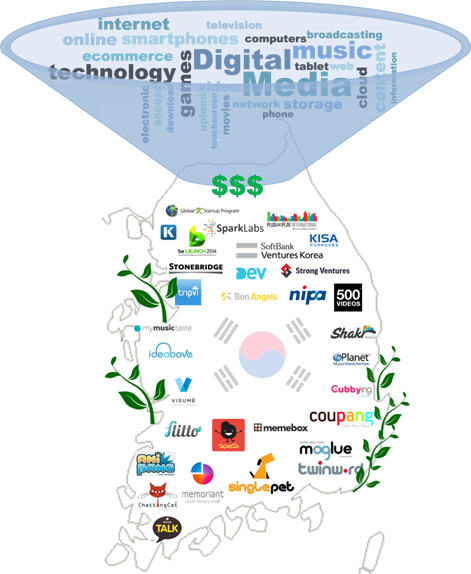
American business has long led the way in high tech density or the proportion of businesses that engage in activities such as Internet software and services, hardware and semiconductors. The US is fertile ground for tech start-ups with access to capital and a culture that celebrates risk taking. Other countries have made their mark on the world stage, competing to be prominent tech and innovation hubs. Israel has been lauded as a start-up nation with several hundred companies getting funded by venture capital each year. A number of these companies are now being acquired by the likes of Apple, Facebook and Google. Finland and Sweden have attracted notice by bringing us Angry Birds and Spotify among others. But a new start-up powerhouse is on the horizon – South Korea. Read more of this post

Why Coca-Cola invested in Keurig

Why Coca-Cola invested in Keurig

By Beth Kowitt, Writer February 6, 2014: 11:40 AM ET

A billion-dollar stake? Believe it. We get the details from Green Mountain CEO (and former Coca-Cola executive) Brian Kelley.

FORTUNE — Eyes rolled when Green Mountain Coffee Roasters (GMCR), best known for its single-serve pod Keurig brewing machine, first announced at its September investor day that it was building a system for cold beverages. Read more of this post

How 2014’s upbeat story turned into a scary thriller

Last updated: February 6, 2014 5:57 pm

How 2014’s upbeat story turned into a scary thriller

By Ralph Atkins

It is China that markets are now watching closest, writes Ralph Atkins

The story seemed so simple at the start of the year. Shares were rallying on optimism about a world economic recovery; US and German bond yields were widely expected to edge higher as the Federal Reserve tapered its asset purchases, or quantitative easing. Investors positioned accordingly. Read more of this post

A Catalog of Cancer Genes That’s Done, or Just a Start; As the Cancer Genome Atlas project, started in 2005, comes to an end, scientists are debating where cancer research should go next

A Catalog of Cancer Genes That’s Done, or Just a Start

FEB. 6, 2014

Carl Zimmer

Cancer is a disease of genes gone wrong. When certain genes mutate, they make cells behave in odd ways. The cells divide swiftly, they hide from the immune systemthat could kill them and they gain the nourishment they need to develop into tumors. Read more of this post

HP and Autonomy: a parable on due diligence

February 7, 2014 8:14 am

HP and Autonomy: a parable on due diligence

By Neil Collins

Autonomy’s technology allows computers to harness the full richness of human information, forming a conceptual and contextual understanding of any piece ofelectronic data”. Thus read a footnote to one of the company’s constant light drizzle of petty announcements in 2011 when it was a listed company, this one for an order from an un-named US bank worth $50m “over the next few years.” Read more of this post

Google buys 6% stake in Chinese PC maker Lenovo

7 February 2014 Last updated at 07:06

Google buys 6% stake in Chinese PC maker Lenovo

Google bought a near 6% stake in Lenovo for $750m (£459m), just a day after selling handset-maker Motorola Mobility to the Chinese PC maker.

According to a stock exchange filing, Google acquired 618.3 million Lenovo shares at $1.21 each on 30 January.

Last month, Lenovo spent a combined $5bn on buying Motorola Mobility and IBM’s low-end server business – the two biggest deals in the company’s history. Read more of this post

With a bit of luck, you didn’t invest in Fine Wine’s Bordeaux Fund. Launched in 2008, it’s to be wound up, and £100 invested then will turn into about £42. We’re constantly being told that wine is one of those wonderful alt asset classe

February 7, 2014 8:14 am

A fine whine

By Neil Collins

With a bit of luck, you didn’t invest in Fine Wine’s Bordeaux Fund. Launched in 2008, it’s to be wound up, and £100 invested then will turn into about £42. We’re constantly being told that wine is one of those wonderful alternative asset classes which have made returns from shares look pedestrian, so this sort of performance is something of a shock. Read more of this post

Norway: Cruise control; There are fears that the country’s reliance on oil wealth is threatening its growth prospects

February 6, 2014 8:23 pm

Norway: Cruise control

By Richard Milne

There are fears that the country’s reliance on oil wealth is threatening its growth prospects

On a wintry Thursday afternoon, just before 3pm, a family car laden with ski gearpulls into a Statoil petrol station just west of Oslo’s city centre. Paal, his wife and two children are off to their winter hut for a long weekend, returning on Monday. “This is our third trip this winter – it’s great to get a bit of extra time off,” he says. Read more of this post

S Korea’s elderly left behind by speed of change

February 7, 2014 6:32 am

S Korea’s elderly left behind by speed of change

By Simon Mundy in Guryong, South Korea

As she shuffles down the snow-dusted lanes beside her home, 81-year-old Hwang Sam-bun can easily gaze over at the gleaming Tower Palace, an opulent apartment block in Seoul’s upmarket Gangnam district. Read more of this post

Secret to Homemade Coke: Instant Cold, No Canisters; Coca-Cola and Keurig Dream of Less Lugging, More Glugging

Secret to Homemade Coke: Instant Cold, No Canisters

Coca-Cola and Keurig Dream of Less Lugging, More Glugging

ANNIE GASPARRO and MIKE ESTERL

Feb. 6, 2014 8:00 p.m. ET

For a century, the executives of Coca-Cola Co. KO +1.12% have done everything possible to put their famed cola “within arm’s reach of desire,” to the point that one chief executive frequently pondered an extra tap at the kitchen sink—with Coke flowing from it. Read more of this post

More Men in Prime Working Ages Don’t Have Jobs; Technology and Globalization Transform Employment Amid Slow Economic Recovery

More Men in Prime Working Ages Don’t Have Jobs

Technology and Globalization Transform Employment Amid Slow Economic Recovery

MARK PETERS and DAVID WESSEL

Updated Feb. 6, 2014 6:12 p.m. ET

image001-4

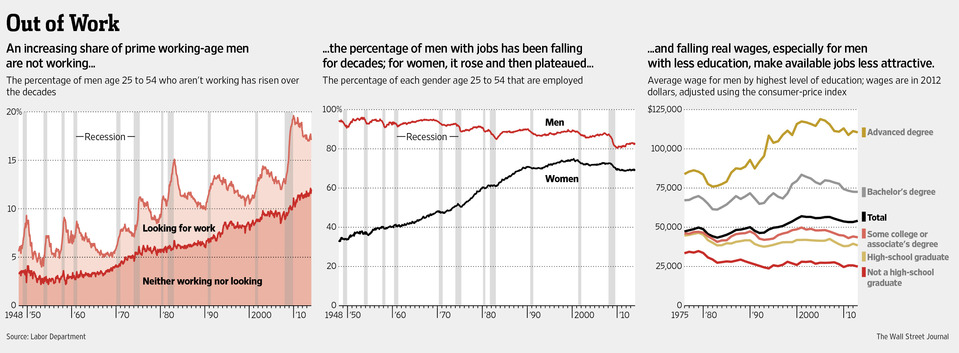
More than one in six men between the ages of 25 and 54, prime working years, don’t have jobs, a chronic condition that shows how technology and globalization are transforming jobs faster than many workers can adapt, economists say. David Wessel, Hutchins Center on Fiscal and Monetary policy director, joins MoneyBeat. Photo: Wesley Hitt for The Wall Street Journal. Read more of this post

IBM Looking to Sell Chip Manufacturing Operations

IBM Looking to Sell Chip Manufacturing Operations

DON CLARK And SPENCER E. ANTE

Feb. 6, 2014 10:13 p.m. ET

International Business Machines Corp. IBM +0.80% is exploring the sale of its semiconductor manufacturing operations, said a person familiar with the matter. Read more of this post

IFRS: A Look At The Global Accounting Landscape

IFRS: A Look At The Global Accounting Landscape

by ManiFebruary 06, 2014, 2:10 pm

The insurance IFRS project that IASB is currently working has potential to make substantial improvement to current financial reporting, notes CITI in its recent report.

Sarah Deans and Terence Fisher of Citi Research in their recent report titled ‘An Investor’s Annual Guide to IFRS Accounting’ anticipate a new standard on revenue recognition to be issued in H1 2014.

Taking stock of IASB’s major projects, the analysts point out IASB is currently working on four major projects viz.: (a) Revenue project relating to replacing existing rules on when revenue is reported, (b) Leases project bringing all leases on balance sheet, (c) Financial instruments project covering replacement of IAS 39 (which has been identified as a high priority following the credit crisis) and (d) Insurance project addressing first comprehensive IFRS for insurance.

Two new IFRS in 2014

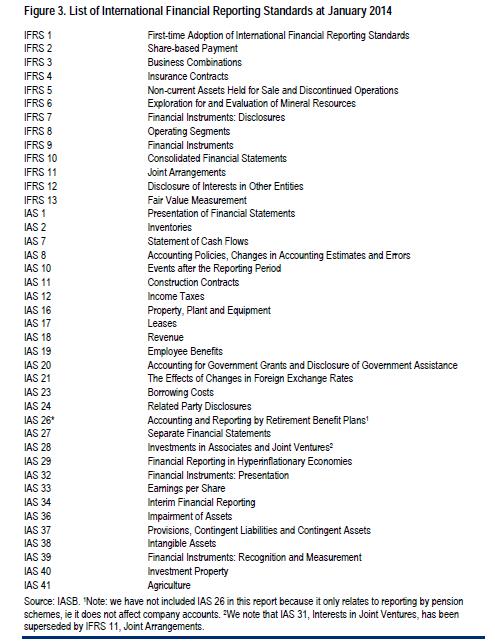
The following table highlights the list of IFRS at January 2014:

image001-3

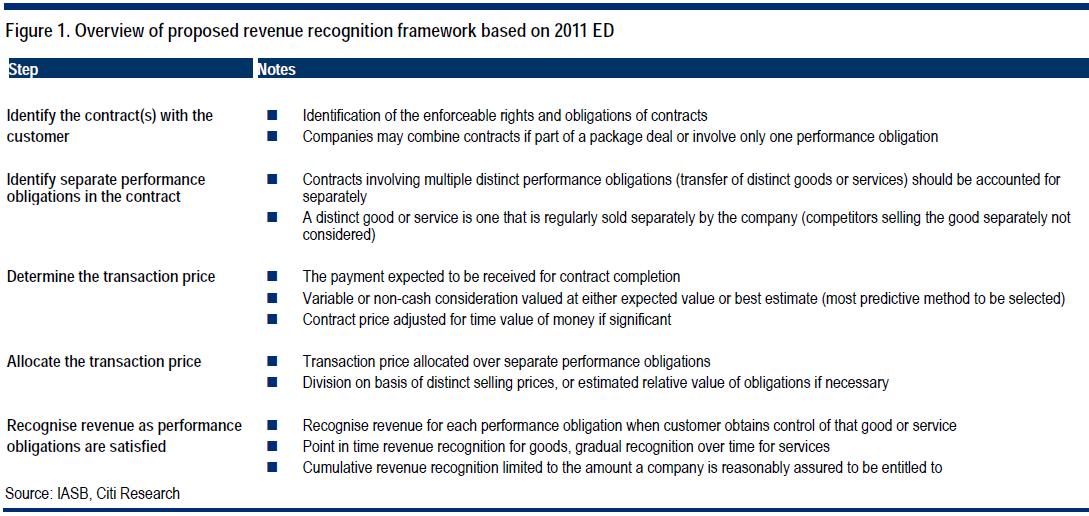
The Citi analysts point out that the International Accounting Standards Board (IASB) failed again in 2013 to deliver final standards for any of the four major projects it has been working on for several years. However, the analysts anticipate two important new IFRS standards to be published in 2014 viz.: revenue and financial instruments. The following table captures the overview of proposed revenue recognition framework:
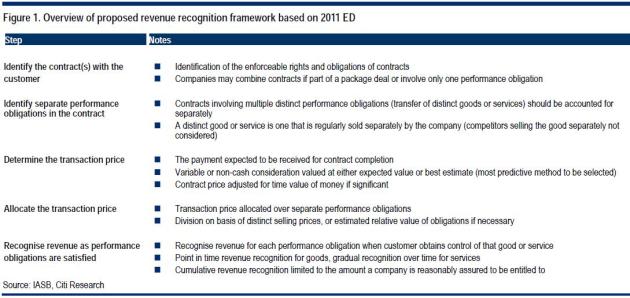
image002-1

However, the analysts are less optimistic that the other two projects viz.: insurance and leases will be completed, though they anticipate significant decisions to be made on both the projects.

Dwelling further into the insurance IFRS, the analysts point out that the insurance project has the potential to make asubstantial, positive improvement to current financial reporting. They point out that currently there is no comprehensive IFRS framework for accounting forinsurance liabilities, implying large diversity in accounting practices amongst insurers, and a resulting lack of comparability of insurance company balance sheets and results.

However, the Citi analysts don’t’ envisage the new IFRS to be issued until 2015 or mandatory until 2018.

Financial instruments IFRS – no significant improvement

The Citi analysts point out that the financial instruments project was initially billed as the IASB’s fix for the perceived accounting problems associated with the 2008 credit crisis, in particular insufficient loan provisioning, overly complex accounting rules in IAS 39. However the analysts don’t envisage the current IFRS 9 proposals as substantially improving accounting on any of these counts.

Highlighting some of the other developments in their report, the Citi analysts point out that three new IFRS viz.: IFRS 10, 11 and 12 are to take effect from January 1, 2014 in the EU.

The Citi analysts anticipate a new standard on revenue recognition to be issued in H1 2014 which is expected to have significant implications for telecoms sector, which will need to move away from cash accounting for bundled contracts.

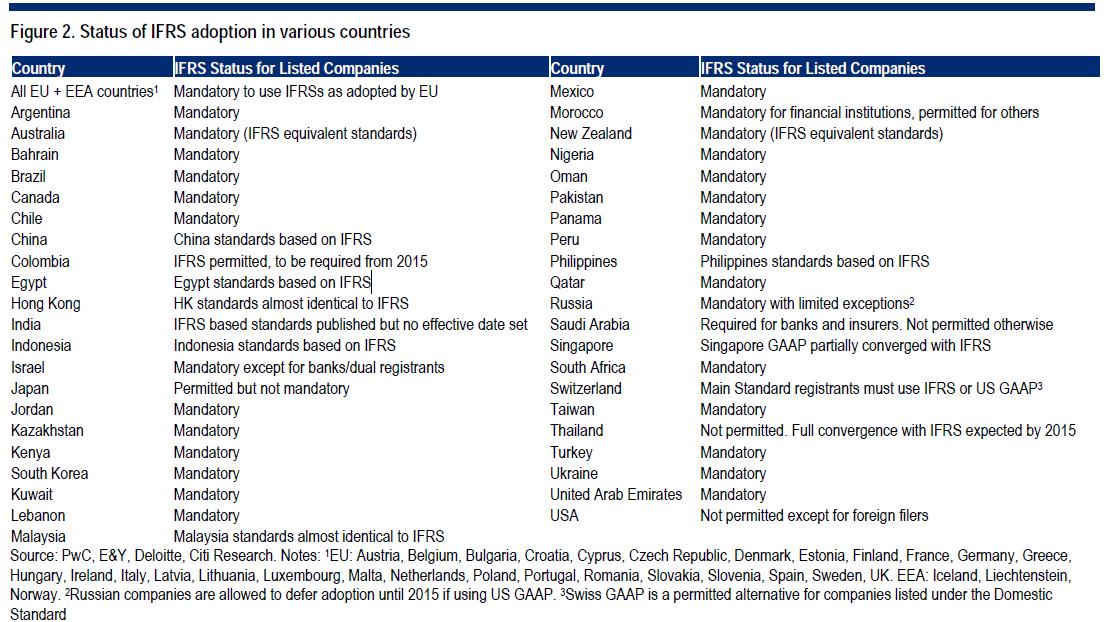
As reported earlier, in 2012, the Securities and Exchange Commission issued a report without making any recommendation or timeframe for adopting IFRS. The Citi analysts don’t expect the US to adopt IFRS in the foreseeable future. The following table summarizes the status of IFRS adoption in various countries:
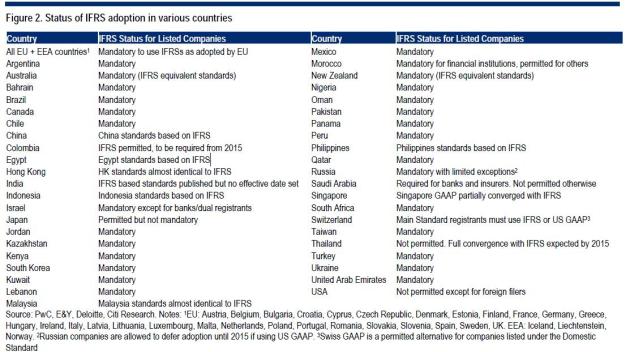
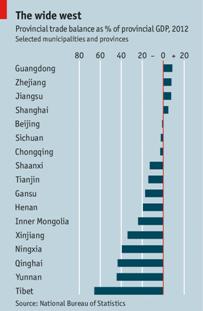
image003-1


Why Mark Zuckerberg has calmed down about openness and authenticity

Why Mark Zuckerberg has calmed down about openness and authenticity

By Matt McFarland, Updated: February 6 at 8:52 am

Amid all the talk of Facebook this week as it celebrates its 10th anniversary, I’m struck by how CEO Mark Zuckerberg has tweaked his tune on the the benefits of openness.

As Facebook rose to prominence, Zuckerberg preached the value of open platforms and sharing information.  ”If people share more, the world will become more open and connected. And a world that’s more open and connected is a better world,” he wrote in 2010. The year before he defined his company as one “that’s trying to bring innovative things to people that help them share more and make the world more open.” Read more of this post

This is why your smartphone battery has the life span of a fruit fly

This is why your smartphone battery has the life span of a fruit fly

By Dominic Basulto, Updated: February 6 at 7:57 am

When news leaked out this week that Apple was experimenting with a new way of charging its anticipated iWatch – possibly using kinetic movement, magnetic induction or solar power — it should have been an “a-ha” moment for innovators everywhere. We’ve been so accustomed to thinking in terms of “battery life” and plugging cords into electrical wall sockets that we never ask the obvious question: Why isn’t there more innovation when it comes to powering our digital devices? Read more of this post

When average is over, lifelong learning is key

When average is over, lifelong learning is key

In a recent book titled Average Is Over, noted economist Tyler Cowen talks about how income disparity has increased and will continue to increase in the world.

BY K RANGA KRISHNAN –

07 FEBRUARY

In a recent book titled Average Is Over, noted economist Tyler Cowen talks about how income disparity has increased and will continue to increase in the world. Read more of this post

Rights Offerings, Trading, and Regulation: A Global Perspective

Rights Offerings, Trading, and Regulation: A Global Perspective

Massimo Massa 

INSEAD – Finance

Theo Vermaelen 

INSEAD – Finance

Moqi Xu 

London School of Economics & Political Science (LSE)
December 13, 2013
INSEAD Working Paper No. 2013/120/FIN

Abstract: 
We study right offerings around the world, using a sample of 8,238 rights offers announced during 1995-2008 in 69 countries. Although shareholders prefer having the option to trade rights, issuers deliberately restrict tradability in 38% of the offerings. We argue that firms restrict rights trading in order to avoid the execution risk associated with strict prospectus requirements, a prolonged and uncertain transaction process, and the potentially negative information signalled via the price of traded rights. In line with this argument, we find that issuers restricting tradability are those with more to lose from reduced participation or that are more likely to face execution risk.

Locus of extremity: Developing economies struggle to cope with a new world

Locus of extremity: Developing economies struggle to cope with a new world

Feb 1st 2014 | HONG KONG | From the print edition

THE central bank of Turkey boasts an impressive art collection, including a canvas by Erol Akyavas entitled “Locus of Extremity”. That was pretty much where the central bank found itself at midnight on January 28th. Turkey’s currency, the lira, had fallen by 13% against the dollar in the previous six weeks, one of the worst casualties of a broader sell-off in emerging-market assets. Prices were rising (by 7.4% in the year to December) and yet the political pressure to suppress interest rates remained firm. At its unscheduled, nocturnal meeting, the central bank dramatically simplified and tightened monetary policy, raising what will henceforth be its key rate from 4.5% to 10%. Read more of this post

Teaching mathematics: Time for a ceasefire; Technology and fresh ideas are replacing classroom drill-and helping pupils to learn

Teaching mathematics: Time for a ceasefire; Technology and fresh ideas are replacing classroom drill—and helping pupils to learn

Feb 1st 2014 | SHANGHAI AND TEL AVIV | From the print edition

image002
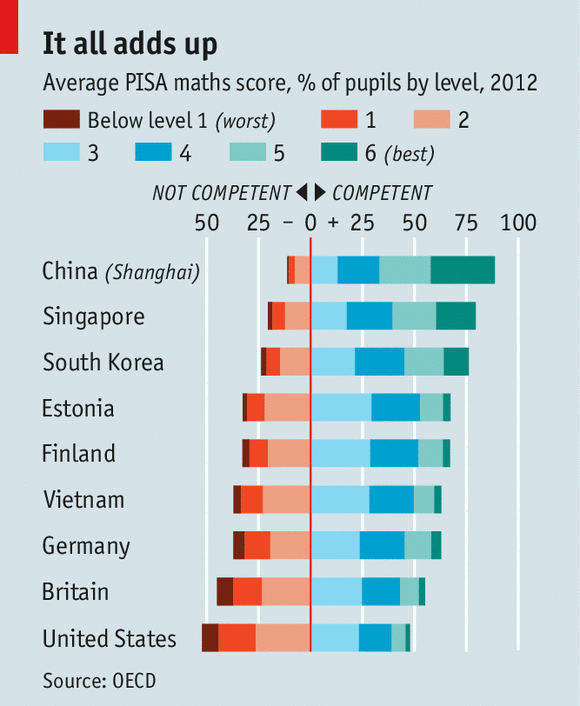
IF THE world’s education systems have a common focus, it is to turn out school-leavers who are proficient in mathematics. Governments are impressed by evidence from the World Bank and others that better maths results raises GDP and incomes. That, together with the soul-searching provoked by the cross-country PISA comparisons of 15-year-olds’ mathematical attainment produced by the OECD, a club of mostly rich countries, is prompting educators in many places to look afresh at what maths to teach, and how to teach it. Read more of this post

Network Shinawatra

Network Shinawatra

Feb 4th 2014, 6:29 by R.C. | CHIANG MAI and SAN KAMPHAENG

AS STREET protests in Bangkok rage on past the elections of February 2nd, the country’s political crisis is gradually turning into something altogether more ominous: a struggle over the territorial integrity of the country itself. Since Suthep Thaugsuban, the messianic leader of the anti-government protesters in the capital, had called for a total boycott, the election itself was little more than a symbolic gesture. There was little violence in Bangkok, but not much voting either. In several southern provinces, polling was made impossible. In the north of the country however, and particularly in the second-largest city, Chiang Mai, the voting went smoothly, with nothing to disrupt it. For here the situation is exactly reversed. Read more of this post