A Tale of Two Chinese Auditor Risk Factors

January 30, 2014, 4:57 PM ET

A Tale of Two Chinese Auditor Risk Factors

EMILY CHASAN

Senior Editor

Last week’s ruling against the Chinese units of the “Big Four” audit firms has already made its first appearance in initial public offering risk factors. Read more of this post

Salesforce CEO Benioff on How to Fix San Francisco

Jan 30, 2014

Salesforce CEO Benioff on How to Fix San Francisco

EVELYN M. RUSLI

These days, you could call Marc Benioff a kind of anti-Tom Perkins.

The billionaire head of Salesforce.comCRM +5.19% doesn’t have anything personal against the co-founder of Kleiner Perkins Caufield & Byers. But he adamantly disagrees with Perkins’ recent defense of the tech elite. The tech community, Benioff argues (and has repeatedly said on Twitter), can do a lot more for the San Francisco community. Read more of this post

Restatements Sully Future Credibility: Study by SMU: Is the Decline in the Information Content of Earnings Following Restatements Short-Lived?

January 30, 2014, 4:40 PM ET

Restatements Sully Future Credibility: Study

MAXWELL MURPHY

Senior Editor

Companies that restate prior results due to accounting irregularities cause investors to tune out their future quarterly numbers, according to recently published academic research. How long they tune out, however, may be within the restating company’s control.

When companies have a material restatement, for example the result of fraud or other misconduct, their stocks tend to trade less volatilely after future earnings statements, an effect that can last nearly three years on average. But companies that take swift, decisive action can trim the investor shunning by more than half, a study in the current issue of the Accounting Review, an American Accounting Association publication, suggests.

The research, by academics at Singapore Management University and Boston College, finds that stock swings surrounding an earnings release, when the company takes little remedial action, are more muted for an average of 11 quarters after a material restatement. The researchers, who studied thousands of restating companies from the late 1990s through 2008, interpret that to mean investors are less trustworthy of the results reported by companies after accounting irregularities.

“When the company issues the earnings report, investors don’t react to the news,” says Alvis Lo, an assistant professor in the accounting department of Boston College’s Carroll School of Management who co-authored the study.

However, companies that move quickly to replace their chief executives and finance chiefs, rejigger the audit committees on their boards or outright fire their accountants, for example, can find their stocks responding more normally to earnings news within five quarters or fewer, Mr. Lo said.

More decisive action, Mr. Lo contends, “can limit the potential damage” to a company’s credibility with investors.


Is the Decline in the Information Content of Earnings Following Restatements Short-Lived?

Xia Chen 

Singapore Management University

Qiang Cheng 

Singapore Management University

Alvis K. Lo 

Boston College
June 3, 2013
The Accounting Review, January 2014, Forthcoming 

Abstract: 
Prior research finds that the decline in the information content of earnings after restatement announcements is short-lived and the earnings response coefficient (ERC) bounces back after three quarters. We re-examine this issue using a more recent and comprehensive sample of restatements. We find that material restatement firms experience a significant decrease in the ERC over a prolonged period – close to three years after restatement announcements. In contrast, other restatement firms experience a decline in the ERC for only one quarter. We further find that among material restatement firms, those that are subject to more credibility concerns and those that do not take prompt actions to improve reporting credibility experience a longer drop in the ERC. Lastly, reconciling with prior research, we find that using a more powerful proxy for material restatements and imposing less restrictive sampling requirements help increase the power of the tests to detect the long-run drop in the ERC.


Building a Movie, One Brick at a Time Lego goes all in for its first Hollywood film (but no kissing)

Building a Movie, One Brick at a Time

Lego goes all in for its first Hollywood film (but no kissing)

DON STEINBERG

Jan. 30, 2014 11:48 a.m. ET

“The Lego Movie” explores what may be the essential question of Lego building as it applies to life: Must you dutifully follow the instructions, or can you combine pieces creatively to make anything you dream up? In the animated children’s comedy, a repressive overlord (voiced by Will Ferrell) is so maniacal about controlling the residents of Bricksburg that he has a weapon designed to glue all the pieces of their world together, putting an end to freestyle play. Only a band of wisecracking rebels (including Chris Pratt, Elizabeth Banks, Will Arnett and Morgan Freeman) can stop him. The film is computer-animated but made to look as if all the scenery is built out of real Lego pieces. Everything moves in a way that simulates the stop-motion films that thousands of Lego customers have created with their pieces and posted online.

“Any frame, if you stopped the movie, would be something you could recreate if you had a lot of money to buy a lot of Lego bricks,” says co-director Christopher Miller.

Maybe just as interesting, if less candy-colored, is the story of how “The Lego Movie” came to be. Lego’s pervasiveness is no secret: The company estimates that the world’s children spend 5 billion hours a year playing with its toys and that, on average, every person on Earth owns 86 Lego bricks (many parents whose homes are littered with Lego pieces will acknowledge the allocation is wildly uneven.) The film, which opens Feb. 7 as the first Lego-related theatrical release, will show whether Lego can emerge from the shadow of Disney, Universal and Warner Bros. as a toy force in Hollywood.

Lego’s collaboration with Hollywood dates back to 1998, when the company, until then known for generic play sets like “Lego Castle,” made a deal with Lucasfilm to create sets based on “Star Wars.” It was a departure for the Danish company and seen as risky at the time. In a world of relentless marketing aimed at children, many parents had come to see Lego as a haven from commercialism. And Lego had never before “seen the need to tell other people’s stories in Lego form,” says Jill Wilfert, the company’s vice president of licensing and entertainment. “Even though there was a huge ‘Star Wars’ movie coming out [“Episode 1: The Phantom Menace”], it was not a decision we took lightly.”

The sets became a top seller, and Lego went back for more. In 2000, the company released the Lego Studios Steven Spielberg Moviemaker set, which included a digital camera, software and parts to recreate a scene from “The Lost World: Jurassic Park.” (Fan-made Lego movies can be seen online on sites such as brickfilms.com.) Soon customers could buy Legos based on Harry Potter, Indiana Jones,”Lord of the Rings” “The Hobbit,” and superheroes from both the DC and Marvel comic universes.

Separately, Hollywood was getting excited about old toys. “Transformers,” based onHasbro HAS +0.83% robots, grossed $710 million world-wide for Paramount and DreamWorks in 2007, and studios clamored over classic toy properties like Battleship and G.I. Joe. Lego seemed a natural—it had already been releasing short movies featuring its characters on home video—and Warner Bros. had an inside track. In addition to controlling many of the Legofied movie franchises, Warner owns TT Games, which was developing Lego videogames (about 85 million games have been sold).

In 2009, Warner producer Dan Lin and writers Dan and Kevin Hageman traveled to Lego headquarters in Billund, Denmark, to pitch a movie set in a Lego-brick universe. Although Lego had financial trouble in 2004 (its near-bankruptcy became a business-school case study), by then it was growing 20% to 25% a year, doing just fine without a movie. (The company last year passed Hasbro in global sales to become the world’s No. 2 toy maker.)

“They really looked at me and said ‘what’s in it for us?’,” Mr. Lin recalls.

Among other things, they talked about making Lego feel cooler to older kids.

“Five to 12 is their sweet spot,” Mr. Lin says. “After that is what Lego calls ‘the dark ages,’ when kids grow out of Lego and it’s not cool. Part of the appeal is that a movie, if done right, can appeal to all audiences.”

Lego is receiving a share of the film’s profits and flexing its own marketing muscle to promote it. “They’re opening a whole new exhibit at LegoLand Carlsbad [in California] to promote the movie,” Mr. Lin says. “It’s in all their stores. They have Lego Club Magazine. They’re promoting it online, on every single level that a studio normally couldn’t hit.” In addition, Lego isn’t putting just one product on the line with this film: “It’s the main brand. It impacts every one of their toy lines. It’s a bigger risk.”

Warner brought in co-directors Phil Lord and Christopher Miller, who had made “Cloudy with a Chance of Meatballs,” to flesh out characters and a plot for the movie, which the studio is calling “family-friendly with an edge.”

“Our fear going into it,” Mr. Miller says, “was they were going to say, ‘We wanna sell this toy and this toy. Kids love race cars, so we need to have a race car in the movie.’ They never did anything like that. They said make the movie you want make. We’ll make toys based on that.”

The company has done that. Already in stores are some of the 17 new building sets that recreate scenes from “The Lego Movie” and 16 new character figurines, known as “minifigs.” There will be a simultaneous Feb. 7 release of The Lego Movie Videogame, McDonald’s Happy Meal collectible cups, and all the other usual tie-in merchandise licensed to outside partners: books, apparel, school supplies.

The movie strives to avoid playing like a giant commercial. “One of the things we talked about from the beginning is to treat Lego as a medium more than a product,” Mr. Lord says. Because the conceit is that anything in the movie could be constructed using real Legos, the filmmakers and their animation studio in Australia collaborated with Lego engineers in Denmark. Animators in some cases used Lego Digital Designer software, which anyone can download, to prototype space ships or pirate ships. “Once we got it pretty close we would send it over to Denmark, where the Lego designers who are really experts at making things structurally sound would adjust it,” Mr. Miller says.

“The Lego Movie” gathers characters who don’t normally hang around together, coming from separately owned franchises and studios. These include Warner movie characters like Batman, Superman, Gandalf, Dumbledore and a Teenage Mutant Ninja Turtle; but also Han Solo, Shaquille O’Neal (from a 2003 NBA-licensed Lego set), and Milhouse from “The Simpsons” (Lego is releasing “Simpsons” products in February). Such matchups can be a licensing nightmare, but Mr. Lin says Lego helped bring the non-Warner characters into the film.

Lego’s experience creating videogames helped the filmmakers gauge what would be acceptable to parents in this first theatrical release. One rule the movie follows, Mr. Lin says: “Lego minifigures can’t kiss. Parents don’t want to see Lego minifigures kiss.”
 

To grow, Bitcoin may need to shed its world of intrigue

To grow, Bitcoin may need to shed its world of intrigue

3:20pm EST

By Emily Flitter

NEW YORK (Reuters) – Bitcoin enthusiasts were buzzing about the arrest of a high-profile promoter of the digital currency at Monday night’s weekly Bitcoin trading session in Manhattan’s financial district. Read more of this post

Nintendo Remains Defiant Against Smartphone Revolution; Fails to Propose Aggressive New Steps, Despite Dismal Earnings

Nintendo Remains Defiant Against Smartphone Revolution

Fails to Propose Aggressive New Steps, Despite Dismal Earnings

MAYUMI NEGISHI and KANA INAGAKI

Updated Jan. 30, 2014 2:27 a.m. ET

TOKYO—Battling to stay relevant amid a gaming revolution, Nintendo Co.7974.TO +0.16% failed to release aggressive new proposals Thursday to turn around its business strategy as the latest quarterly results suggest the floor may be falling from underneath its console-based approach. Read more of this post

Print and broadcast news outlets have long been the world’s gatekeepers of information. Now, Facebook introduced a long-awaited mobile app, called Paper, that offers users a personalized stream of news

Jan 30, 2014

Born Online, Facebook Now Wants to Be Your ‘Paper’

REED ALBERGOTTI

Print and broadcast news outlets have long been the world’s gatekeepers of information. Now,FacebookFB +14.10%

wants a turn.

On Thursday, Facebookintroduced a long-awaited mobile app, called Paper, that offers users a personalized stream of news. Facebook said it will be available Feb. 3 for the iPhone; there is no date yet for Android. Read more of this post

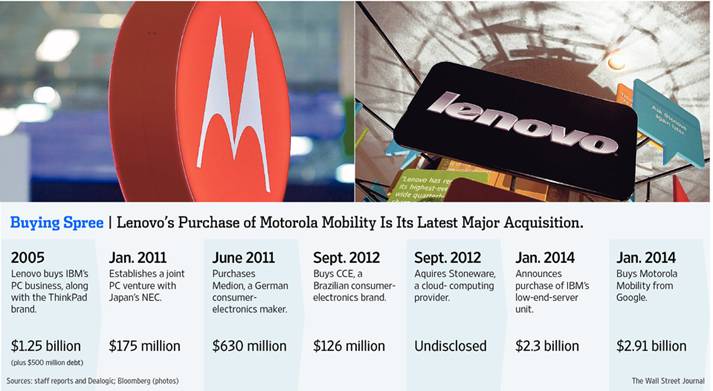
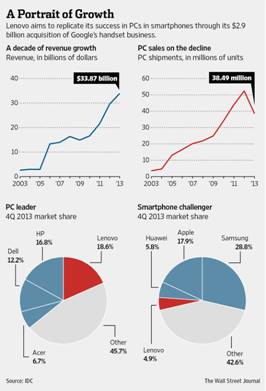
How Lenovo Built a Chinese Tech Giant; CEO Started Out Delivering PCs on Bicycles, Now ‘We Want to Be a Global Player’

How Lenovo Built a Chinese Tech Giant

CEO Started Out Delivering PCs on Bicycles, Now ‘We Want to Be a Global Player’

JURO OSAWA And LORRAINE LUK

Updated Jan. 30, 2014 1:13 p.m. ET

image001image002

Google sells handset business to Lenovo for nearly $3 billion. Bryan Ma of IDC tells the WSJ’s Aaron Back how Motorola phones will give Lenovo a shortcut into the competitive U.S. Market. Read more of this post

Divided Thailand Set for Chaotic Election

Divided Thailand Set for Chaotic Election

By Daniel Rook on 2:45 pm January 30, 2014.
Bangkok. Tens of thousands of police will be deployed across Thailand on Sunday for an election seen as a crucial test of the kingdom’s fragile democracy, with opposition protesters threatening to lay siege to polling stations. Read more of this post

Lunar New Year Has Dark Side for Vietnam Economy, Say Critics who are arguing that the beloved, protracted Tet holiday is actually hurting the already fragile economy

Lunar New Year Has Dark Side for Vietnam Economy, Say Critics

By Tran Thi Minh Ha on 3:40 pm January 30, 2014.
Hanoi. Packed shops, traffic chaos and kumquat trees everywhere can only mean one thing in Hanoi: a new lunar year is approaching. But not everybody is feeling festive. Read more of this post

India, Like Tata Motors, Is Stuck in Neutral Gear

India, Like Tata Motors, Is Stuck in Neutral Gear

By William Pesek on 11:11 am January 30, 2014.
The sudden death of managing director Karl Slym is a tragic and untimely loss for Tata Motors, one of the names India has long seen as projecting the core competencies and global ambitions of the world’s second-most populous nation. Read more of this post