Surfing champion Layne Beachley on knowing when to quit and bouncing back from failure
March 14, 2014 Leave a comment
Caitlin Fitzsimmons Online editor
Surfing champion Layne Beachley on knowing when to quit and bouncing back from failure
Published 10 March 2014 13:01, Updated 11 March 2014 14:11
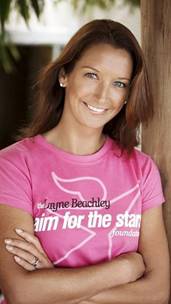
Layne Beachley started surfing at the quiet end of Manly Beach in Sydney as a four-year-old in the 1970s. By age 20 she was ranked sixth in the world and she went on to win seven world championships in surfing, six of them consecutive.
Beachley endured harassment from men who didn’t think a girl should be surfing and financial stress from the lack of prize money available to women in the sport of surfing. There were many times she felt like quitting, but she never did.
But Beachley has had to learn when to quit as an entrepreneur after her attempts to launch a clothing line were not so successful.
Ten years ago, at age 31, Beachley was fresh from winning her sixth world championship. She approached her sponsor, Billabong, about doing a clothing line for women in their 30s but was knocked back.
Beachley, who was speaking at a luncheon on unconscious bias in business and sport hosted by SportsConnect last week, says the reaction from Billabong made her feel that staying with the brand would compromise her personal values so she walked away.
Beachley says the result was a “nasty” situation where some people accused her of being a self-promoting unit. She was also told she was well paid, even though a man with one world championship was paid four times more than her.
“As far as I was concerned I was 100 per cent loyal to that brand,” she says. “Every night and every day and everywhere I went, I had Billabong either on my head, my chest or my butt. My husband, who’s from INXS, was infuriated that I always walked out of the house looking like a surf rat so he made me go shopping and I had to because I had nothing else in my wardrobe. The ramifications were quite nasty for some time.”
BRW has contacted Billabong for comment but the company has not responded.
Developing empathy
But the experience taught Beachley empathy for the other women surfers who didn’t have sponsorship and inspired her to set up a surfing championship for women with a much bigger prize pot. That event ran for seven years, five of them with Commonwealth Bank as a sponsor. When the event started, the industry standard was a prize pool of $40,000 and it’s now $250,000 per event.
“When we lost the [Commonwealth Bank] sponsorship, I thought the event’s done what it needed to do,” Beachley says. “I had three objectives with my event: to raise the prize money, to raise the profile, and open up the marketplace for women’s surfing, and it achieved that. It took me 20 years on tour to earn half a million in prize money, now one girl can earn it in a year.”
Unequal prize money and sponsorship mean that male sporting champions still vastly out-earn their female counterparts, across most sports not just surfing. Only two Australian women were on BRW’s 2013 Top Sports Earners list, compared with 48 Australian men. Thanks in part to Beachley paving the way in the sport of surfing, one of them was pro-surfer Stephanie Gilmore who is sponsored by Quiksilver division Roxy.
Losing the Billabong sponsorship also inspired Beachley to attempt to create her own clothing line herself. She had five attempts before giving up.
She says the first two attempts were “dismal”, and the third was “OK” but didn’t work. The fourth attempt was a brand called Beachley Athletic in Kmart and she believed in it but Kmart did not follow through on the changes it promised to make. The fifth attempt was a bikini or surf wear range called Blue Kiss by Layne Beachley, sold nationally in Myer and Rebel Sports.
Deciding to close Blue Kiss because it wasn’t gaining enough traction was one of the hardest things that Beachley has done.
“It was really hard because I was swallowing my pride because I was driven to prove Billabong wrong, but ultimately I wasn’t in it for the right reasons, I didn’t have the skill sets to make it work, and I hadn’t surrounded myself with the right people,” Beachley says.
“The thing was, I know from my own experience, when you are committed to achieving something, you never feel like you have to justify, rationalise or inspire yourself to do it. It just comes from the heart, it’s a passion project, it’s something that lights you up in the morning.
Asking tough questions
“The number one thing to not only achieving success but maintaining success is that you continue to find ways to improve. My brand was not growing, it was not improving, so I had to ask myself the hard questions. The quality of the questions you ask determines the quality of your life.”
The questions she asked herself, and the answers she came to, were:
Is the product right? No.
Are the distribution channels correct? No.
Are the people I’m working with the right people? No
Is the marketing appropriate? No.
Do I have the skill set to make it right? No.
Do I have the passion to invest in acquiring those skill sets? No.
Then why am I doing this?
“When I did dissolve it, I ended up with a job as the athlete liaison officer for the Australian Olympic team, so by not being able to fill all my time with that brand, I was now able to go the Australian Olympic Village in London with an access-all-areas pass. It was a fascinating experience, here I was alongside John Eales, Steve Waugh and Kieran Perkins mentoring the Australian Olympic team – what an amazing opportunity!
“At the time you go, ‘why is this happening to me?’ but if you take the time to remove yourself, detach yourself emotionally, and ask yourself those tough questions, in time when you reflect on it, it’s a wonderful opportunity. All challenge is an opportunity for growth.”
Beachley has now started the Aim for the Stars Foundation to help women with small grants to pursue excellence in a range of endeavours, from circus arts to human rights law.
She says unconscious bias persists against women, both in sport and in business, and the first step to solving the problem is to become conscious of your own biases.
 About bambooinnovator
 Bamboo Innovator