A Daring Designer of Snazzy Snacks; Jim Goldberg founded Deep River Snacks, whose kettle chips are sold in high-end delis from Darien to Dubai. How he bags aficionados
March 23, 2013 Leave a comment
March 22, 2013, 9:00 p.m. ET
A Daring Designer of Snazzy Snacks
By AMY GAMERMAN
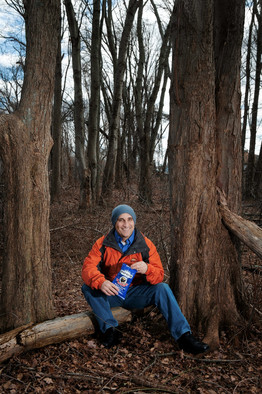

Jim Goldberg found one of his best potato-chip ideas in a pickle bowl. The founder of Deep River Snacks, whose kettle chips are sold in high-end delis from Darien to Dubai, was eating lunch at Katz’s Delicatessen in New York one day when he bit into a pickled green tomato.
“I said, ‘Holy crap, someone’s got to make something this good,’ ” he recalls. “We gotta do this!”
What Mr. Goldberg does is turn taste sensations into potato chips: chips that taste like they’ve come off a mesquite grill or bathed in a dish of olive oil and rosemary. So as soon as he had finished his pastrami sandwich, Mr. Goldberg made calls to four seasoning companies. “I said, ‘I want it to be a little bit spicy. It’s got to have good dill flavor—it’s really got to taste like the pickle.’ ”
After six months of experimentation, Deep River’s New York Spicy Dill Pickle kettle-cooked chip hit store racks last year. Unlike conventional “flat” chips, which are fried as they move along a production line, kettle chips are cooked in vats of oil. Mr. Goldberg makes 11 varieties.
“For the price and value, it’s the best chip,” says Charlie Moore, grocery buyer for the Fairway chain of stores. A 2-ounce bag of Sweet Maui Onion or Sea Salt & Vinegar retails for between 99 cents and $1.39. Mr. Goldberg says that he sold more than 24 million bags of his chips last year: a crumb compared with Lay’s, but not bad for an 11-year-old company with headquarters above a varicose-vein clinic in Old Lyme, Conn.
Short and peppery, with a five o’clock shadow at 10 a.m., the 42-year-old Mr. Goldberg gets his chips made to his precise specifications by a co-packing facility in the Midwest. To find the thickness that would deliver his ideal crunch, he lined up chips and measured them. Peanut oil dulled the potato essence of his Dakota Gold chips, he discovered, while canola oil left “a fishy aftertaste.” He switched to sunflower oil, to showcase his flavors. Bags of new seasonings—powdered mixes of spices, dehydrated vegetables and cheeses—sit on his shelves, to be tasted on a wet finger or tossed onto a chip warmed in the office microwave. He doesn’t use focus groups, although he does like to try out new varieties on the women who work downstairs.
Mr. Goldberg has been in the food business since he was a kid, tagging along with his father, a “rack jobber,” who distributed everything from shoe polish to pet food. “I’d be in [his warehouse] on the weekend, pushing the broom, at 5 or 6 years of age.”
After college, Mr. Goldberg worked in the food industry—until he complained about a bad-tasting new product in front of the executive who developed it. After a detour to law school and a Web firm, he tried marketing a product of his own: roasted-pecan caramel popcorn, created in his kitchen. From there, it seemed natural to take a nibble at the chip market.
Mr. Goldberg seeks an intense snacking experience. Like many other brands, his Zesty Jalapeño was originally seasoned with a variety of spices. Six months ago, he jettisoned everything but salt and jalapeño. Fresh chips, still hot and sticky with oil, were tumbled in pulverized peppers. “Oh my God, it was so hot, because now it’s the real deal,” he recalls. “People were coughing.”
He figured out how to calibrate the jalapeño, to let its heat build to a burn at the back of the throat. “If you get this big blast in the beginning, you don’t taste anything afterward,” he says.
Other flavors never make it off the runway, such as his lamented tequila chip (“no one would ever buy it”). Some chips elude his grasp, like the goat cheese, basil and garlic blend that he has been working on for over five years. He’s tormented by the siren song of the bacon chip. “I can’t do it,” he says. “We’re kosher. If you call it bacon, doesn’t it have to have bacon in it? What do you say? Bacon-style?”
Now Mr. Goldberg is in the process of getting all his snacks certified as free of genetically modified material, part of his quest to scrub away the junk-food taint. His tortilla chips—there are two varieties—are packed with flax seeds and quinoa. Earlier this month, he unveiled his newest product, Sneaky Snacks (“Snacks With Benefits”), a baked cheese puff fortified with powdered navy beans and designed for kids.
A seasoning company had just sent him a new GMO-free Mesquite BBQ mix, dusted onto “blank” kettle chips. He ripped open the silver foil bag and started munching.
“I find if I breathe out through my nose I get more flavor. What do I taste? Is that smoky enough? I think so. The last one wasn’t smoky enough. Is it too sweet? No, the last one was way too sweet,” he says. “Do I eat the one chip and say I want to have another one? Is that the right color orange, or is there something wrong with that?” He grabs a Pantone color book from his desk and searches for a shade. By adjusting the level of annatto, a seed that gives food an orange hue, he can match the color.
Mr. Goldberg conducts these flash taste tests every week, on every flavor, “to make sure it’s right.” Right now, his popular Sea Salt & Vinegar kettle chip is in the cross hairs.
“I think the vinegar pucker could be better and more consistent,” Mr. Goldberg says. “I have to figure out how to get that pucker factor for every bite. Maybe it’s wrong, maybe people would say, ‘You’re killing us, it’s too much vinegar.’ But I’ve always designed this for what I like.”
 About bambooinnovator
 Bamboo Innovator