March 30, 2013
High-Tech Means of Production Belies the Nostalgic Image of Maple Syrup
By JULIA SCOTT
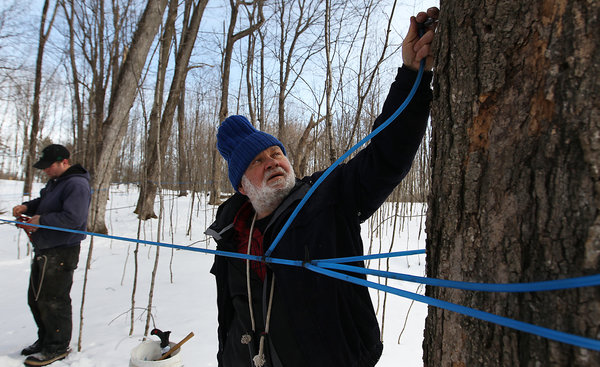
Gathering sap to boil into maple syrup, long a tradition in places like Vermont, has become a more high-tech process, with miles of plastic tubing and powerful vacuums that draw the sap out of the trees.
EAST MONTPELIER, Vt. — The rich, sweet tang of sap being boiled into maple syrup greeted tourists at Burr Morse’s sugar shack here this month — along with Mr. Morse, every inch the rural maple farmer in worn baseball cap and syrup-stained jacket, stirring the steaming evaporator with an old-fashioned dipper.
“People want to have a nostalgia trip,” said Mr. Morse, 65, a seventh-generation maple syrup farmer and the patriarch of Morse Farm Maple Sugarworks. “They want to see something natural, like taking sap from a tree.”
Forty years ago, Mr. Morse would snowshoe into the forest with his father to collect sap from galvanized buckets and load them onto a tractor. The farm has not changed much since then, but the winters have. So has the maple syrup ritual itself.
Scientists say the tapping season — the narrow window of freezing nights and daytime temperatures over 40 degrees needed to convert starch to sugar and get sap flowing — is on average five days shorter than it was 50 years ago. But technology developed over the past decade and improved in recent years offers maple farmers like Mr. Morse a way to offset the effects of climate change with high-tech tactics that are far from natural.
Today, five miles of pressurized blue tubing spider webs down the hillside at Morse Farm, pulling sap from thousands of trees and spitting it into tubs like an immense, inverse IV machine. Modern vacuum pumps are powerful enough to suck the air out of a stainless steel dairy tank and implode it, and they help producers pull in twice as much sap as before.
“You can make it run when nature wouldn’t have it run,” Mr. Morse said. His greatest secret weapon is a reverse-osmosis machine that concentrates the sap by pulling it through sensitive membranes, greatly increasing the sugar content before it even hits the boiler. The $8,000 instrument with buttons and dials looks like it belongs in a Jetsons-era laboratory more than in a Vermont sugarhouse. But it saves more fuel and money than every other innovation combined. With it Mr. Morse can process sap into syrup in 30 minutes, something that used to take two hours. Read more of this post









 Bamboo Innovator