Boy Selling Candles Becomes Polish Billionaire Unhappy With Debt
Boy Selling Candles Becomes Polish Billionaire Unhappy With Debt

iKH9XcOc3agU

In Radom, a blue-collar Polish city better known for producing guns than entrepreneurs, Feliksa Pietruszka remembers the young boy from the neighboring apartment who sold candles at the cemetery opposite. “These were good kids,” said Pietruszka, 85, who still lives in the same building with outside toilets and coal-fired stoves for heating, as she sat in a kitchen barely big enough for two chairs and a table. “This was just a normal family.”

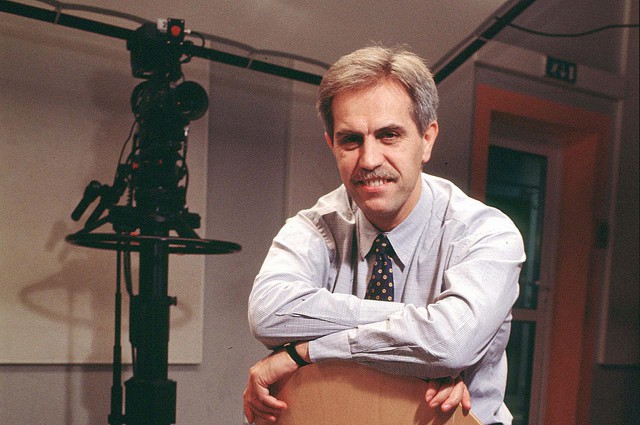
More than four decades and three changes of name later, that boy, Zygmunt Solorz-Zak, has turned his first zloty into a fortune exceeding $3 billion and a business spanning television, mobile phones, a bank and a power utility. Along the way, it also made him Poland’s biggest borrower as he expanded to compete with rivals funded by foreign investors and create the fastest mobile Internet service in the country. Read more of this post

Good Strategy, Bad Strategy by Richard Rumelt

Fed may decide that owning warehouses, pipelines and tankers does not fit with banks’ missions – meaning they could be ordered, or pressured, to divest those infrastructure assets

On U.S. banks and commodity trade, Fed unlikely to say no

12:03am EDT

By Jonathan Leff

NEW YORK (Reuters) – When it comes to commodity trading, the U.S. Federal Reserve has a habit of lengthy deliberation, deep enquiry and saying yes. The Fed granted its first authorization to trade physical commodities to Citigroup Inc (C.N: QuoteProfileResearch,Stock Buzz) in 2003 after nearly five years of study; the letter allowing it to keep its Phibro unit arrived just six days before a grace period ended. It spent another nine months scrutinizing one of its last such permits, given to the Royal Bank of Scotland (RBS.L:QuoteProfileResearchStock Buzz) in 2008 when it bought half of Sempra Commodities; the Fed’s deliberations delayed plans to close the deal by months, but it ultimately approved a vastly expanded array of activities. So even after a week of unprecedented public and political scrutiny on the multibillion-dollar commodity trading desks at Goldman Sachs Group Inc (GS.N: QuoteProfileResearchStock Buzz), Morgan Stanley (MS.N: QuoteProfileResearchStock Buzz) and JPMorgan Chase & Co (JPM.N: QuoteProfileResearch,Stock Buzz), a dozen legal experts and industry sources say the Fed is unlikely to turn back the clock to an era when banks were barred from touching gasoline cargoes or aluminum coils. Read more of this post

Google’s Instant Translators Could Become The Universal Tongue

Google’s Instant Translators Could Become The Universal Tongue

DARRELL ETHERINGTON

posted 2 hours ago

Google likes to create things that gather data, which can be used to determine intent and for all kinds of profitable purposes. There’s no bigger fish in that pond than the Babel fish – that invention of Douglas Adams’ in his Hitchhiker’s Guide to the Galaxy series that instantly translates one language to another to make communication seamless. That’s because Google would be processing literally everything a person says to another (at least while travelling), which adds up to a lot of mineable data. Read more of this post

CEO Overconfidence and Repurchases

CEO Overconfidence and Repurchases

Suman Banerjee Nanyang Business School

Mark Humphery-Jenner University of New South Wales – Australian School of Business; Financial Research Network (FIRN)

Vikram K. Nanda Georgia Institute of Technology – College of Management

June 8, 2013 FIRN Research Paper

Abstract: 
This paper analyzes how CEO overconfidence influences repurchase-decisions, dividend-repurchase substitution, and the market’s reaction to repurchases. Overconfident CEOs tend to over-estimate the value of investments and under-estimate their risk. We show that overconfident CEOs prefer repurchases to dividends as they represent less of a drain on future cash flows, reflecting overconfident CEOs’ positive beliefs about future projects and the need for cash to support them. This manifests in a substitution from dividends to repurchases. Further, consistent with the idea that an overconfident CEO believes their company to be under-valued, overconfident CEOs are even more likely to substitute CAPEX for repurchases. Overconfident CEOs are also more sensitive to a stock market decline than are other CEOs and are less sensitive to the company’s cash/cash-flow decision when making repurchases. Overconfident CEOs who are more insulated from internal or external discipline are more likley to act on these behavioral biases. We also find that overconfident CEOs’ excessive optimism results in repurchases conveying a weaker signal about the firm’s quality, leading the market to react less strongly to overconfident CEOs’ repurchases.

Are Institutional Investors Truly Skilled or Merely Opportunistic?

Are Institutional Investors Truly Skilled or Merely Opportunistic?

Gennaro Bernile Singapore Management University – School of Business; University of Miami – School of Business Administration

Alok Kumar University of Miami – School of Business Administration

Johan Sulaeman Southern Methodist University (SMU) – Edwin L. Cox School of Business

Qin Wang University of Michigan – Dearborn

July 25, 2013

Abstract: 
Using a large dataset of institutional trades, we examine whether superior intraquarter trading performance of institutional investors reflects superior trading skill or opportunistic access to information. Our conjecture is that true investment skill would not depend upon geographical proximity between investors and firms, while opportunistic access to information is likely to be location-dependent. Thus, if institutions are truly skilled, they would earn high average return and exhibit performance persistence in both their local and nonlocal trades. Our evidence indicates that institutions on average are not skilled and their superior intraquarter performance is more likely to reflect opportunistic access to short-term local information. They have high average local performance but this performance is not persistent. Further, we observe increased local trading activity and profitability prior to earnings announcements, particularly before negative news. In contrast, the average net non-local intraquarter trading profits are not significantly different from zero. There is persistence in non-local performance, however, which suggests that some investors in the cross-section may be skilled. Specifically, investors with superior non-local performance exhibit superior future performance in both non-local and local trades. This evidence indicates that superior performance in non-local trades is a better indicator of innate trading skill.