Growth in China trust assets slows as shadow banking crackdown bites

Growth in China trust assets slows as shadow banking crackdown bites

1:05am EDT

By Gabriel Wildau and Lu Jianxin

SHANGHAI (Reuters) – Growth of China’s trust sector, the largest component of the country’s so-called shadow banking system, slowed markedly in the second quarter after a government clampdown on risky lending.

China’s top leaders have signaled concern over runaway credit growth and the risk of a debt crisis being sparked by local governments and firms borrowing at high interest rates from non-bank lenders, especially trust companies. Read more of this post

Japan nuclear body says radioactive water at Fukushima an ’emergency’

Japan nuclear body says radioactive water at Fukushima an ’emergency’

3:40am BST

By Antoni Slodkowski and Mari Saito

TOKYO (Reuters) – Highly radioactive water seeping into the ocean from Japan’s crippled Fukushima nuclear plant is creating an “emergency” that the operator is struggling to contain, an official from the country’s nuclear watchdog said on Monday. This contaminated groundwater has breached an underground barrier, is rising toward the surface and is exceeding legal limits of radioactive discharge, Shinji Kinjo, head of a Nuclear Regulatory Authority (NRA) task force, told Reuters. Read more of this post

Chinese banks face losses over “Chinnovator” Wuxi Suntech Power loans

August 5, 2013 4:34 pm

Chinese banks face losses over Wuxi Suntech Power loans

By Henny Sender

Chinese banks that lent money to solar-panel maker Wuxi Suntech Power, and later put it into administration, are facing substantial losses on their loans, according to the company’s other creditors.

While the total liabilities of Wuxi Suntech – which is the principal operating subsidiary of the US-listed Suntech Power Holdings – remains in dispute, creditors have said the figure is at least Rmb10bn ($1.63bn), while its assets may be less than a quarter that amount. Read more of this post

Investors Turn Hong Kong’s Red Taxis Into Latest Bubble Market; The price of a license combined with a taxi reached a record HK$7.66 million ($987,600)

Investors Turn Hong Kong’s Red Taxis Into Latest Bubble Market

Allan Shek, the owner of a Hong Kong shop selling gold and jade jewelry, says he’s made millions on the side by riding wild swings in the stock market and by buying into the city’s property boom. No more. Last month, he bought five Hong Kong taxis and the licenses to operate them. Seven or eight of his friends have bought taxis too, he says.

“If I have the ability, I will buy another 15 taxis this year,” says the 60-year-old Shek, speaking with rapid-fire enthusiasm over the latest way to make money in a city where the benchmark Hang Seng Index (HSI) has fallen almost 7 percent from the year’s high and record property prices have started to decline because of government curbs. Read more of this post

Berkshire Avoids Rout as Buffett Sidesteps Bonds

Berkshire Avoids Rout as Buffett Sidesteps Bonds

Warren Buffett’s preference for buying stocks and whole companies rather than bonds is helping Berkshire Hathaway Inc. (BRK/A) weather a spike in interest rates better than other insurers.

Book value rose 2 percent to about $122,900 per Class A share in the three months ended June 30, Omaha, Nebraska-based Berkshire said Aug. 2. Insurance competitors including Allstate (ALL) Corp., American International Group Inc. (AIG) and Travelers (TRV) Cos. posted second-quarter declines in the measure of assets minus liabilities. Read more of this post

Family Offices Chasing Wealthy’s $46 Trillion in Assets

Family Offices Chasing Wealthy’s $46 Trillion in Assets

Karen McNeill, Ph.D., used to teach history at the University of California, Berkeley. In June, she took a job as head of family history with Ascent Private Capital Management, a new unit of U.S. Bancorp (USB) that manages the affairs of ultra-wealthy families.

McNeill’s job is to help Ascent’s clients discover their pasts, skeletons and all, and gain perspective on their Gatsby-sized fortunes. The job is the creation of Michael Cole, Ascent’s president, who’s determined to make Minneapolis-based U.S. Bancorp, the fifth-largest U.S. lender, a contender in the market for high-end financial services. Read more of this post

Chicago pits going quiet, 165 years after shouting began

Chicago pits going quiet, 165 years after shouting began

7:16am EDT

By Tom Polansek

CHICAGO (Reuters) – On a recent morning in the Chicago Board of Trade’s soybean futures pit, the trading action looked like this: One trader hiked up a leg onto a metal railing, stretching his hamstring; another passed time bouncing a green rubber ball; a third yawned.

Activity in Chicago’s 165-year-old open-outcry grain markets has been declining for decades because of computerized trading, which can be executed much faster. But after the CBOT changed the way it reports end-of-day prices in June last year, the share of trading attributed to shout-and-gesture trading fell by about half. Read more of this post

China’s Offshore Push Shakes Singapore Builders of Oil-Drilling Rigs

August 5, 2013, 8:07 a.m. ET

China’s Offshore Push Shakes Singapore Builders of Oil-Drilling Rigs

Beijing Shifts Resources From Shipbuilding, Seeking 20% of Global Market

ERIC YEP

Despite booming demand, tiny Singapore faces a tough time ahead defending one of its few heavy industries, building offshore drilling rigs. The reason is familiar: rising Chinese competition. Singapore’s rig makers, Keppel Corp.’s BN4.SG +0.48% Keppel Offshore and Marine unit and SembCorp Marine Ltd., S51.SG 0.00% which both posted lower second-quarter profits, are responding by trying to move upmarket, with equipment that can drill for oil and gas at greater depths and more extreme conditions than the shallow-water rigs they’ve specialized in. But this is a sector where South Korean yards are well-established and China is a growing presence. Read more of this post

Abu Dhabi sovereign wealth fund is fighting to avoid losses on its $2 billion investment in Eike Batista’s companies as the former billionaire seeks to save his commodity empire from collapse

Citigroup Haunts Abu Dhabi as Mubadala Caught in Brazil Meltdown

Mubadala Development Co., the Abu Dhabi sovereign wealth fund, is fighting to avoid losses on its $2 billion investment in Eike Batista’s companies as the former billionaire seeks to save his commodity empire from collapse.

The fund is owed $1.5 billion after converting a preferred equity investment in Batista’s EBX Group Co. into debt, three people with knowledge of the matter said last month. That amount is secured by Batista assets, one of the people said, asking not to be named as details are private. EBX also last month agreed to “redeem” a portion of Mubadala’s original investment. Read more of this post

Falling Rupiah Hits Indonesian Firms

Falling Rupiah Hits Indonesian Firms

By Francezka Nangoy on 8:54 am August 6, 2013.
The weak rupiah might be a boon to exporters keen to get their products to foreign markets cheaply, but for some local firms it is eroding profit margins and leaving them with foreign exchange losses.

After tumbling 2.7 percent against the US dollar in the first six months of the year, the rupiah underwent a sharp depreciation in July, leaving it 6.4 percent weaker for the year so far, according Bank Indonesia. That makes the rupiah one of the worst-performing currencies in the Asia Pacific region. Read more of this post

Thai Public Spending Delay Adds to Growth Risks: Southeast Asia

Thai Public Spending Delay Adds to Growth Risks: Southeast Asia

Thailand’s economic growth may slow further this year as the government’s attempt to push through an amnesty bill for political protesters risks delaying its $64 billion infrastructure spending plan.

Prime Minister Yingluck Shinawatra’s ruling Pheu Thai party said it will resume debate tomorrow on a law to exonerate protesters involved in demonstrations stretching from a coup in 2006 that ousted her brother, Thaksin Shinawatra. Read more of this post

Fortress to Blackstone Say Now Is Time to Sell on Surge; “It’s almost biblical: there is a time to reap and there’s a time to sow,” Apollo’s Leon Black

Fortress to Blackstone Say Now Is Time to Sell on Surge

By Devin Banerjee  Aug 2, 2013

Private-equity managers from Fortress Investment Group LLC (FIG) to Blackstone Group LP (BX), which made billions by buying low and selling high, say now is the time to exit investments as stocks rally and interest rates start to rise. Fortress, the first publicly traded buyout firm in the U.S., is preparing holdings for public offerings while struggling to find attractive new deals, Wesley Edens, who runs Fortress’s $14.3 billion private-equity business, said on a conference call with investors yesterday. That environment extends to credit and distressed investments, said Pete Briger, who oversees the New York-based firm’s $12.5 billion credit business. “This is a better time for selling our existing investments than making new investments,” Briger said on the call. “There’s been more uncertainty that’s been fed into the markets.” Read more of this post

Ecommerce Giant Alibaba Tackles Counterfeits in China as Fake Goods Proliferate; “Counterfeiting is a cancer we have to deal with,” Alibaba founder Jack Ma said

August 5, 2013, 5:23 a.m. ET

Alibaba Tackles Counterfeits in China

E-Commerce Giant Faces Big Challenge as Fake Goods Proliferate

JURO OSAWA

AM-AZ729_ALIBAB_G_20130805055408

HONG KONG—Alibaba Group Holding Ltd. is stepping up its battle against rampant counterfeiting in China, as it gears up for one of the technology industry’s biggest initial public offerings. For the past several years, the Chinese e-commerce giant has been working to remove fake items from its Taobao shopping site. But counterfeiters are persistent, posing a challenge for Alibaba just as bankers and investors are raising their expectations for the company ahead of its initial public offering. The IPO is likely to raise about $70 billion based on analysts’ estimates and bankers said it could take place as soon as this year, but Alibaba hasn’t set a specific date. “Counterfeiting is a cancer we have to deal with,” Alibaba founder Jack Ma said at a news conference in April, when the company announced its partnership with government agencies to fight piracy online and offline. Later this month, a group of Alibaba officials will travel to the U.S. to meet with representatives from brands, industry associations and the government in Los Angeles, New York and Washington to discuss intellectual property issues, the company said. Read more of this post

With few big deals, private equity moves to be Asia’s new banker

With few big deals, private equity moves to be Asia’s new banker

5:58am EDT

By Stephen Aldred

HONG KONG (Reuters) – In three years, global private equity firm KKR & Co (KKR.N: QuoteProfileResearch,Stock Buzz) has provided over $1.5 billion in loans to companies in India, a business traditionally handled by state-owned and private sector banks. Encouraged by that success, KKR – which rose to prominence with its hostile $25 billion takeover of U.S. food and tobacco giant RJR Nabisco in 1989 – plans to expand the niche business in China and across Asia. The move by private equity into lending comes at a time when buyout deals in Asia are few and far between and as traditional banks retreat. Apollo Global Management (APO.N: QuoteProfileResearchStock Buzz), KKR and Olympus Capital are raising credit funds as they seek out alternative sources of income. At least $6.6 billion is being raised by 12 funds for investment in Asia, according to Private Equity International and Thomson Reuters data. At the same time, credit across Asia has grown tight, leaving small businesses and family-owned firms short of capital as the big banks focus their attention on top-tier clients. Read more of this post

61-year-old hidden billionaire Rick Cohen has transformed C&S into the world’s largest grocery wholesaler since taking the helm of the business in 1989, making money in an industry bedeviled by small profit margins and mismanagement

There’s a reason why Richard B. Cohen escapes attention.

C&S Lester1

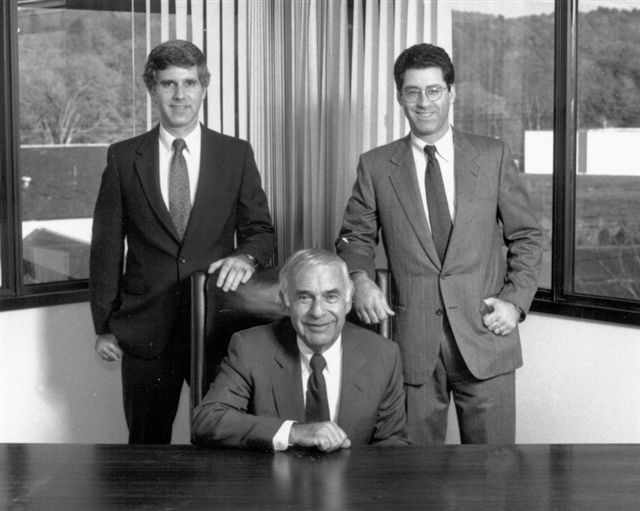
Lester Cohen and his sons, including Rick Cohen (right), who joined C&S in 1974.

The chairman of C&S Wholesale Grocers Inc. works out of a nondescript office park once slated to house a county jail in Keene, New Hampshire, a leafy mountain hamlet 90 miles northwest of Boston. The truckers who deliver goods from the company’s 54 distribution centers drive unmarked tractor-trailers. Cohen’s last interview was published a decade ago. Even the Keene Chamber of Commerce overlooked C&S as one of the town’s largest employers. “We’re the biggest company no one has ever heard of,” Bryan T. Granger, a company spokesman, said by phone. The 61-year-old — who goes by “Rick” — has transformed C&S into the world’s largest grocery wholesaler since taking the helm of the business in 1989, making him one of the 100 richest people in the world and the wealthiest man in New England after Connecticut hedge-fund manager Raymond T. Dalio, according to the Bloomberg Billionaires Index. The company had sales of $21.7 billion in 2012, distributing more than 95,000 products to 4,000 supermarkets from Maine to Hawaii. Cohen is the business’ sole owner, Granger said. He has a net worth of $11.2 billion, according to the Bloomberg index, and has never appeared on an international wealth ranking — a status one associate said suits him just fine. “I tried to put our name on the trucks and he didn’t want any part of it,” said Edward Albertian, 58, a former C&S president and now chief executive officer of Citysports, a 22-store Boston-based retailer owned by Highland Capital Partners LP. “He wanted to continue to be stealth and operate in this little, dinky Keene, New Hampshire, marketplace.” Read more of this post

Dyson’s chief is not standing in the eponymous inventor’s shadow

August 4, 2013 2:53 pm

Enough limelight for both bosses

By Andy Sharman

images (28)article-2100152-11B3AD95000005DC-328_468x405Dyson070912_2331798bjames-dyson1

The ‘other’ of invention: Max Conze with a Dyson cordless vacuum cleaner

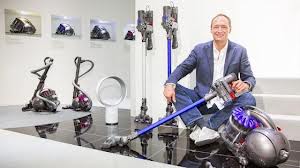
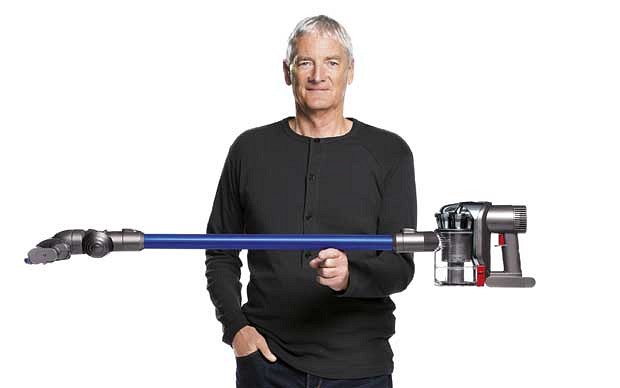
Aplain white room in a warehouse in rural Wiltshire. Futuristic vacuum cleaners and bladeless fans are stood on plinths. Empty shelves line the wall. And a 6ft 2in former German army lieutenant is pirouetting around the room, vacuuming up detritus. It’s a fantastical scenario worthy of the mind of Sir James Dyson, the inspiredinventor, eponymous overlord and chief engineer of the UK manufacturing group behind bagless vacuum cleaners, towel-less hand dryers and bladeless fans. However, the star of today’s show is not Sir James, but Max Conze, the Dyson chief executive who is demonstrating the company’s latest innovation – the curiously named Dyson Hard, a cordless vacuum-mop hybrid. “If you work for Dyson,” he says, “you have to have fun with vacuum cleaners.” Read more of this post

Beyond Blame: Would we better off in a world without blame?

Beyond Blame: Would we better off in a world without blame?

Barbara H. Fried

Friday, June 28, 2013

In an article published shortly before his death, the political scientist James Q. Wilson took on the large question of free will and moral responsibility:  Does the fact that biology determines more of our thinking and conduct than we had previously imagined undermine the notion of free will? And does this possibility in turn undermine, if not entirely destroy, our ability to hold people accountable for their actions? Wilson’s answer was an unequivocal no. He has lots of company, which should come as a surprise given what scientific research into the determinants of human behavior has told us over the past four decades. Most of that research, as Wilson says, points to the same conclusion: our worldviews, aspirations, temperaments, conduct, and achievements—everything we conventionally think of as “us”—are in significant part determined by accidents of biology and circumstance. The study of the brain is in its infancy; as it advances, the evidence for determinism will surely grow. One might have expected those developments to temper enthusiasm for blame mongering. Instead, the same four decades have been boom years for blame.  Read more of this post

Life in a Toxic Country

August 3, 2013

Life in a Toxic Country

By EDWARD WONG

04COVER-articleLarge

A baby being given nebulizer therapy at Beijing Children’s Hospital.

BEIJING — I RECENTLY found myself hauling a bag filled with 12 boxes of milk powder and a cardboard container with two sets of air filters through San Francisco International Airport. I was heading to my home in Beijing at the end of a work trip, bringing back what have become two of the most sought-after items among parents here, and which were desperately needed in my own household. China is the world’s second largest economy, but the enormous costs of its growth are becoming apparent. Residents of its boom cities and a growing number of rural regions question the safety of the air they breathe, the water they drink and the food they eat. It is as if they were living in the Chinese equivalent of the Chernobyl or Fukushima nuclear disaster areas. Read more of this post

Inferior composite wood used for 188,000 sleepers of Singapore’s MRT train which can hardly withstand the crushing weight of trains and result in train derailment

Was inferior composite wood used for MRT sleepers?

August 5th, 2013 |  Author: Editorial

25881842e

On 14 May 2013, ST reported that SMRT and LTA will accelerate a programme to replace timber sleepers on the ageing North-South and East-West lines to improve the resilience of the rail network in Singapore (‘LTA, SMRT to accelerate sleeper replacement on North-South and East-West lines‘). It said that SMRT aims to replace all 188,000 timber sleepers on the North-South Line by 2015, and on the East-West Line by 2016. On Saturday (3 Aug), SPH’s bilingual news and entertainment portal (www.omy.sg) published an interesting article [Link] claiming the timber sleepers have been discovered to be made of sub-standard wood. The article claims to have heard from an insider in the wood industry. It seems that some company has bought or otherwise acquired the old MRT timber sleepers (i.e. the timber sleepers that are to be gradually replaced by 2015 in the case of the North-South Line and 2016 in the case of the East-West Line). The company wants to cut these timber sleepers into smaller pieces to manufacture other products. As the sleepers used for the Malaysian railway line can last for decades with no decay, the company quite fairly assumed the sleepers used for our MRT network to be of similar quality. However the company was shocked when it cut the sleepers. They found that they are not made of hard wood at all. They are in fact made of composite wood. Furthermore, the wood has decayed. Apparently the company is not so much concerned about the loss of their investment in the “timber” sleepers as they are that such inferior wood has been used as sleepers for Singapore’s rail network. The lousy sleepers made of composite wood can hardly withstand the crushing weight of trains. If enough sleepers disintegrated, the rail would sink. That would split the track and signals would be interrupted. Train derailment might result. Maintenance staff replacing the wooden sleepers on the train tracks near Clementi MRT station. Rail operator SMRT and rail authority LTA will accelerate a programme to replace so-called timber sleepers on the ageing North-South and East-West lines to improve the resilience of the rail network. (ST Photo)

The article posed a number of questions to LTA:

1. Does the Govt know about this? Is it the reason SMRT and LTA want to change the sleepers?

2. Who purchased the inferior sleepers?

3. Was this the cause of the intermittent signal interruption problems in the MRT network in the past?

4. Was the slowing of our trains due to the realisation that the tracks are lined with inferior sleepers?

5. Is it a misunderstanding? In other words, are there in fact no problems at all with the sleepers? Read more of this post

The Finances of Serious Illness; For people facing a grim diagnosis, finances are often the last thing they want to talk about. But they shouldn’t be

August 4, 2013, 4:55 p.m. ET

FUNDAMENTALS OF INVESTING

The Finances of Serious Illness

For people facing a grim diagnosis, finances are often the last thing they want to talk about. But they shouldn’t be.

LISA WARD

It’s the news no one wants to hear: a diagnosis of a dire, possibly fatal, disease. As questions about life and death naturally overshadow everything else, financial planners and advisers say, it’s common for people in this situation to let their finances fall to the wayside. Nevertheless, they say, coming up with a financial plan, which may involve making changes to your investment portfolio, is crucial to achieving the best possible outcome for patients and their families. Here are some pointers from advisers on how to handle the financial impact of a serious illness. Read more of this post

Monogamy’s Boost to Human Evolution; Fossil records suggest that by sticking around and protecting and feeding their offspring, early men paved the way for the growth of the human brain

August 2, 2013

Monogamy’s Boost to Human Evolution

By CARL ZIMMER

“Monogamy is a problem,” said Dieter Lukas of the University of Cambridge in a telephone news conference this week. As Dr. Lukas explained to reporters, he and other biologists consider monogamy an evolutionary puzzle. In 9 percent of all mammal species, males and females will share a common territory for more than one breeding season, and in some cases bond for life. This is a problem — a scientific one — because male mammals could theoretically have more offspring by giving up on monogamy and mating with lots of females. In a new study, Dr. Lukas and his colleague Tim Clutton-Brock suggest that monogamy evolves when females spread out, making it hard for a male to travel around and fend off competing males. Read more of this post

How to Teach Your Children About Investing; Have them invest in companies they understand

August 1, 2013, 10:42 a.m. ET

How to Teach Your Children About Investing

Money pros tell how they introduced financial concepts to their own kids

APARNA NARAYANAN

Financial advisers spend lots of time explaining investing principles like diversification, compounding and dollar-cost averaging to clients. But how do they explain these investing fundamentals to a more personal audience—their kids, and at what ages? When money matters become part of the dinner-table conversation, raising investment-savvy kids can be as simple and painless as filing a 1040EZ. Here are some tips from financial professionals to parents on how to teach their children about investing. Read more of this post

Stop ‘Branding’ and Improve English’s Reputation

Stop ‘Branding’ and Improve English’s Reputation

By Alex Marshall  Aug 2, 2013

In 16th-century England, Thomas Gresham formulated what is now known as Gresham’s law, which stipulates that bad money drives out good. Paper money tends to circulate more freely than silver, and silver more freely than gold, because people hoard whatever type of money is seen as best. It’s why we spend those torn dollar bills first. I have no problem with this. It might even be a good thing, because it expands the money supply and credit. But I do have a problem when a similar dynamic takes over language, as bad, bureaucratic, bulky and bothersome words drive out simple, short, clear and good ones. Read more of this post

A bond-fund manager who retired last year wanted to leave before the difficult bear market for bonds that she sees ahead

August 4, 2013, 4:55 p.m. ET

Bond Manager Wanted Out Before the Bear Arrives

MICHAEL A. POLLOCK

IF-AB232_BONDSI_G_20130731181718

Margaret Weinblatt and her husband traveled to China last year.

For successful financial professionals, the toughest decision sometimes is when to quit. The bond-market outlook made the choice easier for Margaret “Didi” Weinblatt, who retired in 2012 after a dozen years as a bond-fund manager at San Antonio-based USAA Investments. Ms. Weinblatt fears that fixed-income investors generally now face a very difficult bear market in bonds as the Federal Reserve eventually pares back its economic stimulus. “Your fund might do well relative to other funds, but when the bond market goes down, all funds could go down,” she says. “That can be very stressful for a fund manager.” Ms. Weinblatt, who is 69, worked in funds management for nearly three decades. At USAA, she managed the $4 billion-plus USAA Income fund and the $500 million USAA Government Securities fund. The funds rank, respectively, in the top quarter and top third of their Morningstar Inc. MORN +0.60% categories for the past decade—performances that she says resulted from “being careful to not take on too much risk.” The Income fund’s only stumble during her tenure was a negative 5% return in 2008. Read more of this post

Dying out? China’s young shun family firms, giving first-generation owners fewer exit options

Dying out? China’s young shun family firms

Wed, Jul 31 2013

By Lavinia Mo

HONG KONG (Reuters) – Dai Yintao, 21, is the only son of the millionaire owner of Chinese real estate, pharmaceutical and mining companies. He has no interest in taking over his father’s business, opting instead to work on a building site in Guiyang in Guizhou province, arriving each day in a Porsche. “I work here because I don’t want to take money from my father,” Dai says. “Freedom means everything.” As China’s first-generation entrepreneurs hit retirement age, more than 3 million private businesses will have to deal with succession issues in the next 3-8 years, according to data from the Chinese Academy of Social Sciences. This is not unique to China, of course, but it poses particular risks in a country where there are few professional managers, and families are reluctant to hire outsiders anyway for fear they will take control of the business. Domestic acquisitions and private equity involvement are also rare, giving first-generation owners fewer exit options. Read more of this post

Murky Data Muddy Debate on Chinese Consumers’ Strength

August 4, 2013, 2:56 p.m. ET

Murky Data Muddy Debate on Chinese Consumers’ Strength

Issue Is Key to Determining Need for Policy Reform

TOM ORLIK

NA-BX526_OUTLOO_G_20130804181806

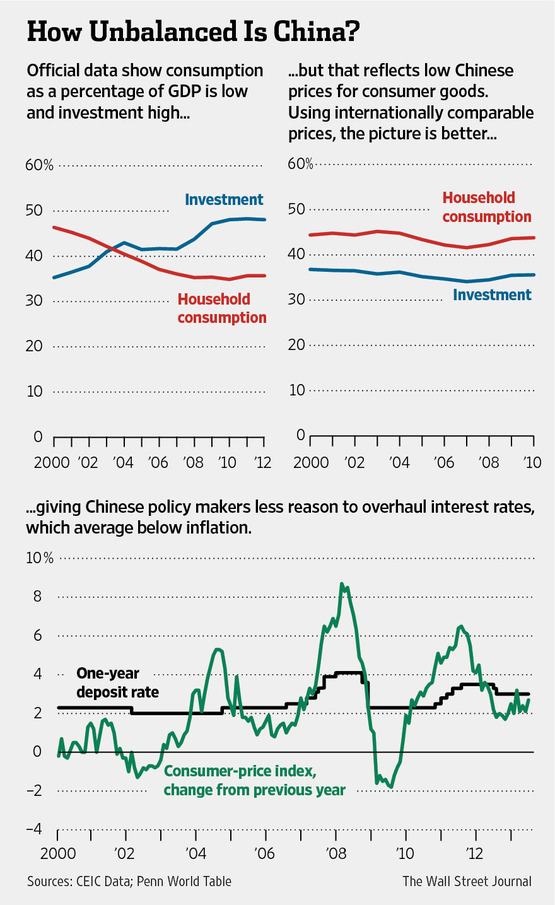
As China’s growth slows toward a 20-year low, economists are calling for consumers to shoulder more of the burden of supporting the world’s No. 2 economy. But the country’s leaders are increasingly saying Chinese consumers aren’t shirking their responsibility—they’re just undercounted. “The official data severely understates household consumption,” argued People’s Bank of China Deputy Governor Yi Gang, speaking at a meeting of top government and private economists from China and the U.S. in April. Mr. Yi also played down the role of China’s low interest rates—long seen as depressing consumption—in contributing to the imbalances, according to those present at the meeting. Read more of this post

Demands for new Indian states revive after Telangana created; India could have 50 States if all demands are met

August 4, 2013 1:03 pm

Demands for new Indian states revive after Telangana created

By Amy Kazmin in New Delhi

Globally renowned for tea estates that produce some of the most delicate, and highly-prized teas, India’s mountainous Darjeeling region was rocked for most of the 1980s by strikes and protests by the indigenous Gorkha community, who were demanding the area be turned into a separate state within the Indian union. The movement ebbed in the late 1980s, when Darjeeling was granted some autonomy within its present state of West Bengal. But this weekend the Himalayan region has been shut down once again. Businesses and elite boarding schools are closed, transport suspended, and tourists have been sent away as Gorkha political leaders enforce an indefinite strike in a ‘do or die’ push for statehood. Read more of this post

Sanofi Dengue Bid Seen as $2.6 Billion Hit or Major Flop

Sanofi Dengue Bid Seen as $2.6 Billion Hit or Major Flop

Drug ineffective in tests against most common strain in Thailand

By Simeon Bennett on 9:33 am August 5, 2013.

Sanofi, whose vaccines have all but eradicated polio, recently flew journalists from around the globe to a sparkling new factory in France to tout its next big project — the world’s first vaccine for dengue. That takes confidence, considering mid-stage studies for the shot last year yielded results that ranged from perplexing to disappointing. Sanofi is forging ahead. It’s readying commercial production of a vaccine to prevent the debilitating and sometimes fatal mosquito-borne malady that’s had outbreaks in the US and Europe and threatens half the global population. The drug maker is making the first batches of the shot at its new 300 million-euro ($398 million) plant, even as it waits for results next year of make-or-break trials to determine whether the product will be a $2.6 billion-a-year success or an $800 million flop. Read more of this post

Regulatory risk on the rise in India

Regulatory risk on the rise in India

Fri, Aug 2 2013

* Constant rule changes spook investors

* Lack of clarity mars even positive changes

* Courts often overturn new regulation

By Manju Dalal

SINGAPORE, Aug 2 (IFR) – When Palaniappan Chidambaram took over as Finance Minister of India exactly a year ago, he would not have expected that his efforts to open doors for foreign investors would end up highlighting one of their biggest concerns: regulatory risk. The recent attempts to stem the rupee’s depreciation have reminded global investors that the rules of engagement in India can change with alarming regularity. “We make investment decisions on factors like forex risk, regulatory risks and target company fundamentals. Of these three pillars, two are already on very shaky ground in India,” said a Singapore-based investor. “If I was 100% bullish on India two years back, I am only 25% bullish now. I cannot ignore India, but I know for sure I cannot expect the kind of stability in regulation that we see in China or even in Thailand.” Read more of this post

For most of the past decade Yes Bank has been the fastest-growing and highest-profile upstart in India; Yes Bank loses shine as India liquidity ebbs and rupee slumps

August 4, 2013 8:14 am

Yes Bank loses shine as India liquidity ebbs

By James Crabtree in Mumbai

For most of the past decade Yes Bank has been the fastest-growing and highest-profile upstart in a new generation of Indian private banks. But in the aftermath of government moves to prop up the nation’s currency, it is gaining a fresh reputation as the biggest loser from India’s new moment of tighter liquidity. Founded in 2004, Yes Bank has expanded rapidly to become the country’s fourth-largest private bank by loans, with after-tax profits growing at an eye-catching compound annual rate of 44 per cent over the past five years – creating an unorthodox image bolstered by the group’s charismatic and publicity loving founder Rana Kapoor. Read more of this post