Tesla Is the New Apple: Najarian; Any mention of the electric car industry leader’s stock in a favorable light is met by the sneering contempt unique to bears

Tesla Is the New Apple: Najarian

By Jeff Macke | Breakout – 17 hours ago

Tesla’s (TSLA) stock has done nothing but make people money but you wouldn’t know it from the Twitter-sphere. Any mention of the electric car industry leader’s stock in a favorable light is met by the sneering contempt unique to bears. Sure there are devotees but for the most part Tesla is regarded as a stock for cult-members, not investors. “If you talk positively about Tesla you’re some sort of fiend,” says OptionMonster’s Jon Najarian. “There are so many haters… you can see it by the 30% short interest.” In that sense Najarian says he hasn’t seen such instinctive contempt for “cult-ish” shareholders since the days when Steve Jobs was running Apple (AAPL). Read more of this post
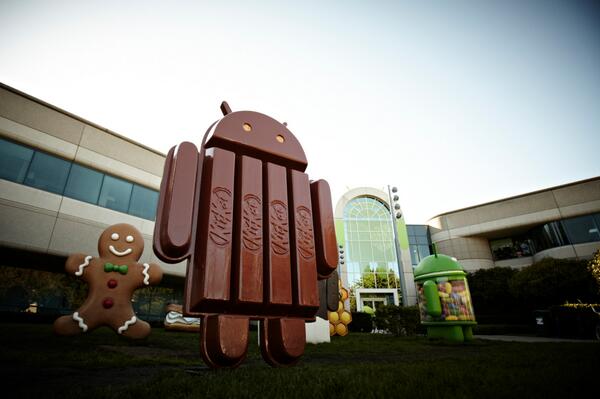
The next version of Google’s Android operating system will be named KitKat

Sep 3, 2013

KitKat, Google’s Purely Promotional OS Flavor

By Greg Bensinger

BTQIADeCUAAJ3WN

GoogleGOOG +1.59% raised eyebrows Tuesday when it announced that the next version of its Android operating system will be named KitKat, after the trademarked NestleNESN.VX -0.73% candy bar. Sundar Pichai, Google’s head of Android, said in a blog post on Google+ that he was surprised to return from a trip to Asia only to find a giant statue of an Android-looking KitKat bar on the lawn. That Google named the latest version of its mobile OS after a sweet treat isn’t a surprise. Previous versions of Android software have been named after ice cream sandwiches, gingerbread and jelly beans. Naming it after a well-known brand, though, is a first. (We hardly knew ye, Android Key Lime Pie.) Is there more to this alliance? Will Nestle and Google somehow profit with money changing hands? Nope, says a Google spokesman. The KitKat promotion is just that — a promotion. Neither Google nor Nestle gets paid or pay as part of the accord. Still, KitKat packages will be graced with the familiar Android robot logo, and the two companies announced a sweepstakes for a limited number of robot-shaped KitKat candy bars, free Google Play app store credits and Nexus 7 tablets. But there will be plenty of marketing prowess on display. A verified Twitter account for KitKat, replete with the confectionery Android robot, retweeted praise for what many called Nestle’s marketing “win” and kept up with its own tweets. Google is only now getting to letter K in its march down the alphabet of OS names. What will future letters hold? Oreo? Whatchamacallit? Will OS names, like professional sports arenas, go to the highest bidder? Google isn’t saying.


Vodafone Decade of Patience Pays $125 Billion

Vodafone Decade of Patience Pays $125 Billion: Real M&A

Vodafone Group Plc (VOD)’s payout from a decadelong dance with Verizon Communications Inc. (VZ) over the fate of their U.S. wireless joint venture was worth the wait.

By holding off until now to sell its 45 percent stake in Verizon Wireless, Vodafone secured $130 billion, adding to more than $15 billion in dividend payouts since the venture was formed in 1999. With Sanford C. Bernstein & Co. estimating Vodafone’s initial investment at $20 billion, the company is getting as much as $125 billion more than that for a sixfold return, according to data compiled by Bloomberg. Read more of this post

YouTube marketing pioneer BH Cosmetics named to the Inc 500, proving the power of online brand building

YouTube marketing pioneer BH Cosmetics named to the Inc 500, proving the power of online brand building

BY MICHAEL CARNEY 
ON SEPTEMBER 3, 2013

Nearly every brand and aspiring self promoter has a YouTube channel today that they use to “engage” with their fans. But this was hardly the case in 2009 when BH Cosmetics launched their first video content marketing initiative in 2009. At the time, BH founder Fred Sadovskiy, a former ad agency owner, was well ahead of his time. This foresight enabled the founders to build a massively popular online-only cosmetics brand without ever raising a dollar of outside financing. Last week, BH was named to the Inc 500 list (No. 448) as one of the fastest-growing private companies in America, a feat that Sadovskiy attributes largely to the more than 200,000 videos his company his published and the more than 100 million total video views they have amassed over the last four years. Read more of this post

Verizon to Microsoft Buoy M&A Surge to Counter Tech Disruption

Verizon to Microsoft Buoy M&A Surge to Counter Tech Disruption

Ask telecommunications and technology bankers what they did this summer and many will have a simple answer: Deals.

There have been more than $240 billion of tech and telecom takeovers this quarter, led by Verizon Communications Inc. (VZ)’s $130 billion buyout of Vodafone Group Plc (VOD)’s stake in their wireless venture, according to data compiled by Bloomberg. That puts the period on pace to be the busiest quarter since 2000, when AOL Inc. and Time Warner Inc. announced their merger, then valued at as much as $186 billion. Read more of this post

Timing of bullish Nokia options trades raises questions

Timing of bullish Nokia options trades raises questions

Tue, Sep 3 2013

By David Gaffen

(Reuters) – A flurry of bullish bets on Nokia just before markets closed on Friday are in line to pay off handsomely as a result of Microsoft’s move to buy the Finnish company’s handset business, and has once again raised questions about suspicious timing of such trades. Microsoft Corp said Monday that it would buy Nokia’s handset business for $7.2 billion in a bid to win market share in the mobile business. The announcement sparked a massive rally in Nokia’s U.S.-listed shares, which were up 30 percent on the day. Read more of this post

Why Nokia didn’t sell its patents to Microsoft

Why Nokia didn’t sell its patents to Microsoft

Tue, Sep 3 2013

By Dan Levine

SAN FRANCISCO (Reuters) – Nokia may have sold its handset business to Microsoft Corp, but by hanging on to its valuable patent portfolio, the Finnish company could also get a big future payoff at the expense of Android phone makers. Microsoft agreed on Tuesday to pay 3.79 billion euros ($5 billion) for Nokia’s handset business and another 1.65 billion euros for a 10-year license for Nokia’s patents, considered some of the highest-quality patents in the mobile market. Read more of this post

Why Microsoft and Nokia won’t live happily ever after

Why Microsoft and Nokia won’t live happily ever after

September 4, 2013 – 11:07AM

Stephen Hutcheon

1378256765240

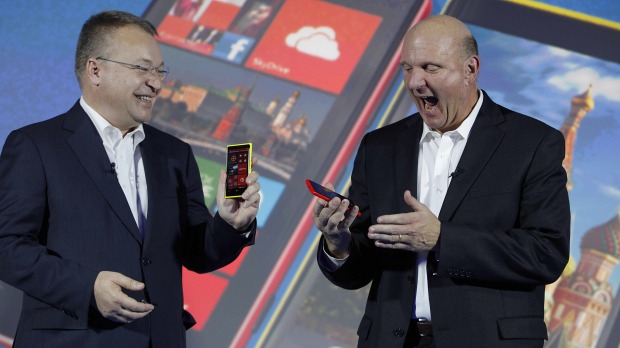
Flashback: Microsoft CEO Steve Ballmer, right, and Stephen Elop share the stage in November 2012. Photo: Bloomberg

Two-and-a-half years ago, the then recently recruited Nokia chief executive Stephen Elop fired off an email to his staff which became known as the “burning platform” memo. The email spelt out the uncomfortable truth: Nokia, the one-time mobile phone industry leader, was on the ropes and faced some difficult decisions. Those choices, he explained using a metaphor, were not unlike those facing a man working on a North Sea oil rig that had just caught fire. Read more of this post

Nokia Sale Marks End of an Era; Former Tech Giant Has Long History of Reinventionk

September 3, 2013, 5:23 a.m. ET

Nokia Sale Marks End of an Era

Former Tech Giant Has Long History of Reinvention

JOHANNES LEDEL

MK-CG005A_NOKFA_G_20130903191804

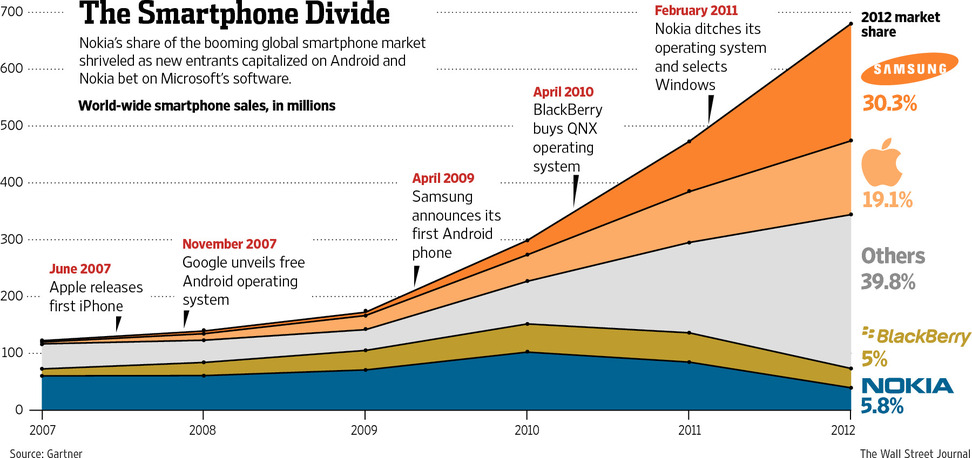
Nokia Corp.’s NOK1V.HE +33.94% decision to sell its handset business to MicrosoftCorp. MSFT -4.55% and focus on wireless-network equipment is the Finnish company’s latest attempt in its 148-year history to reinvent itself during a crisis. It also marks the effective end of a national champion and onetime global tech giant. “This is end of an era in Finland,” Jan Vapaavuori, the country’s minister of economic affairs said Tuesday. The deal with Microsoft will have a “mental effect,” he said, since Nokia long has been an important international brand with Finnish roots. Read more of this post

Microsoft-Nokia deal not necessarily good news for fellow device maker BlackBerry

Microsoft-Nokia deal not necessarily good news for fellow device maker BlackBerry

Matthew Braga | 13/09/03 | Last Updated: 13/09/03 4:50 PM ET
On the surface, BlackBerry Ltd. and Finland’s Nokia Corp. share much in common: both are struggling smartphone manufacturers fighting against fierce competition from Apple Inc. and devices running Google Inc. software in the battle for third place — with one key difference. Read more of this post

In Nokia, Microsoft Bets on Apple-Like Revival

September 3, 2013

In Nokia, Microsoft Bets on Apple-Like Revival

By NICK WINGFIELD

Microsoft-Nokia

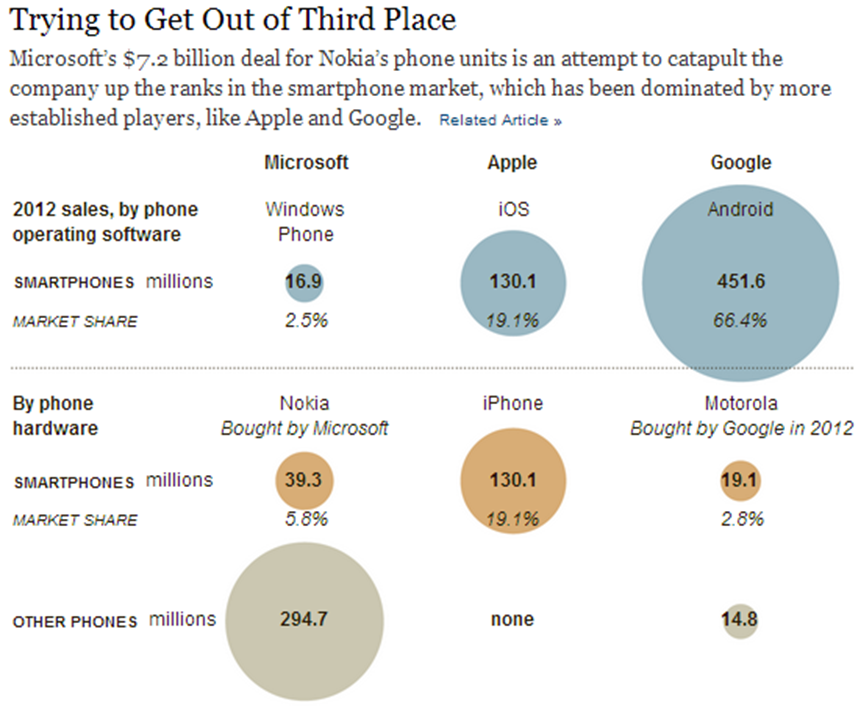
SEATTLE — With its purchase of Nokia’s phone business, Microsoft is taking inspiration from Apple’s way of making products, bringing hardware and software under a single roof where they can be more elegantly woven together. But Microsoft already bears a striking resemblance to Apple — the Apple of two decades ago, not the trailblazer of the mobile era. The $7.2 billion Nokia deal, which was reached late Monday, is unlikely to change that and catapult Microsoft up the ranks in the smartphone market. Read more of this post

Don’t cry for Nokia, Finland

Don’t cry for Nokia, Finland

By Michal Lev-Ram, writer September 3, 2013: 2:53 PM ET

Why the Microsoft acquisition — and Stephen Elop — may turn out to be Nokia’s greatest hope.

FORTUNE — It’s a sad day for Finland. Or is it? Sure, much of the phonemaker’s storied legacy — and future — is now in Microsoft’s hands, a bitter pill to swallow for many Finns. And yes, 32,000 Nokia employees will become part of the Redmond-based tech giant’s empire overnight, whether they like it or not. But Nokia’s (NOK) downward spiral began a long time ago, and the company wasn’t headed toward any kind of happy ending, with or without Microsoft (MSFT) swooping in to buy its devices and services business for $7.2 billion. What’s more, the deal may actually give the Finnish brand a sliver of a chance to regain some of its lost momentum. Especially if Stephen Elop — yes, the Nokia CEO and former Microsoft exec now blamed for this most recent turn of events — lands the top job in Redmond. Read more of this post

Australian billionaire James Packer bought 9.4 percent of Zillow Inc., becoming the second-biggest shareholder in the U.S. real-estate website

Billionaire Packer Buys Zillow Stake as Housing Rebounds

By David Fickling  Sep 4, 2013

Australian billionaire James Packer bought 9.4 percent of Zillow Inc., becoming the second-biggest shareholder in the U.S. real-estate website amid a recovery in the housing market. Cavalane Holdings Pty bought about 3 million shares, Seattle-based Zillow said in a filing, without giving financial terms. The stake is valued at $298 million based on Zillow’s last closing price. Cavalane, controlled by Packer, is Zillow’s largest shareholder after Caledonia Private Investments Pty, according to data compiled by Bloomberg. Packer, who has a net worth of $6.1 billion according to the Bloomberg Billionaires Index, is betting on improving demand in the U.S. housing market. Confidence among U.S. homebuilders climbed in August to the highest level since 2005 as demand for new homes supports the market amid rising mortgage rates. In August, Packer sold about A$261 million of shares in jobs website Seek Ltd. (SEK) and fund manager Magellan Financial Group Ltd. (MFG) that were held by Cavalane, the vehicle he used in 2010 to buy into broadcaster Ten Network Holdings Ltd. (TEN) Zillow climbed 2.7 percent to $99.09 yesterday. The stock has more than tripled this year, after advancing 23 percent in 2012.

To contact the reporter on this story: David Fickling in Sydney at dfickling@bloomberg.net

Apps bring lock and key into the digital age

Apps bring lock and key into the digital age

Tue, Sep 3 2013

By Natasha Baker

TORONTO (Reuters) – The lock and key has been a mainstay of security for thousands of years, but companies developing new apps are bringing them into the digital age, allowing people to share keys digitally and gain keyless access to homes. KeyMe, an app for the iPhone, aims to modernize the way spare keys are stored, and how copies are shared with family and friends. With KeyMe, home owners can photograph their keys, which the app converts into instructions that a locksmith can follow to replicate the key. Read more of this post

5 reasons 3-D printing isn’t quite ready for prime time

5 reasons 3-D printing isn’t quite ready for prime time

September 3, 2013: 3:02 PM ET

The 3-D printing market could triple by 2018, but don’t confuse that with a 3-D printing revolution.

By Clay Dillow

FORTUNE — If there was any doubt Wall Street is warming up to 3-D printing it was extinguished last week when Citi analyst Kenneth Wong initiated coverage of 3-D printer manufacturers Stratasys (SSYS) and 3D Systems (DDD), at the same time expressing in a client note that he believes the market for 3-D printing equipment and services will triple by 2018. The market “is on the cusp of seeing much broader adoption across more upstream production applications and the consumer end market,” Wong wrote. Shares of Stratasys and 3-D Systems — as well as others in the space — spiked. Read more of this post

Are we ready for the next meltdown?

Are we ready for the next meltdown?

By Allan Sloan, senior editor-at-large   @FortuneMagazine August 30, 2013: 1:30 PM ET

Okay, folks. It’s been five years since Lehman Brothers failed, setting off a chain of unanticipated consequences that came within inches of melting down the world’s financial system. Had the Federal Reserve, other central banks, and the U.S. government not intervened and thrown trillions of dollars at the crisis to keep financial markets afloat, we would be talking about Great Depression II.

But rather than offering the conventional wisdom about what’s happened since Lehman filed for bankruptcy on Sept. 15, 2008, which is readily accessible in a zillion places, I’d like to offer some unconventional wisdom — at least I hope it’s wisdom — based on my 40-plus years of writing about business. My specialty is fiascoes and failures, which is why there’s a toy vulture hanging from my office ceiling, a mid-1980s Father’s Day present from my children. Read more of this post

Health.com.au’s Andy Sheats eyes health insurance shake-up

Health.com.au’s Andy Sheats eyes health insurance shake-up

PUBLISHED: 03 SEP 2013 00:05:00 | UPDATED: 03 SEP 2013 12:39:45

fc4d22e0-1135-11e3-a019-ae7c4c5b1189__MG_0332--646x363

‘Health insurance is a massive industry and there is plenty of room for everybody,’ says Andy Sheats. Photo: Michel O’Sullivan

MERCEDES RUEHL

Former REA Group executive Andy Sheats wants to shake up the $16 billion private health insurance sector, the way realestate.com.au transformed buying and selling houses. The last new substantial health insurance company to open its doors was Medibank Private in 1997, according Mr Sheats. Even though the industry has moved online, he feels there is room for a new, more modern player. Launched in April 2012, his online health insurance company, health.com.au already generates sales of $45 million and employs 23 people. It has grown to cover 40,000 Australians. “Health insurance is a massive industry and there is plenty of room for everybody,” Mr Sheats said. “We are only doing $45 million out of a possible $16 billion so we are not really concerned about new entrants.” Read more of this post

Asia Services Set to Exceed Manufacturing as GDP Share

Asia Services Set to Exceed Manufacturing as GDP Share

Dinh Tu quit being a monk three years ago and worked in a yoga studio in Ho Chi Minh City to cater to a growing Vietnamese middle class who are finding new outlets for their money. These days, he’s selling insurance, too. “People in Vietnam have more to spend now,” said the 40-year-old agent for Tokyo-based Dai-ichi Life Insurance Co. “Because I’m no longer a monk, I have to worry about financial pressures, too. I can see that insurance is a good business.” As Tu and millions of other Asians switch from traditional occupations, farms and factories, the contribution of service industries to the region’s emerging economies is poised to exceed 50 percent for the first time, according to data compiled by Bloomberg from government statistics. The watershed marks Asia’s shift from its role as the world’s workshop with countries led by China concentrating on building domestic economies. Read more of this post

The prospect of the Pratt family taking part of their Visy packaging empire public has always tantalised the business community

James Thomson Editor

A very private family goes public: Pratt family’s investment guru Alex Waislitz to run listed group

Published 04 September 2013 11:04, Updated 04 September 2013 13:59

The prospect of the Pratt family taking part of their Visy empire public has always tantalised the business community, particularly the nation’s investment bankers. A few years ago, we got close when packaging group Pact, owned by Richard Pratt ’s daughter Fiona and her husband Raphael Germinder, looked at an IPO. But on Tuesday, it finally happened. Well, sort of. Alex Waislitz is set to become the non-executive chairman of listed cashbox Wentworth Holdings after his investment group Thorney struck a deal on a $50 million recapitalisation of the company. The business will be renamed Thorney Opportunities Ltd. The deal means Waislitz will manage the money of ordinary punters for the first time. Read more of this post

The Greek Yogurt Culture War; It’s Crowding Out Classic Flavors and Others in the Dairy Case; Bye Bye, Margarine

September 3, 2013, 7:22 p.m. ET

The Greek Yogurt Culture War

It’s Crowding Out Classic Flavors and Others in the Dairy Case; Bye Bye, Margarine

SARAH NASSAUER

PJ-BQ312_NOGREE_G_20130903195412

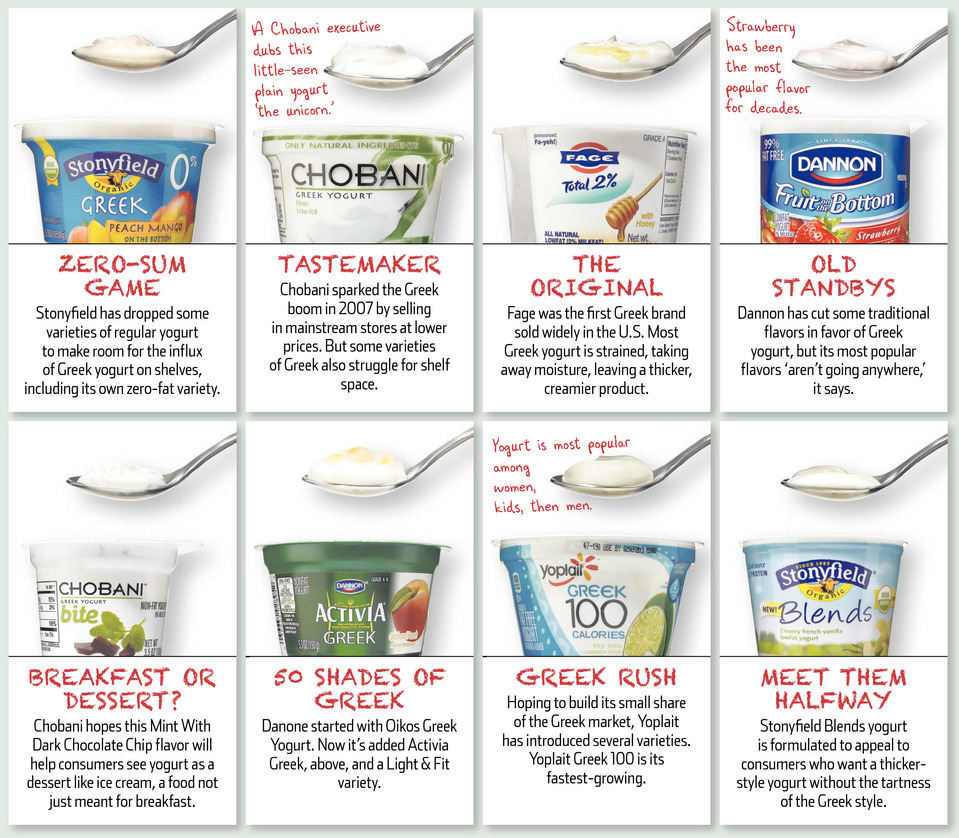
Culture wars are being waged at a supermarket near you, as traditional yogurt is getting the squeeze from upstart Greek-style brands. WSJ’s Sarah Nassauer joins Lunch Break. Photo: F. Martin Ramin for The Wall Street Journal. These are dark days for fans of regular yogurt. The creamy snack is being edged out on grocery store shelves by its thicker, tarter, higher-protein sibling, Greek yogurt. Over a third of the yogurt in a typical grocery store is now Greek, in varieties from low-fat to fruit-on-the-bottom to tubes for kids. Because shelf space is limited, the Greek squeeze means consumers have had to say goodbye to some varieties of traditional-style yogurt and more obscure flavors. (R.I.P. Stonyfield Farm’s Whole Milk White Chocolate Raspberry and Strawberry Acai flavors.) Pudding cups, margarine and other products with the misfortune of usually sitting near yogurt also are harder to find. Read more of this post

Texas Wines Take the Heat in $1.8 Billion Business; With 275 bonded wineries producing 3 billion gallons annually and $1.8 billion in sales, both climate and sales marketing have made it a struggle to compete with California, Oregon

Texas Wines Take the Heat in $1.8 Billion Business

Being the fifth largest wine grape and wine producing state in the U.S. might be worth boasting about, but Texas is not a state that takes fifth place lightly. With 275 bonded wineries producing 3 billion gallons annually and $1.8 billion in sales, Texas’s wine industry is still expanding. But both climate and sales marketing have made it a struggle to compete with California, Oregon, and other states for bragging rights. “Our state’s top vignerons are among the bravest, most intrepid and most tortured farmers on the planet,” Houston Chronicle wine columnist Dale Robertson wrote last month. “Late freezes, hailstorms and drought wreak constant havoc.” Read more of this post

Procter & Gamble is talking to retailers about plans for a new bargain version of its flagship Tide laundry detergent. Three years ago P&G scrapped a lower-priced Tide Basic, fearing cannibalization

Updated September 3, 2013, 7:12 p.m. ET

P&G to Test Waters Again on a Bargain Tide

Cheaper Liquid Detergents Are Growing; Company Scrapped Earlier Effort

PAUL ZIOBRO

Procter & Gamble Co. PG -0.18% is trying again with a lower-priced Tide. In a move that could set off price battles in the laundry aisle, Procter & Gamble is talking to retailers about plans for a new bargain version of its flagship Tide laundry detergent, people in the industry said. One person said the product may be a liquid detergent called Tide Simple, a name P&G considered when it tried a low-price Tide several years ago. It would be priced just above rival bargain brands, such as Church & Dwight Co.’s CHD -0.30% Arm & Hammer. P&G declined to comment. A decision to offer a lower-priced version of the premium brand carries the risk that buyers of regular Tide could trade down and stay there. Read more of this post

Dollar General Is Paying Its Way; Shareholders Should Be Concerned About Its Dwindling Edge Over Larger-Format Competitors

September 3, 2013, 5:45 p.m. ET

Dollar General Is Paying Its Way

Shareholders Should Be Concerned About Its Dwindling Edge Over Larger-Format Competitors

SPENCER JAKAB

MI-BY226_AOT_NS_20130903165408

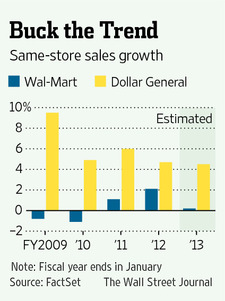
For retailers who obsess about a few cents here or there, there is nothing more painful than seeing an item walk out the door at a margin of negative-100%. Discussing a tepid fiscal first quarter, management at Dollar General Corp.DG -0.17% cited such “shrinkage” as a factor behind weaker margins. A euphemism for loss of inventory, mainly due to theft, it is a cost of doing business for a retailer found largely in low-income neighborhoods.  Read more of this post

Chinese Courier SFExpress Testing Parcel Delivery with Robotic Drones; China could become the first country to legalize parcel delivery by drone

Chinese Courier SFExpress Testing Parcel Delivery with Robotic Drones

By Tracey Xiang on September 3, 2013

SFdrone3 SFdrone1

S.F. Express, one of the largest couriers in China, is testing delivering parcels with robotic drones. It is reported that it is developed in house (in Chinese). The drone can fly as high as one hundred meters. With built-in navigation system, a drone carrying a parcel can arrive at a place by a route pre-set by S.F.Express staff. The company claims the maximum distance error is only two meters. The maximum weight a drone can carry is not disclosed. Currently several major Chinese couriers like S.F.Express have expanded to counties or even villages. But there are still areas that are more remote or with poor transport infrastructure. It is expected the drones will be useful for delivering online shopping goods to those places. Read more of this post

Baidu’s IQiyi to Sell TCL Smart TVs to Compete With Alibaba

Baidu’s IQiyi to Sell TCL Smart TVs to Compete With Alibaba

Baidu Inc. (BIDU), the owner of China’s most-popular Internet search engine, will start selling smart TVs with TCL Multimedia Technology Holdings Ltd. (1070) to compete with Alibaba Group Holding Ltd. in the growing online video business. Baidu and TCL’s 48-inch TV will go on sale online tomorrow at 4,567 yuan ($746), the companies said in a joint statement ahead of a news conference in Beijing today. A second model priced at 2,999 yuan will go on sale in November. Read more of this post

Why Are Items Pricier in China? From iPads to Starbucks to ice cream and cars, the price of many goods is far higher in China than in many other countries. But consumers there are wising up

September 3, 2013, 7:43 p.m. ET

In China, Veil Begins to Lift on High Consumer Prices

Resistance to Prices Grows Amid New Ways to Comparison Shop

LAURIE BURKITT

BEIJING—In China, consumers pay nearly $1 more for a latte at StarbucksSBUX +1.53% than their U.S. counterparts. A Cadillac Escalade Hybrid Base 6.0 costs $229,000 in China, compared to just over $73,000 in the U.S. Welcome to China’s modern retail world, where the price of many goods is far higher than in many other countries, a disparity that is all the more stark considering the income differences. A basic iPad 2 is priced at $488 in China, where average per capita income is around $7,500. The same tablet is $399 in the U.S., where average per capita personal income totals $42,693. Clothing and other apparel is on average 70% more expensive for consumers in China than in the U.S., according to data from SmithStreet, which compared the prices of 500 items of 50 brands in both countries. Read more of this post

When a Beijinger Owns 1,000 License Plate Numbers to rent out for profit; Flawed public policy can only be avoided through transparent decision-making and the use of judicial review

09.03.2013 12:40

When a Beijinger Owns 1,000 License Plate Numbers

Flawed public policy can only be avoided through transparent decision-making and the use of judicial review

By Wang Yong

Beijinger Wang Xiuxia should be in the Guinness World Records book for holding 1,000 license plate numbers, equivalent to 5 percent of new Beijing numbers issued monthly. She rented them out for profit. The case, exposed in late August, involves a number of legal and public policy questions worth analyzing. Wang’s rental business had two models of operation. Before a purchase limit was enacted by the Beijing city government in 2011, she rented identity cards to people from outside Beijing so they could register license plates. After the purchase limit came into effect – a limit that requires locals to enter a lottery system to get a plate – she rented out plates under her own name. Read more of this post

State Council Counselor Xia Bin noted that results of the ongoing nationwide auditing of local government debt could be quite “striking”, with substantial part of debts having gone sour, proposes “bailout” package to deal with the problems

State Council Counselor Suggest Tough Ways Against Local Debt

09-04 15:33 Caijing

Xia Bin says Beijing should punish those who spends recklessly and lavishly on offical buildings.

A counselor of the State Council in China suggested tough ways in reining in local government’s addition to debt, including sales of government’s assets like the usually fancy office buildings. “Local governments who spend recklessly and extravagantly in office building, while shouldering high debt burden, should be ordered to move out from their luxurious offices….and sell them along with other good assets to repay debts,” Xia Bin, who is also honorary director of the Finance Institute of the State Council Development Research Center, told media on Tuesday. Read more of this post

New Chinese Luxury: Pairing Wine With Duck, Not Sprite

New Chinese Luxury: Pairing Wine With Duck, Not Sprite

By Bloomberg News  Sep 3, 2013

Can’t tell a Monet from a Van Gogh? Christie’s International’s China staff can help. Mixing a pricey Chateau Petrus or Chardonnay with Sprite? Sommeliers at Shanghai wine retailer Sarment will explain why not. As growth in China’s luxury industry slows and consumers turn more selective, high-end brands are boosting efforts to educate consumers on the finer points of haute couture and vintage wines to persuade them to pay up. Read more of this post

Don’t Trust a Chicken Nugget That’s Visited China; Would you willingly eat a chicken nuggets processed in a country that has no intention of meeting U.S. food-safety standards? Most Americans likely wouldn’t

Don’t Trust a Chicken Nugget That’s Visited China

Would you willingly eat a chicken nuggets processed in a country that has no intention of meeting U.S. food-safety standards? Most Americans likely wouldn’t.

That may explain why the U.S. Department of Agriculture waited until Friday — the day before a long holiday weekend — to announce that it had ended a ban on Chinese chicken imports by approving four Chinese poultry processors to ship processed (“heat-treated/cooked”) chicken to the U.S. The report on the approved poultry plants noted that the audit set out to “to determine whether the People’s Republic of China’s (PRC) food safety system governing poultry processing remains equivalent to that of the United States (U.S.), with the ability to produce products that are safe, wholesome, unadulterated, and properly labeled.” Needless to say, the Chinese plants passed. Read more of this post