Korea Inc. grapples with aging workforce

Korea Inc. grapples with aging workforce
Militant labor unions blamed for high wage and low productivity

2013-09-01

By Lee Hyo-sik

130901_a02_koreainc1130901_a02_koreainc2

Korea has emerged as a global manufacturing powerhouse since the Korean War. Over the past six decades, automakers, shipbuilders, steelmakers and other manufacturers have become leaders in the industry. Companies like Samsung Electronics and Hyundai Motor are selling Korean-made products that are in demand across the world. While demand is high, local manufacturers are facing a ticking time bomb: a rapidly aging workforce. As a result, Asia’s fourth-largest economy is facing higher wages and falling labor productivity, which is chipping away at Korea’s ability to compete. Read more of this post

Singapore Stocks Worst in Developed World: Southeast Asia

Singapore Stocks Worst in Developed World: Southeast Asia

Singapore stocks tumbled by the most among developed markets last month as investors pulled cash from Southeast Asia on concern about the future of global stimulus.

Singapore’s Straits Times Index, the benchmark gauge for the region’s biggest market, dropped 7.5 percent in the 10 days through Aug. 28, its longest losing streak since 2002. The gauge slumped 6 percent in August, the worst performance among the world’s developed equity markets. Jardine Cycle & Carriage Ltd., the largest shareholder of Indonesia’s PT Astra International (ASII), and commodities trader Olam International Ltd. led declines. Read more of this post

New Zealand Ends Patents for Basic Software

Sep 1, 2013

New Zealand Ends Patents for Basic Software

By Lucy Craymer

International technology giants won’t be able to get patents for basic software under a law passed by the New Zealand government, although protection for significant innovations and programs will remain under the country’s copyright law. The New Zealand government updated its 60-year-old patent bill with a new law that acknowledges overseas influences in New Zealand but perhaps more controversially prevents both local and international companies receiving patents for their software. Local patent experts say the move brings the country in line with the U.K. and Europe, which already prevent the patenting of software. Under the U.K. law, a number of smartphone patents that Apple Inc. wanted such as a patent on unlocking a phone by performing a gesture were rejected. Read more of this post

Minzhong Refutes Glaucus Report as Aimed at Pushing Shares Lower

Minzhong Refutes Glaucus Report as Aimed at Pushing Shares Lower

China Minzhong Food Corp. (MINZ), the vegetable processor targeted by Glaucus Research Group, said it “strongly” refutes the short-seller’s report, describing it as going beyond fair comment. Glaucus’s statements on the Putian, China-based company’s performance were made with the sole objective of driving down the company’s share price and gaining from the decline, Minzhong said late yesterday in a statement. The response follows a collapse in Minzhong’s market value after Glaucus said the company deceived investors and regulators. More Chinese businesses trading in Hong Kong, Singapore and New York are drawing scrutiny from short-sellers. China Minzhong tumbled 48 percent, the most on record, in less than two hours on Aug. 26 after Glaucus, which has an office in Newport Beach, California, questioned the company’s accounts in a report. Read more of this post

Investment scams on the rise in recent years: Consumers Association of Singapore (Case)

PUBLISHED SEPTEMBER 02, 2013

Investment scams on the rise in recent years: Case

Whole of 2012 had 27 cases, complaints in Jan-July this year already hit 37

ANNABETH LEOW LEOWHMA@SPH.COM.SG

DISPUTES over dodgy investment schemes have been on the increase in recent years. The number of investment-related complaints lodged with the Consumers Association of Singapore (Case) stood at an estimated 37 in just the first seven months of this year, compared with 27 for the whole of last year and 12 for 2011. Out of the 37 complaints, close to half concerned gold investment schemes. Four more pertained to wine investments. Both these types of investments have attracted negative publicity of late.

Malaysian shrimp industry will lose RM511million if US anti-dumping duty is imposed

Updated: Monday September 2, 2013 MYT 6:56:47 AM

M’sian shrimp industry will lose RM511mil if US anti-dumping duty is imposed

BY DAVID TAN
DAVIDTAN@THESTAR.COM.MY

The next concern for the local shrimp industr y is the European Union’s preferen tial tariff of about 4% enjoyed by Malaysian shrimp producers

GEORGE TOWN: The local shrimp industry stands to lose over US$155mil (RM511mil) in revenue per annum should the United States’ proposal to impose a 54.5% anti-dumping duty on Malaysian shrimps take effect on Oct 1, 2013. Malaysia Shrimp Industry Association president Syed Omar Syed Jaafar told StarBizthat shrimp exports to the United States comprised 43.84% of Malaysian shrimp sold overseas, indicating that the United States is a major market. Read more of this post

Huge Summer for Hollywood, but With Few Blockbusters; In many ways, the summer belonged to smaller original movies when it came to turning out larger-than-expected audiences

September 1, 2013

Huge Summer for Hollywood, but With Few Blockbusters

By BROOKS BARNES

LOS ANGELES — Here in Hollywood, the land of false-front movie sets and business-has-never-been-better studio spin doctors, summer ticket sales are being summed up with a single word: blockbuster. Ticket revenue in North America for the period between the first weekend in May and Labor Day totaled $4.71 billion, a 10.2 percent increase over the same period last year, according to analyst projections. Attendance rose 6.6 percent, to about 573 million. Higher ticket prices contributed to the rest of the growth. But behind that rosy picture lurk some darker realities. Ticket sales rose in part because Hollywood crammed an unusually large number of big-budget movies into the summer, a period that typically accounts for 40 percent of box office revenue. Studios released 23 films that cost $75 million and up (sometimes way up), 53 percent more than in the same period last year. The audience fragmented as a result, leaving films like “The Wolverine” and “The Hangover Part III” wobbling when they should have been slam dunks. Read more of this post

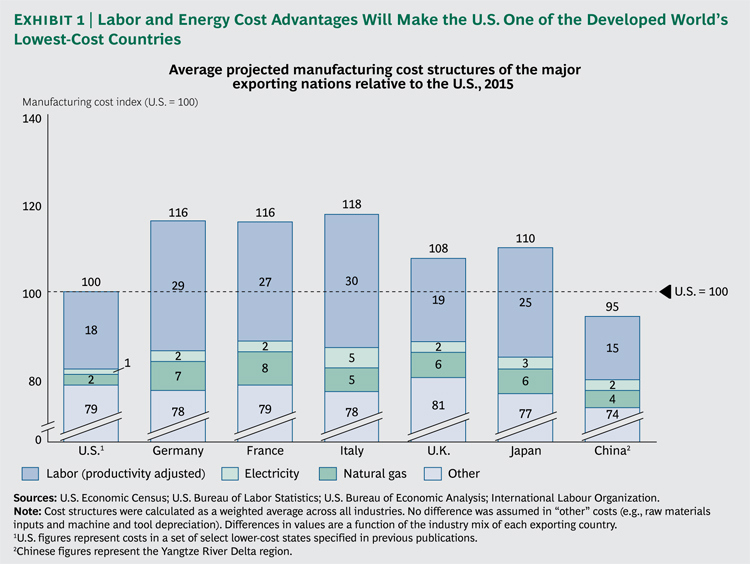
Overall, in 2015, manufacturing in the US will cost only about 5% more than in China

What gives American factories their competitive edge: They’re easy to close

By Tim Fernholz @timfernholz August 30, 2013

american_export_surge_ex1_lg_tcm80-141741

Yesterday’s pleasant surprise: The US economy grew much faster than we thought in the previous quarter: 2.5% on the year, thanks to robust exports. Another pleasant surprise: That might continue. America’s great manufacturing renaissance continues to attract converts. Companies including Toyota, Honda, Siemens and Rolls Royce have all shifted production to the US in recent years. Boston Consulting Group, which advises companies on their supply chains, recently made an extended case that the United States is like the China of wealthy countries (awesome analogy!) because of how cheap it is to make stuff there. Here’s BCG’s chart. What it shows is that labor and energy costs are a lot lower in the US than in Europe and Japan, and are no higher, combined, than in China. Overall, in 2015, manufacturing in the US will cost only about 5% more than in China. Read more of this post

Measuring the gauges of US stock valuations

September 1, 2013 3:00 pm

Measuring the gauges of US stock valuations

By John Authers

The key metrics are coming in for re-examination

Cue q. For weeks, an academic debate has spilled into dealing rooms over the merits of cyclically adjusted price/earnings ratios, known as Capes, one of academics’ favoured metrics for gauging whether stock markets are cheap or expensive. But another key gauge is also now coming in for re-examination: Tobin’s q. Before anyone stops reading, this matters, a lot, to those hoping to make money in stock markets. Cape and q both tell the same story, that the US stock market is significantly overvalued and this contradicts much hopeful analysis from Wall Street and the City. As so many people have an interest in selling stocks, it is inevitable that these metrics will be re-examined; and it is vital to understand why academics find them so useful. Read more of this post

Italy will become the first country to introduce a tax on high-frequency trading in a move that has become a test case for potential further crackdowns on the controversial practice

September 1, 2013 4:35 pm

Italy introduces tax on high-speed trade and equity derivatives

By Philip Stafford

Italy will on Monday become the first country to introduce a tax on high-frequency trading in a move that has become a test case for potential further crackdowns on the controversial practice. The country will introduce levies against high-speed trading and equity derivatives in the final part of a two-stage process established this year to tax equity-related transactions. Read more of this post

How much Europe is too much Europe?

How much Europe is too much Europe?

Luke Baker 8 hours ago

By Luke Baker

BRUSSELS (Reuters) – In the dark days of Europe’s debt crisis in 2012, when it seemed Greece might be forced out of the euro and the single currency could implode, leaders believed “more Europe” was the only answer. Only deeper integration can bolster the region to withstand future crises, they said. A more united Europe will punch its weight in the world, not collapse on the ropes. Read more of this post

Does renewed acronym anxiety spell crisis? First it was Piigs, now Fragile Five Biits, as EM scare unsettles

August 30, 2013 6:50 pm

Does renewed acronym anxiety spell crisis?

John Authers

First it was Piigs, now Fragile Five Biits, as EM scare unsettles

Acronym anxiety is here. It is a clear sign of worry when brokers start to produce acronyms to encapsulate negativity. The emergence of “Piigs” (Portugal, Ireland, Italy Greece and Spain) was one of the first symptoms of the budding crisis on the periphery of the eurozone. In the last week, my email inbox has brought me the Fragile Five Biits (Brazil, Indonesia, India, Turkey and South Africa) from Deutsche Bank, and Crash (Conflict, Rates, Asia, Speculation and Housing) from BofA Merrill Lynch. So we have a state of high acronym anxiety. Read more of this post

How You Climb A Mountain Is More Important Than Reaching The Top

How You Climb A Mountain Is More Important Than Reaching The Top

by SHANE PARRISH on AUGUST 30, 2013

Two examples from Patagonia founder Yvon Chouinard’s book,Let My People Go Surfing: The Education of a Reluctant Businessman, demonstrating that process is more important than results.

Focus on the movements, not the goal.

I’ve been a student of Zen philosophy for many years. In Zen archery, for example, you forget about the goal — hitting the bull’s-eye — and instead focus on all the individual movements involved in shooting an arrow. You practice instead your stance, reaching back and smoothly pulling an arrow out of the quiver, notching it on the string, controlling your breathing, and letting the arrow release itself. If you’ve perfected all the elements, you can’t help but hit the center of the target. The same philosophy is true for climbing mountains. If you focus on the process of climbing, you’ll end up on the summit. As it turns out, the perfect place I’ve found to apply this Zen philosophy is in the business world.

How you climb a mountain is more important than reaching the top.

Climbing mountains is another process that serves as an example for both business and life. Many people don’t understand that how you climb a mountain is more important than reaching the top. You can solo climb Everest without using oxygen, or you can pay guides and Sherpas to carry your loads, put ladders across crevasses, lay in six thousand feet of fixed ropes, and have one Sherpa pulling and one pushing you. You just dial “10,000 Feet” on your oxygen bottle, and up you go. Typical high-powered, rich plastic surgeons and CEOs who attempt to climb Everest this way are so fixated on the target, the summit, that they compromise on the process. The goal of climbing big, dangerous mountains should be to attain some sort of spiritual and personal growth, but this won’t happen if you compromise away the entire process. This reminds me of what Viktor Frankl wrote in Man’s Search for Meaning on success:

Don’t aim at success — the more you aim at it and make it a target, the more you are going to miss it. For success, like happiness, cannot be pursued; it must ensue, and it only does so as the unintended side-effect of one’s dedication to a cause greater than oneself or as the by-product of one’s surrender to a person other than oneself. Happiness must happen, and the same holds for success: you have to let it happen by not caring about it. I want you to listen to what your conscience commands you to do and go on to carry it out to the best of your knowledge. Then you will live to see that in the long run—in the long run, I say!—success will follow you precisely because you had forgotten to think of it.

Slowing the work treadmill; To aid creativity and achieve more, try doing less, HBS professor says

Slowing the work treadmill

To aid creativity and achieve more, try doing less, HBS professor says

August 27, 2013 | Editor’s Pick Popular

By Chuck Leddy, Harvard Correspondent

Teresa Amabile compares much of work life to running on a treadmill. People constantly try to keep up with the demands of meetings, email, interruptions, deadlines, and the never-ending need to be more productive and creative. Yet on many days they seem to make no progress at all, especially in creative endeavors. “Many companies are running much too lean right now in terms of the number of employees,” said Amabile, the Edsel Bryant Ford Professor of Business Administration and a director of research at Harvard Business School. So the treadmill speeds up, compelling time-strapped employees to do ever more with less. Read more of this post

Michael Lewis on Writing, Money, and the Necessary Self-Delusion of Creativity; Lewis remained disinterested in money as a motive – in fact, he recognized the trap of the hedonic treadmill and got out before it was too late

Michael Lewis on Writing, Money, and the Necessary Self-Delusion of Creativity

“When you’re trying to create a career as a writer, a little delusional thinking goes a long way.”

The question of why writers write holds especial mesmerism, both as a piece of psychological voyeurism and as a beacon of self-conscious hope that if we got a glimpse of the innermost drivers of greats, maybe, just maybe, we might be able to replicate the workings of genius in our own work. So why do great writers write? George Orwell itemized four universal motives. Joan Didion saw it as access to her own mind. For David Foster Wallace, it was about fun. Joy Williams found in it a gateway from the darkness to the light. For Charles Bukowski, it sprang from the soul like a rocket. Italo Calvino found in writing the comfort of belonging to a collective enterprise.

In Why We Write: 20 Acclaimed Authors on How and Why They Do What They Do (public library) – which also gave us invaluable wisdom from Susan Orlean, Mary Karr and Isabel Allende, and which was among the 10 best books on writing from my recent collaboration with the New York Public LibraryMichael Lewis, one of today’s finest nonfiction masters, shares his singular lore. Read more of this post

The Art of Thought: Graham Wallas on the Four Stages of Creativity, 1926; How to master the beautiful osmosis of conscious and unconscious, voluntary and involuntary, deliberate and serendipitous

The Art of Thought: Graham Wallas on the Four Stages of Creativity, 1926

How to master the beautiful osmosis of conscious and unconscious, voluntary and involuntary, deliberate and serendipitous.

In 1926, thirteen years before James Webb Young’s Technique for Producing Ideas and more than three decades before Arthur Koestler’s seminal “bisociation” theory of how creativity works, English social psychologist and London School of Economics co-founder Graham Wallas, sixty-eight at the time, penned The Art of Thought – an insightful theory outlining the four stages of the creative process, based both on his own empirical observations and on the accounts of famous inventors and polymaths. Though, sadly, the book is long out of print, with surviving copies sold for a fortune and available in a few public libraries, the gist of Wallas’s model has been preserved in a chapter of the 1976 treasure The Creativity Question (public library) – an invaluable selection of meditations on and approaches to creativity by some of history’s greatest minds, compiled by psychiatrist Albert Rothenberg and philosopher Carl R. Hausman, reminiscent of the 1942 gem An Anatomy of Inspiration. Wallas outlines four stages of the creative process – preparation, incubation, illumination, and verification – dancing in a delicate osmosis of conscious and unconscious work. These phases, which literary legend Michael Cowley would come to parallel in his 1958 model of the four stages of writing, go as follows: Read more of this post

Apple to ship over 63 million iWatches next year: Reports

Apple to ship over 63 million iWatches next year: Reports

TAIPEI — Two suppliers in Taiwan have received orders to build Apple’s highly anticipated iWatch for release next year, according to local reports.

BY –

30 AUGUST

TAIPEI — Two suppliers in Taiwan have received orders to build Apple’s highly anticipated iWatch for release next year, according to local reports. Taiwan’s Apple Daily newspaper reported that Quanta Computer will split the iWatch orders with Inventec on a 60-40 basis, citing unnamed sources. Meanwhile, CIMB Securities analyst Wanli Wang projected in a report that Apple might ship 63.4 million units in the first year after its launch, with an average price of around US$199 (S$254). Read more of this post

New Radiation Hotspots Found at Fukushima Daiichi; Operator’s Struggle to Control Highly Radioactive Water Suffers New Setbacks

Updated September 1, 2013, 11:35 a.m. ET

New Radiation Hotspots Found at Fukushima Daiichi

Operator’s Struggle to Control Highly Radioactive Water Suffers New Setbacks

KANA INAGAKI

TOKYO—The operator of the troubled Fukushima Daiichi nuclear complex said over the weekend that its struggles to control highly radioactive water had suffered new setbacks. The company announced the discovery of contaminated spots in new parts of the compound where the water is stored, while radiation levels jumped to highly dangerous levels in another part of that area where readings were previously lower. Read more of this post

Most Brazil IPOs have lost money since 2005: Credit Suisse

Most Brazil IPOs have lost money since 2005: Credit Suisse

Fri, Aug 30 2013

By Guillermo Parra-Bernal

CAMPOS DO JORDÃO, Brazil (Reuters) – Many initial public offerings in Brazil have led to investor losses over the past eight years, a senior Credit Suisse Group fund manager said on Friday, with the worst results coming from oil and gas – a sector that for years was seen as the nation’s most promising. Only 37 of the 117 IPOs since the start of 2005 have yielded returns above the benchmark CDI interbank lending rate, with remainder losing as much as half of the amount initially invested, according to a presentation by Luiz Stuhlberger, who as chief investment officer oversees 43 billion reais ($18 billion) in assets for Credit Suisse Hedging Griffo. Read more of this post

Rupee slump a hard lesson for Indian students overseas

Rupee slump a hard lesson for Indian students overseas

12:49am EDT

By Anurag Kotoky

NEW DELHI (Reuters) – Student Mikael Haris is wrestling with the sort of question confronting others across India, including companies, investors and banks, following the 18 percent slump in the rupee this year. With plans to study for a masters degree in marketing in London from this month, he is trying to decide whether to pay his course fees up front and secure a discount, or to spread them out in the hope that a rebound in the rupee will ultimately reduce his costs. Read more of this post

Charlie Munger: Lessons From an Investing Giant

Aug 30, 2013

THE INTELLIGENT INVESTOR

Charlie Munger: Lessons From an Investing Giant

By Jason Zweig

BF-AF687_INVEST_G_20130830161038

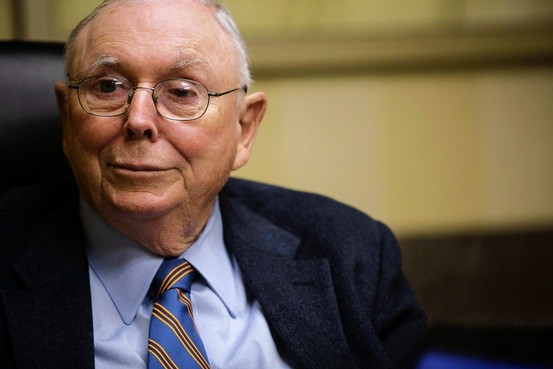
One of the least appreciated virtues in investing is courage. Filings with the Securities and Exchange Commission in March and again this month show the extraordinary gumption of Charlie Munger, Warren Buffett’s business partner and vice chairman of Berkshire Hathaway. Mr. Munger, who will turn 90 years old next Jan. 1, is a model for individual investors who wonder how they can possibly beat the professionals at their own game. The pros have more information than you, and their trading machines are faster. But you still have an edge over them—so long as you play a different game by your own, more sensible rules. You can be patient; the pros can’t. You don’t have to be part of the herd; they do. Above all, you can be brave; they almost never are. What makes Mr. Munger a model for individual investors? In the first quarter of 2009, during the most desperate days of the financial crisis, Mr. Munger took 71% of the cash at Daily Journal, a small publishing company he chairs, and poured it into the bank stocks that so many other investors were fleeing. By March 31, 2009, his bet already had gained 60%. With other purchases he made later, Mr. Munger invested $49.7 million into stocks and bonds that today are worth $128.4 million, according to financial statements Daily Journal filed on Aug. 20. Read more of this post

From humble beginnings in a father’s living room, Ng Cheong Choon’s Rainbow Loom, a kit to make bracelets out of rubber bands, has skyrocketed in popularity; 600 retailers carry Rainbow Loom, and just over one million units have been sold at a retail price of $15-17

August 31, 2013

Rainbow Loom’s Success, From 2,000 Pounds of Rubber Bands

By CLAIRE MARTIN

01-PROTO-JP3-articleLarge

Cheong Choon Ng, above, designed Rainbow Loom, a suddenly popular crafts kit that turns rubber bands into bracelets. The key to selling the kits, it turned out, was educating buyers about how to use them.

LAST weekend in Fair Harbor, N.Y., on Fire Island, a few dozen children gathered on the boardwalk for the local tradition of selling lemonade, baked goods and painted seashells to passers-by at sunset. Among the children was Julia Colen, a 12-year-old vacationer from New Jersey, who in addition to hawking cupcakes and drinks was presiding over a stand overflowing with brightly colored bracelets. Julia and a friend had made the jewelry out of tiny rubber bands, using a crafts kit called Rainbow Loom. “We had a lot, at least 100,” Julia estimated of their inventory, which they priced at $1 to $2 apiece. Sales were impressive that night — “we made like $68,” she said. Read more of this post

What Amazing Leaders Do Differently

What Amazing Leaders Do Differently

Shane Snow

191509e 1e839d5 1396a75

In my work as a startup founder over the last few years, I’ve been fortunate enough to find myself surrounded by some incredible young leaders, be mentored by a few wise executives, and spend time with rockstar leadership thinkers like Jack Canfield and Sir Freeman Dyson. It’s been humbling, but awesome. As I’ve attempted to step into the role of leader myself (along with my two fantastic cofounders), and fumbled repeatedly along the way, I’ve come to appreciate great leaders who make what turns out to be a very hard thing look easy. Amazing leaders often do things counter-intuitively. Here are seven patterns I’ve observed in the best leaders in my life, despite the natural pressure for powerful people to do otherwise:

They change their minds.

One of the most courageous things a leader can do is admit when he or she is wrong, and admit it often. Tim Cook, CEO of Apple, said that the late Apple founder Steve Jobs was a notorious, but deliberate, flip-flopper. “I saw it daily,” Cook said in an interview with AllThingsD. “This is a gift, because things do change, and it takes courage to change. It takes courage to say, ‘I was wrong.’” Read more of this post

The Seven Deadly Sins of Investing; Financial crisis be damned—investors are still making the same mistakes the always have

August 30, 2013, 5:58 p.m. ET

The Seven Deadly Sins of Investing

Financial crisis be damned—investors are still making the same mistakes the always have.

KIRSTEN GRIND

It has been nearly five years since the depths of the U.S. financial crisis, and investors have learned a lot since then. Or have they? Despite the downturn that left many investors reeling from losses on everything from real estate to the stock market, when it comes to investor behavior—those hard-wired instincts that drive us all—little has changed, say psychologists and financial advisers. Investors still make the kinds of mistakes that have gotten them in trouble for decades. They are wooed by the hottest new trend, they want to follow the crowd—consequences be damned—and they just can’t seem to pay enough attention to important details, such as the steep annual fees charged by many mutual funds. Read more of this post

What if Apple’s iWatch is… a TV?

What if Apple’s iWatch is… a TV?

By Jonny Haskins, 11 hours ago

Jonny Haskins has a theory about Apple’s iWatch. It was originally published on his own blog, Pixel Lounge.

Like many people, I enjoy guessing as to what technology is going to bring and what innovations will transform our lives.  The quicker we all innovate, the quicker I will be to owning my life’s dream – that flying car (it better be in my lifetime!). In today’s world, things are so mundane and boring, so drip-fed to us commercially and unsystematically, that our dreams of the future are comparatively dull.  An exception is Elon Musk who seems to be the one person in the world who’s challenging this approach and is not scared about taking on the auto industry with his electric Tesla’s and hovering rockets, not to mention the challenging foray of other ideas like a levitating Hyperloop train in a vacuum tube. Read more of this post

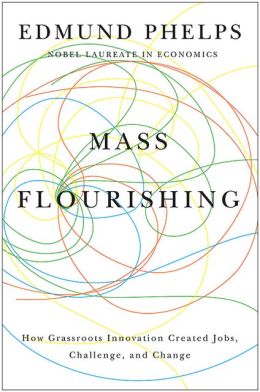
Mass Flourishing: How Grassroots Innovation Created Jobs, Challenge, and Change

Mass Flourishing: How Grassroots Innovation Created Jobs, Challenge, and Change Hardcover

by Edmund S. Phelps (Author)

9780691158983_p0_v1_s260x420

In this book, Nobel Prize-winning economist Edmund Phelps draws on a lifetime of thinking to make a sweeping new argument about what makes nations prosper–and why the sources of that prosperity are under threat today. Why did prosperity explode in some nations between the 1820s and 1960s, creating not just unprecedented material wealth but “flourishing”–meaningful work, self-expression, and personal growth for more people than ever before? Phelps makes the case that the wellspring of this flourishing was modern values such as the desire to create, explore, and meet challenges. These values fueled the grassroots dynamism that was necessary for widespread, indigenous innovation. Most innovation wasn’t driven by a few isolated visionaries like Henry Ford; rather, it was driven by millions of people empowered to think of, develop, and market innumerable new products and processes, and improvements to existing ones. Mass flourishing–a combination of material well-being and the “good life” in a broader sense–was created by this mass innovation.

Yet indigenous innovation and flourishing weakened decades ago. In America, evidence indicates that innovation and job satisfaction have decreased since the late 1960s, while postwar Europe has never recaptured its former dynamism. The reason, Phelps argues, is that the modern values underlying the modern economy are under threat by a resurgence of traditional, corporatist values that put the community and state over the individual. The ultimate fate of modern values is now the most pressing question for the West: will Western nations recommit themselves to modernity, grassroots dynamism, indigenous innovation, and widespread personal fulfillment, or will we go on with a narrowed innovation that limits flourishing to a few?

A book of immense practical and intellectual importance, Mass Flourishing is essential reading for anyone who cares about the sources of prosperity and the future of the West. Read more of this post

When Work Is Challenging, Economies Thrive

When Work Is Challenging, Economies Thrive

by Justin Fox  |  12:30 PM August 30, 2013

“In economics, consumption is the sole end of production,” the late, great Swedish economist, politician, and social commentator Gunnar Myrdal wrote in 1930. “This is a stock phrase of all the textbooks since Adam Smith: Man works in order to live.” Myrdal, though, didn’t think that was right: [T]here are many people who live in order to work, who consume in order to produce, if we like to use those terms. Most people who are reasonably well off derive more satisfaction in their capacity as producers than as consumers. Indeed, many would define the social ideal as a state in which as many people as possible can live in this way. Read more of this post

Nike Patents Golf Shirt Design That Could Double as Coach; The clothing will have tighter material in areas key to a repetitive movement, like a golf swing. The snugger fit increases muscle stimulation, giving a better feel that will improve form, help a coach normally would provide by watching the golfer perform

Nike Patents Golf Shirt Design That Could Double as Coach

Nike Inc. (NKE) says it can make a golf shirt that could replicate what a coach does. The world’s largest maker of sporting goods obtained about a dozen patents on Aug. 27, including one invention with the potential to irk golf pros. “A coach or trainer can greatly improve an athlete’s form or body positioning, which can result in improved athletic performances,” Nike said in a patent filed with the U.S. Patent and Trademark Office. “For most people, however, a coach or trainer is not always available” and there isn’t an easy way to check positioning on your own, Nike said. Enter what the sponsor of Tiger Woods describes as “articles of apparel providing enhanced body position feedback.” The clothing will have tighter material in areas key to a repetitive movement, like a golf swing. The snugger fit increases muscle stimulation, giving a better feel that will improve form, help a coach normally would provide by watching the golfer perform, the document said. Nike has prospered even in hard times with a sustained focus on innovation, from air-pocket sneaker soles in the 1980s to last year’s Flyknit shoe, whose upper is woven like a sock. While these aren’t always the company’s best-sellers, they give its brand credibility — as does paying the world’s most famous athletes to wear them on television. Read more of this post

Astronomers say they may have solved a cosmic mystery: why gravitational monsters known as black holes are inept at swallowing their prey

August 29, 2013, 10:25 p.m. ET

Scientists Shed New Light on Black Holes

GAUTAM NAIK

NA-BX859_BLACKH_G_20130829173919

A composite image of the region around the black hole at the center ofthe Milky Way, with X-ray emissions shown in the inset.

Astronomers say they may have solved a cosmic mystery: why gravitational monsters known as black holes are inept at swallowing their prey. A black hole can form in space when a large star dies and its matter gets crunched into a much smaller volume. The resulting gravitational pull is so great that even light can’t escape. Given this power, one theory was that black holes indiscriminately consumed everything that passed within their reach. However, scientists recently observed that this scenario isn’t always the case—and they now believe they understand why. Read more of this post

Hulbert on Investing: Beyond the Superstar CEO; Companies with a strong corporate culture are a much better indicator of long-term success

August 30, 2013, 6:10 p.m. ET

Hulbert on Investing: Beyond the Superstar CEO

Companies with a strong corporate culture are a much better indicator of long-term success.

MARK HULBERT

The chief executive Microsoft MSFT -0.45% chooses to succeed Steve Ballmer will most likely fail to transform the company into the cutting-edge high-tech player so many on Wall Street say they want. That is because Microsoft is under enormous pressure to follow a CEO search process that is “irrational,” according to Rakesh Khurana, a professor of leadership development at Harvard Business School. Most companies that have been in Microsoft’s current position—a one-time industry leader whose future prospects appear to be fading—searched for a new CEO “with as much star power as possible,” he said in an interview, in order to restore shareholder confidence and boost its stock price. Read more of this post