Mini-brains raise big hopes and fears

August 30, 2013 6:43 pm

Mini-brains raise big hopes and fears

Synthetic neuroscience will soon face serious ethical issues

The science-fiction prospect of a living, thinking “brain in a dish” took a small but significant step toward reality this week. Researchers have grown a mini-brainfrom human stem cells in a Vienna biotechnology lab. This pea-sized “cerebral organoid” has the characteristics of a nine-week-old embryo’s brain, with active neurons. While it is far from demonstrating anything like conscious thought or sentience, and its creators are interested in understanding neurological disease rather than artificial intelligence, the mini-brain is an unexpected achievement that could soon be taken further – raising profound ethical issues. Read more of this post

Contrary to conventional wisdom that humans are essentially selfish, scientists are finding that the brain is built for generosity

August 30, 2013, 6:34 p.m. ET

Hard-Wired for Giving

Contrary to conventional wisdom that humans are essentially selfish, scientists are finding that the brain is built for generosity

ELIZABETH SVOBODA

OB-YT030_2GIVIN_G_20130830235102

New research shows that not only do humans have a generosity gene, but there’s a biological basis for why giving feels good. Author Elizabeth Svoboda explains.

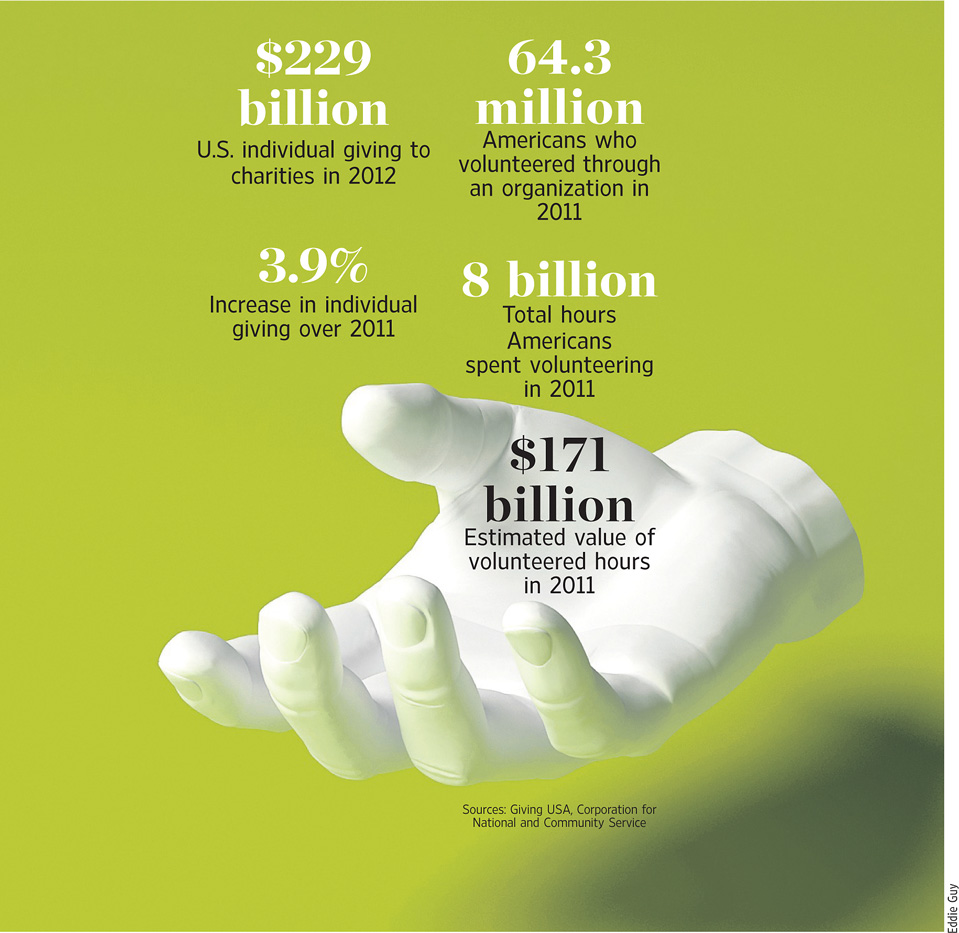
The Darwinian principle of “survival of the fittest” echoes what many people believe about life: To get ahead, you need to look out for No. 1. A cursory read of evolutionary doctrine suggests that the selfish individuals able to outcompete others for the best mates and the most resources are most likely to pass their genes on to the next generation. Then there is classical economic theory, which holds that given the choice, we will often opt for a personal benefit over a personal loss, even if that loss involves a benefit to someone else. The philosopher and economist John Stuart Mill championed the self-centered theory in the mid-1800s, describing man as a creature that “does that by which he may obtain the greatest amount of necessaries, conveniences and luxuries, with the smallest quantity of labor and physical self-denial.” Read more of this post

The Man Who Invented Modern Probability; Mathematics: Chance encounters in the life of Andrei Kolmogorov

The Man Who Invented Modern Probability

Mathematics: Chance encounters in the life of Andrei Kolmogorov.

BY SLAVA GEROVITCH ILLUSTRATION BY LINCOLN AGNEW

If two statisticians were to lose each other in an infinite forest, the first thing they would do is get drunk. That way, they would walk more or less randomly, which would give them the best chance of finding each other. However, the statisticians should stay sober if they want to pick mushrooms. Stumbling around drunk and without purpose would reduce the area of exploration, and make it more likely that the seekers would return to the same spot, where the mushrooms are already gone. Read more of this post

The psychology of scarcity: Days late, dollars short; Those with too little have a lot on their mind

Aug 31st 2013 |From the print edition

Scarcity-Why-having-too-litt

Scarcity: Why Having Too Little Means So Much. By Sendhil Mullainathan and Eldar Shafir. Times Books; 288 pages; $28. Allen Lane; £20. Buy from Amazon.com,Amazon.co.uk

THE authors of this book both study people for a living—often people who lack money. They may be vegetable sellers in Chennai, India, who borrow money at dawn and repay with exorbitant interest at dusk. Or they may be ill-paid office managers, like Shawn from Cleveland, Ohio, who lives from pay cheque to pay cheque, always finding that there is “more month than money”. Read more of this post

The chief of Cognizant says an organization’s culture is passed along via its rituals, heroes and legends.

August 31, 2013

Francisco D’Souza of Cognizant, on Finding Company Heroes

By ADAM BRYANT

This interview with Francisco D’Souza, chief executive of the information technology company Cognizant, was conducted and condensed by Adam Bryant.

Q. What were some early lessons for you?

A. I was very fortunate in my upbringing. My father was a diplomat, and so, until I was 18, we traveled to a new country every three years. After finishing high school in the Caribbean, I wound up in Hong Kong when I was 18. We realized that there were few universities that taught in English, and so I went to one in Macau that focused on working professionals. I went to school at night and on weekends. My days were free, and I got a job as a bank teller. It was a small bank, and they still used a punch-card system. I had taught myself as a teenager how to program. I went to the branch manager and told him he ought to consider new technology. He said: “Fine. Help me figure it out.” We bought a computer. We wrote the software, and I wound up supervising a couple of people when I was 19. Read more of this post

Best way to deal with copycats? Don’t

Best way to deal with copycats? Don’t

BY ERIN GRIFFITH 
ON AUGUST 30, 2013

Warby Parker has worked really hard to build up its brand. Like, really, really hard. A-B testing the difference between “collegiate” and “preppy” hard. It has paid off — Warby Parker has a strong brand, and naturally, others in the world want to capitalize on it. The company has dealt numerous copycats as it has grown from a tiny e-commerce operation out of Blumenthal’s apartment to a company with 16 physical retail stores locations and 150 employees. At one point, Bluefly launched an eyewear vertical which even stole images of Warby Parker’s products. “Copycats suck,” co-CEO Neil Blumental said at PandoMonthly New York last night. He couldn’t help from ranting about the most notorious copycatters, the Samwer brothers, and their cloning vehicle, Rocket Internet. Read more of this post

A new species of shark that “walks” along the seabed using its fins as tiny legs has been discovered in eastern Indonesia called the bamboo shark

‘Walking’ Shark Discovered in Indonesia

By Agence France-Presse on 6:10 pm August 30, 2013.
A new species of shark that “walks” along the seabed using its fins as tiny legs has been discovered in eastern Indonesia, an environmental group said Friday. The brown and white bamboo shark pushes itself along the ocean floor as it forages for small fish and crustaceans at night, said Conservation International, whose scientists were involved in its discovery. The shark, which grows to a maximum length of just 80 centimeters is harmless to humans, was discovered off Halmahera, one of the Maluku Islands that lie west of New Guinea. Bamboo sharks, also known as longtail carpet sharks, are relatively small compared to their larger cousins, with the largest adult reaching only about 120 centimeters in length. They have unusually long tails that are bigger than the rest of their bodies and are found in tropical waters around Indonesia, Australia and Papua New Guinea. Conservation International said the discovery of the shark, which was first disclosed in the International Journal of Ichthyology, “should help draw diver interest to this mega-diverse but largely undiscovered region.” Ketut Sarjana Putra, Indonesia country director for the group, said the Hemiscyllium halmahera shark could “serve as an excellent ambassador to call public attention to the fact that most sharks are harmless to humans and are worthy of our conservation attention”. Conservation International, whose scientists discovered the shark along with colleagues from the Western Australian Museum, added it came at a time when Indonesia was increasing its efforts to protect shark and ray species.

Man Isn’t Alone; Apes Also Suffer Midlife Crises

August 30, 2013, 7:38 p.m. ET

Man Isn’t Alone; Apes Also Suffer Midlife Crises

ROBERT M. SAPOLSKY

The petroleum industry is still absorbing the recent, surprising resignation of Peter Voser, CEO of Royal Dutch Shell. Mr. Voser had been riding high with many successes during his stewardship of the petroleum giant. Yet, at the peak of his game at age 54, he resigned, wanting a “lifestyle change,” and to spend more time with his family. If this constitutes a midlife crisis for Mr. Voser, he appears to have dealt with it with a steady hand. But there is no shortage of people, amid their own midlife crises, going off the rails in ways both small—sudden obsessive exercising, immersion in bungee jumping, the imprudent hair transplant—and large—affairs, crackpot investments, substance abuse, or starting a “cultural revolution” in the company. Read more of this post

How Snacking Became Respectable; Before they became standard fare in American life, snacks drew suspicion and even scorn

August 30, 2013, 7:54 p.m. ET

How Snacking Became Respectable

Before they became standard fare in American life, snacks drew suspicion and even scorn

ABIGAIL CARROLL

As parents take their kids back-to-school shopping this year, it isn’t just new jeans and notebooks that will be checked off the list, but also booty for the pantry: snacks to help bridge the gap between the end of the school day and dinner. When it comes to American eating, snacking is ubiquitous—at home, at work, everywhere. But snacking wasn’t always such a regular or accepted part of the American eating routine. Snack foods once drew suspicion and even scorn—that is, before they were redeemed. Read more of this post

Only A Few People In History Have Dared To Use Sarin Gas

Only A Few People In History Have Dared To Use Sarin Gas

BRIAN JONES AUG. 30, 2013, 10:42 AM 8,534 11

The attack reportedly occurred Aug. 21. Last week, pictures and amateur videos trickled into the Western media depicting residents of a Syrian suburb twitching and struggling to breathe. Their pupils were constricted. They were confused. And then there were the dead, who showed no external injuries. Noah Shachtman with Foreign Policy wrote that upon seeing the images, weapons experts and U.S. intelligence officials had little doubt what weapon wreaked that havoc. They thought it was Sarin. Developed in Nazi Germany in 1938 by a team of German scientists seeking a tougher pesticide, Sarin works as an “off-switch” for the body’s glands and muscles. Most victims die because they are no longer able to breathe, according to the Centers for Disease Control and Prevention, which calls Sarin “the most volatile of the nerve agents.” It kills within seconds. Even the Nazis, however, chose not to use deadly sarin gas or other chemical weapons during WWII.

Read more of this post

The history of chemical weapons: The shadow of Ypres; How a whole class of weaponry came to be seen as indecent

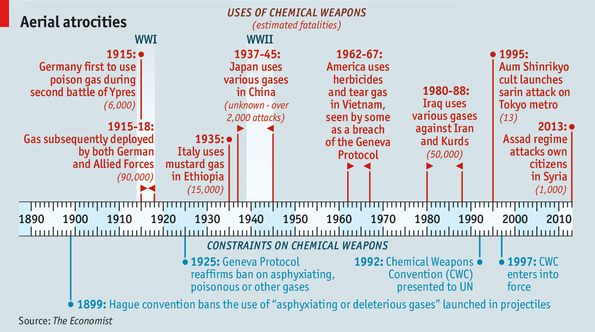
The history of chemical weapons: The shadow of Ypres; How a whole class of weaponry came to be seen as indecent

Aug 31st 2013 |From the print edition

20130831_FBC947

“CLEARLY,” wrote an exasperated Winston Churchill in the summer of 1944, “I cannot make head against the parsons and the warriors at the same time.” Through most of that July the British prime minister had been asking his military chiefs to reconsider the question of using poison gas against Germany, telling them he wanted “cold-blooded calculation” rather than moralistic arguments about the unique iniquity of chemical weapons. The joint chiefs unanimously came down against the idea. Churchill grumpily acquiesced. Read more of this post

Asia sees widespread McDonald’s refugee phenomenon

Asia sees widespread McDonald’s refugee phenomenon

Staff Reporter

2013-09-01

McDonald’s introduced 24-hour operations in its chains in Japan in 2006, and since then a number of homeless people have chosen to stay in its stores for a long-term stay due to its cheap costs, earning them the name McDonald’s refugees. Media outlets in mainland China, Hong Kong and South Korea have also done their own reports on the phenomenon which has been widely seen across the region, NetEase’s online news unit reports. These homeless or jobless people, who cannot afford to pay normal rentals due to low income, have chosen to stay in 24 hour restaurants like McDonald’s. Always-open restaurants started in China in 2006, with the media reporting the refugee phenomenon at a Beijing location in December 2006. In 2007, Hong Kong and South Korea media began similar reports, finding more and more low-income people choosing to stay at McDonald’s for the long-term. Read more of this post

Laos Bourse to Open Bond Trading, Triple New Stocks after posting a loss every year since it opened in 2011

Laos Bourse to Open Bond Trading, Triple New Stocks to Halt Loss

Lao Securities Exchange will start trading bonds and triple the number of listed companies next year to raise revenue after posting a loss every year since it opened in 2011.

The exchange, the second-smallest by market capitalization among 84 global bourses tracked by Bloomberg, after Swaziland, plans to begin government bond trading for the first time early next year, according to Chief Executive Officer Dethphouvang Moularat. It will also expand the number of listed stocks to six, from two, he said. Laos World Co. Ltd., a trade exhibition operator, and a state-controlled cement maker are among companies to join the Laos Composite Index. (LSXC) Read more of this post

What’s the Difference Between U.S., Chinese Corruption?

What’s the Difference Between U.S., Chinese Corruption?

Forming opinions in the absence of facts is a dangerous business, which is why it’s premature to draw conclusions about whether the government is on the right track with its investigation of JPMorgan Chase & Co.’s hiring practices in China. That said, if the feds are going to make a case, they will need a lot more evidence on the bank than what the New York Times offered today in its latest article on the subject. Maybe they will find it. The article relies on information from people whom the Times didn’t identify. So it’s sometimes hard to tell whose version of events we’re getting — the government’s or JPMorgan’s. The article does refer to a “confidential government document” as a key source, although it obviously isn’t very confidential because the Times said the document was sent to JPMorgan. Read more of this post

Wahaha needs a new business model, says Kelly Zong

Wahaha needs a new business model, says Kelly Zong

Staff Reporter

2013-08-31

Kelly Zong, the daughter of Hangzhou Wahaha chairman Zong Qinghou, has said the beverage empire that has made her father one of China’s richest men is gradually losing its advantage in terms of business model and product lines. Her father’s anointed successor, Zong has rarely discussed in the past the management issues and future development concerns of the company, worth an estimated 32 billion yuan (US$5.2 billion). She revealed her apprehensions about the company’s business model recently however in an interview with ifeng.com, the news website run by Hong Kong’s Phoenix TV network. Read more of this post

Too big to hail: China’s banking behemoths are too beholden to the state. It is time to set finance free

Too big to hail: China’s banking behemoths are too beholden to the state. It is time to set finance free

Aug 31st 2013 |From the print edition

20130831_LDC291

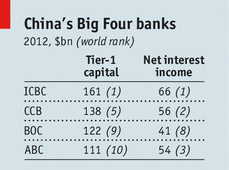
AT FIRST sight, China seems to have a superb banking system. Its state-controlled banks, among the biggest and most profitable in the world, have negligible levels of non-performing loans and are well capitalised. That appears to suggest that the country’s approach should be applauded. Not so. For one thing, though China’s banking system is stable, its banks are not as healthy as they seem. The credit binge of recent years has left them with far higher levels of risky loans than they acknowledge. And a profit squeeze is coming. The banks are having to work harder to keep both their biggest depositors, who are tempted by alternative investment products, and their biggest borrowers, who are turning to the bond market instead. As a consequence, the country’s Big Four banks—Industrial and Commercial Bank of China, Bank of China, Agricultural Bank of China and China Construction Bank—will no longer make easy money by merely issuing soft loans to state-owned enterprises, or SOEs (see article). Read more of this post

China’s War On Online Gossip Is Starting To Get Scary

China’s War On Online Gossip Is Starting To Get Scary

ADAM TAYLOR AUG. 31, 2013, 11:49 AM 1,730 2

china-rumors

An image featured on China’s gossip-reporting website

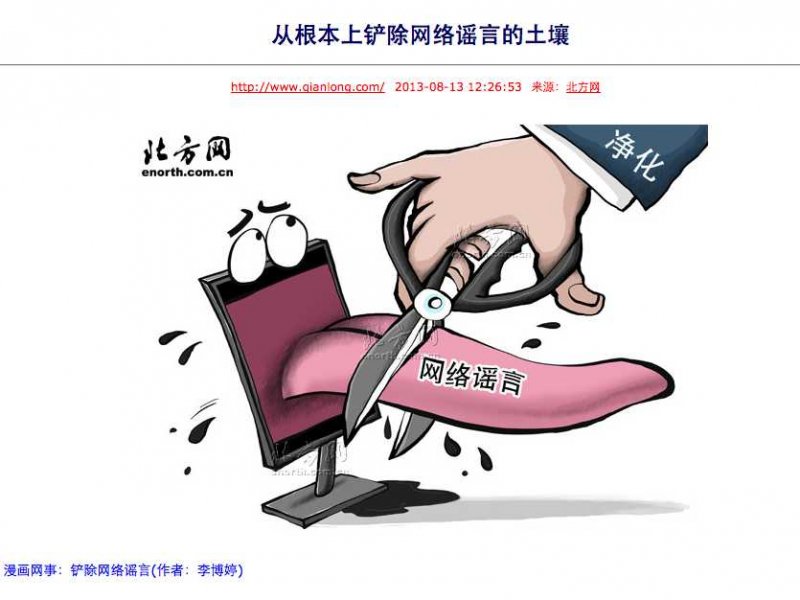
These days its rare to read a story about the gritty side of Chinese life without a mention of an overseas gossip website, or an angry reaction from Weibo’s online mob, the so-called “human flesh search engine.” Authorities aren’t too pleased with the gossipy world online — perhaps understanding that frequently this gossip is designed to undermine politicians and officials. A state-directed campaign to clamp down on rumors dates back at least a few years, with state-run newspapers comparing gossip to heroin and cocaine in 2011. However, in the last month there appears to have been a notable uptick in the war on rumors with arrests and people detained: It’s starting to get some people worried. Read more of this post

SEC Is Shocked, Shocked by Business as Usual in China

SEC Is Shocked, Shocked by Business as Usual in China

According to a Bloomberg News report, the Securities and Exchange Commission is on the verge of figuring out how business is actually done in China. The key to this discovery is a spreadsheet that the SEC obtained from JPMorgan Chase & Co.. It includes two key sets of data: the names of the offspring of some of China’s most prominent families, and a list of “specific deals pursued by the bank.” According to the Bloomberg report, combining these two data sets has provided investigators with a Rosetta Stone-like insight into how the bank just might make money in the Middle Kingdom: The spreadsheet, which links some hiring decisions to specific transactions pursued by the bank, may be viewed by regulators as evidence that JPMorgan added people in exchange for business, according to one person with knowledge of the review. Read more of this post

Foreclosures rising in China’s “entrepreneur city” Wenzhou as properties drop below mortgage values

Foreclosures rising in Wenzhou as properties drop below mortgage values

Staff Reporter

2013-09-01

C324X0227H_2013資料照片_N71_copy1

Many upscale housing units in Wenzhou are reportedly half empty amid a bout of foreclosures. (Photo/Xinhua)

Foreclosures are spiking in the city of Wenzhou in east China’s Zhejiang province as shrinking property prices have turned properties into negative equity, reports the Shenzhen-based Security Times. Since hitting a peak around two years ago, property prices in Wenzhou have declined sharply, so much so that the market value of many properties has fallen below the amount of their corresponding loans, turning them into negative-value assets. Read more of this post

Corrupt, anonymous and in thrall to the party – China is not the new Japan; However big the statistics say the Chinese economy is, it will never reach its full potential until the state relinquishes its grip

Corrupt, anonymous and in thrall to the party – China is not the new Japan

However big the statistics say the Chinese economy is, it will never reach its full potential until the state relinquishes its grip

Will Hutton

The Observer, Sunday 1 September 2013

It is a paradox. China is the world’s leading exporter ahead of both the US and Germany. If you trust its figures, it is the second biggest economy. Yet it succeeds in making only 9.5% of internationally applicable, so-called “triadic”, patents. This is a country whose growth has not been propelled by innovation. The failure is matched by a parallel failure of Chinese firms to develop as multinationals. When Japan was rising to global economic prominence in the 60s and 70s, its car and electronics companies became household names. No such claim can be made for China. Its big companies, still either state-owned or heavily state-influenced, are largely anonymous. There are certainly no Chinese multinationals of the standing of, say, Toyota, Sony or Hitachi.

Read more of this post

China’s largest village corruption case explodes in Zhejiang

China’s largest village corruption case explodes in Zhejiang

Staff Reporter 

2013-08-29

Ten officials in Xinqiao, a small village in easterns China’s Zhejiang province, have whipped up what has been deemed the nation’s biggest collective corruption case on record for village-level governance in the history of the People’s Republic of China. The alleged crimes involve the illicit seizure of 316 resettlement houses, worth 1.8 billion yuan (US$294 million), reports the Beijing-based Economic Observer. Read more of this post

China’s top anti-corruption agency is investigating Jiang Jiemin, head of the commission overseeing the country’s biggest state-owned enterprises

China State Assets Head Jiang Under Investigation

By Nerys Avery  Sep 1, 2013

(Corrects month of Jiang’s appointment in third paragraph.)

China’s top anti-corruption agency is investigating Jiang Jiemin, head of the commission overseeing the country’s biggest state-owned enterprises, the official Xinhua News Agency reported today. Jiang, 57, head of the State-Owned Assets Supervision and Administration Commission, is being probed by the Communist Party’s Central Commission for Discipline Inspection over “suspected serious disciplinary violations,” Xinhua said in a one-paragraph report today. No further details were given. Jiang, who was appointed to the commission in March, is the latest senior official to come under investigation after Xi Jinping pledged to root out corruption when he took over as head of the party in November. Liu Tienan, vice chairman of the country’s planning agency, was expelled from the party in August after being fired in May after a probe began and Li Chuncheng, a deputy party secretary of Sichuan province was put under investigation in December, Xinhua reported at the time. The South China Morning Post said Aug. 30 that party leaders have agreed to investigate retired Politburo Standing Committee member Zhou Yongkang on corruption allegations, citing people it didn’t identify. Leaders made the decision because of rising anger inside the party at the scale of corruption and the vast fortune amassed by his family, it said. News of Jiang’s investigation comes a week after the trial of ousted Politburo member Bo Xilai, who was charged with bribery, embezzlement and abuse of power.

To contact the reporter on this story: Nerys Avery in Beijing at navery2@bloomberg.net
 

150 tonnes of pork ribs made from diseased pigs sold in Shenzhen

150 tonnes of pork ribs made from diseased pigs sold in Shenzhen

Staff Reporter

2013-09-01

C316X0450H_2013資料照片_N22F_2013資料照片_N71_copy1

An inspector checking pork on a truck in Shanghai. (File photo/Xinhua)

Although the Chinese government has implemented measures to prevent pork made from diseased pigs from entering the market, police in southern China’s Guangdong province busted a factory that sold over 150 tonnes of pork ribs made from diseased pigs to stores in Shenzhen city, according to our Chinese-language sister newspaper Want Daily. Read more of this post

Billions wiped from blue-chips as carbon tax hits Australia’s top companies

Billions wiped from blue-chips as carbon tax hits Australia’s top companies

STEVE LEWIS AND STEPHEN MCMAHON

NEWS LIMITED NETWORK

AUGUST 30, 2013 1:07PM

Virgin Australia CEO John Borghetti said the carbon tax had added nearly $50 million to the company’s 2012/13 expenses. Source: News Limited

VIRGIN Airlines has blamed the carbon tax for contributing to a $98 million full-year loss, adding to corporate concerns that Labor’s climate change scheme is wiping billions of dollars off blue-chip profits. Australia’s second biggest airline on Friday morning announced the carbon tax had added nearly $50 million to its 2012/13 expenses – around half the amount booked by Qantas, which said the green impost added $106 million. Read more of this post

China’s internet giants planning new online to offline services

China’s internet giants planning new online to offline services

Staff Reporter

2013-09-01

After Baidu, China’s largest search engine, spent US$160 million to buy a 59% stake in the group purchasing website Nuomi, other leading internet companies, such as Alibaba and Tencent, have also started planning an online to offline service. As an increasing number of companies entered the market, the online to offline service was expected to reach a trillion yuan (US$163.25 billion) in market scale, a source told the National Business Daily. Read more of this post

Big Chinese Internet Companies Busy Building Online Education Platforms

Big Chinese Internet Companies Busy Building Online Education Platforms

By Tracey Xiang on August 29, 2013

Say it once again: China’s education market is huge and is moving online. While local startups are building online education services by modeling western ones or improving the must-criticized existing education system in China (they have raised so much money in the past half a year alone), local Internet giants are building platforms to accommodate all of them. Read more of this post

Baidu, AutoNavi Fighting for Navigation Market Share, Offering Apps for Free

Baidu, AutoNavi Fighting for Navigation Market Share, Offering Apps for Free

By Emma Lee on August 29, 2013

Baidu

Baidu (NASDAQ:BIDU) announced yesterday that it would offer Baidu Navigation for free ever after. The company promised today to refund the users who purchased their navigation services on both Android and iOS platforms. AutoNavi (NASDAQ:AMAP), a leading map service in China, followed suit shortly afterwards, declaring that its navigation software will also be offered for free. These moves will undoubtedly overhaul the navigation market. Compared with dedicated navigation machines usually priced at over 300 yuan ($48.67), Baidu and AutoNavi navigation apps once priced at 30 yuan and 50 yuan respectively are much cost-effective choices. Let alone the services are free now. AutoNavi Navigation has been pre-installed or downloaded for more than 70 million times, according to financial report of the company. Read more of this post

New WeChat Payment app to spur competition in China’s mobile payment market

New WeChat app to spur competition in mobile payment market

Staff Reporter

2013-09-01

The debut of the new version of edition 5.0 WeChat, a mobile messaging communication service developed by Chinese internet company Tencent, has sparked concerns among major e-commerce companies that the mobile payment segment will now be dominated by Tencent, the Guangzhou-based Southern Metropolis Daily reported. Last week, Tencent’s online service, Yixun, announced that its website will now support WeChat Payment, a new feature included in the latest version of WeChat. This has made it the first business to consumer website to be fully connected with the WeChat Payment interface. Read more of this post

Xbox Spinoff Seen More Likely With Ballmer Exit

Xbox Spinoff Seen More Likely With Ballmer Exit: Real M&A

After 13 years of declining value, some Microsoft Corp. (MSFT) investors want Steve Ballmer’s replacement to take bolder steps to reverse the slide at the world’s largest software maker. That could mean spinning off the Xbox video-game business. Ballmer’s retirement as chief executive officer may clear the way for a potential spinoff of the Xbox unit to unlock shareholder value. While a consumer success with $7 billion in annual sales, it’s one of Microsoft’s lower-margin divisions and doesn’t drive sales of the company’s core business services and software. Xbox may be worth at least $17 billion on its own, based on Nintendo Co. (7974)’s revenue multiple, according to data compiled by Bloomberg. Its value should be even higher given that Nintendo has operating losses, Wedbush Inc. said. Read more of this post

The Acxiom Corporation is to open a Web site that will allow individual consumers to see some of the information that the company has collected about them

August 31, 2013

A Data Broker Offers a Peek Behind the Curtain

By NATASHA SINGER

01-ACXIOM-JP-articleLarge

“You have to make things visible,” says Scott Howe, who demonstrated a Web site that will let consumers see some of Acxiom’s data about them. IT can be disconcerting to learn what, not to mention how much, marketers know about us. Consider a consumer like Scott E. Howe. The Acxiom Corporationa marketing technology company that has amassed details on the household makeup, financial means, shopping preferences and leisure pursuits of a majority of adults in the United States, knows that Mr. Howe is 45, married with children, the owner of a house in the 2,500-square-foot range, and is interested, among other things, in tennis, domestic travel, cooking, crafts, sweepstakes and contests. Those intimate details, Mr. Howe says, are entirely accurate. Read more of this post