Early setbacks fuel drive of Lopez family who owns the Philippines’ biggest television broadcaster and its largest private power distributor
October 9, 2013 Leave a comment
September 22, 2013 12:55 pm
Early setbacks fuel Lopez family drive
By Roel Landingin
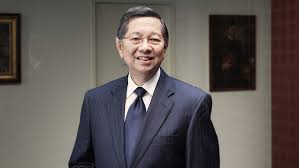
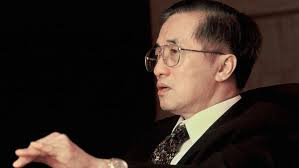
Oscar Lopez, the younger brother of Eugenio ‘Geny’ Lopez Jr, serves as chairman emeritus of the publicly listed Lopez Holdings Corp. The 83-year-old’s group faces challenges as it seeks to diversify away from the core utilities business; Manuel Lopez, also a younger brother of ‘Geny’, is chairman of Lopez Holdings. The 71-year-old says the group is well-positioned for the inevitable generational shift, because it selects senior managers solely on merit. ‘I myself started at the bottom,’ he says. Eugenio ‘Gabby’ Lopez III, the son of ‘Geny’, is chairman of ABS-CBN Broadcasting. He holds an MBA from Harvard University and as vice-chairman of Lopez Holdings is next in line to run the overall group behind his uncle Manuel; President Ferdinand Marcos imprisoned ‘Geny’ in 1972 on a trumped-up murder charge in an effort to force the Lopez patriarch to give up control of Meralco. The electricity tycoon escaped from prison, however, and returned to the Philippines in 1986 after Marcos was overthrown and rebuilt the family empire.
Not many tycoons have had their life story turned into an action movie. Eugenio Lopez Jr, the late head of the family that owns the Philippines’ biggest television broadcaster and its largest private power distributor, is one of the few exceptions. “Geny”, as he was known, was imprisoned by Philippine president Ferdinand Marcos in 1972 when he was 44 years old on a trumped-up murder charge. The move was aimed at forcing his father to give up control of Manila Electric Co, then and still the country’s biggest electricity distributor. With another political prisoner, Geny staged a daring escape from an army detention facility in 1977, fleeing to a private airstrip outside Manila, where a waiting plane whisked them out of the country. Geny returned to the Philippines in 1986 shortly after Marcos was overthrown. Together with younger brothers Oscar and Manuel, he rebuilt the family’s business empire, large parts of which were taken over by the Marcos regime. His arrest and escape became the basis for a feature film released in 1995. The family patriarch Eugenio Lopez Sr was one of the Philippines’ most successful businessmen in the period after the second world war.Through a skilful combination of entrepreneurial flair and political alliances he parlayed early holdings in sugar haciendas and other local businesses into the country’s biggest private electric utility and leading media enterprise by the early 1960s.
Geny died in 1999. Oscar, 83, and Manuel, 71, now head the conglomerate as chairman emeritus and chairman, respectively, of publicly listed holding company Lopez Holdings Corp. They face challenges that are less dramatic but just as daunting as they look abroad and diversify from their core utilities business.
The group has embarked on a significant expansion as part of a strategic shift. It is moving from heavily regulated businesses insulated from foreign competition, such as electricity, water and toll roads, into more open sectors including power generation, energy resource development, and real estate.
Between 2009 and 2012 the family sold some of its stake in electricity distributor Meralco, as Manila Electric is known, down from one-third to 3.9 per cent. It is making its first overseas push in more than 80 years, seeking geothermal exploration rights in Indonesia, Chile and Peru. Their ambition is to push newly acquired Energy Development Corp from the world’s second-biggest geothermal power producer into top spot, surpassing US energy group Chevron.
Family-controlled companies loom large in Asia. Some are grappling with awkward succession battles, while others have shown innovation as younger members rise through the ranks. FT reporters examine some of the leading dynasties Full series
The family’s ABS-CBN Broadcasting Corp, the Philippines’ biggest broadcaster by revenue, is shifting from a pure content producer to wireless and broadband service provider via a network-sharing agreement with the country’s second-biggest mobile phone company.
Federico Lopez, Oscar’s son and chairman of energy and infrastructure arm First Philippine Holdings, describes the shift as “a massive redeployment of [our] company’s capital, talent and resources,” as Oscar and Manuel lay the groundwork to hand the leadership to the next generation.
Since the start of the year the market capitalisation of First Philippine Holdings surged to 63bn pesos, although it dropped back to 43bn pesos in the recent emerging markets sell-off.
While previous leadership transitions have been smooth, the next Lopez family succession could be trickier because the next generation comprises almost two dozen first-cousins, warns management professor Elfren Cruz, who has studied family-owned businesses.
“Ownership also becomes more dispersed so it’s very hard to get a majority vote. And then the incentive to reinvest may not be that strong any more especially among family members who are not involved in the business,” Mr Cruz says.
He adds that nearly nine in 10 family businesses in western countries close down by the third generation, and that the rate is even higher in Asia.
Succession issues have hobbled a number of Philippine family businesses. In one extreme case, one of the country’s richest men gave up management control of a flagship company to a competitor because he could not decide which of his sons should inherit the business.
‘A Lopez family member who wants to assume a senior management position in any of the companies must go on the same development track and prove him or herself worthy in competition with non-Lopez professionals’
– Manuel Lopez
Manuel says the Lopez group is well positioned for the generational shift because it selects senior managers, family or otherwise, strictly on merit. Lopez family members who occupy senior posts have worked their way up.
“A Lopez family member who wants to assume a senior management position in any of the companies must go on the same development track and prove him or herself worthy in competition with non-Lopez professionals,” says Manuel.
“I myself started at the bottom in Meralco,” he adds.
Two third-generation family members have already assumed top positions at the Lopez group’s two biggest companies. Alongside Oscar’s 52 year-old son Federico, or “Piki,” as chairman of First Philippine Holdings,
Geny’s son Eugenio III, or “Gabby,” 61, is chairman of ABS-CBN. Gabby is also vice-chairman of Lopez Holdings, next in line to head the overall group after Manuel relinquishes the chairmanship.
Day-to-day management at ABS-CBN Broadcasting and First Philippine Holdings is delegated to non-family professionals who have been with the companies for more than two decades. Lopez Holdings, too, is managed by a professional executive.
“They have figured out a way to smooth the transition and it appears to be working well,” says Laura Dy-Liacco, an analyst with ATR Kim Eng Securities.
The younger Lopezes’ education and experiences may also have better prepared them to run more open and globalised businesses. Gabby and Piki both studied business or economics in the US and began their careers at a time of economic liberalisation in the Philippines that saw a reduction in the role of the state.
As young managers, they weathered the 1997-98 Asian financial meltdown when the group was forced to sell both lossmaking and profitable companies to repay debt.
They still face the formidable challenge of navigating the murky waters of Philippine politics, and their years spent studying overseas mean they do not have the social connections with politicians that their elders had.
Although the role of politics has ebbed over time as the group moves from industries that are heavily state-regulated, its influence is unlikely to ever completely disappear.
“Today we do our best to stay out of political controversies, but politics is unavoidable,” says Manuel, who in addition is the Philippines’ ambassador to Japan.
“Our media business is highly political – whatever we do can and is always given some political colour. I would be less than candid if I say we don’t get involved in politics, but most definitely we are a lot less political than my father was,” points out Manuel.
 About bambooinnovator
 Bamboo Innovator