Chinese Regulators Crack Down on Cartoons to address violent programming content
October 15, 2013 Leave a comment
October 14, 2013, 9:24 PM
Chinese Regulators Crack Down on Cartoons
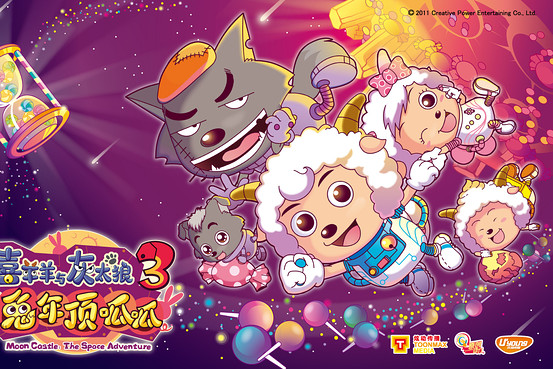
Chinese cartoon “Pleasant Goat and the Big Big Wolf” hasn’t been so pleasant as of late, according to the country’s TV regulators. China’s State Administration of Press, Publication, Radio, Film and Television called out the popular cartoon, which made headlines earlier this year for episodes containing violent scenes, and the regulator said Saturday in a statement that it plans to outline new content standards for TV animation to address violent programming content.“Pleasant Goat and the Big Big Wolf,” which has licensing agreements with entertainment companies Imagi International Holdings Ltd. and Walt Disney Co. and has enjoyed immense popularity since it launched in 2005, came under scrutiny in May after two brothers in Jiangsu province severely burned themselves. The brothers said they were mimicking scenes they saw in the cartoon in which characters set one another on fire.
The parents of the boys filed suit against Creative Power Entertaining, the Guangzhou-based animation company behind “Pleasant Goat and the Big Big Wolf,” demanding 260,000 yuan ($42,500) to cover medical expenses and a public apology,according to the Shanghai Daily. The parents also requested warnings on cartoon episodes containing violent scenes to help inform guardians. The suit’s current status is unclear.
A press representative from Creative Power Entertaining Co. said executives and spokesmen were unavailable for comment.
China’s regulator said in its statement that Creative Power is one of 20 top animation companies banding together to reform content and promote social values.
State Broadcaster China Central Television reported that the production company is “revising comprehensively” the show, an undertaking that local media reported could cost millions of yuan.
According to China’s official Xinhua news agency, under the proposal, cartoons should “promote good and lash out at evil,” “advocate social morality and family virtues, and resist “egoism, money worship, hedonism, superstition, pseudoscience and contents containing harmful thoughts and bad habits.” It also said cartoons should avoid violent scenes, including depictions of attacks that children could easily imitate, and should not use daily necessities for dangerous purposes.
It’s not the first time TV content has come under fire in China. TV authorities last year strengthened a ban on shows involving time travel after two girls in east Fujian province committed suicide as part of an attempt to travel back in time. Authorities also imposed limits on TV adaptions of online videogames.
Mainland authorities typically exercise strong censorship of television content, but China lacks a ratings system to warn viewers of content that may be inappropriate for children and some parents say regulators haven’t done enough to prevent violent content from reaching children.
“Don’t you think all the spy and anti-Japanese TV series are too violent? So many killings and not harmonious?” one user of China’s Twitter-like social networking site Sina Weibo said.
A poll conducted by Sina Weibo found nearly 9,000 respondents divided over whether the cartoon is too violent, based on results as of Monday evening.
With more than 1,000 episodes, “Pleasant Goat and the Big Big Wolf” features plots entailing the constant battle between a herd of goats and the crafty wolves who hunt them. Characters like Xi Yangyang—the sage goat who often escapes the wolves’ evil plans—have gained the kind of fame that Mickey Mouse garnered when he first emerged in the U.S. Images of the recognizable goat can be found plastered on merchandise across the country, including on toys, clothing, books and games.
The show’s success has led to deals with Disney, which in 2010 secured broadcast licensing to air the show on the Disney Channel across Asia. The goat also made it into movie theaters with a series of film spin-offs, the fourth of which grossed $25.39 million in its first three weeks in theaters in China last year, according to market-research company EntGroup.
Disney did not reply to requests for comment about the Pleasant Goat.
Across the globe, TV content has become a concern for parents who fear it could negatively impact children’s behavior. U.S. President Barack Obama earlier this year called for the Center for Disease Control and Prevention to renew scientific inquiry into the relationship between “video games, media images, and violence,” and urged Congress to support a bill granting $10 million for the research.
A study published by the American Academy of Pediatrics in 2011 found that some cartoons that feature violent acts can affect children’s sleep.
 About bambooinnovator
 Bamboo Innovator