FamilyMart launches pick-up service in Taiwan for Taobao products
October 17, 2013 Leave a comment
FamilyMart launches pick-up service in Taiwan for Taobao products
CNA
2013-10-17
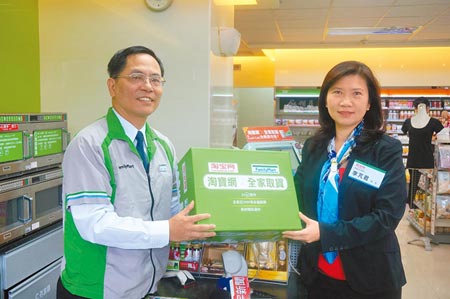
Taiwan’s FamilyMart general manager, RD Chang, left, and Daphne Lee, director of overseas business for Taobao at a FamilyMart store. (Photo Courtesy of FamilyMart)
Taobao, China’s largest e-commerce website, has partnered with the FamilyMart convenience store chain to launch a pick-up service in Taiwan, the chain announced Wednesday. FamilyMart said it has now become the first convenience store chain in Taiwan to offer a cross-border pick-up service, which expected to boost the growth of its pick-up service by more than 10%.Convenience store pick-up service has become increasingly popular among online buyers and sellers because this type of delivery is not time-limited and is less costly than other methods, said Taiwan’s FamilyMart general manager RD Chang.
The business opportunities provided by Taiwan’s online shopping stores are estimated NT$100 billion (US$3.3 billion) a year, he said.
Daphne Lee, director of overseas business for Taobao, said demand for the company’s products is growing in Taiwan, where Taobao has 800,000 members. Taobao is pleased that FamilyMart will now provide pick-up services for the site’s buyers, she said.
With nearly 2,900 stores around Taiwan, FamilyMart will offer buyers a more convenient service for online shopping, she added.
Under the arrangement that took effect Wednesday, customers in Taiwan can choose the pick-up service after they place their orders with Taobao, with an estimated delivery time of 4-7 days, Lee said. Buyers will be able to track their orders and get delivery information, she added.
In Taiwan, one out of every seven people has used a convenience store pick-up service at least once, according to freight logistics services.
The country’s four major convenience store chains handle more than 1 million packages a month and the market for online shopping pick-up services is estimated at NT$500 million (US$17 million) a year, the freight companies said.
 About bambooinnovator
 Bamboo Innovator