Groceries Become a Guy Thing: Packaging for products traditionally marketed with women in mind aims to win men over as they shop more
October 17, 2013 Leave a comment
Groceries Become a Guy Thing
As Men Shop More, Packaging Aims to Win Them Over; ‘Inner Abs’ Appeal
ANNE MARIE CHAKER
Oct. 16, 2013 7:00 p.m. ET
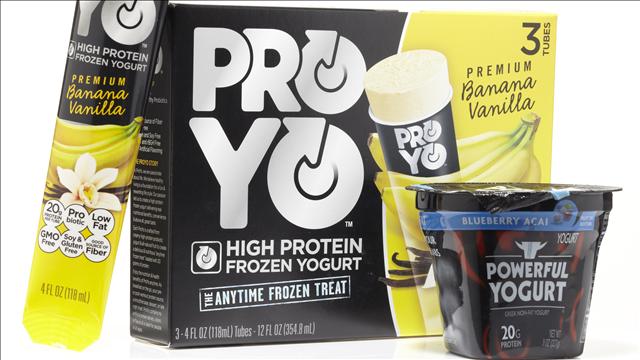
Yogurt for men is radically different from the yogurt women buy: The label is black. Food makers, including giants Kraft Foods Group Inc. KRFT +1.82% and General MillsInc., GIS +1.80% eager for any potential new sales, are trying to win over men. Research indicates men are doing a greater share of the grocery shopping and meal preparation. In a June survey of 900 meat-eating men ages 18 to 64, 47% were deemed “manfluencers” by Midan Marketing LLC, a Chicago market research group focused on the meat industry. Manfluencers are responsible for at least half of the grocery shopping and meal preparation for their households.Food company executives hope more men shopping means new opportunities for foods some men have traditionally shied away from in this country, including yogurt and hard cider. The changes are often cosmetic: larger portions or darker color schemes instead of recipes on the backs of packages.
Lots of products on food shelves are big no-nos to men, says Lu Ann Williams, head of research for Netherlands-based Innova Market Insights. Others help men feel more, well, manly. “A beer or soda in a long-necked, brown bottle makes a man feel like a man. Drinking out of a straw does not—puckered lips and sunken cheeks are not a good guy look.”
Which helps explain Powerful Yogurt, a Greek yogurt launched in March featuring a bull’s head symbol on red-and-black packaging and an image of stomach muscles next to the slogan “Find Your Inner Abs.”
A single-serving yogurt cup is a hefty eight ounces, compared with the more typical five to six ounces, and features 20 to 25 grams of protein.
The yogurt shelf “is light blue, light pink, white, and everyone’s talking to women and their digestive health,” says Carlos Ramirez, chief executive of the Miami-based company. “The amount of protein is what guys are looking for.”
Men also shy away from frozen yogurt, says Nathan Carey, founder of Twin Cups LLC, which makes Pro Yo, a frozen yogurt geared specifically for men that launched in August. Mr. Carey ran a frozen-yogurt kiosk in Santa Barbara, Calif., and marveled at how the vast majority of his frozen-yogurt customers were women. The men who came with them would just have coffee.
He decided to instruct his employees on using different sales pitches on men.
“If it’s a male, we’d say, ‘This product tastes like a premium ice cream, it’s high in protein and has live active cultures,’ and we’d get immediate buy-in. But if you told a guy it was low fat before he knew it tasted like premium ice cream, he’d never buy it,” Mr. Carey recalled.
Using what he learned, he came up with a frozen yogurt meant to have macho appeal without turning off potential female customers. A black box with “Pro Yo” in boldface contains three tubes of frozen yogurt in flavors such as Vanilla Bean and Blueberry Pomegranate. “On the box, the first thing it says isn’t ‘frozen yogurt,’ ” he says. “It’s ‘high protein.’ ”
In the end, about half his customers are male, he says. The product, introduced two months ago, is sold in California supermarkets and gyms; Mr. Carey says he is in discussions with supermarkets in other regions of the country.
Larger players in the food industry also see new potential in men. General Mills went on a nationwide summer tour to introduce its newly rebranded Helper product line to more men.
Representatives in a red truck offered samples of Crunchy Taco and Ultimate Three Cheese Marinara at fire stations, Nascar races and a Real Men Cook event for fathers in Chicago. (“Ultimate” is a male-friendly buzzword appearing regularly in products like these.)
Part of the appeal, says Elizabeth Laughlin, General Mills marketing manager, is the lineup’s ability to produce difficult-sounding dishes like Sweet & Sour Chicken in three steps: Brown, simmer and serve.
That’s the draw for Jeremy Alinder, a 39-year-old, recently divorced father to three daughters, ages 4 to 9, in Minneapolis. He says he stashes 10 or so boxes at a time in the kitchen cupboard. He prepares dishes like Cheddar Broccoli or Creamy Stroganoff twice a week, when the girls start to tire of his homemade chili. “It’s nutritious enough for the kids, they enjoy it and it’s quick and easy for myself,” he says.
Kraft’s Velveeta Shells and Cheese used to aim for busy moms in its advertising. But research about two years ago turned up a previously unnoticed type of consumer: “We found a segment of men already making and cooking Shells and Cheese that we frankly weren’t talking to,” says Tiphanie Maronta, senior brand manager for Velveeta meals. “They are not a chef. They are not a foodie. It’s somebody who is starting to cook.”
Typically, they’re men in their 20s and 30s, half of whom are married and likely don’t have kids yet. Since August 2012, Kraft has been targeting these men in its advertising with the Eat Like That Guy You Know TV ads, featuring slacker heroes such as one who sells model helicopters at a mall.
Coffee shops have found a macho answer to sugary, flavored lattes: Cold-brewed coffee, steeped anywhere from 10 to 24 hours and typically served black and cold.
“Some [coffeehouses] put it in kegs. Some are even adding nitrogen so it pours like a Guinness, which is totally appealing to guys,” says Darleen Scherer, co-owner of Gorilla Coffee Inc., which roasts its own coffee and sells it out of its Brooklyn, N.Y.-based coffee shop, as well as supermarkets in the Northeast.
Gorilla is relaunching its cold-brew coffee this spring. Her shelf-stable cold-brews, in red-and-black cartons with no-spill screw tops, launched in 2012 in 40 Northeastern stores, but supply couldn’t keep up with demand, she says, so production stopped. She expects the product will return by March.
Portland, Ore.-based Stumptown Coffee Roasters began serving cold-brew coffee in its eight cafes in 2011 and began distributing it to upscale grocery stores and restaurants nationally a year later.
It is packaged in a vintage-looking, dark-amber beer bottle, where the black coffee accentuates a “smokiness,” says Joth Ricci, president of the company.
At MillerCoors LLC, executives see opportunity in hard cider, a category that currently feels “very female-focused” says Rita Patel, director of new product development. “There is a big unmet need.”
The challenge: combating the stigma in the U.S. that real men drink beer, not cider. The company next year will launch Smith & Forge, a cider brand that “has a masculine tone to it,” says Ms. Patel.
It will retail only in cans—not bottles—and the alcohol level of 6% will be slightly higher than the average of 5%, she says. Black and orange cans declare the product is “Made Strong” in boldface letters.
 About bambooinnovator
 Bamboo Innovator