China’s ‘Mr. Market’ Urges Political Reform; Country’s Most Famous Economist Says Next Wave of Change Needs to Target Political System
October 23, 2013 Leave a comment
China’s ‘Mr. Market’ Urges Political Reform
Country’s Most Famous Economist Says Next Wave of Change Needs to Target Political System
ANDREW BROWNE
Oct. 22, 2013 10:31 a.m. ET
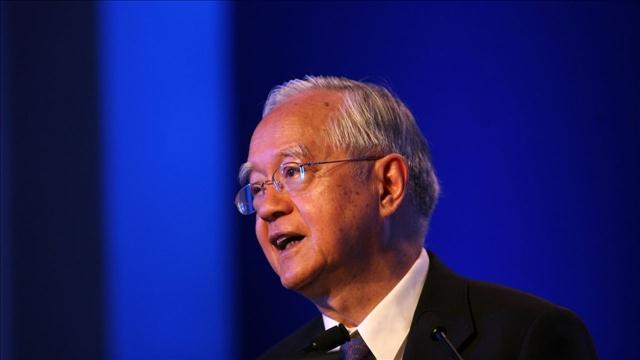
The Chinese leadership appears to have launched a battle against press freedom, civil rights and judicial independence. But China’s most famous economist, Wu Jinglian, believes that China needs more – rather than less — political reforms. The WSJ’s Andrew Browne explains why press freedom is crucial to a better economy. BEIJING—Ever since Deng Xiaoping launched his first overhauls in 1978, free-market reforms in China have come in great waves, usually in response to a crisis.The crisis that formed the backdrop to the initial reform wave was the devastation caused by the Cultural Revolution. Later, it was the brutal suppression of protesters around Tiananmen Square in 1989. A further reform wave followed the 1997 Asian financial crisis.
The far-reaching reforms put in place after those upheavals transformed China’s economy into the world’s second-largest. But over the past decade, the momentum for economic change has stalled, freezing in place an economic system that still hasn’t broken free from Stalinist-era central planning and is dominated by state enterprises.
For Wu Jinglian, China’s most famous economist, the half-finished business of reform is at the root of problems that now afflict the economy. He has long argued that failure to complete the reforms has led to pervasive corruption as unaccountable bureaucrats cash in on China’s boom. These so-called “rent-seekers”—officials who profit by selling access to land and other resources—have an interest in perpetuating China’s lopsided growth based on resource-heavy investment rather than consumption, Mr. Wu says. That, in turn, has led to economic waste and inefficiency.
That’s why the next reform wave, in his view, needs to take direct aim at the political system. Mr. Wu believes that step is needed to bring growth onto a sustainable track—and to counter the public’s perception that three decades of economic reform have served only to benefit a privileged elite and widen social disparities.
Mr. Wu is no wild radical. His popular nickname is “Mr. Market”; to his acolytes, who now occupy some of the top economic jobs in China, he’s known respectfully as “Teacher Wu.” His opinions have been sought out by a succession of premiers. Former President Jiang Zemin took his counsel. And he has been a mentor to prominent reformists in the current government, including the People’s Bank of China Gov. Zhou Xiaochuan and Finance Minister Lou Jiwei.
Though Mr. Wu is an academic, his economic views are forged from experience. He comes from a long line of entrepreneurs. His maternal great-grandfather founded a match factory; his father set up what became China’s biggest privately owned newspaper group. The match works eventually went bust, and the papers were forced to close.
“I gradually came to understand that the development of science and industry was conditional on the social institutions and the political situation,” he says in a new English-language collection of his most important writings, edited and translated by China scholar Barry Naughton at the University of California, San Diego.
What he proposes is to roll back the state’s power over the economy, including state-owned enterprises that still dominate key industrial sectors. He also advocates making courts independent, penning a new constitution with a bill of rights, and introducing media freedoms—all of which would curb the broader power of the Communist Party.
“For a task like this, there is no room for hesitation,” he writes in one of his essays.
Mr. Wu’s passionately held beliefs have come into focus ahead of a key Communist Party meeting in November intended to set the course of the Chinese economy for the next decade. Its outcome will have a profound impact not just on China’s prospects in the 21st century but on the global economy, too.
To anyone trying to handicap the chances of a new reform wave coming from the November meeting, however, it’s worth considering this: The reform ideas of Mr. Wu, now 83 years old, face more resistance from within the party than at almost any point in the past three decades—precisely because, in his view, economic reform must start with political change.
Instead, the new Chinese leadership under President Xi Jinping has gone in the opposite direction, calling for a battle against “seven unmentionable topics,” including press freedom, civil rights and judicial independence.
The economist Xia Yeliang, an outspoken advocate for free speech and rule of law, this month was dismissed from his job at Peking University’s School of Economics after a faculty vote. The university said he was removed for poor teaching.
And Mr. Xi himself has adopted Maoist-style slogans and campaign themes. “Our red nation will never change color,” Mr. Xi said recently.
In other words, Mr. Wu’s core reform recommendations can’t even be talked about in public. That has dramatically narrowed the scope of possible reforms coming out of the November party meeting.
“There’s no question that things have gone backwards,” says Mr. Naughton, who admits he is having difficulty squaring the professed commitment of Mr. Xi and other leaders to economic reform with the conservative politics sweeping the country. “It doesn’t add up,” he says.
Widely expected from November’s gathering are reforms to the financial system, further opening of the economy to private enterprises and measures that will speed up the pace of urbanization.
These might seem significant. But they stop well short of the previous waves that set China’s economy on its dramatic growth trajectory. Mr. Deng’s initial reform wave transformed rural China in the 1980s. His next wave set up a modern financial sector and overhauled the tax system. Later waves privatized the country’s entire housing stock, dismantled trade barriers, threw open the economy to foreign competition and closed thousands of money-losing state enterprises, throwing tens of millions of workers out of work.
And they don’t come close to what Mr. Wu says is needed.
Still, Mr. Wu remains optimistic that his vision for the future of China will prevail. “There is one thing that makes me hopeful about a revival of reform,” he says in a Q&A with Mr. Naughton at the start of the book. “Right now there are many problems, and the new generation of leaders can see that if they don’t make changes, things will get very difficult for them.”
 About bambooinnovator
 Bamboo Innovator