The chairman of Tsui Wah Holdings (1314), Lee Yuen-hong, was but a humble cha chaan teng delivery boy when he started his working life in the 1960s
October 30, 2013 Leave a comment
Serving up success
Karen Chiu
Monday, October 28, 2013
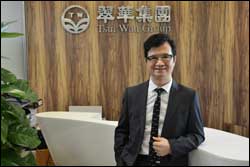
The chairman of Tsui Wah Holdings (1314), Lee Yuen-hong, was but a humble cha chaan teng delivery boy when he started his working life in the 1960s. But through sheer hard work and perseverance, the 58-year-old is now the proud owner of the listed Tsui Wah chain, boasting 25 cha chaan teng in the territory, one in Macau and eight in the mainland. What sets Tsui Wah apart from other cha chaan teng is the ethos that Lee upholds. We have used our heart to keep the taste of local favorites at our eatery for nearly five decades, even in the face of challenges, Lee says, noting how the chain has evolved in an innovative manner to stay in step with the rapidly changing eating habits of Hongkongers.A cha chaan teng as Lee defines it is the quintessential Hong Kong cafe, serving up an array of local favorites, and doing it fast.
The birth of Tsui Wah meant Hongkongers facing increasingly fast lifestyles could have all meals breakfast, lunch, tea, dinner and even late-night snack at the eatery, Lee says.
Tsui Wah now serves more than 170 local dishes including traditional milk tea, crispy buns with sweet condensed milk, fishball noodles, curry chicken and Hainanese chicken rice.
The menu was limited to hotdogs, cakes and drinks when the first Tsui Wah dining room was opened by Choi Cheung-po in 1967 in Mong Kok.
I wanted to create an eatery that can truly represent Hongkongers not only in terms of dishes and appetite, but also the local culture, Lee says.
This is all about hard work and persistence.
He took over the reins at Tsui Wah in 1989, when Choi retired and emigrated. Since then Lee has strived to take the brand forward, hoping to create a bigger pie for the business.
Today, Lee is Tsui Wahs largest shareholder.
His innovations include central kitchens to standardize food quality and a fully computerized ordering system at all outlets set up in 1997.
But there was no change in the taste of iconic dishes served since the 1960s.
A good cha chaan teng is not about changing dishes to fit in with ever- changing popular dining habits, but to serve quality food that customers dream of and keep returning to, Lee says.
In 1993, Lee reached a deal with other cha chaan teng operators to jointly raise the food standards of the industry. But that sparked a price war. Lee, however, refused to give in and did not cut prices, in the belief that maintaining quick and quality service was more important.
We have the right speed, right attitude, right food temperature and we are sincere, says Lee in proudly presenting the cha chaan teng chains selling point.
The only obstacle to your progress may be yourself, he stresses.
If you do not have the heart to solve a problem, it will become a barrier, even though it may be easy to overcome.
The firms fortunes soared when Lee was able to make the modest chain attract tourists and celebrities alike, including singer Eason Chan Yik-shun and Hutchison Whampoa (0013) managing director Canning Fok Kin-ning, all with the opening in the mid-90s of its first 24-hour branch on Wellington Street in Central.
Proximity to nightlife hotspot Lan Kwai Fong meant a steady stream of locals as well as tourists eager to fill their stomachs after bouts of partying.
From just one then, Tsui Wah now operates six round-the-clock eateries.
Apart from the idea of a 24-hour outlet, Lee also started up the Tsui Wah Delivery service centers, which reached out to high-end customers by offering take-away and motorcycle deliveries in Mid-Levels.
Now delivery services are also enjoyed by residents of densely populated neighborhoods, including Lai Chi Kok, Cheung Sha Wan, Shek Kip Mei, Kowloon Tong and Nam Cheong.
Interior design of the outlets has been upgraded and HK$1 million is spent on staff training each year.
Staff are one of the most important assets of Tsui Wah, Lee says, as they help sustain its core values and culture. We retain our staff by Tsui Wahs culture rather than simply raising their wages like other market players do, he emphasizes.
Lee said for staff, Tsui Wah is like a family that cares about everyone. For instance, staff housing and meals are provided for those working in the mainland.
I also have the same food as my staff while I make a visit there, he says.
A big influence on Lee was likely his father, who told him a restaurant job is good as it ensures free meals and a roof over ones head. Lee believes he is himself a good role model for staff, with his positive and hardworking attitude.
Coming from a modest background, Lee has devoted his life to the food business.
He would wake up at two or three in the morning and learn how to make dough for bread, and then learn baking from 5am to 6am.
I was a delivery boy, but I was a happy one who always enjoyed life, he proudly says.
Now Tsui Wah is way more successful than the cha chaan teng Lee worked for, including Hoi On Cafe in Sheung Wan, owned by the founder of the Tsit Wing Group now a major local coffee and tea supplier.
Lees perseverance in the food retailing industry is also the key to his success in bringing the local cha chaan teng brand to the mainland despite challenges. Every step we take will be challenging, but we should see them as good opportunities for us to improve, he says.
Five years ago, Hong Kong-based Tsui Wah started serving traditional Chinese dishes in the mainland.
These made up more than one-third of the menu, as the chain hoped to increase market share by catering to the tastes of mainland customers.
That meant items such as Sichuan- style sliced fish in hot chili oil were on the menu. Unfortunately, most mainland patrons came in looking for Tsui Wahs own specialties, instead of having their traditional food fine-tuned for them, Lee says.
So he decided to refocus on serving typical Hong Kong-style food to mainland customers, keeping up the Tsui Wah motto of fast speed, good quality and good outlook while promoting the food safety of its eateries. Now, only 20 percent of the dishes served in the mainland are of local Chinese origin.
Food safety is the top priority and our mainland comrades identify us by this, Lee says, stressing that this is especially important across the border.
He says sacrificing food quality is out of the question despite rising pressures from rents, wages and cost of raw materials.
In the works are two central kitchens in Shanghai and Guangdong to control food quality.
Looking forward, Lee plans to open 15 more outlets by 2015, with four local ones and eight in the mainland to come up next year alone.
Two-thirds of the net proceeds of HK$692.2 million raised through its initial public offering in July last year will be invested in setting up central kitchens in the mainland, with the rest to be used in Hong Kong.
Shares have risen by 136 percent to HK$5.36 from the offer price of HK$2.27.
But with rising construction costs, expected capital expenditure for the first central kitchen in Shanghai has risen to HK$90 million-HK$100 million, from the expected HK$60 million-HK$70 million.
In the near term, Tsui Wah plans to focus more on first-tier cities or the eastern region and Wuhan.
Unlike running hotels or other Chinese restaurants, there isnt any book that will teach you how to operate cha chaan teng in a successful way, Lee points out.
Which is why each operator has to create their own story.
 About bambooinnovator
 Bamboo Innovator