An ad campaign for a skin-whitening product in Thailand has sparked a debate over whether having lighter skin leads to better-paying jobs and higher social status in the Southeast Asian country

Whiter-Skin Ad Campaign Spurs Debate Among Thais

WARANGKANA CHOMCHUEN

Oct. 25, 2013 11:27 a.m. ET

BANGKOK—An ad campaign for a skin-whitening product in Thailand has sparked a debate over whether having lighter skin leads to better-paying jobs and higher social status in the Southeast Asian country. Social media sites were filled with messages that explored the role of skin color in Thai society following a recent ad campaign by Unilever‘s ULVR.LN -0.64% Thailand operation for its Citra Pearly White UV Body Lotion. Read more of this post

Brown Considering Ban on Investing in 15 Coal-Related Companies

Brown Considering Ban on Investing in 15 Coal-Related Companies

Brown University is considering a ban on investing in 15 companies that mine or burn coal, requiring the Ivy League school to sell some existing holdings. The 54 members of Brown Corp., the university’s governing body, are meeting this weekend at the campus in Providence, Rhode Island, and plan to discuss a recommendation to divest, according to Marisa Quinn, a spokeswoman for the school. Any actions taken at the meeting, which could include a vote on the issue, would come tomorrow, she said, declining to elaborate. Read more of this post

Indonesia’s Islamic parties in decline

Indonesia’s Islamic parties in decline

Friday, October 25, 2013 – 09:56

Salim Osman

Senior Writer

The Straits Times

WHEN former Solo mayor Joko Widodo was elected Jakarta governor in September last year, he became an overnight sensation for defeating the widely experienced and well-regarded incumbent Fauzi Bowo. But when he was touted as a presidential candidate because of the high ratings he received from pollsters, he became the source of disquiet among Jakarta politicians envious of his meteoric rise. Read more of this post

Export Slowdown Threatens World Economy

Export Slowdown Threatens World Economy

When HSBC Holdings Plc’s economists from around the world recently pooled their forecasts, virtually all had a similar source of growth in mind for the region they monitored: exports. The impossibility of every nation being able to sell more than it buys means some of the analysts must be wrong — unless the rest of the solar system becomes a source of demand for the globe’s products, Stephen King, HSBC’s chief economist, told an Oct. 16 conference in London, flashing a slide of the planets. “Export claims are just far too optimistic,” said King, a former U.K. Treasury official. Read more of this post

SEC Goes Fishing for Fraud in Puerto Rico

SEC Goes Fishing for Fraud in Puerto Rico

Many municipal-bond funds own at least some debt issued by the U.S. territory of Puerto Rico because the tax advantages and high yields boost returns. So it was interesting to find an article in the Bond Buyer reporting that the Securities and Exchange Commission is “probing” some mutual funds because they invest in Puerto Rican debt. According to a letter from the SEC’s San Francisco office obtained by the newspaper, the agency is checking whether funds “are adequately disclosing the risks involved.” The SEC is also asking for the funds’ “policies and procedures used to value portfolio positions,” including “copies of the most recent stress test” and “Value-at-Risk analysis.” Read more of this post

Big Banks Are Padding Profits With ‘Reserve’ Cash; As Revenue Slows, Some Banks Increasingly Use Loan-Loss Reserves to Boost Income

Big Banks Are Padding Profits With ‘Reserve’ Cash

As Revenue Slows, Some Banks Increasingly Use Loan-Loss Reserves to Boost Income

MICHAEL RAPOPORT

Updated Oct. 25, 2013 7:23 p.m. ET

BF-AG065_RESERV_G_20131026002405

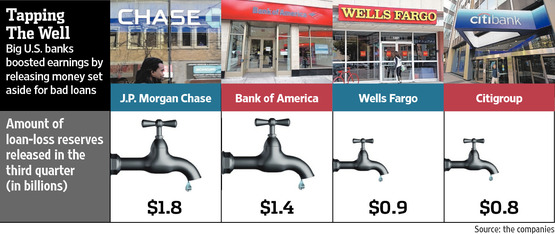
Federal regulators have warned banks to be careful about padding their profits with money set aside to cover bad loans. But some of the nation’s biggest banks did more of it in the third quarter than earlier this year. J.P. Morgan Chase JPM +0.55% & Co.,Wells Fargo WFC +0.40% & Co., Bank of America Corp. BAC +0.64% and CitigroupInc., C -0.18% the nation’s largest banks by assets, tapped a total of $4.9 billion in loan-loss reserves in the third quarter, up by about a third from both the second quarter and the year-ago quarter after adjustments. All the banks except Citigroup showed significant increases compared with the second quarter. Read more of this post

Ford finally finds its place in China; Just five years ago, Ford was thought to be hopelessly behind in China. But sales in the country so far this year have reached 647,849, an eye-popping 51% higher than a year ago

Ford finally finds its place in China

October 25, 2013: 5:00 AM ET

Just five years ago, Ford was thought to be hopelessly behind in China. But sales in the country so far this year have reached 647,849, an eye-popping 51% higher than a year ago.

By Doron Levin

FORTUNE — After a slow start, Ford (F) has finally found its footing in China. Alan Mulally ought to count such a feat among his signal achievements as CEO at the auto giant. Sales so far this year have reached 647,849, an eye-popping 51% higher than a year ago. Just five years ago, Ford was barely selling 250,000 vehicles a year and thought to be hopelessly behind. The last few months have been trending toward an annual sales rate of 1 million vehicles. Read more of this post

Oil’s $5 Trillion Permian Boom Threatened by $70 Crude

Oil’s $5 Trillion Permian Boom Threatened by $70 Crude

Bryan Sheffield, a third-generation oil wildcatter in Texas’s Permian Basin, knows what he’ll do if crude drops to $80 a barrel: shut down half his drilling rigs and go on a takeover hunt for weaker rivals. Sheffield is among producers who’ve together invested $150 billion in the Permian since 2010 seeking their piece of an oil trove estimated to be worth as much as $5 trillion. As the money pours in, risks are mounting of a bust as analysts including Marshall Adkins of Raymond James & Associates Inc. forecast crude is heading down to $70 a barrel next year, a price that would slow drilling in the most expensive U.S. shale formation. Read more of this post

Indonesian Oil, Gas Exploration May Halt Over Land-Tax Issue

Indonesian Oil, Gas Exploration May Halt Over Land-Tax Issue

Work at 19 Indonesia exploration wells may halt after the finance ministry shifted the cost of land and building taxes for oil and natural gas projects. The companies that operate the wells have temporarily halted orders for drilling rigs because they are required to pay the tax before starting exploration, according to Aussie Gautama, planning deputy at SKK Migas, the country’s upstream oil and gas regulator. The suspension may hamper effort to find potential resources of 1.6 billion barrels of oil and 3.7 trillion cubic feet of gas reserves, Gautama said. Read more of this post

Upcoming Elections May Hinder Asian Reforms; Indonesia and India are both slated to hold national elections next year –in April and July in Indonesia, and by the end of May in India

October 24, 2013, 10:59 PM

Upcoming Elections May Hinder Asian Reforms

NATASHA BRERETON-FUKUI

AI-CE420_AVOTE_NS_20131024043004

The U.S. Federal Reserve’s decision to keep its easy monetary policy in place for now has given Asia time to prepare for the eventual drawback of foreign capital. But upcoming elections mean policy makers are unlikely to take the hard decisions needed to make their economies more resilient once the Fed does move. Indonesia and India, the two Asian economies hit hardest this summer when investors pulled out of emerging markets in anticipation of Fed tightening, are both slated to hold national elections next year –in April and July in Indonesia, and by the end of May in India. Read more of this post

Najib Drives Malaysian Shift to Fiscal Prudence as 6% GST Planned from April 2015

Najib Drives Malaysian Shift to Fiscal Prudence as GST Planned

Malaysian Prime Minister Najib Razak took steps for a shift toward fiscal prudence, scrapping sugar subsidies and unveiling plans for a consumption tax in 2015 while softening the impact with handouts to the poor. The government will implement a goods and services tax of 6 percent in April 2015, while corporate and personal income tax rates will be lowered after the new levy comes into force, Najib said in his 2014 budget speech yesterday. The fiscal deficit will shrink to 3.5 percent of gross domestic product next year from 4 percent in 2013, meeting targets set previously, the finance ministry said in a report. Read more of this post

Nigeria Bourse Wants More of $22 Billion Pension Cash

Nigeria Bourse Wants More of $22 Billion Pension Cash

The Nigerian Stock Exchange (NGSEINDX) is seeking to have rules on pension-fund investing relaxed to attract funds and boost Africa’s third-best performing gauge this year, Chief Executive Officer Oscar Onyema said. Nigeria has more than 3.5 trillion naira ($22 billion) in invested retirement savings, according to the National Pension Commission, known as Pencom. Investors should be able to put that money into companies with at least three years of financial statements, less than the five required now, he said in an interview in the commercial capital, Lagos, on Oct. 23. Read more of this post

Norway’s $810-Billion Sovereign Wealth Fund Warns of Stock Market Correction

Norway’s Sovereign Wealth Fund Warns of Stock Market Correction

Norway’s sovereign wealth fund, the world’s largest, warned that stock market gains may reverse as Europe’s biggest equity investor said it won’t use new inflows to buy more shares. “Our share in the stock market has been stable or falling even though markets are rising, and that means in practice that we’re not using inflows to buy stocks,” Yngve Slyngstad, chief executive officer of Norges Bank Investment Management, said at a press conference today in Oslo. The fund is preparing for a “correction” in stock prices, he said. Read more of this post

Weitz to Yacktman Hold Cash as Managers Find Few Bargains

Weitz to Yacktman Hold Cash as Managers Find Few Bargains

Wally Weitz, the mutual-fund manager who beat 90 percent of rivals in the past five years by buying stocks he deemed cheap, says bargains are so scarce these days that he’s letting his cash holdings swell. “It’s more fun to be finding great new ideas,” Weitz, whose $1.1 billion Weitz Value Fund (WVALX) had 29 percent of assets in cash and Treasury bills as of Sept. 30, said in a telephone interview from Omaha, Nebraska. “But we take what the market gives us, and right now it is not giving us anything.” Read more of this post

Companies rush to build ‘biofactories’ for medicines, flavorings and fuels; Amyris has created 3 milllion new organisms that do not exist in nature

Companies rush to build ‘biofactories’ for medicines, flavorings and fuels

By Ariana Eunjung Cha, Friday, October 25, 8:50 AM

For scientist Jack Newman, creating a new life-form has become as simple as this: He types out a DNA sequence on his laptop. Clicks “send.” And a few yards away in the laboratory, robotic arms mix together some compounds to produce the desired cells. Newman’s biotech company is creating new organisms, most forms of genetically modified yeast, at the dizzying rate of more than 1,500 a day. Some convert sugar into medicines. Others create moisturizers that can be used in cosmetics. And still others make biofuel, a renewable energy source usually made from corn. “You can now build a cell the same way you might build an app for your iPhone,” said Newman, chief science officer of Amyris. Read more of this post

Euro zone suffers from integration fatigue

Euro zone suffers from integration fatigue

7:40am EDT

By Jan Strupczewski and Martin Santa

BRUSSELS (Reuters) – The euro zone is suffering from integration fatigue and banking union might be the last big push for the foreseeable future, officials in the currency bloc say. After three years of tightening policy cooperation, forced by a sovereign debt crisis, the single currency area may be reaching the limits of how much power governments are willing to cede. Read more of this post

New blockbuster movie shows why Pakistan loves to hate India

New blockbuster movie shows why Pakistan loves to hate India

6:57am EDT

By Mehreen Zahra-Malik

ISLAMABAD (Reuters) – Militants overrun a Pakistani police academy and kill 100 officers. An Indian spy and her accomplice waltz in a glitzy flat in Islamabad to celebrate the success of their mission. This is a scene from Waar (“Strike”), Pakistan’s first big-budget movie which opened this month to enthusiastic audiences in the nuclear-armed South Asian country of 180 million. Read more of this post

Indonesia Pledges Budget Prudence as Ministers Avoid First Class

Indonesia Pledges Budget Prudence as Ministers Avoid First Class

Indonesia will seek to rein in state spending next year to tackle a record current-account shortfall that has hurt the rupiah. The government is aiming for a budget deficit of 1.69 percent of gross domestic product in 2014, compared with an earlier target of 2.4 percent, Finance Minister Chatib Basri told reporters in Jakarta today after the parliament approved the budget. Authorities accept growth next year will be slower, he said, with the expansion target reduced to 6 percent from 6.4 percent. Read more of this post

Amazon’s Jeff Bezos Explains Why We Love Some Companies And Fear Others

Amazon’s Jeff Bezos Explains Why We Love Some Companies And Fear Others

MAX NISEN OCT. 24, 2013, 3:33 PM 1,953 1

Amazon has grown rapidly from e-commerce pioneer and bookseller to a behemoth that sells just about anything you can think of. And considering Amazon Web Services, which helps run everything from Netflix to DropBox, there are more services than most people would imagine. According to Brad Stone’s new book “The Everything Store,”  that omnipresence made its CEO Jeff Bezos wonder how Amazon could avoid becoming one of those companies that people hate for its size and power. The company had already been criticized for how it pays sales tax, eBook pricing, certain acquisitions, and ill-thought out marketing efforts, like an aggressive price comparison app. He wanted to know how the company could be “loved, not feared.” Bezos wrote a memo called “Amazon.love,” which Stone was able to obtain, that he distributed to his “S-team” of top executives. In it, he highlighted the fact that some multibillion-dollar companies have managed to remain beloved, or at least thought of as “cool” by customers. Think Apple, Whole Foods, Costco, Nike, and Google. Others get piled on, rather than defended, if things go badly. Think Microsoft, Goldman Sachs, ExxonMobil, and Wal-Mart. Both sets of companies do very well. But the core of Amazon’s ethos and culture is that the customer always comes first. Because the customer loses trust if they fear that you’re out to take advantage of them, Amazon’s sheer size makes that a worry. Bezos laid out the core differences between the two types of businesses in the memo. It’s a playbook for any business that aspires to be loved, instead of feared. Via “The Everything Store”:

  • Rudeness is not cool.
  • Defeating tiny guys is not cool.
  • Close-following is not cool.
  • Young is cool.
  • Risk taking is cool.
  • Winning is cool.
  • Polite is cool.
  • Defeating bigger, unsympathetic guys is cool.
  • Inventing is cool.
  • Explorers are cool.
  • Conquerors are not cool.
  • Obsessing over competitors is not cool.
  • Empowering others is cool.
  • Capturing all the value only for the company is not cool.
  • Leadership is cool.
  • Conviction is cool.
  • Straightforwardness is cool.
  • Pandering to the crowd is not cool.
  • Hypocrisy is not cool.
  • Authenticity is cool.
  • Thinking big is cool.
  • The unexpected is cool.
  • Missionaries are cool.
  • Mercenaries are not cool.

After ranking companies on those attributes, Bezos concluded that customer focus alone isn’t enough. Being inventive isn’t enough, either. Beloved companies manage to make what he describes as “that pioneering spirit” perceived and felt by their customers. When customers believe the company has a vision of the future that they want to be a part of and trust it can deliver on that vision, then they are more likely to support it.
China conjures up new ‘bad bank’ magic trick; Solution to prospect of growing bad debts is same as in the past

October 24, 2013 6:04 am

China conjures up new ‘bad bank’ magic trick

By Henny Sender

Solution to prospect of growing bad debts is same as in the past

Beijing is authorising the establishment of a second batch of so-called bad banks, this time at the provincial level, as it continues its slow move towards more financial deregulation. This time around the incentive is to prepare for any nasty side-effects as interest rate controls are gradually relaxed. Those include a rise in the cost of capital for already cash-strapped Chinese companies as well as the possible risk of accidents in Chinese banks that have not had to worry about asset liability management in the past. The purpose is also to deal with a new round of bad debts following the stimulus programme adopted in the wake of the global financial crisis. Read more of this post

Michael Petis: Hidden China Debt MUST Still be Repaid

Hidden Debt MUST Still be Repaid

Michael Petis, 2013-10-24 13:57:13

导读:中国庞大的外汇储备是否能用来清理银行坏账?当然不能。用外汇储备纾困银行只能减少央行资产,而债务不会相应减少。换言之,外汇储备转移多少,央行净负债将增加多少。
谁来承担中国银行里的坏账损失?要是家庭部门继续像目前这样承受损失——不管是通过抑制利率这种隐藏的方式,还是以更明显的形式,如税收,来实现——中国银行体系的坏账必将压制家庭消费开支的增长。中国的债务增加的速度似乎比偿还能力的增长快得多,说明未来的增长必定会放缓。

Five or six years ago, a few skeptics first started pointing out that the credit dynamics underlying Chinese growth was creating an unsustainable increase in debt. This, they warned, would ultimately undermine the banking system and cause growth to collapse if it were not addressed in time. There were three standard rejoinders to the warnings. First, analysts argued that investment was not being misallocated, and because credit growth poured mostly into investment, it did not therefore follow, as the skeptics argued, that debt was rising faster than debt servicing capacity. Although I think few analysts still support this argument, there remain some analysts who do not think China has an overinvestment problem. For example my Carnegie colleague Yukon Huang, who has argued, for example in one of the FT blogs that China is actually underinvested: Read more of this post

If Chinese companies cannot use the IPO proceeds to fund losses in the VIE, so how did the funds get into the VIE? Loan payable by the VIE to a related company is eliminated in consolidation. How was this loan legal?

Four new IPOs and forex problems

SFC proposes audit regulatory reforms

We have had several Chinese companies file for IPOs in the US recently.500.com is an online sports lottery company.58.com is China’s copy of Craigslist. Sungy Mobile is mobile internet, mostly games.Qunar Cayman Islands is similar to Kayak.

Auditors of these companies are:

500.com           EY
58.com             PwC
Sungy Mobile    KPMG
Qunar               EY

Deloitte won none of these engagements although it previously had the largest market share by number of companies. Some private equity people have told me that they have been avoiding Deloitte for fear that their SEC problems might get in the way of a timely offering. The problems that the Big Four are having with the SEC get extensive coverage in the risk factors, with three of them saying that if the SEC acts against the China Big Four, they willnot be able to file financial statements and may be delisted. I was pleased to see that KPMG signed Sungy’s report using its mainland affiliate, breaking from its former practice of signing these reports in Hong Kong. The mainland affiliate does the audits; it needs to sign the reports.  Read more of this post

Accounting World, Still Resisting Sunlight; The American accounting industry has fiercely battled any attempt by regulators to require partners to sign off publicly on audits

October 24, 2013

Accounting World, Still Resisting Sunlight

By FLOYD NORRIS

The accounting business has sometimes had an attitude of — how shall I put it? — contempt for those who would regulate it. The people who run the major firms know best, and regulators should yield to their superior judgment. Nowhere is that clearer than when regulators penalize partners of big firms. The Tammy Wynette song “Stand by Your Man” could be the industry’s anthem. In 2001, when the Securities and Exchange Commission settled charges against Arthur Andersen for its involvement in financial fraud at Waste Management, a partner named Robert G. Kutsenda was banned for a year. He was not the partner in charge of the Waste Management audit, but an e-mail showed he had approved accounting that the S.E.C. said was improper. Read more of this post

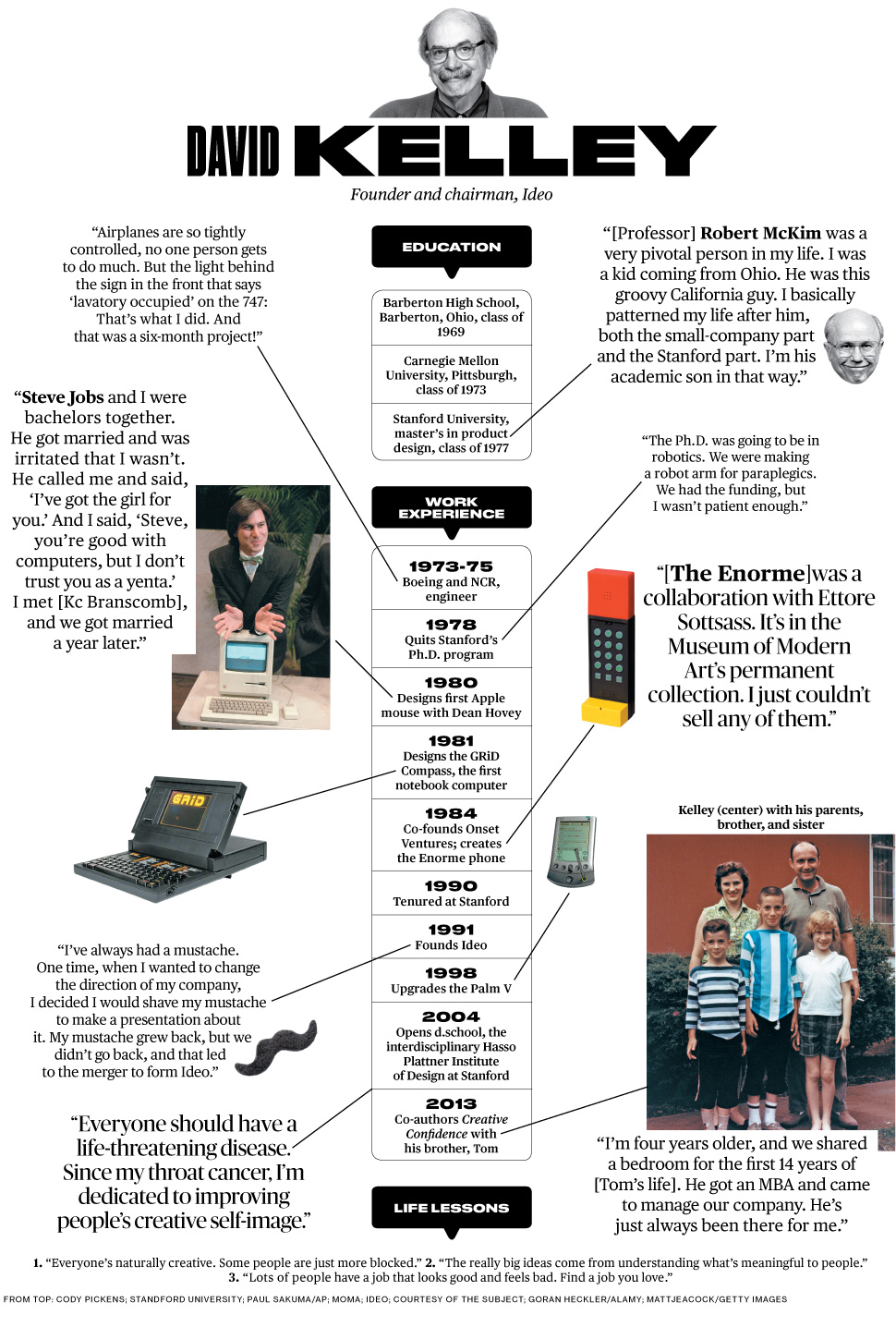
Ideo’s David Kelley: How Did I Get Here? The design guru on his contribution to Boeing’s 747, collaborating on the artistic Enorme phone, and other high points of his career

Ideo’s David Kelley: How Did I Get Here?

October 24, 2013

The design guru on his contribution to Boeing’s 747, collaborating on the artistic Enorme phone, and other high points of his career.

etc_backpage44_970


Marina Mahathir: The cost of telling the truth; It takes courage to stand one’s ground, but the greatest reward is the ability to sleep at night, knowing that one’s conscience is clear

Updated: Thursday October 24, 2013 MYT 9:07:53 AM

The cost of telling the truth

BY MARINA MAHATHIR

It takes courage to stand one’s ground, but the greatest reward is the ability to sleep at night, knowing that one’s conscience is clear.

WHEN parents try to teach their young children certain values and behaviours, consistency is the key. When you tell children that lying is wrong, then they must never catch you telling untruths. If you say there’s no money to buy some fancy new toy, then you can’t come home with a brand new car without them wondering how come you can afford that. Children have natural radar for hypocrisy. It is tuned to catch any inconsistencies, white lies or complete untruths that parents spout because these grate against the natural sense of fairness that kids have. And every time they catch their parents out, a small bit of parental authority erodes. This anti-hypocrisy radar is only maintained if the child doesn’t then learn that to be hypocritical is more rewarding than to be true to one’s own conscience. If they find that there is nothing to be gained from telling the truth, and everything to gain from fudging facts, then the children grow up with their moral compass askew. They learn not to take responsibility for their own misdeeds but to blame others for it. Thus you get stories, for example, about kids who blame their maids for not putting their homework in their schoolbags on the day they are meant to pass them up. Unfortunately there are more and more adults behaving in this way these days. Read more of this post

Getting Ph.D.s to Think Like Entrepreneurs; Hundreds of scientists have participated in business boot camps sponsored by the National Science Foundation.

Getting Ph.D.s to Think Like Entrepreneurs

By Nick Leiber October 24, 2013

In a crowded hotel conference room in downtown Brooklyn, N.Y., in October, Jerry Engel told dozens of earnest young scientists and engineers to cut the “scientific crap” and instead identify would-be customers who might care about their products. Frank Rimalovski piled on, urging attendees presenting research that they wanted to turn into businesses—from bone grafts to facial-recognition software—“to focus on the problem, not the solution.” Read more of this post

“It’s 1776 in Indonesia”: From Washington, Some Lessons for Jokowi; many Indonesians hope that Joko can do for Indonesia what Obama is perceived to have done for America. Obama finds himself frustrated by members of his own party weary of his leadership and increasingly willing to defy him”

From Washington, Some Lessons for Jokowi

By Stanley Weiss on 1:45 pm October 24, 2013.
In 1949, a young press attache was dispatched from Jakarta to New York, with the difficult task of convincing the American public to support young Indonesians in their fight against Dutch forces that had ruled Indonesia for more than a century. Realizing that Indonesia, like America before it, was seeking to create a sovereign nation by breaking the colonial ties that bound it to a single European power, he produced an eloquent paper that harkened back to the year America declared independence from Great Britain. Its provocative title? “It’s 1776 in Indonesia.” Read more of this post

Economy-class activist investor crashes the corporate party

Economy-class activist investor crashes the corporate party

ROSS KERBER, REUTERS OCT. 24, 2013, 6:12 AM 10,248 9

LOS ANGELES (Reuters) – Shareholder activists come in different flavors. One is the deep-pocketed investor, such as Carl Icahn or Dan Loeb, who takes big stakes in companies and forces management to change strategy. Another type is the persistent provocateur who buys a handful of shares and agitates on a shoestring. That’s John Chevedden. Now 67 years old, Chevedden launched his career as an activist – he rejects the term “gadfly” – after being laid off from the aerospace industry in the early 1990s. Since then, he has unleashed a relentless flow of shareholder proxy measures at some of the largest U.S. companies.

Read more of this post

Why Can People Live In Hiroshima And Nagasaki Now, But Not Chernobyl?

Why Can People Live In Hiroshima And Nagasaki Now, But Not Chernobyl?

MELISSATODAY I FOUND OUT OCT. 24, 2013, 9:50 AM 8,925 16

On August 6 and 9, 1945, U.S. airmen dropped the nuclear bombs Little Boy and Fat Man on the Japanese cities of Hiroshima and Nagasaki. On April 26, 1986, the number four reactor at the Chernobyl Nuclear Power Plant in the Ukraine exploded. Today, over 1.6 million people live and seem to be thriving in Hiroshima and Nagasaki, yet the Chernobyl exclusion zone, a 30 square kilometer area surrounding the plant, remains relatively uninhabited. Here’s why. Read more of this post

The making of Amsterdam: How the Dutch capital gave birth to the Enlightenment

The making of Amsterdam: How the Dutch capital gave birth to the Enlightenment

Oct 26th 2013 |From the print edition

Amsterdam: A History of the World’s Most Liberal City. By Russell Shorto.Doubleday; 368 pages; $28.95. Little, Brown; £25. Buy from Amazon.com,Amazon.co.uk

DURING its rise in the 17th century, Amsterdam was an important haven for religious dissidents. It was also the publishing centre for the racy philosophical tracts that were too hot to be printed in France or England. The city’s economic fortunes were born of its embrace of international trade and of financial innovation. And the highly profitable Dutch East India Company was the world’s first joint-stock company, leading in time to the world’s first stock and options markets. Read more of this post