The debt mountain at U.K. water companies is their best defense against politicians seeking to cut the cost of living

Debts Keep Water Firms Off-Limits for Politicians: U.K. Credit

The debt mountain at U.K. water companies is their best defense against politicians seeking to cut the cost of living. The Labour opposition, which has pledged to freeze gas and electricity prices for 20 months if it wins the 2015 general election, may be wary of imposing a similar cap on highly leveraged water businesses, according to Lakis Athanasiou, a utilities analyst at Agency Partners LLP. Water companies have debt-to-equity ratios as high as 80 percent and rely on borrowings to keep infrastructure intact. “I really can’t see them going after the water industry,” Athanasiou said in a phone interview. “Because they are highly leveraged structures, they need masses of debt, not just for expansion but for replacement of existing debt.” Read more of this post

Fidelity to Open Cheapest Single-Industry ETFs in Push

Fidelity to Open Cheapest Single-Industry ETFs in Push

Fidelity Investments, the second-biggest mutual-fund provider, plans to open the cheapest lineup of single-industry exchange-traded funds as it seeks to break into a market dominated by Vanguard Group Inc. and BlackRock Inc. (BLK) Fidelity on Oct. 24 will start 10 funds, focused on industries ranging from energy to telecommunications, with an annual expense ratio of 0.12 percent, cheaper by 2 basis points than Vanguard Group Inc.’s lineup of similar ETFs, according to a regulatory filing and data compiled by Bloomberg. The ETFs, distributed by Fidelity, will be managed by BlackRock, the world’s biggest money manager. A basis point is one-hundredth of a percentage point. Read more of this post

Emerging-Market Currency Rout Will Worsen Next Year, Jen Says

Emerging-Market Currency Rout Will Worsen Next Year, Jen Says

Emerging-market currencies will probably see bigger declines next year when the Federal Reserve actually starts tapering its record stimulus, Stephen Jen, co-founder of hedge fund SLJ Macro Partners LLP said. The Fed’s signal on May 22 that it may start reducing its $85 billion of monthly bond purchases caused the JPMorgan Emerging Markets Currency Index to drop 7.2 percent through the end of August. India’s rupee led the declines with a 16 percent loss during the period, followed by Brazil’s real at 14 percent and Indonesia’s rupiah at 13 percent. The gauge has since rallied 4.3 percent as the Fed unexpectedly decided to maintain its debt buying on Sept. 18. Read more of this post

Fund firms wrestle with “star manager” syndrome

Fund firms wrestle with “star manager” syndrome

Tuesday, Oct 22, 2013

Reuters

LONDON – Neil Woodford’s surprise announcement last week of his planned departure from fund manager Invesco Perpetual neatly encapsulates the risks to fund firms who employ such star managers and the investors who back them. They can leave. Woodford, widely feted for a defensive stock-picking style that made money throughout the financial crisis, is responsible for running around 30 billion pounds (S$60.22 billion) of assets, out of the firm’s 70 billion total. His 25-year career made him one of the best known money managers among Britain’s private investors. Yet for the fund firms who employ such individuals, there are clear risks of becoming over-dependent on their presence. Read more of this post

Auto Makers Shift Gaze to ‘Emerging’ Emerging Markets

Auto Makers Shift Gaze to ‘Emerging’ Emerging Markets

Car Companies Look Past the BRICs

NEAL E. BOUDETTE

Oct. 22, 2013 1:27 p.m. ET

TROY, Mich.—The auto industry has been buzzing for the last couple of years about growth in the so-called BRIC markets –Brazil, Russia, India and China. Now the conversation is shifting to the Future 15—the next group of emerging markets beyond the BRICs that are expected to drive the industry forward. They include populous Asian nations of Indonesia, Thailand and Malaysia; Turkey, Saudi Arabia and Iran in the Middle East; South America’s Andean nations such as Chile and Argentina; and Morocco, Egypt and others in North Africa. Read more of this post

The Global Innovation 1000: Navigating the Digital Future

October 22, 2013

The Global Innovation 1000: Navigating the Digital Future

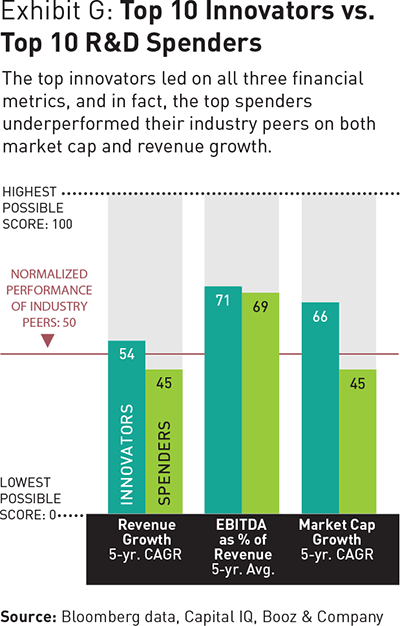
Booz & Company’s annual study of R&D spending reveals the tools that are transforming innovation—from customer insight to product launch.

by Barry Jaruzelski, John Loehr, and Richard Holman

At Catalent, a U.S.-based producer of pharmaceutical products and provider of advanced drug delivery technologies and services, digital tools often support the practices of the company’s 18 research and development sites around the world. Data pours in from R&D, sales and marketing, operations, quality assurance, and regulatory affairs, as well as customers. Evjatar Cohen, vice president for global innovation and portfolio management, and his team make sense of it all with a slate of new market and customer insight enablers. “Collecting the data is just part of what we do,” he says. “It’s really about using that input to come up with market uptake estimates for each potential product and an understanding of its business value. That aids us greatly in deciding where to focus our day-to-day activities as well as planning our long-term strategy.”

00221_ex01b00221_ex0200221_exfb00221_exgb Read more of this post

Starbucks Links Coffee Makers to Web Fueling $27B Market

Starbucks Links Coffee Makers to Web Fueling $27B Market

Starbucks Corp. (SBUX), famous for giving away Wi-Fi that links customers to the Internet, now wants to apply Web technology to its own operations by networking coffee makers, refrigerators and other appliances. Over the next year, Starbucks said it plans to double the number of its Clover coffee-brewing machines, which connect to the cloud and track customer preferences, allow recipes to be digitally updated and help staffers remotely monitor a coffee maker’s performance. Also in the works: connected fridges that indicate when a carton of milk has spoiled. “We are investing in different technologies to make it easier for our baristas,” Marianne Marck, a senior vice president for the Seattle-based company, said in an interview. Read more of this post

HTC Said to Plan Smartwatch as Cher Wang Rallies Workers

HTC Said to Plan Smartwatch as Wang Rallies Workers

HTC Corp. (2498) is developing a smartwatch that uses Google Inc. (GOOG)’s Android software and can take pictures, according to a person familiar with the matter. Cost, functions and sales strategy for the watch are still to be decided before it’s released by the second half of 2014, said the person, who asked not to be identified because the plans aren’t public. Chairwoman Cher Wang gathered workers at a town-hall style meeting today to tell them the Taiwanese smartphone maker needs to improve its customer focus, Chief Marketing Officer Ben Ho said in an interview. Read more of this post

Beijing May Make ABCs Less Important After English-Training Boom

Beijing May Make ABCs Less Important After English-Training Boom

China’s capital city of Beijing proposed reducing the importance of English in education by cutting the language’s weighting on college-entrance tests in favor of the nation’s own tongue. English would count for 100 points, down from the current 150, out of the maximum score of 750 starting in 2016, the official Xinhua News Agency reported yesterday, citing the Beijing Education Examinations Authority. The possible score in Chinese would rise to 180 from 150, Xinhua said. The local government said English programs currently stress examinations over mastery of the language, according to Xinhua. Read more of this post

How Wall Street Fed Puerto Rico’s $70 Billion Borrowing Binge

How Wall Street Fed Puerto Rico’s $70 Billion Borrowing Binge

Seven years ago, in the wake of a government shutdown caused by a $740 million budget deficit, Puerto Rican officials vowed to fix the island’s finances by 2010. Now investors are calling their bluff. In the $3.7 trillion municipal-bond market, Puerto Rico and its agencies more than doubled their borrowing since 2004 to $70 billion this year. Even as the island’s population shrank and the economy contracted 16 percent since 2004, the government kept selling enough bonds to saddle each man, woman and child with $19,000 in debt. Read more of this post

“An entrepreneur has to tell a story that’s a prophecy that we feel will definitely come true.” How Screenwriting Guru Robert McKee Teaches Brands To Tell Better Stories; If you want everyone from customers to colleagues to believe in your mission, you need to tell them a story, not make an argument.

HOW SCREENWRITING GURU ROBERT MCKEE TEACHES BRANDS TO TELL BETTER STORIES

IF YOU WANT EVERYONE FROM CUSTOMERS TO COLLEAGUES TO BELIEVE IN YOUR MISSION, YOU NEED TO TELL THEM A STORY, NOT MAKE AN ARGUMENT.

BY: ROBERT MCKEE AS TOLD TO DRAKE BAER

It’s hard not to refer to Robert McKee as a “guru.” And why not? McKee, who has been teaching a seminar on screenwriting for 30 years and has written the field’s holy text, has become a foundational necessity to making it in movies, with alumnae including Peter Jackson, Julia Roberts, and John Cleese, and with 50-some Academy Award winners and 170 Emmy Award winners. McKee, who’s worked with brands likeMicrosoft, Nike, and HP to craft their stories, is now also teaching a Story-in-Business seminar. I had lunch with McKee and his wife, Mia, in Manhattan last week to talk about why brands need narratives. Here, we present an edited portion of our conversation.

To me, “story” is a fundamental. When people say story or whatever, they immediately begin to think of Hollywood and/or maybe the theater and novels, history, biography, autobiography. To me, they think about those big narrative forms and they call it the story, or they think in those terms. To me, the heart of it is a story, a mode of thought in direct opposition to other modes of thought that business tends to favor. Read more of this post

Berkshire Beats Apple as Favorite Stock of Tiger 21 Group

Berkshire Beats Apple as Favorite Stock of Tiger 21 Group

By Margaret Collins  Oct 22, 2013

Warren Buffett’s Berkshire Hathaway Inc. (BRK/A) regained its ranking as the favorite stock pick among U.S. and Canadian multimillionaires, beating Apple Inc. (AAPL) and fending off the increasing preference for exchange-traded funds. Members of Tiger 21, a New York-based group of wealthy investors, selected Berkshire in an annual survey of preferred investments scheduled to be released today. Apple, which had held the No. 1 spot the last two years, slipped to No. 2. “The bloom is off of Apple,” Michael Sonnenfeldt, founder and chairman of Tiger 21, said in an interview. “For people who held Berkshire Hathaway it’s held its appeal, but for Apple, a lot of people who were on that ride have realized that perhaps the best days are behind it.” Read more of this post

You’ll never be a Yale superman: How Yale’s influential endownment fund and its CIO are reining in their ambitions

You’ll never be a Yale superman

Dan McCrum

| Oct 22 12:02 | 4 comments | Share

David Swensen is an investing superman. His pioneering use of alternative investments after he took over the Yale endowment in 1985 prompted a thousand imitators and created an industry. Indeed, the Yale model became the endowment model, so widely was it embraced. Then, with alternative investments legitimised as suitable for big investors, pension funds began to follow his lead, albeit tentatively. Yet you can never be David. Or rather, you can never match up to the myth that Mr Swensen’s performance has become. Consider the recent decision by the $21bn Yale endowment to cut its allocation to private equity for the first time in eight years, to 31 per cent from 35 per cent. That shift may simply reflect a lack of opportunities at present, but note the long-term return target which Yale expects its private equity investments to deliver. Read more of this post

Cleaner air a bitter pill for north China cities

October 22, 2013 2:20 pm

Cleaner air a bitter pill for north China cities

By Lucy Hornby in Chengde

When people in Beijing put on their pollution masks, it makes international headlines. But the effort to clean up the air in northern China depends on steel-producing cities such as Chengde, whose three million people are more worried about jobs than smog. The authorities have become so concerned about the state of the air in the Chinese capital that they want the industrial cities of Hebei province that encircle Beijing to cut coal use and steel and cement capacity to ease the problem. Read more of this post

Thailand is considering slapping a 500-baht ($16.60) entry fee on tourists to help cover foreigners’ unpaid medical bills

Thailand considers charging all tourists to cover unpaid hospital bills

October 23, 2013 – 12:32AM

Thailand is considering slapping a 500-baht ($16.60) entry fee on tourists to help cover foreigners’ unpaid medical bills, officials say. “The policy is the result of foreign tourists who have accidents or fall sick in Thailand and seek treatment at our hospitals but then can’t pay their bills,” the Health Ministry’s deputy permanent secretary, Charnvit Phrathep, said. The unpaid hospital bills of foreign tourists cost the state about 700 million baht a year, the ministry said. Read more of this post

Australia to Raise Debt Ceiling as Mining Slowdown Bites

Australia to Raise Debt Ceiling

Move to Raise Debt Ceiling to $483 Billion as Mining Slowdown Bites

JAMES GLYNN and RACHEL PANNETT

Oct. 22, 2013 4:58 a.m. ET

SYDNEY—Australia’s new conservative government said it would seek to raise the ceiling on government borrowing to fund its policies and day-to-day operations, highlighting the dire state of the nation’s finances as a long mining boom cools. In doing so, the center-right Liberal-National coalition risks a rift with voters who identified rising government debt as a key concern in the lead-up to the Sept. 7 election. Read more of this post

The highly unusual company behind Sriracha, the world’s coolest hot sauce; Tran’s dream is “to make enough fresh chili sauce so that everyone who wants Huy Fong can have it. Nothing more.”

The highly unusual company behind Sriracha, the world’s coolest hot sauce

By Roberto A. Ferdman @robferdman October 21, 2013

images (38)130611_sriracha_2

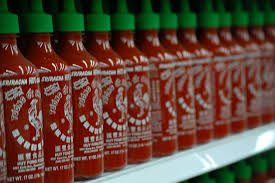
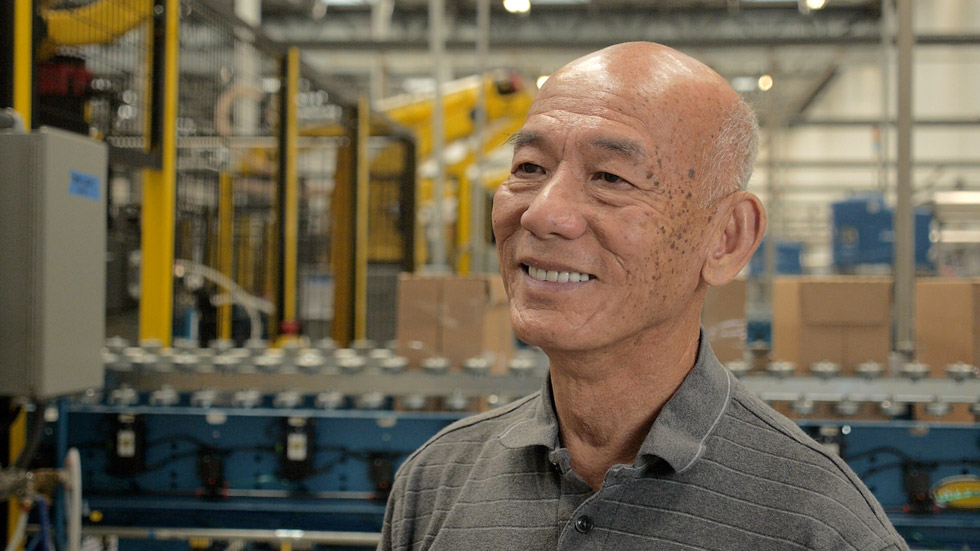
If David Tran were a more conventional CEO, he would be a fixture at conferences, a darling of magazine profiles, and a subject of case studies in the Harvard Business Review. Sriracha hot sauce, made by Huy Fong Foods, which Tran founded 33 years ago in Los Angeles, is one of the coolest brands in town. There are entire cookbookswritten to celebrate Sriracha’s versatility; memorabilia ranging from iPhone covers to t-shirts and all sorts of other swaga documentary in the works to chronicle its rise; and innumerable imitators. Sriracha sales last year reached some 20 million bottles to the tune of $60 million dollars, percentage sales growth is in the double digits each year, and it does all this without spending a cent on advertising. Yet Tran shuns publicity, professes not to care about profits, hardly knows where his sauces are sold, and probably leaves millions of dollars on the table every year. His dream, Tran tells Quartz, “was never to become a billionaire.” It is “to make enough fresh chili sauce so that everyone who wants Huy Fong can have it. Nothing more.” Read more of this post

Prince Charles royal ruckus for fund managers saying that short-term thinking was making their brand of capitalism increasingly “unfit for purpose”

Last updated: October 18, 2013 2:03 pm

A right royal ruckus for fund managers

By Neil Collins

Prince Charles’ criticism likely to be shrugged off

The Prince of Wales may know as much about finance as the average fund manager knows about the royal family but sometimes he’s uncomfortably close to the truth. This week he told the National Association of Pension Funds that short-term thinking was making their brand of capitalism increasingly “unfit for purpose”. This irritating, overworked phrase aside, there’s a serious problem here, although short-termism is a symptom rather than the cause. The malaise in this industry can be easily summarised: too many coins are sticking to the shovels of the managers and the brokers. Since they designed the model, this is hardly surprising: they get paid whatever happens to the fund being managed. There is the nuclear threat of losing the mandate but generally only prolonged poor performance allied with no convincing case for improvement causes the bomb to be dropped. Running a fund is so lucrative that there are four pages of them in your weekday FT and little more than a single page of the underlying stocks that the funds trade. Describing this problem is easy; breaking the model is much harder. The Kay report recommended scrapping quarterly reports and greater engagement by fund managers with companies. It singled out Neil Woodford as the model manager. Unfortunately, Mr Woodford has now left the big fund he ran and the response of the average manager to the royal criticism is likely to be: why should I bother?

Start-Up Reinvents the Bicycle Wheel; “The Copenhagen Wheel” transforms a normal bicycles into a hybrid e-bike

OCTOBER 21, 2013, 8:59 PM

Start-Up Reinvents the Bicycle Wheel

By NICK BILTON

bits-wheel-tmagArticle

“The Copenhagen Wheel” transforms a normal bicycles into a hybrid e-bike.

It’s rare that a company comes along and reinvents the wheel, but it looks like that is about to happen. Superpedestrian, a start-up in Boston, announced on Monday that it has received $2.1 million in financing to help build a wheel that transforms some standard bicycles into hybrid e-bikes. The product, the Copenhagen Wheel, is a design from the Massachusetts Institute of Technology SENSEable City Laboratory. The original goal of the wheel was to entice more people to more bicycles in large cities in lieu of cars by giving them help from a motor. Read more of this post

Why is pivot such a dirty word?

Why is pivot such a dirty word?

BY CARMEL DEAMICIS 
ON OCTOBER 21, 2013

If I had a dollar every time someone explained to me why their company’s shift in priorities wasn’t a pivot, well, I might not be a millionaire, but I’d probably have enough to treat everyone at the bar that night. “I wouldn’t say it’s a pivot so much as…” An iteration. A new feature. A shift in priorities. No company that pivots thinks it’s pivoting. Or at least, no company that pivots wants to admit it to a member of the press. The word pivot’s use in startup land comes from the book The Lean Startup, where author Eric Ries defines it as, “Structured course correction designed to test a new fundamental hypothesis about the product, strategy, and engine of growth.” Despite his clear definition, the term has subjective meanings that color it. It’s associated with failure. Read more of this post

Mapping China’s Surnames 制图 “老百姓”

Mapping China’s Surnames 制图 “老百姓”

by ASTOKOLS27 on Oct 20, 2013 • 9:56 pmNo Comments

Li-300x270 wang--300x258 zhang-300x267 C-hen-300x256 guo-300x255 ma-300x210

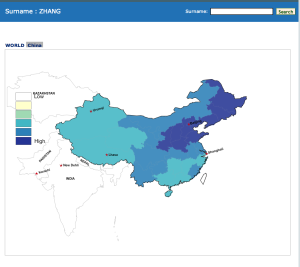
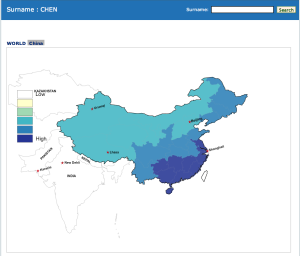
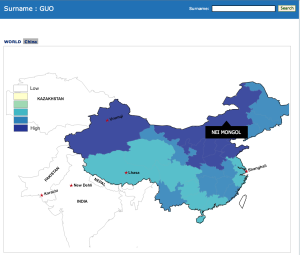
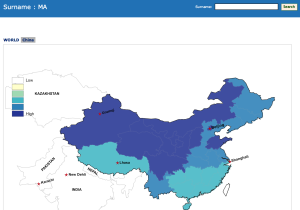
Using this cool new website that maps global surnames according to geographic origin, I was able to map a few of the most common Chinese surnames.  The map shows data at the sub-national level, enabling a province-level map of China’s surnames.  China presents a unique context in which to study the origin of surnames due to the continuity and prevalence of recorded Chinese characters associated with each surname, and the relatively low number of total surnames.  There are, by some estimates, 4,100 surnames in China, while in the US that number is around 6.2 million total. The geographic spread of names in China could be explained in many ways: from population and migration patterns over history, the geographic divisions between north and south, and watersheds.  Historian William Skinner’s came up with the concept of  “macro-regions”  that defined patterns of trade, commerce, language, and culture in China. With China’s massive internal migration today, one might think that the importance of geographic divisions such as the macro-regions, would fade.  As these maps show, that is clearly not the case. Here’s are maps for some of the most common surnames*: Purple indicates a high density of surnames in that province. Read more of this post

Leaders need trust more than Twitter; Running a business raises many questions to which ‘social media’ is not the answer

October 21, 2013 3:32 pm

Leaders need trust more than Twitter

By Andrew Hill

Running a business raises many questions to which ‘social media’ is not the answer

Irecently spent time sifting strategic plans for seven non-profit organisations, drawn up by teams of MBA students for an FT competition, the winner of which will be announced this week. It was a rare insight into how bright young executives are thinking and I am sure their efforts will benefit the non-profits themselves. But one thing stood out: the number of entrants that believed that, whatever the problem, social media would help solve it. Raising money? Go to Twitter. Building local, national and international support? TryFacebook. Read more of this post

Economic Theory, via YouTube and Cartoon; Ray Dalio, the founder of the largest hedge fund, offers a 30-minute lecture in how the economy works. No tuition necessary, just a connection to YouTube

OCTOBER 21, 2013, 8:53 PM

Economic Theory, via YouTube and Cartoon

By ANDREW ROSS SORKIN

Forget Econ 101. Take a look at the lessons in Dalio 101. Ray Dalio, the 64-year-old founder of Bridgewater Associates, the largest hedge fund in the world with some $150 billion under management, has quietly begun teaching his investment secrets on YouTube. Mr. Dalio, who is said to be worth some $13 billion, was one of the few investors to see the financial crisis of 2008 developing, and perhaps just as important, the rebound. He’s made his money by predicting big macroeconomic cycles. His economic theories, up until now, have been known only to a small group of investors and those willing to pay his firm 2 percent management fees and 20 percent of the investment profits.

Read more of this post

The Inefficient Market Hypothesis

OCTOBER 21, 2013, 12:01 AM

The Inefficient Market Hypothesis

By NANCY FOLBRE

Nancy Folbre is professor emerita of economics at the University of Massachusetts, Amherst.

Either it was a partisan compromise, or the Nobel Memorial Prize in Economic Science committee simply hedged its bets, bestowing its annual prize on three economists, two of whom represent divergent views. One Financial Times blogger compared it to a joint celebration of Milton Friedman and John Maynard Keynes. John Kay, also writing in The Financial Times, put it more sharply, as “awarding the physics prize jointly to Ptolemy for his theory that the Earth is the center of the universe and to Copernicus for showing it is not.” Read more of this post
Repeatedly burned, short sellers avoid momentum stocks

Updated: Tuesday October 22, 2013 MYT 6:55:17 AM

Repeatedly burned, short sellers avoid momentum stocks

NEW YORK: Even as some of Wall Street’s biggest trading favorites – considered by many to be massively overvalued – report earnings this week, short sellers are staying away. Shorts have become gun-shy as the market has continued to rally, making bets against high-flying stocks like Netflix or Tesla very expensive ones. Steep losses have been amplified by “short squeezes,” where shorts are forced to cover their bets to prevent further losses. Read more of this post

What happens when retailer Sears is supposedly valuable for its tangible property assets and the business is managed by a dealmaker? 18 Depressing Photos That Show Why Nobody Wants To Shop At Sears

18 Depressing Photos That Show Why Nobody Wants To Shop At Sears

ASHLEY LUTZ OCT. 21, 2013, 8:26 AM 71,887 57

Sears, once America’s golden retailer, is a company in crisis.  The company has shuttered hundreds of stores in recent years. The embattled company has been selling some its most profitable stores to raise money. Brian Sozzi, chief equities strategist at Belus Capital Advisors, took poignant photos inside of New Jersey  and New York Sears locations. “To understand why Sears is in a ‘sell stores mode’ one must look no further than the stores themselves, where the truth is to be found,” Sozzi writes. His photos show the sad reality of what Sears is today.

Sears’ mannequins are outdated in comparison with competitors like Macy’s, Lord & Taylor, and JCPenney, Sozzi says. “If you are living darn near paycheck to paycheck, does this presentation excite you about making a purchase with a couple saved up electronic dollars?”

shld-mann-e1382137232438

Sozzi points out that this display is confusing. “Huh? A random football themed carpet with no promotion around it?” he says.

football-carpet1-e1382137446920 Read more of this post

Why Transformation Needs a Second Chapter: Lean, but Not Yet Mean

Why Transformation Needs a Second Chapter: Lean, but Not Yet Mean

by Martin Reeves, Kaelin Goulet, Gideon Walter, and Michael Shanahan

OCTOBER 21, 2013

LeanNotMean_Ex1_lg_tcm80-146756 LeanNotMean_Ex2_lg_tcm80-146760

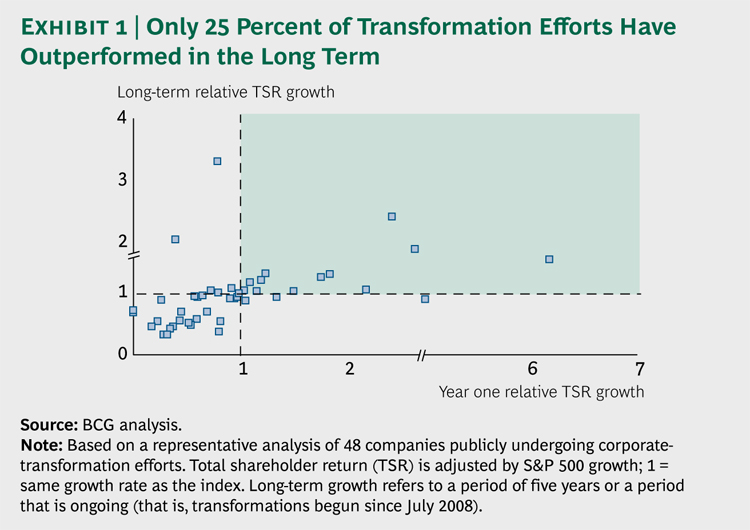
It’s a well-known mantra in business: “You can’t cut your way to greatness.” Nonetheless, painful cost cutting and other defensive measures are a familiar strategy for staying afloat. They are quick and obvious and deliver tangible results, but they are not in themselves a recipe for success. What does a CEO driving a turnaround do after these “easy” measures have been exhausted? Read more of this post

Wang Fengying, China’s only female motor industry CEO

Wang Fengying, China’s only female motor industry CEO

Staff Reporter

2013-10-21

CFP420550083-103435_copy1

Wang Fengying at a Great Wall Motor product launch in Tianjin in August 2011. (Photo/CFP)

Wang Fengying, general manager and CEO of Great Wall Motor Company, is the only female CEO in China’s massive motor industry. Born in October 1970 in the city of Baoding in north China’s Hebei province, Wang obtained her bachelor’s degree from the Tianjin Institute of Finance and began working for Great Wall Motor in 1991. She later returned to her alma mater and completed a master’s degree in economics in 1999. Wang, who turns 43 this month, as spent her entire career at Great Wall Motor. After working at the company for 13 years, predominantly in sales and marketing, she was promoted to general manager and CEO, making her the first — and to date only — female chief executive of a motor vehicle manufacturer in China. Read more of this post

Shanghai ZPMC, the world’s biggest maker of container cranes, move from profit to loss; ZPMC reached the limits to fast growth

October 21, 2013 3:33 pm

Crane maker’s move from profit to loss

By Olaf Plötner and Wang Xuyi

The story. Shanghai Zhenhua Heavy Industries (also known as ZPMC), the world’s biggest maker of container cranes, was founded in 1992 by the charismatic Guan Tongxian. By 2001, ZPMC had listed in Shanghai and was the global leader in a market traditionally dominated by European, North American and Japanese companies. In 2008 its market share was estimated at more than 70 per cent, and profits were above the industry norm. But by 2012 revenues were falling and the company was experiencing operating losses of Rmb1.3bn. What had gone wrong? Read more of this post

How the Chinese Learned to Embrace Independent Travel; 70 percent of Chinese tourists traveling abroad are now choosing to go independently

How the Chinese Learned to Embrace Independent Travel

By Gabrielle Jaffe

For years, the prevailing image of Chinese travelers was this: masses of red-hat wearing people organized in tour groups, pouring out of big, noisy buses. But this stereotype is now out of date. According to a recent report from Hotels.com’s Chinese International Travel Monitor, 70 percent of Chinese tourists traveling abroad are now choosing to go independently. Read more of this post