Scientists hail breakthrough in embryonic-like stem cells

Scientists hail breakthrough in embryonic-like stem cells

Thu, Jan 30 2014

By Kate KellandHealth and Science Correspondent

LONDON (Reuters) – In experiments that could open a new era in stem cell biology, scientists have found a simple way to reprogram mature animal cells back into an embryonic-like state that allows them to generate many types of tissue. Read more of this post

Home blood pressure monitoring may find hidden risk

Home blood pressure monitoring may find hidden risk

2:50pm EST

By Shereen Jegtvig

NEW YORK (Reuters Health) – People with normal blood pressure at the doctor’s office but high blood pressure at other times may have a doubled risk of heart attacks and strokes, according to new research reviews. Read more of this post

GoPro’s new focus: becoming a media giant

GoPro’s new focus: becoming a media giant

January 31, 2014 – 2:01PM

Nick Wingfield

image001-17

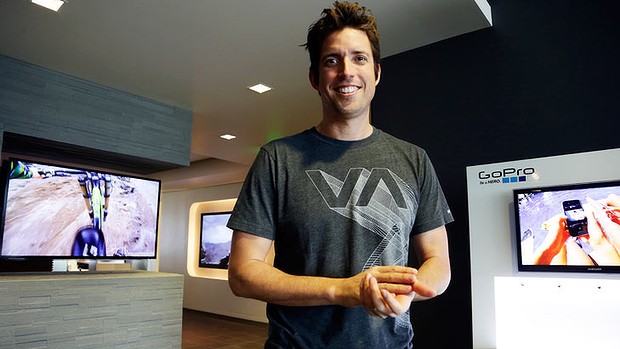
”GoPro is producing some of the best short-form content out there”: Nick Woodman, chief executive. Photo: Jim Wilson/The New York Times

SAN MATEO, California: Inside the headquarters of GoPro, the video camera maker, there is a racing car, a collection of motorcycles and drones outfitted with the company’s products. All of them are reminders of the niche that GoPro has carved out as the camera of choice for recording skiing, surfing and other experiences too gnarly for dainty smartphones. Read more of this post

Third Banker, Former Fed Member, “Found Dead” Inside A Week

Third Banker, Former Fed Member, “Found Dead” Inside A Week

Tyler Durden on 01/31/2014 10:16 -0500

If the stock market were already crashing then it would be simple to blame the dismally sad rash of dead bankers in the last week on that – certainly that was reflected in 1929. However, for the third time in the last week, a senior financial executive has died in what appears to be a suicide. As Bloomberg reports, following the deaths of a JPMorgan senior manager (Tuesday) and a Deutsche Bank executive (Sunday), Russell Investments’ Chief Economist (and former Fed economist) Mike Dueker was found dead at the side of a highway in Washington State.Police said the death appeared to be a suicide. Read more of this post

Google’s Motorola deal shows tech giant is happy to just be the platform

Google’s Motorola deal shows tech giant is happy to just be the platform

Google announced on 29 January 2014 that it is selling its Motorola Mobility cell phone unit to China’s Lenovo Group for 2.91 billion US dollar – less than two years after it paid 12.5 billion US dollar for the company. Analysts said that the deal did not represent much of a loss for Google, since it will keep the majority of Motorola’s patents. It also pocketed 2.9 billion US dollar of Motorola’s cash when it originally acquired the company.  Read more of this post

We want to be your friend: Brands are finding it hard to adapt to an age of scepticism

We want to be your friend: Brands are finding it hard to adapt to an age of scepticism

Feb 1st 2014 | From the print edition

image001-16

ONE of Kingsley Amis’s many bêtes noires was pretentious advertisements for beer. The poet laureate of alcohol thought that all such ads needed were three things: the name of the beer, a picture of a mother-in-law falling over and the slogan: “Makes You Drunk”. These days advertisements are even more pretentious than they were when Amis was harrumphing. Guinness’s blather on about the true nature of human character, and so on. Read more of this post

European chemicals: A German chemicals giant swaps its scientist boss for a restructuring expert

European chemicals: A German chemicals giant swaps its scientist boss for a restructuring expert

Feb 1st 2014 | BERLIN | From the print edition

IT IS always bitter for a chief executive to see his company’s shares spike when his departure is announced. But that is what happened when Lanxess, a German chemicals producer, said this week that Axel Heitmann would be leaving. He has run the business since it was spun off from Bayer, a pharmaceuticals and chemicals group, in 2004. Its shares did well in the early years, and recovered strongly after the financial crisis, but they have slid in the past year. Lanxess says the decision for Mr Heitmann to go was mutual. Read more of this post

Don’t be evil, genius: Google buys a British artificial-intelligence startup

Don’t be evil, genius: Google buys a British artificial-intelligence startup

Feb 1st 2014 | From the print edition

WHEN a search engine guesses what you want before you finish typing it, or helpfully ignores your bad spelling, that is the result of machine learning, a branch of artificial intelligence. Although AI has been through cycles of hype and disappointment before, big technology companies have recently been scrambling to hire experts in the field, in the hope of building machines that can learn even more sophisticated tasks. Read more of this post

Turkish conglomerates: Too big to fail, but in a good way; Two huge family firms, Koc and Sabanci, should weather Turkey’s crisis

Turkish conglomerates: Too big to fail, but in a good way; Two huge family firms, Koc and Sabanci, should weather Turkey’s crisis

Feb 1st 2014 | ISTANBUL | From the print edition

KOC HOLDING and Sabanci Holding, Turkey’s two oldest and largest business dynasties, are now in their third generation, having survived various political and economic storms down the years. Their interests stretch from banking and retailing to producing electricity, cars and fridges. They and their listed subsidiaries together make up more than a quarter of the market capitalisation of the Istanbul stockmarket. Many of their offshoots are joint ventures with global firms. Standard & Poor’s, a credit-rating agency, gives Koc a higher rating than Turkey itself. Read more of this post

Hail, the Swabian housewife: Views on economics, the euro and much else draw on a cultural archetype

Hail, the Swabian housewife: Views on economics, the euro and much else draw on a cultural archetype

Feb 1st 2014 | STUTTGART | From the print edition

image001-15

THE Swabian housewife made her debut on the world stage in 2008, when Angela Merkel, neither Swabian nor a housewife but the chancellor of Germany, mentioned her at an event in (Swabian) Stuttgart. The American banks which were failing, she said, should have consulted a Swabian housewife because she could have told them how to deal with money. Read more of this post

Venezuela and Argentina: The party is over; Latin America’s weakest economies are reaching breaking-point

Venezuela and Argentina: The party is over; Latin America’s weakest economies are reaching breaking-point

Feb 1st 2014 | BUENOS AIRES AND CARACAS | From the print edition

WHEN the euro crisis was at its height it became commonplace for struggling European economies to insist that they were not outliers like Greece. Whatever their woes, they declared, Greece’s were in a class of their own. In Latin America, by contrast, the unwanted title of outlier has two contenders: Argentina and Venezuela. Read more of this post

Facebook Uses Data to Charm Advertisers; Facebook Refined its Tools that Allow Advertisers to Target Users Based on Spending Habits in Brick and Mortar Stores

Facebook Uses Data to Charm Advertisers

Facebook Refined its Tools that Allow Advertisers to Target Users Based on Spending Habits in Brick and Mortar Stores

REED ALBERGOTTI

Jan. 30, 2014 9:17 p.m. ET

To make the journey from underachiever to advertising juggernaut, Facebook Inc.FB +14.10% had to do some advertising of its own. Read more of this post

Ryanair teams up with a virtual unknown in the price-comparison market

Flight comparison websites

Comparative advantage

Jan 30th 2014, 15:04 by M.R.

IF YOU frequently shop for flights online, you will almost certainly be familiar with flight comparison websites like Skyscanner and Kayak. These so-called metasearch engines invite you to key in your desired travel itinerary, before pulling data from other websites—mostly airlines, travel agents and rival search engines—and aggregating the results into a list of available airfares. Read more of this post

Google and Lenovo: Motonovo

Google and Lenovo: Motonovo

Jan 30th 2014, 9:52 by M.G. and V.V.V. | SAN FRANCISCO AND SHANGHAI

MAKING smartphones these days is a bitterly competitive business and even stars such as Apple are finding it harder to keep their sales growing. That is no doubt why Google, which only entered the smartphone market in a big way some 19 months ago when it finalised the $12.5 billion acquisition of Motorola Mobility, is already heading for the exit. On January 29th the web giant announced plans to sell Motorola’s handset business to China’s Lenovo in a $2.9 billion deal. Read more of this post

Thailand’s political crisis: Both sides in the stand-off must back down, or risk their country’s disintegration

Thailand’s political crisis: Both sides in the stand-off must back down, or risk their country’s disintegration

Feb 1st 2014 | From the print edition

FOR more than three months Bangkok has been the scene of confrontation, as huge protests have shut down the government district and other parts of the capital. A snap general election is due on February 2nd, but the opposition (which would lose) refuses to contest it. The protests’ tub-thumping leader, Suthep Thaugsuban, calls for a temporary suspension of constitutional government so that an unelected “people’s council” can “save” democracy. Protesters have blocked Thais from taking part in early voting at polling stations. Several people, from both sides, have been killed, and the risk of grave violence is rising. The capital and surrounding districts are under a state of emergency. Read more of this post

How Google’s Costly Motorola Maneuver May Pay Off

How Google’s Costly Motorola Maneuver May Pay Off

ROLFE WINKLER

Updated Jan. 30, 2014 9:02 p.m. ET

Motorola will help Lenovo capitalize on its supply-chain and distribution strengths. Here, workers in a Motorola smartphone plant in Texas. Associated Press

Google Inc. GOOG +2.57% suffered some expensive bruises in its two-year foray into making smartphones. But the expense wasn’t as big as it appears, and Google may have achieved some strategic ends. Read more of this post

Shock now clearly trumps transparency in central bank policymaking

Shock now clearly trumps transparency in central bank policymaking

By Sumanta Dey

JANUARY 29, 2014

The days of guided monetary policy, telegraphed by central banks and priced in by markets in advance, are probably coming to an end if recent decisions around the world are any guide. Read more of this post

As Overseas Costs Rise, More U.S. Companies Are ‘Reshoring’

As Overseas Costs Rise, More U.S. Companies Are ‘Reshoring’

by JACKIE NORTHAM

January 27, 2014 9:52 AM

For decades, American companies have been sending their manufacturing work overseas. Extremely low wages in places like China, Vietnam and the Philippines reduced costs and translated into cheaper prices for consumers wanting flat-screen TVs, dishwashers and a range of gadgets. Read more of this post

How my Year of TED was a lot like the Wizard of Oz: A Q&A with Kylie Dunn

How my Year of TED was a lot like the Wizard of Oz: A Q&A with Kylie Dunn

Posted by: Kate Torgovnick May
January 29, 2014 at 2:43 pm EST

image001-14 help of the scarecrow, tin man and lion. Illustration: Matthew Dunn

Kylie Dunn has come up with the perfect analogy for her Year of TED, a self-improvement project she dreamed up in 2011 to infuse ideas from TED Talks into her everyday life. She says that the experience was akin to the Wizard of Oz, with herself playing each of the main characters. Read more of this post

The future of the $100 billion parking industry

The future of the $100 billion parking industry

BY AASHISH DALAL 
ON JANUARY 30, 2014

The 2014 Consumer Electronics Show featured the auto-industry like no other CES before it. From self-driving vehicles to digital interiors, the promise of a “connected car” is surely getting closer. Largely missing from the announcements, however, was how parking is being improved for drivers. Innovative parking models have been written about for years, but those models have never fully materialized. Read more of this post

The Pension Heist: How politicians raid retirement funds to enrich their corporate masters

The Pension Heist: How politicians raid retirement funds to enrich their corporate masters

BY DAVID SIROTA 
ON JANUARY 30, 2014

Let’s say that as a condition of your employment, your company agreed to pay you a set retirement benefit from its retirement fund, with the implied understanding that the company would make the necessary annual contributions to keep that fund solvent. How would you feel when you later discovered your employer wasn’t actually making those annual contributions? Instead there is a severe cash shortfall. More specifically, how would you feel if your employer cited that shortfall – the one it created – as justification to slash your retirement benefits — the ones you were originally promised? Read more of this post

Beyond the check-in: Foursquare’s future of location-based commerce is closer than you think

Beyond the check-in: Foursquare’s future of location-based commerce is closer than you think

BY MICHAEL CARNEY 
ON JANUARY 30, 2014

The Foursquare of today couldn’t be further from product that debuted to users in March 2009. Gone is the emphasis on checkins, mayorships, and other gamification tactics aimed at getting users to share their location. What’s emerged is a platform geared toward exploration and discovery of the physical world around us. It’s a problem that Dennis Crowley has been trying to solve since 2005 when he founded Dodgeball – which was later acquired and sunsetted by Google – he just needed technology, small businesses, and consumers to catch up with his vision. Read more of this post

Five tips for entrepreneurs from Flight Centre founder and rich lister Geoff Harris: Cultivate personal resilience; Design your organisational structure for humans

Caitlin Fitzsimmons Online editor

Five tips for entrepreneurs from Flight Centre founder and rich lister Geoff Harris

Published 24 January 2014 11:41, Updated 27 January 2014 12:22

+font-fontprintEmail page

image001-13

Flight Centre founder Geoff Harris recently stepped down as vice-president of the Hawthorn AFL club after three years. Mal Fairclough

As founder of Flight Centre, Geoff Harris made a fortune valued at $800 million on the 2013 BRW Rich 200. He was also an early investor in Janine Allis’s Boost Juice and still holds a small stake in parent company Retail Zoo that will be divested if the sale to Affinity Equity goes ahead. Harris is also an investor and director of Top Deck Travel in the UK. Read more of this post

Entrepreneur behind K5 surveillance robot faces down critics

Entrepreneur behind K5 surveillance robot faces down critics

Published 27 January 2014 16:08, Updated 29 January 2014 09:29

USA Today

image001-12


The K5 robot is presented as a potential police aid. Its built-in laser sweeps 270 degrees to photographically map the area it is monitoring in 3D.

A visitor to Knightscope, a seven-person robotics start-up with a bold and controversial vision for crime fighting, is as likely to be greeted by a robot as he is a human. Read more of this post

Too many office managers, too few computer scientists: Freelancer’s Matt Barrie pinpoints our start-ups’ problems

Michael Bailey Deputy editor

Too many office managers, too few computer scientists: Freelancer’s Matt Barrie pinpoints our start-ups’ problems

Published 28 January 2014 10:34, Updated 29 January 2014 09:29

image001-11

Matt Barrie: searching hard for computer science graduates Louis Douvis

Australia’s relatively low number of graduates in science, technology, engineering and mathematics, as well as its habit of shunning failed entrepreneurs, are two factors harming our start-up ecosystem according to Freelancer.com founder Matt Barrie. Read more of this post

How to win from uncertainty: four tips for entrepreneurs

Caitlin Fitzsimmons Online editor

How to win from uncertainty: four tips for entrepreneurs

Published 29 January 2014 11:50, Updated 30 January 2014 10:39

The world is not predictable – even if you have a crystal ball. Photo: Phil Carrick

Dave Snowden, the UK-based founder of Cognitive Edge, has a message for any entrepreneur trying to figure out how to avoid risk and uncertainty – don’t bother. Read more of this post

Myer offer for David Jones has let the genie out of the bottle

Myer offer for David Jones has let the genie out of the bottle

January 31, 2014 – 1:25PM

Malcolm Maiden

Myer wanted to avoid putting its department store competitor David Jones into a classic takeover ‘‘bear hug’’ when it approached DJs with a merger proposal at the end of October last year. Read more of this post

How to recognise the 5 new patterns of innovation

How to recognise the 5 new patterns of innovation

Published 31 January 2014 11:57, Updated 31 January 2014 11:59

Rashik Parmar, Ian Mackenzie, David Cohn and David Gann

The data-trading relationship between Vodafone and TomTom is one example of new innovation patterns.

The search for new business ideas and new business models is hit-or-miss in most corporations. Management scholars have considered various reasons for this failure. One well-documented explanation: Managers who are skilled at executing clearly defined strategies are ill equipped for out-of-the-box thinking. In addition, when good ideas do emerge, they’re often doomed because the company is organized to support one way of doing business and doesn’t have the processes or metrics to support a new one.

Without a doubt, if you tackle business innovation systematically you improve the odds of success. Tested ways of framing the search for ideas exist, of course. One is competency-based: It asks, How can we build on the capabilities that already make us distinctive to enter new businesses and markets? Another is customer-focused: What does a close study of customers’ behavior tell us about their unmet needs? A third addresses changes in the business environment: If we follow “megatrends” to their logical conclusion, what future business opportunities will become clear?

We’d like to propose a fourth approach. It complements the existing frameworks but focuses on opportunities generated by the explosion in digital information and tools. Our approach asks: How can we create value for customers using data and analytic tools we own or could have access to? Over the past five years, we’ve explored that question with a broad range of IBM clients. In the course of that work, we’ve seen advances in information technology facilitate the hunt for new business value in five distinct – but often overlapping – patterns. We believe that by examining them methodically, managers in most industries can conceive solid ideas for new businesses.

PATTERN 1: AUGMENTING PRODUCTS TO GENERATE DATA

Because of advances in sensors, wireless communications and big data, it’s now feasible to gather and crunch enormous amounts of data in a variety of contexts, from wind turbines to intelligent scalpels. Those data can be used to improve the design and operation of assets or to enhance how an activity is carried out. Such capabilities, in turn, can become the basis of new services or new business models. A classic example is Rolls-Royce’s engine health management capability. In the mid-2000s new sensor technology and data management allowed Rolls-Royce to identify airplane engine problems at an early stage, thereby optimising maintenance and repair schedules, and to improve engine design. The ability to control costs encouraged the company to adopt a business model in which it retained ownership of the engines and provided maintenance and repairs, charging airlines an all-in fee based on actual hours flown, as part of a “power-by-the-hour” offering.

PATTERN 2: DIGITISING ASSETS

Over the past two decades, the digitisation of music, books and video has upended entertainment industries, spawning new models such as iTunes, streaming video services and e-readers. As mobile technologies continue to fuel this trend, businesses are tapping into it and generating their own enhanced services or new business models. For instance, sophisticated analytic and visualisation techniques have improved design in many manufacturing industries, from aerospace and automotive to clothing and furniture. And the digitisation of health records is expected to revolutionize the health care industry, making the treatment of patients more efficient and appropriate, and slashing hundreds of billions of dollars in costs.

PATTERN 3: COMBINING DATA WITHIN AND ACROSS INDUSTRIES

The science of big data, along with new IT standards that allow enhanced data integration, makes it possible to coordinate information across industries or sectors in new ways. Consider the city of Bolzano, Italy, where retired people account for almost a quarter of the population. That puts considerable strain on social and health services. Working with the city, IBM developed a network of sensors in the home that monitor not only conditions such as temperature, carbon dioxide level and water usage, but also what constitutes “normal” behavior patterns – for example, regular cooking times. Abnormalities trigger a call to a relative or a friend, who can check that all is well with the senior and alert the appropriate city service if necessary. Behind the scenes, a common IT system links all the relevant city agencies, enabling a highly coordinated response.

PATTERN 4: TRADING DATA

The ability to combine disparate data sets allows companies to develop a variety of new offerings for adjacent businesses. Take the recent partnership between Vodafone and TomTom, a provider of satellite navigation devices and services. With its mobile network, Vodafone can identify which of its subscribers are driving, where they are and how fast they’re moving. Such data can be used to pinpoint traffic jams – information that is extremely valuable to TomTom, which buys it from Vodafone.

PATTERN 5: CODIFYING A DISTINCTIVE SERVICE CAPABILITY

Ever since their invention, IT systems have helped automate business processes. Now companies have a practical way to take the processes they’ve perfected, standardize them and sell them to other parties. IBM’s Global Expense Reporting Solutions were originally developed to automate all the steps in the company’s internal travel booking and expense-reporting processes. IBM found that, in addition to reducing related administrative costs by 60 to 75 percent, the systems helped ensure that employees complied with corporate expense policies, lowering total expense spending by up to 4 percent. A few years later, realising that many of its customers would be interested in achieving comparable savings, IBM turned the systems into a service, which it has since sold to organizations worldwide.

COMBINING THE PATTERNS

The five patterns are a helpful way to structure a conversation about new business ideas, but actual initiatives often encompass two or three of the patterns. In addition, what begins as a relatively simple extension of an existing business often grows into a whole new business.

Take the smart energy meters being rolled out in nearly every developed country, which record the consumption of energy over the course of the day and communicate that information back to the energy provider. These devices started out by augmenting the utilities’ businesses along several dimensions: They made it possible to adopt intraday pricing that reflected demand patterns, to optimise operations and infrastructure usage, and to provide customers with the information needed to manage their own usage. But before long it became clear that the meters created opportunities for altogether new businesses. They could, for instance, gather data on the energy usage patterns of appliances, which could be sold back to their manufacturers.

The faster technology advances, the more opportunities seem to open up. It’s time companies took a structured, systematic approach to examining these advances, carefully considering how IT can enable not only better products and services but also innovative business models and platforms. By thinking through what implications the five patterns hold for their businesses, companies can find ways to engage more fully with the digital economy – and cash in on its promise.

(Rashik Parmar is the president of IBM’s Academy of Technology, Ian Mackenzie is a senior lecturer at Harvard Business School, David Cohn is a research scientist at IBM’s Thomas J. Watson Research Center, and David Gann is vice president of development and innovation at Imperial College London.)

 

How Thaksin’s meddling sparked a new Thai crisis for PM sister

How Thaksin’s meddling sparked a new Thai crisis for PM sister

6:20am IST

By Andrew R.C. Marshall and Jason Szep

BANGKOK (Reuters) – Yingluck Shinawatra’s journey from political nobody to prime minister was breathtakingly swift. Her premiership’s descent into crisis has been just as rapid.

A political neophyte when she took office in 2011, the 46-year-old former business executive surprised many observers by steadying Thailand after years of often bloody political unrest. Read more of this post

China just became the biggest investor in Laos, and Laos’s neighbors are worried

China just became the biggest investor in Laos, and Laos’s neighbors are worried

By Adam Pasick @adampasick January 30, 2014

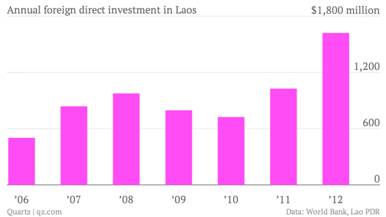
Land-locked Laos is one of the poorest countries in the world, but it has one thing in abundance: access to the massive Mekong River. The country’s hydropower potential has earned it the nickname “the Battery of Asia” and made it a magnet for investment from its neighbors: Thailand, southeast Asia’s second-biggest economy; Vietnam, a strategic Communist ally since the 1970s; and China, which is writing checks that put the rest to shame.

Guan Huabing, Beijing’s ambassador to Laos, announced today (Jan. 30) that China’s cumulative investment in Laos now stands at $5.1 billion, edging out Thailand and Vietnam. China is also building a controversial railroad linking its Yunnan province to the Lao capital Vientiane, at a cost of $7.2 billion that it is loaning to Lao government—equivalent to 75% of the Lao GDP.

image001-10

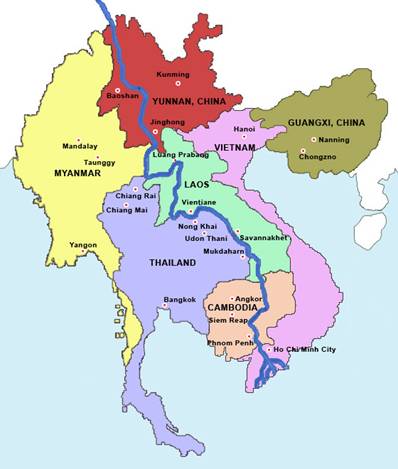
China’s increasing influence has long been a worry for Vietnam. It “feels threatened” by its increasingly marginalized role in Laos, according to a letter last year from the Vietnamese Communist Party to its Laotian counterpart that wasobtained by Radio Free Asia. And there is more to be lost than just political influence: Laos is upstream of Vietnam, Thailand, and Cambodia on the Mekong, so any dams that it builds there with Chinese assistance could have dire consequences for its neighbors.

image002-6

Dams built on the Laotian Mekong could affect Laos’s downstream neighbors.Mekong Tourism Coordinating Office

Of the nine dams being planned in the Laotian Mekong, Chinese developers and investors have interest in at least four, according to East Asia Forum, along with at least half of the 63 dams being planned on the Mekong’s many tributaries (the government lists its planned projects here). Environmental groups and Western governments have warned that poorly planned dams could cause untold damage to the region’s economy.

When US secretary of state John Kerry visited the region in December, he said: “No one country has the right to deprive another country of the livelihood and eco-system and its capacity for life itself that comes with that river. … That river is a global asset, a treasure that belongs to the region.”