Federal regulators have launched an antitrust investigation into the merger of the two largest funeral services companies in the US, probing the industry as it prepares for a surge in business from a generation of baby boomers. “It’s a distress purchase, and people spend more when their thinking is clouded because someone has died.”

July 16, 2013 7:09 pm

Consumer groups push for funeral deal to be put six feet under

By April Dembosky

Federal regulators have launched an antitrust investigation into the merger of the two largest funeral services companies in the US, probing the industry as it prepares for a surge in business from a generation of baby boomers. The Federal Trade Commission will examine the market impact of the $1.4bn purchase by Service Corporation International(SCI), the largest chain of funeral homes and cemeteries in the US by sales, ofStewart Enterprises, the second-largest company in the field, several people familiar with the matter said. The FTC declined to comment. Read more of this post

French dreams of a start-up renaissance

July 16, 2013 3:55 pm

French dreams of a start-up renaissance

By Hugh Carnegy

On a Friday morning in a modest office block in eastern Paris, Bastien Cazenave is huddled with colleagues behind a computer screen. They are putting the finishing touches to the latest episode in his young company’s online murder-mystery game.

There is an air of quiet intensity as Pretty Simple Games releases its weekly instalment of Criminal Case, a sleuthing game that has rocketed up the social gaming charts this year. It is now the second most-played game on Facebook after King.com’s Candy Crush, overtaking those of Zynga, the biggest maker of Facebook games. Read more of this post

Bad loans cast long shadow over Indian banks

July 16, 2013 3:01 pm

Bad loans cast long shadow over Indian banks

By James Crabtree

System is left vulnerable to setbacks such as this week’s liquidity tightening

Growing concerns about bank asset quality, hidden bad loans and a general lack of transparency, all set against the backdrop of an economic slowdown. This may sound like a description of worries about China’s shadow banking system. But it could equally apply to the increasingly parlous situation in India too. Politicians in Asia’s second-largest emerging economy often talk with pride about their banks, which are typically cautious and well capitalised. Most made it through the global financial crisis with little difficulty. But signs of stress have become unmistakable over the past year, in particular among the same supposedly reliable state-backed institutions that control about three-quarters of banking assets. And they are getting worse. Tuesday’s sudden moves by the Reserve Bank of India to tighten liquidity, designed to stem recent falls in the rupee, only deepened the problem. Read more of this post

Top fund managers were blindsided by U.S. bond market carnage

Top fund managers were blindsided by U.S. bond market carnage

8:32pm EDT

By Jennifer Ablan and Katya Wachtel and Tim McLaughlin

(Reuters) – The plunge in the U.S. Treasuries market in the past couple of months may well have been one of the most well-telegraphed reversals in financial market history. Top money managers and investment strategists had warned the U.S. Federal Reserve was likely to soon begin paring back its bond-buying stimulus if U.S. economic data remained robust. Bill Gross, who is known on Wall Street as “the Bond King,” said on May 10 he believed “the 30-yr secular bull market in bonds” had likely ended at the end of April. Other leading Wall Street figures told the New York Fed they were concerned about the exposure of mom-and-pop investors in the event of a bonds slump. Read more of this post

Is the Singapore soil fertile for creativity?

Is the Singapore soil fertile for creativity?

Singapore’s drive for productivity has focused attention on a key component to boosting organisational performance — innovation. While companies espouse the importance of innovation, the truth of the matter is that many companies have, consciously or unconsciously, put up barriers to innovation.

4 HOURS 43 MIN AGO

Singapore’s drive for productivity has focused attention on a key component to boosting organisational performance — innovation. While companies espouse the importance of innovation, the truth of the matter is that many companies have, consciously or unconsciously, put up barriers to innovation. Barriers to innovation could exist within the structure of the organisation, the mindset of its leaders and managers or within the culture itself. The starting point for any company that wishes to foster innovation and creativity should be to recognise these barriers. Read more of this post

Nike’s Lost Year in China Serves as Cautionary Tale

Nike’s Lost Year in China Serves as Cautionary Tale

Not long ago, Nike Inc. (NKE) could simply open stores in China and wait for newly minted middle-class shoppers to show up. No longer. Though it has been in China for 30 years, the world’s largest sporting-goods maker is losing customers to Adidas AG (ADS)’s more fashionable street wear and Hennes & Mauritz AB (HMB)’s cheap, hip clothing. Making matters worse, Nike is knee-deep in unsold merchandise after a projected post-Olympics sales bump didn’t materialize. Eighteen months ago, Nike was so bullish on China it predicted sales there would double to $4 billion in four years. Now it says China sales will probably fall for the next two quarters, which would make it five in a row. Read more of this post

‘Invisible’ Man Steers China’s Reserves; Zhu Changhong, a former physicist, plays a key role in the allocation of China’s trillions of dollars of foreign reserves, but little is known about him

July 16, 2013, 2:53 p.m. ET

China’s Zhu Changhong Helps Steer Nation’s Currency Reserves

Nation’s Media Call Former Physicist ‘Invisible’

By LINGLING WEI and BOB DAVIS

MI-BX255_ZHU_NS_20130716181803

BEIJING—At an official Chinese New Year’s party earlier this year, a former bond trader named Zhu Changhong was hailed for the smart choices he made investing the world’s largest stash of cash: China’s $3.5 trillion in foreign reserves. Tweaking the lyrics of a famous revolutionary song that extolled Mao Zedong, Mr. Zhu’s colleagues jocularly lauded him: “The east is red, the sun rises. From China arises Zhu Changhong…he is SAFE’s savior,” people with knowledge of the event say. SAFE is China’s State Administration of Foreign Exchange, the division of the central bank that manages China’s currency reserves and is one of the most powerful investors in the world.

Read more of this post

India makes risky bet with rupee defense

India makes risky bet with rupee defense

12:22pm EDT

By Rafael Nam and Subhadip Sircar

MUMBAI (Reuters) – India’s boldest attempt yet to prevent a rout in the rupee delivered only a modest lift in the currency but shares slumped and bond yields jumped as investors worried that policymakers might overplay their hand and damage economic growth. The government said on Tuesday the moves were an attempt to stabilise the currency, which hit a record low last week and is down nearly 10 percent since the start of May. Analysts say longer-term economic reforms are what India really needs.

Read more of this post

Unease as property fuels rise in Singapore household debt

Unease as property fuels rise in household debt

Tuesday, Jul 16, 2013

Goh Eng Yeow

The Straits Times

SINGAPORE – During the global financial crisis five years ago, one local bank boss quipped that his management went through so many stress tests on the loans book that they were stressed out themselves. Well, stressful times are back. You can’t blame analysts for going into overdrive trying to suss out the various economic scenarios that could emerge here after the United States central bank flagged a possible tightening of its monetary policy. Read more of this post

Alibaba Invests in Chinese Travel-Website Qyer; Taobao Travel hosts more than 800 travel agencies offering more than 100,000 hotel rooms, while China-based Qyer.com, founded in 2004, has more than 10 million users

July 16, 2013, 10:26 a.m. ET

Alibaba Invests in Chinese Travel-Website Qyer

JURO OSAWA

HONG KONG—Alibaba Group Holding Ltd. invested in travel website Qyer.com, the latest in a series of deals by China’s largest e-commerce company. Alibaba, which operates Taobao and other online shopping sites, declined to disclose the terms of the deal. Qyer’s travel-related information and services will complement travel-booking site Taobao Travel, Alibaba said Tuesday. Taobao Travel hosts more than 800 travel agencies offering more than 100,000 hotel rooms, while China-based Qyer.com, founded in 2004, has more than 10 million users, Alibaba said. The Qyer deal follows two other investments by Alibaba in the past few months. In April Alibaba agreed to buy an 18% stake in Sina Corp.’s SINA +1.08% Twitter-like Weibo microblogging business for $586 million, gaining an opportunity to tap into the site’s mobile-user base. Alibaba agreed in May to buy a 28% stake in Chinese mapping-software firm AutoNavi Holding Ltd. AMAP +3.97% for $294 million, another move to strengthen its mobile-based business. Read more of this post

‘Clone factory’ Rocket Internet by German Samwer brothers fires into the big time after securing $400m investment

Last updated: July 16, 2013 7:51 pm

‘Clone factory’ Rocket Internet fires into the big time after $400m investment

By Henry Mance and Tim Bradshaw

Three German brothers seeking to rivalAmazon and Alibaba for dominance of global e-commerce have secured an investment of $400m from backers including Russian-born billionaire Len Blavatnik, bringing their fundraising total for the past eighteen months to almost $2bn.

Rocket Internet, founded by Alexander, Marc and Oliver Samwer, has financed and built one of Latin America’s largest online fashion retailers, as well as dozens of businesses in Russia, Asia and the Middle East, since emerging in 2007. Read more of this post

Musicals, the stalwart of the Korean performing arts market, have hit a slump; Interpark accounts for more than 70 percent of ticket sales in the country

2013-07-16 16:47

Musicals sing summer blues

By Baek Byung-yeul

Musicals, the stalwart of the Korean performing arts market, have hit a slump despite efforts to bolster summer ticket sales. As people tend to travel, summer is generally considered the offseason for musical companies. But in a market where some 400 productions are staged in a year, even the sticky months are seen as a time to promote musicals. The trend was validated last year, when the smash hit musical “Wicked” drew in more than 200,000 during the summer and early fall. Not so this summer. Read more of this post

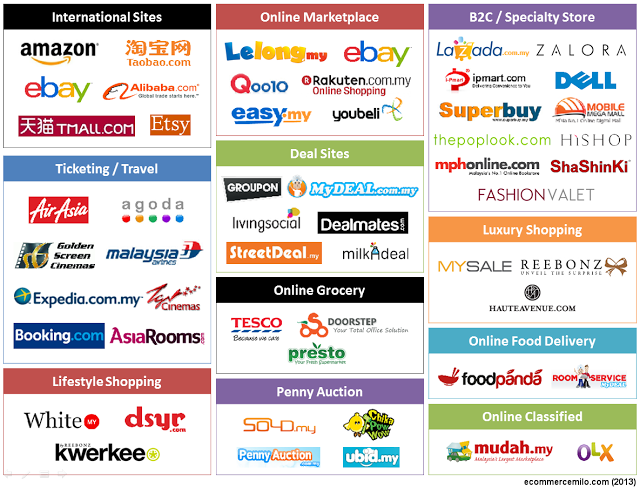
Here are the kings and queens of the Malaysian e-commerce scene

Here are the kings and queens of the Malaysian e-commerce scene

e-commerce.milo 17, Jul 2013Malaysia 

top_ecommerce_sites_malaysia ecommerce_companies_malaysia

Malaysia’s e-commerce scene has been relatively crowded these days. But who’s dominating each vertical? Which are the top or most popular e-commerce sites in Malaysia? Here, we are compiling the rankings by segment or the nature of the e-commerce business. Our methodology is pretty straightforward by retrieving the data from Alexa’s top 500 sites in Malaysia (on 1 July 2013). However, some popular names are missing from the top 500 so we are including them here as well. Do take note that some notable names such as Parkson Online, Trosworld, Bubucaca. PostMe, and AirAsiaMegastore are missing from this compilation as their Alexa rankings are marginally below their competitors in respective segment. However, some of the sites above might continue to grow and we will observe them again in the near future. Before we start, you might want to read our post earlier on e-commerce history & milestones in Malaysia. Let’s get started with a visual first, followed by the rankings & tables. Read more of this post

Thai startup bubble will burst, and only the best will survive

Thai startup bubble will burst, and only the best will survive

BangkokStartup 15, Jul 2013News 

After a long chat with Krating Poonpol from DTAC, a Thai telecom conglomerate, we learnt that there is indeed a Thai startup bubble. AIS, DTAC and True. It is evident that these large telecommunication companies in Thailand are committed to the startup community. AIS has run StartupWeekends since 2011 and recently sent NoonSwoon to Echelon. The second telco hopping on the startup train is DTAC. DTAC went for a full accelerator program right away, invited international speakers to their weekly events and even hosted Geeks on the Plane. While DTAC might not be the first to play the startup game, they definitely push hard. We spoke with Krating Poonpol and his team at the DTAC House to find out how, what and why they are doing what they are doing. Read more of this post

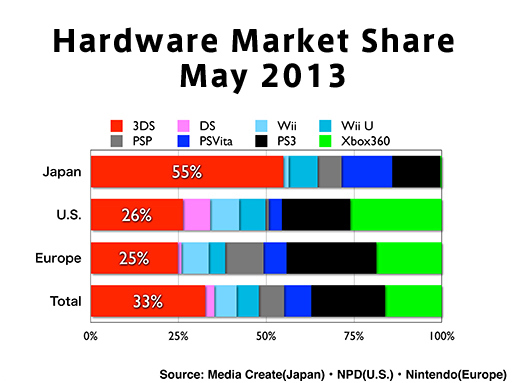
On the 30th anniversary of Nintendo’s iconic console, the company is facing an existential crisis

On the 30th anniversary of Nintendo’s iconic console, the company is facing an existential crisis

By Christopher Mims @mims 9 hours ago

nintendo-market-share

On Monday, the original Nintendo game console turned 30, but it’s looking increasingly unlikely that the company that made it will last another 30 years. Nintendo’s issues are many. The company took losses in its last two fiscal years despite maintaining revenue—mostly because of a strong yen, says CEO Satoru Iwata. Meanwhile, stiff competition from Microsoft and Sony and the advent of mobile gaming have eaten into the company’s growth. Nintendo’s recent Q&A with shareholders included a number of pointed questions that highlight the company’s weaknesses: Read more of this post

Whatsapp, The Granddaddy of Messaging Apps, Finally Goes For A Subscription Model on iOS

The Granddaddy of Messaging Apps, WhatsApp, Finally Goes For A Subscription Model on iOS

KIM-MAI CUTLER

posted 2 hours ago

While messaging has become a veritable war with apps like Line, KakaoTalk, WeChat, Path and Facebook Messenger across Asia and Western markets, there’s been one longstanding app that’s presided over the space with very few apparent changes. WhatsApp, the Sequoia-backed messaging app that dominates in Europe and that is often tipped as an attractive acquisition candidate for companies like Google and Facebook, just went freemium finally on iOS. The app has been paid for years on the iPhone at a $0.99 price point. Read more of this post

Codoon: The Chengdu-based company behind Baidu Wristband

Codoon: The Company behind Baidu Wristband

By Knight Liao on July 16, 2013

122

Codoon Wristband and App

Codoon Wristband, one of the first wearable devices produced by Chinese companies, was launched in the past June. Previously known as an appcessory developed by Baidu, this  fitness-tracking gadget, however, was made by Codoon, a Chinese startup based in Chengdu. Shen Bo founded Codoon in October 2009. In April 2011, Codoon received funding from Chinese online gaming company Shanda. Codoon Wristband is its latest product. By partnering with Baidu, Codoon can leverage its Cloud platform. The two sides also plan to come up with personalized services based on user data.

Read more of this post

Smartphone that can bend into a smart watch

Smartphone that can bend into a smart watch

July 17, 2013 – 9:14AM

Vignesh Ramachandran

art-limbo-flex-watch-620x349

Bend it: Jeabyun Yeon’s concept for a smartphone that bends into a smart watch.

This post was originally published on Mashable.

As technology advances, the list of gadgets we own grows longer: laptops, music players, smartphones, tablets, smart TVs, Google Glass – it’s endless. Now, with the buzz around smart watches, you may be wondering whether you want yet another gadget to charge, sync and carry around. Earlier this year, South Korean designer Jeabyun Yeon showcased his concept for a bendable smartphone that could transform into a watch. At 6.1-millimetres thick, the “Limbo” smartphone would be able to flex, so you could mount the 4.3-inch display on your wrist. Read more of this post

Apple Said Developing Ad-Skipping as Part of TV Strategy

Apple Said Developing Ad-Skipping as Part of TV Strategy

Apple Inc. (AAPL) is developing ad-skipping technology that would let owners of its Apple TV set-top box and future television devices watch shows without commercials, people with knowledge of the matter said.

Apple executives have briefed at least two owners of broadcast TV networks and cable channels, as well as some of the biggest U.S. pay-TV systems, said the people, who asked not to be identified because the talks are private. One proposal is for Apple to reimburse programmers for skipped ads, they said. Read more of this post

Google Said to Discuss Web TV With Media Companies

Google Said to Discuss Web TV With Media Companies

Google Inc. (GOOG), operator of the world’s most-popular search engine, has held discussions with media companies to introduce its own online-television service, people with knowledge of the matter said.

The product would offer viewers television packages that bypass cable subscriptions, said the people, who asked not to be identified because the matter is private. The talks, which also cover issues related to online piracy, are preliminary and nothing is imminent, the people said. Read more of this post

Verdict Still Out on Baidu’s $1.9 Billion App Store Deal; “Baidu has come to the realization that mobile search doesn’t work the same way that web search does”

Jul 16, 2013

Verdict Still Out on Baidu’s $1.9 Billion App Store Deal

By Paul Mozur and Isabella Steger

Baidu Inc. BIDU +4.04% just pulled off its biggest acquisition ever: forking out $1.9 billion to buy a Chinese app store operator from gaming company NetDragon Websoft Inc. 0777.HK +0.21% But investors in Hong Kong-listed NetDragon certainly didn’t like the deal, with its shares plunging as much as 21% during the day. It might also be awhile before Baidu investors learn the true value of the purchase. Nasdaq-listed Baidu is paying $1.9 billion for 91 Wireless Websoft Ltd., which posted first-quarter revenue of only $20 million. Clearly, what Baidu is after is not cash, but mobile users, who come in droves to 91′s app store HiMarket, one of the most popular in China, and one of an increasingly dwindling number of big nonaligned Chinese mobile assets. Read more of this post

Dropbox used by Chinese hackers to spread malware

Dropbox used by Chinese hackers to spread malware

Paul WagenseilTechNewsDaily

July 15, 2013 at 3:36 PM ET

Popular cloud-based file-sharing service Dropbox wants to be all things to all people, with big plans to share application metadata — game saves, settings preferences and so forth — as well as raw files across devices and platforms. But when Dropbox CEO Drew Houston announced last week that Dropbox intends to “replace the hard drive,” he probably didn’t expect Chinese hackers to take him up on it so quickly. Read more of this post

Intel to IBM Feel Putin Pinch as Medvedev Loses Hold on Tech Hub

Intel to IBM Feel Putin Pinch as Medvedev Loses Hold on Tech Hub

When Russian agents stormed the downtown offices of the Skolkovo technology hub being built near Moscow on April 18, a startled Intel Corp (INTC). executive got caught up in the raid.

Dusty Robbins, head of global programs for the world’s largest chipmaker, was forced to surrender his mobile phone and was only allowed to leave the building escorted by officers after Skolkovo officials appealed to investigators, two people familiar with the matter said. Robbins flew back to the U.S. without holding a planned meeting with Skolkovo’s billionaire president, Viktor Vekselberg, said the people, who asked not to be identified because the information is confidential. Read more of this post

NEC to exit smartphone business after failed deal with Lenovo: Nikkei

NEC to exit smartphone business after failed deal with Lenovo: Nikkei

2:28pm EDT

(Reuters) – Japan’s NEC Corp plans to exit its loss-making smartphone business after a deal with Chinese PC maker Lenovo Group Ltd failed to materialize, the Nikkei reported. The two companies have a partnership in the personal computers business and NEC was in talks with Lenovo for a deal for its smartphones operations since late 2012, the Japanese daily reported. The Japanese electronics company had offered Lenovo a majority stake in NEC Casio Mobile Communications Ltd, its subsidiary that makes smartphones. Casio Computer Co and Hitachi Ltd are among NEC Casio’s current investors. NEC, once a market leader in the smartphones business in Japan, currently has a market share of about 5 percent, the business daily said. The Japanese company will now focus on conventional handsets and plans to sell some of its mobile phone-related patents, according to the Nikkei. NEC will reassign majority of NEC Casio employees to other group firms, the paper said.


New apps do heavy lifting during the job search

New apps do heavy lifting during the job search

2:56pm EDT

By Natasha Baker

TORONTO (Reuters) – Finding a job is not easy but a range of smartphone and web apps are designed to customize employment searches and even provide information on the competition. Free apps such as SimplyHired, Indeed, and Monster, for iPhone and Android devices, provide job opportunities through a keyword search, and web-based apps, including TwitJobSearch and TweetMyJobs, will scour Twitter for opportunities and send job alerts through the social network. A new free iPhone app called TheLadders takes a different approach and sends a list of job opportunities to users based on their employment profile and career goals. “One of the big frustrations for job hunters is that they go online to apply for a job and they don’t hear back. It’s a black hole,” said Alex Douzet, chief executive and co-founder of TheLadders, headquartered in New York. Read more of this post

The Patrón Way: From Fantasy to Fortune—Lessons on Taking Any Business From Idea to Iconic Brand; How a billion-dollar business ascended from a forgotten dusty agave field in central Mexico

How to sell cheap stuff expensively

Jul 13th 2013 |From the print edition
Patron

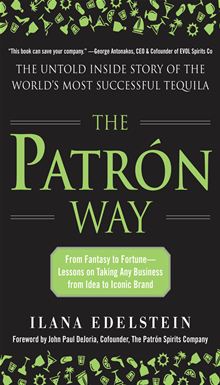
The Patrón Way: From Fantasy to Fortune—Lessons on Taking Any Business From Idea to Iconic Brand. By Ilana Edelstein. McGraw-Hill; 220 pages; $25 and £16.99. Buy from Amazon.comAmazon.co.uk

OUTSIDE Mexico (and especially in America) tequila too often fuels vomity student parties and spring-break shooting sessions. But recently various brands have tried to market the drink as a more sophisticated tipple. Among them is Patrón, whose individually numbered bottles sell for between $45 and $500. Though its name is evocative of old Mexico, the brand was started in 1989 by a pair of gringos: John Paul DeJoria and the late Martin Crowley. Now, Ilana Edelstein, Crowley’s former partner, has written an account of the brand’s rise. In Jalisco, Mexico’s prime agave country, Crowley chanced upon a distillery whose tequila knocked his socks off. Ms Edelstein admits that neither she nor Crowley, who was recovering from bankruptcy, knew anything about the drinks business—indeed, when it came to tequila she “couldn’t be anywhere near the stuff without heaving”. But they copied the perfume industry and promptly designed some swanky packaging. The celebrity contacts of Mr DeJoria, who had made a fortune in the hair-care business, helped to get the bottle seen at the right parties in Los Angeles. Though it is still rather looked down on in Mexico (it was not sold there at all until relatively recently), Patrón has become the second-best selling brand in America, partly thanks to its following among high-rolling hip-hop stars. It is also growing fast in the Far East. Ms Edelstein’s account is short on business wisdom but long on the sometimes seedy details of the booze business. Her unofficial role in the operation concerned mainly marketing, including designing the skimpy outfits of the promotional “Patrón Girls”, who were recruited first from Las Vegas escort agencies and later fromPlayboy’s Playmates. She seems to have little access to the business nowadays; Mr DeJoria has written a (slightly wary) foreword and the quotes from other key people are lifted from newspaper interviews. A chapter of historical padding comes from Wikipedia and other websites, according to the notes at the back of the book. Perhaps the best, inadvertent advice to entrepreneurs is to get your name on the business’s documents, or at least on a marriage certificate. Despite pouring years of her life into Patrón, Ms Edelstein was left with nothing when her relationship with Crowley blew up in spectacular style in 2001. She lost a case for compensation and was thrown out of the couple’s California mansion (where the koi carp were left to starve). Though she is admirably upbeat about the experience, it sounds like the recipe for quite a hangover. Read more of this post

Women and China’s property market: Married to the mortgage; Are high house prices hurting women more than men?

Women and the property market: Married to the mortgage; Are high house prices hurting women more than men?

Jul 13th 2013 | BEIJING |From the print edition

20130713_CNC060

CHINA’s communists attacked many bourgeois institutions after taking power in 1949. But marriage was not one of them. On the contrary, they enacted a marriage law in 1950, four years before they introduced a constitution. The pressure to marry remains heavy in today’s China, where almost 80% of adults have tied the knot at some point, compared with only 68% in America. But today, in contrast to the 1950s, marriage is bound up with another bourgeois institution: property. In China mortgages often precede marriages. According to popular belief, if a man and his family cannot buy property he will struggle to find a bride. In choosing a husband, three-quarters of women consider his ability to provide a home, according to a recent survey of young people in China’s coastal cities by Horizon China, a Beijing-based market-research firm. Even if a woman herself dismisses this criterion, her family and friends, not to mention the country’s estate agents, will not let her forget it.

Read more of this post

Xi’s campaign to boost the Chinese party’s image fails to inspire

Masses of meetings: A campaign to boost the party’s image fails to inspire

Jul 13th 2013 | BEIJING |From the print edition

20130713_CND001_0

ON JULY 9th the Communist Party issued a new directive on President Xi Jinping’s campaign to clean up its act. Among the orders: “Avoid going through the motions”. Despite a blizzard of instructions in recent weeks calling on officials to get “closer to the masses”, the response has been perfunctory. Even one of the party’s own newspapers has hinted that Mr Xi’s efforts are on the wrong track.

The campaign “to study the mass line” revives a Maoist notion that the party should learn from the people (while ignoring any demands for a different party to lead them). It was announced in April and formally launched in June with a speech by Mr Xi to the Politburo calling for a “thorough clean-up” of the party to rid it of “formalism, bureaucratism, hedonism and extravagance”. It is supposed to carry on until mid-2014. This month 45 teams of officials were despatched by the party leadership to make sure that provincial leaders, university principals and the managers of state-owned enterprises were paying proper attention. Mr Xi has ordered his generals to make sure the army (a bastion of privilege) listens too. Read more of this post

Europe’s zombie banks: Europe’s financial system is in a terrible state, and nothing much is being done about it

Europe’s zombie banks: Europe’s financial system is in a terrible state, and nothing much is being done about it

Jul 13th 2013 |From the print edition

“PROBABLY the most successful monetary-policy measure undertaken in recent times.” That is Mario Draghi’s self-effacing judgment on the outright monetary transactions (OMT) programme, the promise made by the European Central Bank (ECB) last summer to buy the bonds of struggling euro-area governments. The ECB’s president deserves credit for bringing calm to bond markets. But in reality the situation is still awful, and Europe’s banks are at the heart of the problem.

The euro-zone economy has contracted for six consecutive quarters. The IMF this week revised its 2013 forecast down again: it expects the euro zone to shrink by 0.6% this year. (Just to rub things in, the fund adjusted its forecasts for Britain upwards.) The outlook in the core euro-zone economies has worsened, thanks in part to a slowdown in China: in May German exports suffered their sharpest fall for two years. But the brunt of the pain is being borne by the peripheral economies. Read more of this post

Brazil struggles to shake off shackles of high interest rates

Brazil struggles to shake off shackles of high interest rates

8:02am EDT

By Alonso Soto

BRASILIA (Reuters) – When Brazilian interest rates nose-dived to record lows last year, President Dilma Rousseff and many economists here boasted that the days of sky-high borrowing costs were over. They may have been wrong. Heavy public spending, a sharp depreciation of the local currency and an expected normalization of monetary conditions in the United States could force Brazilian policymakers to eventually lift the benchmark Selic rate back to double digits. Read more of this post