Comcasted: How Ralph and Brian Roberts Took Over America’s TV, One Deal at a Time

Comcasted: How Ralph and Brian Roberts Took Over America’s TV, One Deal at a Time [Hardcover]

Joseph N. DiStefano (Author)

comcasted-how-ralph-brian-roberts-took-over-americas-joseph-n-distefano-hardcover-cover-art

Publication Date: March 1, 2005

If you’re wondering who or what is next on Comcast’s “to-do” list–stay tuned. Be sure to take this eye-opening, rare look inside an American corporate dynasty that began as a small franchise in Tupelo, Mississippi, and grew to become the nation’s biggest cable TV company and fastest-growing Internet provider. With the tenacious investigative skills and gusto of the seasoned reporter, Joseph N. DiStefano has written a must-read history of this vital industry and its principal player, as well as the unauthorized biography of Comcast’s founder, Ralph Roberts, and his son and successor, Brian. Though rivals like Fox News owner and satellite TV baron Rupert Murdoch continue to nip at its heels, though consumer discontent simmers, Comcast, with allies in small-town city halls and Washington, D.C., as well as powerful companies like Microsoft, continues to exert influence over Hollywood, Madison Avenue, and every TV viewer. We are, indeed, all COMCASTed. Read more of this post


HSBC and StanChart hit by Asia focus as economies lose momentum

August 18, 2013 2:49 pm

HSBC and StanChart hit by Asia focus as economies lose momentum

By Sharlene Goff, Retail Banking Correspondent

Ever since the financial crisis, HSBC and Standard Chartered have trumpeted their exposure to faster-growing economies as a welcome differential among the UK banks.

But the recent slowdown in parts of their Asian heartlands – both reported weaker growth in markets including China, Indonesia, Malaysia and Taiwan in the first half of this year – means their reliance on the region is fast becoming a concern rather than a comfort for investors. Read more of this post

Climbing trees to catch fish: A curious to-and-fro about China’s constitution bodes ill for political reform

Climbing trees to catch fish: A curious to-and-fro about China’s constitution bodes ill for political reform

Aug 17th 2013 |From the print edition

20130817_CND000_0

FOR well over a century, Chinese scholars have been arguing about national constitutions. In the final years of the Qing emperors, some thought that turning the last imperial dynasty into a constitutional monarchy might forestall its collapse. Conservatives long resisted. But in 1906 a “constitutional reform commission” did report to the Empress Dowager, Cixi. “The real reason”, it concluded, “why other countries have become wealthy and powerful lies in the fact that they have a constitution and decide [important issues] through public discussion.” The dynasty collapsed in 1911. But these days the Communist Party seems to think those Qing reformers were wrong: China does not need a constitution at all, or at least not one that has to be enforced. Read more of this post

Everbright Trading Error Adds to China Broker’s Woes

Everbright Trading Error Adds to China Broker’s Woes

Everbright Securities Co. (601788), the Chinese state-controlled brokerage besieged by falling profits and a regulatory probe, faces a further blow to its reputation after a trading error sparked the wildest swings in the nation’s stocks in four years.

The China Securities Regulatory Commission has started an official investigation into Everbright, the watchdog said in a statement yesterday. The regulator has banned the brokerage from conducting proprietary trading from Aug. 29 to Nov. 18, according to a company statement. Everbright is barred from creating new stock-index futures positions starting today, according to a statement by China Financial Futures Exchange. Read more of this post

Is Hukou Reform the Key to Reviving China’s Economy?

August 19, 2013, 7:44 AM

Is Hukou Reform the Key to Reviving China’s Economy?

As China’s growth slows toward a 20-year low, leaders are searching for a way to revive the economy’s flagging fortunes. The suggestion from some of China’s top policy wonks: reform the hukou system. That was the message that came through loud and clear from a meeting of top academics and policy advisers at a conference hosted by the government’s Chinese Academy of Social Sciences on Friday.

Read more of this post

Most Chinese youths pin hopes on parents for success; It seems that only people with strong backgrounds and connections can “get the last laugh” in such a “snobbish” society

Most youths pin hopes on parents for success: survey

(ecns.cn)    08:22, August 19, 2013

A recent survey shows that most respondents think their peers yearn for effortless success with the help of a strong family background.
The Social Survey Center of China Youth Daily surveyed 3,809 people through minyi.net.cn and sohu.com. Of those surveyed, 80.4 percent believe young people who achieve career success in China are all winners in the “competition of family background,” and 83.5 percent believe their peers hope to join the “competition of family background”.
One respondent said: “Life is a game. Following rules is the only way you can survive”. Young people from ordinary families complain that they are currently being judged on their family backgrounds rather than their abilities and knowledge when they look for jobs. This is probably another one of society’s rules, and it’s called “competition of family background”. Read more of this post

Overcoming the great wall of name squatting in China: How do well-known foreign brands react when unscrupulous profiteers swipe their Chinese names?

Published on 2013-08-10 17:16:39

MONIKER MAYHEM: OVERCOMING THE GREAT WALL OF NAME SQUATTING IN CHINA

How do well-known foreign brands react when unscrupulous profiteers swipe their Chinese names?

ECONOMIC OBSERVER/Worldcrunch

BEIJING — Bottega Veneta, the Italian luxury brand best known for its leather goods, recently renamed itself Bao-Die-Jia in ChineseBut because the Italian apparel has been commonly known by another Chinese homonym, Bao-Ti-Jia, the renaming caused some public outcry, not to mention enthusiastic debate on the Internet. Bottega Veneta has refused to comment, except to say that it has never had an official Chinese moniker before.  But it is widely assumed that the Italian fashion house felt obliged to rename itself in Chinese simply because other Chinese businessmen had preemptively registered the name that was well known to the public. In fact, many other successful foreign brands in China have experienced the same sort of so-called “name squatting”. The only difference is that instead of recognizing the setback discreetly, they often resort to legal recourse. Hermès was probably the first apparel company to encounter this dilemma. As early as 1977, the brand registered its English name and trademark in China — but not its Chinese one. Read more of this post

Property Mogul Wang Jianlin of Dalian Wanda-AMC Emerges as China’s Richest Person

Property Mogul Emerges as China’s Richest Person

WANDA-articleLarge f04da2db112211251c3412

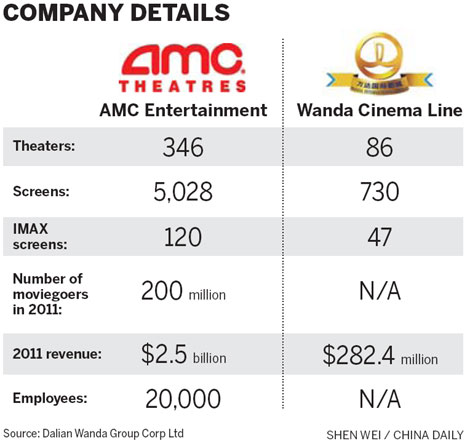
Wang Jianlin, owner of China’s biggest commercial land developer, is the nation’s wealthiest person, based on regulatory filings that show his non-real estate businesses are more valuable than previously calculated.

The chairman of closely held conglomerate Dalian Wanda Group, which became the world’s largest movie theater chain after acquiring AMC Entertainment Holdings Inc. last year for $2.6 billion, has a net worth of $14.2 billion, according to the Bloomberg Billionaires Index. He is $3.2 billion richer than Zong Qinghou, founder of Hangzhou Wahaha Group, China’s No. 3 beverage maker. Zong is the country’s second-wealthiest person. Read more of this post

Protect Yourself When Outsourcing to China

August 18, 2013, 4:49 p.m. ET

Protect Yourself When Outsourcing to China

SAABIRA CHAUDHURI

Q: If you’re going to source your product or parts from China, what special safeguards should you take?

A: Start the process of finding the right manufacturer using a site likeGlobalsources.com, which aims to help buyers connect with China-based suppliers, suggests Mike Bellamy, an author and owner of PassageMaker Sourcing Solutions.

When you find factories that might meet your needs, ask for references and find out if the manufacturers have a history of respecting intellectual property and doing solid work. But don’t offer those factories complete specifications or samples of the product you want created, advises Mr. Bellamy, since your idea might get filched. Instead, send or show them a similar product for comparison or some rough sketches. And ask for samples before you commit to an order. Read more of this post

Samsung’s struggles in China: Record sales don’t mean record revenue

Samsung’s struggles in China: Record sales don’t mean record revenue

By Kaylene Hong, 3 hours ago, 06:59am

Over the weekend, Yonhap News reported that Samsung is struggling in the Chinese market. Yes, struggling. Despite optimistic figures from analyst firms showing record-breaking unit sales of Samsung smartphones in China — Strategy Analytics pinned Samsung’s Q2 2013 sales number at 15.3 million while Canalys had it at 15.5 million — it seems like the number of phones Samsung sold has not translated into robust amounts of revenue. According to the Yonhap News report, Samsung’s net sales stood at KRW77.2 trillion ($69.4 billion) in the first half of this year. Out of that, China accounted for KRW12.6 trillion ($11.3 billion) or a 16.4 percent share — down from the 20.4 percent share recorded in the Korean company’s annual net sales last year. Read more of this post

QR code-based Price Comparison App Wochacha Now Has 140 million Users in China

QR code-based Price Comparison App Wochacha Now Has 140 million Users

By Tracey Xiang on August 16, 2013

wochacha1

During 2013 Spring Festival earlier this year, many Chinese people who traveled back home from first-tier cities found their parents and friends in second- or – lower -tier cities were using Wochacha. Starting as a price comparison app, now it enables users to buy some goods directly. If you order goods from Wochacah’s partner supermarkets, deliverymen will send goods to your door. Brands or merchants can set up a channel on Wochacha selling goods or engage users. The QR code scanner now becomes more useful too that can track your parcels or download digital content. In addition it provides users with deals or coupons, price indexes, quality reports, etc. Read more of this post

Taobao’s Online Education Market Launched; Teachers, education organizations or agencies, or third-party online education services can set up Taobao stores to sell live broadcasts, recorded videos, offline courses or events

Taobao’s Online Education Market Launched

By Tracey Xiang on August 19, 2013

Taobao Classmates (not official translation) , an online course market, was launched recently. Teachers, education organizations or agencies, or third-party online education services can set up Taobao stores to sell live broadcasts, recorded videos, offline courses or events, or courses on third-party sites (including Tmall) — in short,  anyone is allowed to set up a store selling online educational content or related physical goods such as offline event tickets. Just the same with buying physical goods on Taobao, consumers need to log into Taobao and pay with Alipay — not a problem to the majority of Chinese. There is, of course, no delivery fee unless a store charges you for delivering physical tickets and the like. Some well-known online education services have joined in offering courses ranging from language learning to makeup. Actually a large number of online course or service providers already set up Taobao stores to sell their offerings. What more Taobao Classmates can provide is having consumers watch video courses without leaving Taobao. On its introduction page, Taobao Classmates estimates the unique visits will reach 500 thousand by the end of September. Dao Zhengone, director of the Alibaba Local Life BU which build the marketplace, estimated that transactions on the platform could possibly reach one billion yuan in a year.

China banks take a hit, world watching whether it can pull through financial reforms

Updated: Monday August 19, 2013 MYT 9:20:19 AM

China banks take a hit, world watching whether it can pull through financial reforms

CHINESE banks’ profits are expected to fall in the first half against a negative outlook for the next three years. The nine Hong Kong-listed mainland banks are expected to report about 10% growth in net earnings when they start releasing results this month, according to analysts. Meanwhile, the non-performing loans ratio is expected to rise by 0.93%. Some analysts see an increase in bad loans and interest rate liberalisation as denting mainland banks’ profits, says the South China Morning Post (SCMP). Regulators have asked lenders not to extend new loans to sectors hit by overcapacity, such as steel and cement. “That means companies will struggle in the case of a prolonged economic slowdown and have problems repaying existing loans,” says SCMP. Read more of this post

What’s Ailing America’s Cattle? Scientists Suspect Livestock-Feed Additives Are Behind Distress

August 18, 2013, 7:34 p.m. ET

What’s Ailing America’s Cattle?

Scientists Suspect Livestock-Feed Additives Are Behind Distress

JESSE NEWMAN and KELSEY GEE

MK-CF654_ADDITI_NS_20130818183909

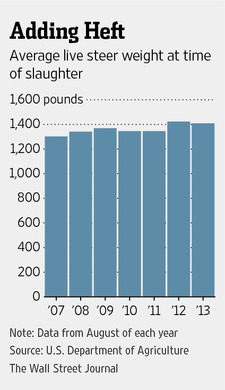
A growing number of cattle arriving for slaughter at U.S. meatpacking plants have recently shown unusual signs of distress. Some walked stiffly, while others had trouble moving or simply laid down, their tongues hanging from their mouths. A few even sat down in strange positions, looking more like dogs than cows.

“I’ve seen cattle walking down a truck ramp tippy-toed,” said Temple Grandin, a doctor of animal science and consultant to the livestock industry. “Normally, they just run down the truck ramp and jump out. We do not want to see bad become normal.” Read more of this post

Shale Grab in U.S. Stalls as Falling Values Repel Buyers

Shale Grab in U.S. Stalls as Falling Values Repel Buyers

Oil companies are hitting the brakes on a U.S. shale land grab that produced an abundance of cheap natural gas — and troubles for the industry.

The spending slowdown by international companies including BHP Billiton Ltd. (BHP) and Royal Dutch Shell Plc (RDSA) comes amid a series of write-downs of oil and gas shale assets, caused by plunging prices and disappointing wells. The companies are turning instead to developing current projects, unable to justify buying more property while fields bought during the 2009-2012 flurry remain below their purchase price, according to analysts. Read more of this post

Missed call has become part of daily life in India as a proxy for a pre-decided short message like “thinking of you” or “call me back” and often morph into modern-day Morse codes

Mobile advertising in India: Marketing a missed call

Aug 17th 2013, 8:30 by A.A.K. | MUMBAI

A TELEVISION advertisement in India for a mobile-phone operator opens with four friends staring forlornly at their car’s smashed windshield. “Call the police,” mutters one. His friend whips out a phone, dials for help and promptly hangs up after one ring. Others look at him quizzically. “I’ve given them a missed call,” he says sheepishly. “They’ll call back.” Everyone, incredulous, rolls their eyes in his direction, as the voiceover encourages viewers to switch to the operator’s dirt-cheap call rates.

The ad, in good humour, portrays how the missed call has become part of daily life in India. According to one estimate, 65% of India’s 860m mobile subscribers prefer it to a quick call. It is a proxy for a pre-decided short message like “thinking of you” or “call me back”. Missed calls often morph into modern-day Morse codes too. Roadside tea vendors routinely accept dropped calls from nearby mom-and-pop stores as a nudge for service; newspapers use it to urge customers to renew subscriptions; and bank balances can be requested the same way. Read more of this post

The Problem With Delhi’s Rich Kids: In India’s capital, the children of the nouveau riche often get whatever they want, apart from happiness

August 18, 2013, 9:00 AM

The Problem With Delhi’s Rich Kids

By Vibha Kumar

A woman I went to college with in New Delhi, now 29, lives in her family home on Prithviraj Road, one of the toniest parts of the capital. She has a shiny new convertible BMW 3 series, bought by her father. She doesn’t have a job. She called me recently and we met for lunch. She looked dull and withdrawn. She told me she was extremely depressed and felt that her life wasn’t worth living. She isn’t the only Delhi rich kid to feel this way. Sanjay Chugh, a Delhi-based psychiatrist, says he treats three or four young, wealthy, unhappy patients a day. “Such children are often brought up being told that they have nothing to worry about and that money can take care of everything,” he said. Often, newly wealthy parents don’t want their children to go through the hardships they experienced growing up, Mr. Chugh says. But they fail to teach them there is more to life than fancy drinks, new toys and branded clothes. On a recent evening at a posh lounge in Delhi, I saw Prada and Gucci-clad teenagers arrive in Lamborghinis, Jaguars and Porsches. They air kissed and went to the bar. “Hedonism is back,” a note on bar’s website says. After an hour or so of drinking, a chubby guy in the group got the bill. “Oh, just 60? Not bad,” he said loudly. It was 60,000 rupees ($1,000.) An acquaintance in Delhi says she spends most afternoons in her apartment, sitting on the couch drinking beer and smoking marijuana. Read more of this post

India can’t be a Jugaad Economy Forever

India can’t be a Jugaad Economy Forever

by Dinesh Narayanan | Aug 19, 2013

India has to implement key reforms in at least three areas—energy, land and labour—to get its economy back on track. It also needs to expand the ambit of economic and political freedom

Overview.indd Overview.indd

World Bank data suggest that India was ninth in the world in terms of new businesses registered in 2011. The cost of starting up a business is still high but it has steadily fallen from 70.1 percent of per capita gross national income in 2008 to 49.8 percent in 2012. The time taken to start a business in India has fallen from 33 days four years ago to 27 days in 2012. Newly released Planning Commission numbers show that India reduced extreme poverty by 15.3 percent  in seven years; that is, 138 million people were lifted out of absolute misery between 2004-05 and 2011-12. In the same period, millions of Indians moved up the social ladder to be counted as middle class. Sales of luxury cars, designer clothes and high-tech gadgets have been growing at 15-20 percent. A Bain & Company report on luxury has been quoted as estimating the number of people with disposable incomes of over $100,000 to top 132,000 in 2013, up 60 percent since 2006. Read more of this post

Chaebol criticized for handing shares to minors in advance to pay less gift tax

2013-08-19 10:54

Chaebol criticized for handing shares to minors

The number of stock-rich South Korean minors jumped 10 percent this month from a year earlier, data showed Monday, as more rich people handed over wealth to their offspring in advance to pay less gift tax. According to the data by local research firm Chaebul.com, the number of minors with shares worth more than 100 million won ($89,887) came to 268 as of Friday, compared to 243 tallied a year earlier. The number of South Korean minors with shares worth more than 1 billion won also jumped 31.3 percent over the cited period to reach 105, the data also said. Of the minors tallied, seven of them had shares worth more than 10 billion won. The richest in terms of value of shares held was the GS Group’s Executive Vice President Huh Yong-su’s eldest son, whose shares were worth 44.5 billion won, trailed by his second son at 18 billion won. The eldest son of Chung Mong-jin, who heads chemicals maker KCC Corp., ranked third with 17.2 billion won. The research firm said the on-year increase was brought on by a drop in the local bourse this year that made it cheaper for stockholders to turn over shares to their kids. Lower stock prices translate into lower gift taxes. South Korea’s benchmark Korea Composite Stock Price Index (KOSPI) closed at 1,920.11 Friday, down 1.97 percent from 1,957.91 tallied a year earlier. (Yonhap)

Korea’s leading brokerage houses are reeling from the unprecedented earning shocks many suffered between April and June in the wake of the prolonged market slump

2013-08-18 16:48

Soaring loss hits Hyundai Securities

By Yi Whan-woo
A number of the nation’s leading brokerage houses are reeling from the unprecedented earning shocks many suffered between April and June in the wake of the prolonged market slump. Among them, Hyundai Securities suffered the worst performance, with its operating loss expanding to 25.6 billion won ($23 million) in the first quarter from the previous year’s 11.4 billion won loss. Brokerages close their books in March. Daeshin Securities also had its operating loss more than double to 14.3 billion won during the same period. The worsening performance was due mainly to a toxic mixture of sluggish trading caused by the prolonged market slump and the rise in yields on bonds following U.S. Federal Reserve Chairman Ben Bernanke’s remark on ending the economic stimulus policy. Bernanke said in June that the U.S. economy offers hints of the possibility of beginning to slow the pace of its bond-buying stimulus. KDB Daewoo Securities, the No. 1 market player, posted an operating profit of 3.76 billion won ($3.36 million) in the April-June period, down 86.8 percent from the previous year and worse than the 56 percent forecasted by FnGuide, a financial news provider. Samsung Securities posted an operating profit of 15.4 billion won, a 63 percent year-on-year decrease. Mirae Assets Securities said its operating profit fall by more than six-fold during the same period, down 19.8 billion won in 2011 to 3 billion won this year. In contrast, there are a couple of firms that have managed to weather the market slump. Korea Investment & Securities posted an operating profit of 24.7 billion won in the first quarter, up 10 percent from a year before. Shinhan Investment, the securities arm of Shinhan Financial Group, and Hana Daetoo Securities, also saw their operating profits jump by 298 percent and 606 percent, respectively, to 19.7 billion won and 4 billion won, during the cited period.

Older S. Koreans flock to smartphones

Older S. Koreans flock to smartphones

Weon Yo-hwan/ Sohn Yoo-ri

South Korea’s ‘Silver Mobilian’ is making headway in maneuvering smart devices. ‘Silver Mobilian’ is the newly-coined term that combines ‘silver’ with ‘mobilian’ referring to those changing their way of living with mobile devices. It means financially well-off older generation who utilizes mobile devices and social networking service (SNS) in active manners. Smart devices including smartphones and tablet PCs are no longer excusive tools for young generation. The rate of wireless internet usage among those in their 50s grew a startling 35.2 percent compared to a year ago, according to the Korea Internet & Security Agency (KISA)’s report released earlier this year. The growth among those in their 50 was steeper than among those in their 20s (5.3 percent) or 30s (19.6 percent).  Read more of this post

The Kaesong Trap: Restarting the industrial zone may restrict Seoul’s ability to respond to the North’s provocations

August 18, 2013, 1:03 p.m. ET

The Kaesong Trap

Restarting the industrial zone may restrict Seoul’s ability to respond to the North’s provocations.

BRUCE KLINGNER

South and North Korean negotiators reached a preliminary agreement last week to reopen the jointly run industrial zone in Kaesong. But their success against considerable odds raises several questions.

Most fundamentally, why does Seoul want to return to Kaesong in the first place? The benefits lop-sidedly accrue to Pyongyang, providing a steady source of hard currency to the beleaguered regime. On the southern side, there is no economic incentive, corporate advocacy or political interest in expanding the complex. Even before the most recent round of North Korean threats, Kaesong was on life-support. Read more of this post

Thai Growth Slows as Scope for Monetary Stimulus Seen Limited

Thai Growth Slows as Scope for Monetary Stimulus Seen Limited

Thai economic growth slowed for a second quarter as exports cooled and local demand weakened, with rising household debt restricting the scope for monetary easing.

Gross domestic product increased 2.8 percent in the three months through June from a year earlier, after expanding a revised 5.4 percent in the previous quarter, the National Economic and Social Development Board said in Bangkok today. The median of 16 estimates in a Bloomberg survey was 3.3 percent.

Southeast Asian nations from Singapore to Indonesia have seen exports falter as growth slows in China, and Europe and Japan struggle to sustain economic recoveries. The Bank of Thailand will hold the policy interest rate at 2.5 percent at its Aug. 21 meeting, a Bloomberg survey showed, after Assistant Governor Paiboon Kittisrikangwan said last month that household debt at 80 percent of GDP limits the scope for further easing. Read more of this post

The maker of the popular Beats by Dr. Dre headphones is looking to buy out its Asian partner and bring in a new investor that can provide it with fresh funds for growth; HTC’s shares have lost nearly 90% of their value since April 2011, when HTC was second only to Apple in U.S. smartphone sales

Updated August 18, 2013, 6:50 p.m. ET

Beats By Dre Looks to Drop HTC

Headphones Maker Is in Talks With Investor for Debt Financing, Minority Stake

SERENA NGEVA DOU and HANNAH KARP

MK-CF638_BEATS_G_20130818180339

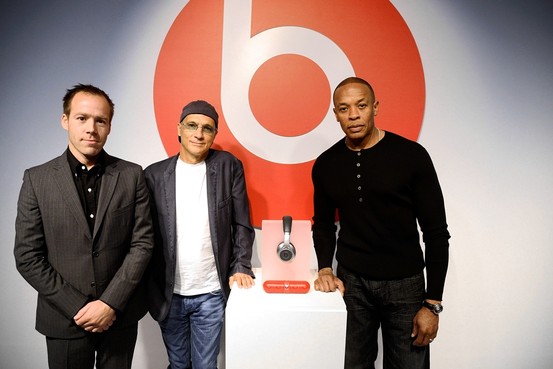
Luke Wood, left, the president of Beats Electronics, with co-founders Jimmy Iovine and Dr. Dre in 2012.

The maker of the popular Beats by Dr. Dre headphones is looking to buy out its Asian partner and bring in a new investor that can provide it with fresh funds for growth, people familiar with the matter said. The moves come as the founders of Beats Electronics LLC—music mogul Jimmy Iovine and American hip-hop producer and artist Andre Young, better known as Dr. Dre—are broadening the company’s business from headphones to include speakers, audio systems in cars and consumer electronics and a soon-to-be-launched online streaming music service. It also comes only a couple of months after the company shelved a separate deal that would have raised hundreds of millions of dollars in cash for acquisitions and investments, as well as allowing the founders to be paid a dividend without giving up their controlling interest in Beats Electronics.

Read more of this post

Disruptions: Texting Your Feelings, Symbol by Symbol

AUGUST 18, 2013, 10:58 AM

Disruptions: Texting Your Feelings, Symbol by Symbol

By NICK BILTON

10-BITS-tmagArticle

A colorful symbol alphabet that contains nearly a thousand images of cute animals, food items and expressive smiley faces can sometimes convey what words cannot.

I recently had to sit my friend down for a modern-day digital intervention. It wasn’t that he was using his phone at dinner, or that he was hitting “reply all” on e-mail threads, or leaving unnecessary voice mail messages. No, this was much worse. A few weeks ago my friend, Michael Galpert, who is 30-year-old and is founder of SuperCalendar, a personal assistant Web site, lives in New York City and was visiting the West Coast for work. I set him up on a date with a friend who lives in Los Angeles. The first date went well and the two decided to see each other again. Read more of this post

Next Out of the Printer, Living Tissue

August 18, 2013

Next Out of the Printer, Living Tissue

By HENRY FOUNTAIN

20PRIN-articleLarge

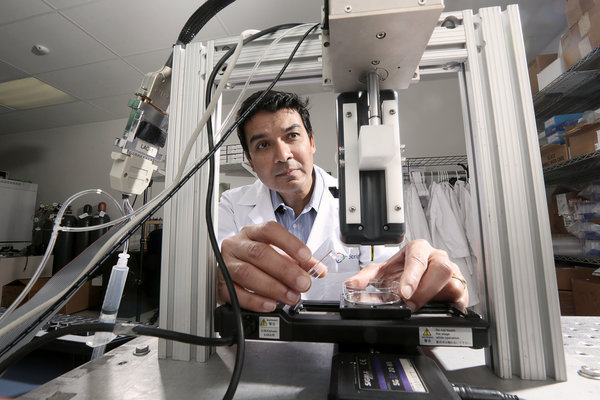
Darryl D’Lima, an orthopedic specialist, worked with a bioprinter in his research on cartilage at Scripps Clinic in San Diego.

SAN DIEGO — Someday, perhaps, printers will revolutionize the world of medicine, churning out hearts, livers and other organs to ease transplantation shortages. For now, though, Darryl D’Lima would settle for a little bit of knee cartilage.

Dr. D’Lima, who heads an orthopedic research lab at the Scripps Clinic here, has already made bioartificial cartilage in cow tissue, modifying an old inkjet printer to put down layer after layer of a gel containing living cells. He has also printed cartilage in tissue removed from patients who have undergone knee replacement surgery. Read more of this post

Inside the Phone-Plan Pricing Puzzle; complex plans make comparison shopping nearly impossible, a tool that discourages customers from jumping ship

July 31, 2013, 7:52 p.m. ET

Inside the Phone-Plan Pricing Puzzle

An Analysis of Some 700 Wireless Options Underscore the Complexity and Confusion in the Market

THOMAS GRYTA

To understand how confusing wireless plans have become, just walk into an AT&TInc. T -0.49% store. The second largest U.S. carrier offers far more plans than its rivals—nearly 30 combinations alone for individuals, and many of its packages contradict one another. For example, customers can sign up for 900 minutes of talk, unlimited texts and 300 megabytes of data for $100 a month. But a “mobile share” plan that is $30 cheaper offers unlimited talk and texts and the same amount of data. The muddled pricing isn’t unique to AT&T. The four major carriers offer a total of nearly 700 combinations of smartphone plans—a family of five alone would have more than 250 options to choose from, according to a Wall Street Journal analysis of smartphone plans offered by the four biggest U.S. carriers. “It is always a cumbersome, somewhat root canalish experience,” said Erin Riordan, of Naperville, Ill., who has five children and manages an account with six lines from AT&T that produces a $495 monthly bill. She has considered switching carriers, but has been overwhelmed by the detailed service contracts, network coverage, the multiple plan options and whether moving will actually save her any money. “I consider myself to be pretty educated but it makes me want to stick a fork in my eye,” Mrs. Riordan said. Confusing plans are as old as the cellphones themselves, although there is some hope that the structures may simplify as competition in the industry heats up. Read more of this post

How LinkedIn Became A Wall Street Juggernaut

How LinkedIn Became A Wall Street Juggernaut

GLENN SOLOMON

Saturday, August 17th, 2013

Glenn Solomon is a Partner with GGV Capital. Some of his recent investments include Pandora, Successfactors, Isilon, Domo, Square, Zendesk, Quinstreet and Nimble Storage. His personal blog, focused on growth stage entrepreneurs who are thinking big; can be found at here. Follow him on Twitter@glennsolomon.

In 2010, had you suggested to the smartest Silicon Valley entrepreneurs and investors that LinkedIn would have a larger market value in 2013 than Groupon, Zynga or Twitter, you would have been laughed at. Had you hypothesized that LinkedIn would be worth more than Groupon, Zynga and Twitter combined and worth nearly one-third the value of Facebook, no one would have believed you.  LinkedIn just wasn’t as exciting as the internet darlings of the day, and, as a result, there were many LinkedIn doubters at that time, myself included. Read more of this post

Graphene: A new miracle in the material world; It is lighter than a feather, stronger than steel, yet incredibly flexible and more conductive than copper

Graphene: A new miracle in the material world

Britain is investing £60m in developing graphene. But are our businesses already falling behind in the race to exploit it, asks Rebecca Clancy.

Graphene is a planar sheet of carbon atoms arranged in a hexagonal pattern. Stacked graphene sheets form graphite, used in pencils.

By Rebecca Clancy

9:23PM BST 18 Aug 2013

It is lighter than a feather, stronger than steel, yet incredibly flexible and more conductive than copper. It has been hailed as “the miracle material”, its possible uses apparently almost endless. The material is graphene, a single layer of carbon atoms forming a regular hexagonal pattern, extracted from graphite, with astonishing properties and impressive potential. Unbreakable, foldable touch screens for mobile phones; a revolution in how drugs are administered; protective coating for everything from food packaging to wind turbines, faster computer chips and broadband; batteries of infinitely higher capacity than today’s – these are just a few of graphene’s possibilities. Read more of this post

Dash Is Turning Cars Into Futuristic, Data-Collecting Machines With An App And A Cheap Plastic Dongle

Dash Is Turning Cars Into Futuristic, Data-Collecting Machines With An App And A Cheap Plastic Dongle

ALYSON SHONTELL AUG. 17, 2013, 12:42 PM 3,728 7

photo 4-11

Dash is made possible by this dongle which fits in a car’s OBD port. Dash can tell you why your check engine light is on and what needs to be replaced in your car.

Jamyn Edis is the CEO and co-founder of Dash, a platform that tracks 300 real-time data points in cars to make them smart vehicles.

A few months ago, just as the weather was starting to warm, a green Mini Cooper convertible rolled to a stop in front of Business Insider’s New York City headquarters. The door popped open and Jamyn Edis greeted me with a beaming smile and a pair of aviators. We were ready to take a Dash around Manhattan. Jamyn Edis and Brian Langel have been creating smart technology products for more than two decades combined. Last year, as HBO’s VP of Emerging Technology and Research Development, Edis entered the New York startup scene and advised founders going through a competitive accelerator program called TechStars. Now, the mentor has become the mentee. Edis and Langel recently founded a company called Dash, which was selected to be one of 11 startups in the 2013 TechStars New York class. Dash’s goal is to turn all vehicles into talking, data-collecting smart cars using nothing but a plastic dongle and a mobile app.  Read more of this post