Opulent Trains Show Japan Is Eager to Spend
October 4, 2013 Leave a comment
Opulent Trains Show Japan Is Eager to Spend
By Chris Cooper and Kiyotaka Matsuda October 03, 2013
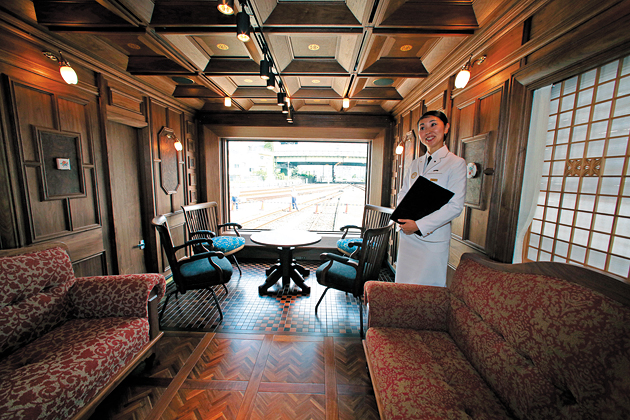
A four-day luxury package can cost more than $10,000. The rear car features two deluxe suites and an observation lounge
A train ride on the Seven Stars in Kyushu can set you back 391,000 yen ($3,900). For that price, a passenger gets three nights in a suite with walnut and maple paneling. A lounge car offers plush sofas and a pianist to provide live background music. The restaurant car features dishes devised by Koji Shimomura, whose Tokyo restaurant was awarded two stars by Michelin. The service makes its debut Oct. 15. Tickets are sold out until June.At least some Japanese believe it’s safe to spend again. Prime Minister Shinzo Abe is moving to stoke inflation, increase government spending, and loosen regulations to spur consumer spending in the world’s third-biggest economy. The gross domestic product is forecast to grow 1.3 percent in the fiscal year starting next April, accelerating to 1.5 percent in fiscal 2015. Those figures hardly compare with the double-digit growth of the 1970s and 1980s, but they beat the three recessions Japan has endured in the past five years.
The Japanese stock market has advanced 36 percent so far in 2013. About 90 percent of stocks held by individual investors in Japan are owned by people in their fifties or older, says Hideo Kumano, chief economist at Dai-ichi Life Research Institute. “Abenomics is helping push up stocks, and that’s giving a boost to older people,” Kumano says. “Seniors are a big market in Japan.”
The luxury market is eager to cater to these older citizens, as well as to younger affluent businessmen and their families. Lured by the weaker yen, the number of tourists from overseas—mostly Hong Kong and Taiwan—rose 23 percent to a record 5 million in the first half of 2013, the Japan National Tourism Organization said in July. The market for luxury goods increased 8 percent, to $27 billion in the latest fiscal year, according to consultants Bain. That appetite for luxury goods and services will probably increase as Japan prepares for an influx of visitors for the 2020 Summer Olympics, says Takeshi Minami, chief economist at Norinchukin Research Institute in Tokyo. Marriott International (MAR) is adding a Ritz-Carlton hotel in Kyoto, and Japan Airlines (9201:JP) has expanded its domestic first-class service. “People are looking for luxury, something one rank above the rest,” says Dairo Murata, a retail analyst at JPMorgan Securities Japan (JPM).
Kyushu Railway’s Seven Stars luxury train, which has 14 rooms spread over seven cars, travels around the western island of Kyushu. Chairs in the viewing room rotate so passengers can enjoy the scenery, including volcanoes and mountains. East Japan Railway (EJPRY), the country’s largest railway operator, is following Kyushu’s lead. It’s hired former Ferrari designer Ken Okuyama to help create its own luxury train for service starting in 2016.
Japan’s high-end travel services are flourishing even though average wages haven’t risen on a sustained basis since the asset bubble burst in the early 1990s. But the optimism is such that this depressing economic fact fails to bother some analysts. “You don’t need higher wages to boost spending,” says JPMorgan’s Murata. “Businesspeople and tourists can do that.”
The bottom line: Japan’s growth may be slow, but it’s still enough to prompt a bull market in stocks and a boom in luxury services.
 About bambooinnovator
 Bamboo Innovator