The oracles at CNBC: good stock advice doesn’t come from TV; Stock market superstars and pundit prognosticators may have loud and lucky forecasts, but they don’t have any crystal ball

The oracles at CNBC: good stock advice doesn’t come from TV

Stock market superstars and pundit prognosticators may have loud and lucky forecasts, but they don’t have any crystal ball

Suzanne McGee

theguardian.com, Thursday 24 October 2013 13.59 BST

CNBC’s Jim Cramer’s forecasts are only right 46.8% of the time, according to CXO. Photograph: Lisa Carpenter

Turn off the television. Put down the remote control. Back away from the streaming CNBC content. Turn off the noise. By noise, I don’t mean only the literal noise of market veterans talking across each other and interrupting as the debate of just how many billions of dollars the recent government shutdown will end up costing the American economy. That’s important, of course – but at this stage in the game, one person’s educated guess isn’t going to be much better than someone else’s. And while every winning streak that makes a money manager or investment strategist a superstar is some combination of skill and luck, it’s also just one lucky call away from turning into a losing streak. Read more of this post

Saudi Women Plan to Hit Roads in Latest Push for Right to Drive

Saudi Women Plan to Hit Roads in Latest Push for Right to Drive

A group of Saudi Arabian women plan a protest tomorrow defying the world’s only ban on female drivers.

Organizers are urging women across the country to take to the roads. The group, named the “26th October Women’s Driving Campaign,” called on the government to provide “a valid and legal justification” for maintaining the ban, and “not simply defer to social consensus,” according to its website. More than 16,000 people signed an online petition in support. Read more of this post

Puerto Rico: Greece in the Caribbean; Stuck with a real debt crisis in its back yard, America can learn from Europe’s Aegean follies; Puerto Rico’s debt crisis: Puerto Pobre; A heavily indebted island weighs on America’s municipal-bond market

Puerto Rico: Greece in the Caribbean; Stuck with a real debt crisis in its back yard, America can learn from Europe’s Aegean follies

Oct 26th 2013 |From the print edition

20131026_LDD001_020131026_FNC591_0

IT WILL not be long till Congress and the White House start squabbling again about the budget in Washington, DC. But before they create another artificial debt crisis, Barack Obama and his Republican opponents ought to pay some attention to a real one 1,500 miles to their south-east. Puerto Rico, an American territory, risks a Greek-style bust. With $70 billion of debt outstanding, the equivalent of 70% of its GDP, it is more indebted than any of America’s 50 states. (Puerto Rico is not technically a state, but its bonds are treated as if it were.) Yields on its bonds have soared as high as 10%, as investors fret it may be heading for a default. Read more of this post

Most Americans accumulating debt faster than they’re saving for retirement

Most Americans accumulating debt faster than they’re saving for retirement

By Michael A. Fletcher, Published: October 24

A majority of Americans with 401(k)-type savings accounts are accumulating debt faster than they are setting aside money for retirement, further undermining the nation’s troubled system for old-age saving, a new report has found. Three in five workers with defined contribution accounts are “debt savers,” according to the report released Thursday, meaning their increasing mortgages, credit card balances and installment loans are outpacing the amount of money they are able to save for retirement. Read more of this post

Michael Novogratz, co-chief investment officer of macro funds at the $55bn Fortress Investment Group, endorses Bitcoin

October 24, 2013 6:46 pm

Bitcoin endorsed by top hedge fund manager

By Stephen Foley in New York

Financial advisers who gathered in New York to hear leaders of the asset management industry impart their best investment ideas for the year ahead were given a surprising tip by one prominent hedge fund manager: Bitcoin. Michael Novogratz, co-chief investment officer of macro funds at the $55bn Fortress Investment Group, used a panel discussion on the prospects for emerging markets to trumpet the much-hyped digital currency, which he said could be used as a cheaper way of transferring money in countries with weak banking systems. Read more of this post

Is Funeral Home Chain SCI’s Growth Coming at the Expense of Mourners?

Is Funeral Home Chain SCI’s Growth Coming at the Expense of Mourners?

By Paul M. Barrett October 24, 2013

feat_death44_catalog_630inline

Steering his jet-black Cadillac CTS sedan along the streets of West Palm Beach, Fla., Brad Zahn offers a tour of the area’s cemeteries, one more tropically lush than the next. Zahn, owner of the Tillman Funeral Home & Crematory, embalms and buries people for a living. He employs his wife, Maribel, and one of their adult sons. Another son attends mortuary school. “My succession plan is in place,” Zahn says. He speaks evenly and wears muted business attire. One hand on the wheel, he seems the very picture of a confident entrepreneur. His demeanor turns anxious, however, when I ask about the funeral chain Service Corporation International (SCI). “How can you not be nervous,” he responds, “when the 1,000-pound gorilla gets even bigger?” Read more of this post

How The 2003 Arrest Of The Richest Man In Russia Changed Everything — And What Happens Next

How The 2003 Arrest Of The Richest Man In Russia Changed Everything — And What Happens Next

ADAM TAYLOR OCT. 24, 2013, 4:51 PM 4,930 12

Pavel Khodorkovsky was in Boston when he first heard of his father’s arrest, of how masked men stormed his father’s jet at dawn in the Novosibirsk Airport in Siberia, aimed machine guns at him, slapped handcuffs on his wrists, and flew him to Moscow. He heard the news in a phone call from his mother on the morning of Oct. 25, 2003, but it would soon make headlines around the world. “Police in Russia seize oil tycoon,” read The New York Times, “Russia’s richest man held for fraud” went the BBC’s version. Read more of this post

Ford Valued Like It’s 1999 Seen Beating Toyota to Peak

Ford Valued Like It’s 1999 Seen Beating Toyota to Peak

Ford Motor Co. (F)’s market value is reaching levels last seen in 1999, putting the company closer to its historical peak than the world’s biggest carmaker, Toyota (7203) Motor Corp. For much of yesterday, Ford traded at a market capitalization of more than $70 billion, a level it has closed at only three times in the last 14 years, according to data compiled by Bloomberg. That left the second-largest U.S. automaker within about $6 billion of its peak valuation in May 1999. Toyota ended the day $30 billion short of its $254 billion high reached in February 2007. Read more of this post

Facebook CEO paid record US$2.2 bil; “In the more than ten years that GMI has been publishing this report, I’ve never seen a top ten highest paid list that loomed this large”

Facebook CEO paid record US$2.2 bil.: survey

AFP
October 25, 2013, 12:27 am TWN

WASHINGTON — Facebook chief Mark Zuckerberg set a new record for corporate compensation in 2012 with a package worth more than US$2.278 billion, according to a survey by a corporate governance firm. The report by GMI Ratings showed Zuckerberg’s salary of US$503,000 and bonus of US$266,000 were eclipsed by stock options worth some US$2.27 billion. This was the first year the survey found any chief executive collected more than US$1 billion, according to the GMI report released Tuesday. Read more of this post

Ex-Bankers Following Swiss Gain Traction Advising Asian Rich

Ex-Bankers Following Swiss Gain Traction Advising Asian Rich

Independent asset managers, who advise rich clients of private banks on their investments, may at least triple the funds they oversee in Asia as demand for specialized products rises, said Taurus Wealth Advisors Pte. Independent managers, mostly former bankers, will increase the assets they advise on in the region to about $70 billion by 2017 after boosting them to about $20 billion now from $4 billion five years ago, Mandeep Nalwa, chief executive officer of Singapore-based Taurus, estimated in an Oct. 23 interview. Nalwa was a founding member of the Association of Independent Asset Managers, which was formed in Singapore in March 2011, Read more of this post

European stock exchanges are courting small firms as never before

Stock exchanges are courting small firms as never before

Oct 26th 2013 | PARIS |From the print edition

20131026_FNC588_0

TEN-YEAR-OLD Ekinops, a small French company that facilitates data transmission over high-speed fibre-optic cable, went public in April, raising €6.7m ($8.7m) on NYSE Euronext in Paris. The fast-growing firm wanted money to help it expand; its venture-capital backers wanted to start returning money to their investors. Didier Brédy, Ekinops’s boss, says he is “delighted” with the amount raised in exchange for over a fifth of the firm’s equity and with subsequent trading volumes in the company’s stock, the price of which has risen by a third. Read more of this post

Europe’s other debt crisis: It’s not just sovereign borrowing; there are too many zombie firms and overindebted households

Europe’s other debt crisis: It’s not just sovereign borrowing; there are too many zombie firms and overindebted households

Oct 26th 2013 |From the print edition

20131026_LDP002_0

FIFTEEN months ago, in July 2012, Mario Draghi, the president of the European Central Bank (ECB), promised to do “whatever it takes” to preserve the single currency. Although the bond-buying scheme set up to fulfil that pledge has never been tested, yields on sovereign bonds have fallen. The euro mess has morphed from an acute crisis into a chronic one. This week Mr Draghi launched what could become the second big turning-point in the euro saga: an inspection of the balance-sheets of the region’s 128 biggest banks which the ECB will supervise from late 2014. As part of its “asset-quality review”, ECB officials, along with outside experts, will start peering into the banks’ balance-sheets and impose common standards for loan quality (see article). This process is supposed to find out which banks are viable now, which will need more capital and which should just be closed down. Read more of this post

A Crocodile’s Bumpy Road From Farm to Handbag

A Crocodile’s Bumpy Road From Farm to Handbag

By Janice Kew and Andrew Roberts October 24, 2013

comp_crocodiles44__01_630x420

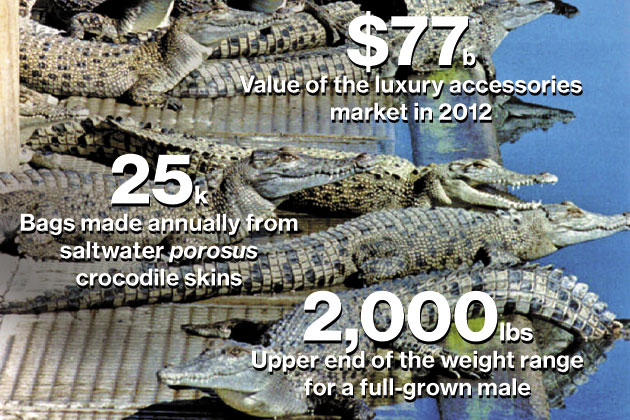
These days, women of every economic stripe can be seen carrying pricey leather handbags. Not so with totes made of crocodile, one of the most difficult luxury materials to obtain, especially in the pristine condition wealthy fashionistas expect. As demand from the world’s elite surges for the skins, luxury goods companies such as LVMH Moët Hennessy Louis Vuitton (MC:FP) and Kering (KER:FP), the owner of Gucci, are making acquisitions to secure a supply of the beasts, whose habits make even collecting their eggs a matter of life and death. Keeping crocodiles from scratching or biting each other as you raise them from hatchling to arm candy is another major challenge. Read more of this post

Debtors’ prison: The euro zone is blighted by private debt even more than by government debt

Debtors’ prison: The euro zone is blighted by private debt even more than by government debt

Oct 26th 2013 |From the print edition

20131026_FNC630_0

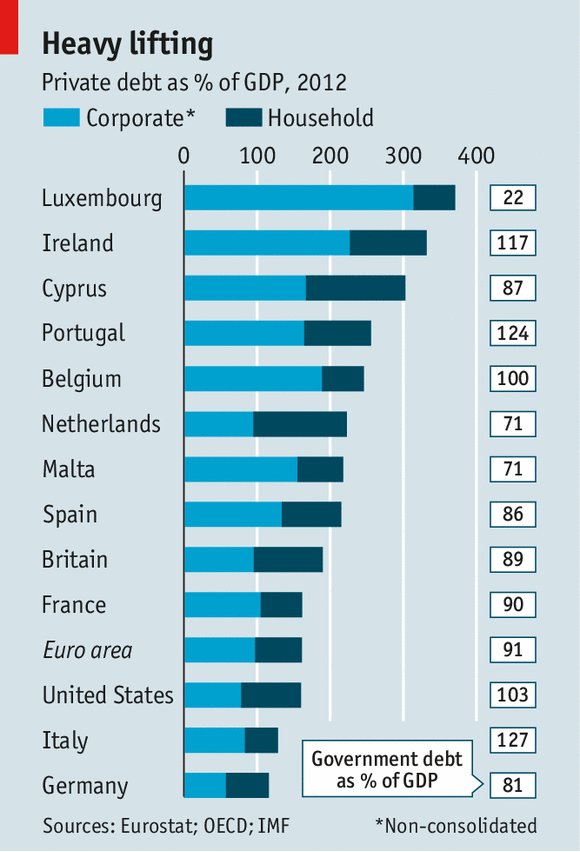
THE European Central Bank (ECB) announced this week how it will undertake a root-and-branch examination of banking assets before it takes charge of supervision in the euro area late next year (see article). One aim of the exercise is to identify the bad debts that are fouling up euro-zone banks and preventing the flow of new credit. This is important because parts of the single-currency area are crippled not just by public borrowing but by private debt, most of which is sitting on banking books. Read more of this post

Bowing to Wall Street, DuPont to spin off titanium dioxide performance chemicals unit

Bowing to Wall Street, DuPont to spin off titanium dioxide unit

Thu, Oct 24 2013

By Ernest Scheyder

(Reuters) – DuPont (DD.N: QuoteProfileResearchStock Buzz) said on Thursday it will spin off its titanium dioxide unit into a separately traded public company within 18 months, yielding to intense pressure from Wall Street to divest the volatile business. Spinning off the performance chemicals business, which also sells refrigerants, would allow DuPont to focus more on specialty materials and agriculture, two growth areas. Read more of this post

The Misreading of China’s Growth Data; Even if not technically inaccurate, Beijing’s GDP numbers mislead, resulting in misguided optimism over an economy slowing down

The Misreading of China’s Growth Data

Even if not technically inaccurate, Beijing’s GDP numbers mislead, resulting in misguided optimism over an economy slowing down.

LELAND R. MILLER and

AND CRAIG CHARNEYCraig Charney

Oct. 24, 2013 12:54 p.m. ET

Another day, another release of economic data in China—this time, Thursday’s HSBCHSBA.LN +0.57% purchasing manager’s index, where an uptick this month suggests improving business confidence. This will contribute to what many observers have described as increasingly positive economic news. But it’s a mistake to draw that conclusion from recent official data, which manage to present potentially misleading data misleadingly. Read more of this post

Yields on Chinese government bonds have risen to their highest level in nearly six years, as a confluence of factors makes investors more demanding

China Bond Yields Soar

Inflation Worries, Growth Outlook, Central Bank Moves Make Investors More Demanding

SHEN HONG

Updated Oct. 24, 2013 6:10 a.m. ET

SHANGHAI—Yields on Chinese government bonds have risen to their highest level in nearly six years, as a confluence of factors makes investors more demanding, analysts say. The yield on the benchmark 10-year bond hit 4.20% Thursday, the highest since it reached 4.60% in November 2007. “Rising inflationary pressures, a rebound in economic growth and the central bank’s shift toward a slightly more hawkish monetary policy have led to tighter liquidity conditions,” said Chen Long, an analyst at Bank of Dongguan. “These have made bonds less attractive to investors.” Read more of this post

China’s NQ Mobile Sinks as Muddy Waters Calls Company ‘Massive Fraud’

October 24, 2013

Muddy Waters Initiates Coverage on NQ Mobile Inc. (NYSE: NQ)

Muddy Waters rates NQ Mobile Inc. (NYSE: NQ) shares a Strong Sell. In this latest report Muddy Waters highlights:

  • NQ is a massive fraud. We believe it is a “Zero”. At least 72% of NQ’s purported 2012 China security revenue is fictitious. NQ’s largest customer by far is really NQ. Our research estimates that NQ’s real market share in China is only about 1.5%, versus the approximately 55% it reports. We estimate that its China paying user base is less than 250,000, versus the six million NQ claims.
  • NQ’s Antivirus 7.0 is unsafe for sale to consumers, and we consider it to be spyware that makes users’ phones vulnerable to cyber attack. NQ makes a weak attempt to protect users’ private data as it’s uploaded through the Chinese government’s firewall to NQ’s server. Phones are vulnerable to MITM attacks because NQ fails to adhere to basic security protocols. MW engaged top-flight security software engineers to analyze this product.
  • NQ’s purported international revenue of $36.5 million is likely less real than its PRC revenue. NQ claims to generate international revenue in obscure markets, and through mysterious counterparties that seem to seldom pay.
  • NQ’s future is as bleak as its past. The recent pivot to advertising and gaming is merely an attempt to change to a fraud that NQ hopes will be less obvious. NQ cannot monetize users that it does not have.
  • NQ’s acquisitions are highly likely to be corrupt.

NQ’s cash balances are highly likely to not be real. In NQ’s 2012 20-F, PwC classified all cash and term deposits as Level 2 assets (slightly hard to value), which is the first time we have seen this. NQ’s purported movements of cash from its IPO almost certainly did not occur due to PRC FX controls. We therefore believe the term deposits are likely forgeries.

NQ Mobile Sinks as Muddy Waters Calls Company ‘Fraud’

NQ Mobile Inc. (NQ), a Chinese mobile-security service provider, sank the most on record after Muddy Waters LLC called the company a “massive fraud.” NQ Mobile dropped as much as 63 percent to $8.46 in New York, the most since the company’s initial public offering in May 2011, before trading was suspended. Shares were up 279 percent this year as of yesterday. Read more of this post

Singapore Regulators Reviewing Small-Cap Crash; Tumble in Asiasons, Blumont, LionGold Wiped Out Billions in Market Value

Singapore Regulators Reviewing Small-Cap Crash

Tumble in Asiasons, Blumont, LionGold Wiped Out Billions in Market Value

CHUN HAN WONG

Oct. 24, 2013 12:38 p.m. ET

SINGAPORE—Singapore regulators are reviewing recent volatility in three small-capitalization stocks that saw sharp plunges this month wipe out billions of dollars in market value and months of big gains, the city-state’s central bank said Thursday. Asiasons Capital Ltd. 5ET.SG -10.87% , Blumont Group Ltd. A33.SG -7.50% and LionGoldCorp. A78.SG -11.86% have lost more than eight billion Singapore dollars (US$6.5 billion) in combined market value this month. Their prices tumbled on Oct. 4, sparking a broader selloff in small-cap stocks and prompting Singapore Exchange Ltd. S68.SG 0.00% to briefly suspend the stocks and to ban short selling and margin trading on them for two weeks. Read more of this post

Best-selling author James Patterson reflects on success as the first author to achieve 10 million in ebook sales

Best-selling author Patterson reflects on success

12:59pm EDT

By Chris Michaud

NEW YORK (Reuters) – When it comes to bestselling authors James Patterson is hard to beat. He has been called the busiest man in publishing and is the first author to achieve 10 million in ebook sales. His thriller, “Mistress,” soared to the top of the Publishers Weekly bestseller list shortly after its August release, where it spent three weeks. Patterson, 66, spoke with Reuters about his unprecedented success, his characters and why he thinks his books are so popular.

Q: ‘Mistress’ was a recent No. 1 bestseller. Is that kind of benchmark getting old, or is it still a surprise?

A: I still get a kick out of it, but I’m not competitive. If it’s number one I like that. If it isn’t, I’m okay with it. So I can still be the first author and go, ‘Wow, I’m published, and there’s the book.’ And that still is fun. It has never gotten old for me. I can’t say it’s a surprise. It would be if it wasn’t even on the list, I’d go, ‘Whaaat? It’s not there, oh, we did something wrong.’

Q: Why do you think your books are so popular?

A: The three rules of this kind of fiction for me are story, story, story. I’m telling a story, and I sort of have the sense that I’m talking to one person and I don’t want them to get up until I’m finished. And the books are emotional. I think I’m pretty emotional. I think that’s one of my strengths and I think that comes through to people. There are a lot of thrillers that are exciting, but there isn’t much humanity to them. I do create characters that people are comfortable with and that they want to know what happened to them next. Even the villains, I think, there’s just a humanity to them as diabolical as they may be, there’s something recognizably human, which I think is one of the keys to creating villains that are interesting. Read more of this post

Hey, Wall Street: If You Want Efficiency, Buy a Blender; The view of prices as being in a perpetual equilibrium helped to discourage the development of more realistic theories of markets as ecologies of interacting strategies which never reach any benign resting point. Worst of all, easy acceptance of the phrase “markets are efficient” has for several decades helped to feed a complacency surrounding the global financial system

Hey, Wall Street: If You Want Efficiency, Buy a Blender

It is a supreme irony that a man whose ideas could have helped us avoid the most recent financial crisis now shares a Nobel with one whose work went a long way toward making it possible. The two economists — Robert Shiller of Yale University and Eugene Fama of the University of Chicago, winners of the 2013 memorial prize in economics — are both admirers of the power of financial markets. As Shiller rightly argues, finance is a technology that can be just as beneficial as any other, from electric power to the Internet. Without finance, how would we pool our collective resources to fund the vast undertakings required for medical research, oil exploration or even education? How would we insure ourselves against the staggering costs of earthquakes and other natural catastrophes? How many of us would ever own a house? Read more of this post

Samsung Pursuing Glasses That Answer Calls in Google Challenge; “Samsung is willing to throw things at the wall just to see what sticks”

Samsung Pursuing Glasses That Answer Calls in Google Challenge

Samsung Electronics Co. (005930), Asia’s largest technology company, registered a design in South Korea for eyeglasses that can show information from a smartphone and enable users to take calls. The device will have transparent or translucent lenses, include earphones for listening to calls or music, and has been registered as “sports spectacles,” according to documents posted on the Korea Intellectual Property Rights Information Service website. Samsung applied for protection in March, and the patent was registered Oct. 2. Read more of this post

Laps to laptops: Formula One sells its big data know-how

Laps to laptops: Formula One sells its big data know-how

5:07pm EDT

By Jeremy Wagstaff

SINGAPORE (Reuters) – Wander around the pits at a Formula One car race and you’re as likely to bump into a laptop-wielding scientist or engineer as a mechanic with a spanner. And the lessons they are drawing from sensors on F1 tracks, cars and drivers are finding their way into a surprising range of industries – from drilling oil wells to making toothpaste. “By chance or whatever we’ve ended up that F1 is a very strong metaphor for how the world is developing around a more industrialized Internet,” says Peter van Manen, managing director of McLaren Electronic Systems, part of a group which makes F1 cars. “You take information and you measure things, and from that you try to adapt how things behave and flow, so you can make performance better.” Read more of this post

South Korea’s Naver’s Line app to list on Tokyo exchange by next summer at $8-$10 billion market value

Line voice app developer plans to list on Tokyo exchange: Nikkei

4:03pm EDT

(Reuters) – The developer of the Line free voice calling and messaging app plans to list on the Tokyo Stock Exchange by next summer, the Nikkei said. Line Corp, owned by South Korea’s Naver Corp (035420.KS: QuoteProfileResearchStock Buzz), will have a market capitalization of 800 billion yen to 1 trillion yen ($8-$10 billion) when it goes public, the Japanese business daily said. The Line app was developed by employees at Naver’s Japanese subsidiary who were forced to turn to the Internet to contact each other after the massive earthquake and tsunami in March 2011 that disrupted phone lines across the country. The Line app’s user base has grown to more than 270 million worldwide, the daily said. The company is expected use the proceeds on advertising and the development of new apps, the business daily said.

Malaysians Ponder Importance of Banana Leaves in Indian Food with shortage resulting in restaurant owners turning to paper versions

Malaysians Ponder Importance of Banana Leaves in Indian Food

Tradition-Bound Diners Resist Switching Plates

CELINE FERNANDEZ

Oct. 24, 2013 1:52 p.m. ET

AI-CE430_MALBAN_G_20131024143200

Khairi Kassim said he prefers eating Indian food off authentic banana leaves. Celine Fernandez/The Wall Street Journal

KUALA LUMPUR, Malaysia—A shortage of banana leaves prompted the owner of Kanna Curry House in Malaysia to turn to paper versions, setting off a debate among restaurateurs and enthusiasts about what the leaves mean to Indian cuisine. Muthu Kumar finds himself caught between his tradition-bound diners, who refuse to abandon banana leaves, which are used as plates, and an increasingly complex and expensive supply chain that sends machete-wielding workers deep into Malaysia’s jungles in search of the coveted leaves. “There is no point in insisting on keeping the tradition when I can’t get fresh leaves,” said the 25-year-old Mr. Kumar. Read more of this post

Indonesian designers defy stereotypes of Muslim fashion

Indonesian designers defy stereotypes of Muslim fashion

Models present creations by designer Somarta during a Fashion Week show in Jakarta

2:14am EDT

By Andjarsari Paramaditha

JAKARTA (Reuters) – As the world’s most populous Muslim country, Indonesia has high demand for clothing that adheres to religious rules emphasizing modesty for women. But as the stylish, colorful and cool outfits at Jakarta Fashion Week showed, the Southeast Asian nation also aims to be the global leader in the Muslim fashion industry that is worth nearly $100 billion by some estimates. Read more of this post

Hong Kong Needs Debate on Share-Class Rules, Exchange’s Li Says

Hong Kong Needs Debate on Share-Class Rules, Exchange’s Li Says

Hong Kong needs a debate on how to handle “innovative companies,” including whether to allow them to have multiple share classes, said Charles Li, head of the city’s stock exchange, after initial-offering talks with Alibaba Group Holding Ltd. broke down last month. Jack Ma, the billionaire founder of China’s largest e-commerce company, and his partners wanted to retain control after a Hong Kong listing through a partnership that would nominate a majority of board members. Hong Kong rules don’t permit such a structure. Alibaba Executive Vice Chairman Joseph Tsai said last month that the exchange operator should “adapt to future trends and changes.” Read more of this post

Questions remain over David Jones CEO Zahra’s hasty exit

Questions remain over Zahra’s hasty exit

October 23, 2013

Elizabeth Knight

The stage-managed and neatly packaged explanation of Paul Zahra’s impending departure from the top job at David Jones doesn’t pass the smell test. Six weeks ago Zahra told me over lunch, ”I couldn’t imagine myself doing anything else because I love the company”. Either Zahra’s next job is in acting or he did not envisage this week’s chief executive ”transition”. My money is on the latter. He made similar press comments a week later after he spoke with me. ”We have done a lot but there is still more to do,” he said. Chief executive’s don’t side-swipe investors with a decision like this if they are in control of the timing. Under normal circumstances they (and the board) prepare investors and analysts rather than issuing shock announcements. It was abundantly clear from talking with investors and reading the reports from investment bank retail analysts (both of which are generally plugged in) that Zahra’s news came as a surprise. Read more of this post

India eyes $15 billion rollover of subsidy costs into next budget

India eyes $15 billion rollover of subsidy costs into next budget

5:33pm EDT

By Rajesh Kumar Singh

NEW DELHI (Reuters) – India’s finance minister is finding it harder and harder to meet the government’s budget promises and may sweep as much as $15 billion in subsidy costs into next year’s accounts to ensure he hits fiscal targets ahead of national elections, ministry officials say. The finance minister, P. Chidambaram, insists that the fiscal deficit target of 4.8 percent of GDP for the year to March 31, 2014, is a red line that will not be breached. The worst economic downturn since 1991 and a fall in the rupee to a record low have undermined budget assumptions for some months. Read more of this post

Low prices mean highest U.S. sugar subsidy cost in decade

Low prices mean highest U.S. sugar subsidy cost in decade

5:24pm EDT

By Charles Abbott

WASHINGTON (Reuters) – The United States faces its highest sugar subsidy cost since 2000, an estimated $280 million, following a new wave of defaults by processors on government-backed loans. Nearly 382,000 tons were forfeited in the final two months of fiscal 2013, despite repeated Agriculture Department efforts to whittle down a mammoth surplus and bolster futures prices. The surplus was projected to persist for months to come. Read more of this post