Harvard: Great school, lousy investor
November 1, 2013 Leave a comment
Harvard: Great school, lousy investor
By Dan Primack October 31, 2013: 12:13 PM ET
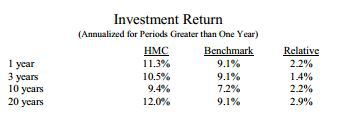
Harvard has America’s largest college or university endowment, but not nearly its best. FORTUNE — Harvard University has the nation’s largest college or university endowment, valued at $32.7 billion through the end of June. It also has worse investment returns than any of its peers over the past five years, according to a Fortune analysis. This may come as a surprise to Harvard employees and alums, who have been told that the endowment’s investment arm — Harvard Management Company — regularly beats its benchmarks. For example, HMC CEO Jane Mendillo wrote the following last month in a public letter:
 “This also marks the fourth consecutive year in which HMC’s return exceeded the Policy Portfolio benchmark. As we have noted previously, earning returns in excess of the markets as represented in the Policy Portfolio is not easily done and is not expected every year.”
But the reality is that such thresholds are pre-set as baselines for making sure that the endowment can adequately meet the university’s financial needs, rather than judgments on HMC’s performance relative to other large schools (or to broader market indices).
On that latter basis, Harvard has been a virtual trainwreck. Its five-year annualized performance is 1.7%. For context, Harvard is the only one of the 25 largest U.S. college or university endowments to have returned less than 2% over that time period, with the next closest being Cornell University at 2.2%. Moreover, investment advisory firm Wilshire Associates reports a median five-year return of 3.38% for the 17 schools within its database that have endowments larger than $500 million (Harvard is not believed to be included in that sample).
No wonder the “Investment Return” chart in Mendillo’s letter was missing a certain time period:
Equally notable is that the five-year period matches up exactly to when Mendillo took over as CEO, on July 1, 2008. To be sure, she inherited the portfolio just months before Lehman Brothers collapsed, and most of the fiscal 2009 return of negative 27.3% can be pinned on her predecessor Mohamed El-Erian (now CEO of PIMCO).
That said, other endowments also had to weather the financial crisis. Moreover, Harvard’s more recent returns also aren’t much to write home about. It’s three-year figure ranks 20th in our group, and its one-year return ia easily in the bottom half.
Those close to the situation offer three defenses for Harvard’s sub-par performance:
1. The larger you are, the harder it is to outperform.
2. Harvard has much less exposure to domestic public equities than do many other endowments, which have been able to ride the recent bull run.
3. Harvard has a particularly large slug of illiquid assets, some of which it felt compelled to sell at deep discounts during the financial crisis. Those sales continue to be a drag on five-year returns.
Unfortunately, each of those arguments are easily countered. First, Harvard has always been the nation’s largest endowment — but it had little trouble outperforming in the past. For example, through June 30, 2012 it ranked #5 over a 20-year period.
Second, it certainly is true that Harvard’s rank has slipped due to its relative dearth of public equities. But other schools with even smaller public equity allocations — such as Yale — have performed much better. Moreover, it is no secret that more and more endowments have been adopting the “Yale model” of allocation, which means that public equity holdings actually have been decreasing over time, not increasing, in the broader endowment world.
Third, Harvard has actually increased its target exposure to illiquid assets over the past five years, including in private equity and real estate. So not only did current management approve the secondary sale (arguably too soon), but it also may be setting itself up for a similar liquidity crunch were the economy to tank again.
None of this, however, seems to be worrying the HMC board of directors. Or at least not openly.
“I think that the team Jane has put in place is prepared to be very successful, and that we’ll look back in five years and think she’s done a terrific job,” says HMC director Glenn Hutchins, co-founder of private equity firm Silver Lake.
Mendillo was not made available for this story.
 About bambooinnovator
 Bamboo Innovator