Sony’s Credit Rating May Be Cut to Junk by Moody’s After Loss; Sony suffers TV relapse as Japan peers change channel

Sony’s Credit Rating May Be Cut to Junk by Moody’s After Loss

Sony Corp. (6758)’s credit rating may be downgraded to junk by Moody’s Investors Service Inc. after the Japanese electronics company posted a loss and cut its earnings forecast, signaling that its turnaround effort is faltering. Moody’s has placed Sony’s Baa3 long-term senior unsecured bond rating on review for a downgrade, the credit-rating company said today in a statement. Baa3 is Moody’s lowest investment-grade rating. Read more of this post
“Please bring back the old Tanah Abang”; SE Asia’s Top Textile Market Seeks to Clean Up Its Act

SE Asia’s Top Textile Market Seeks to Clean Up Its Act

By Agence France-Presse on 10:30 am November 3, 2013.
After years of being overrun by a racketeering mafia, drug addicts and prostitutes, Southeast Asia’s biggest textile market is cleaning up its act in an effort to win back droves of shoppers. Spread across several blocks in the Indonesian capital Jakarta, Tanah Abang market is a colourful whirl of activity that has attracted shoppers from across the region for centuries. While glittering skyscrapers have shot up around the city centre trading hub, the market itself, which was founded in 1735 by a Dutch businessman, is a series of modest buildings in an area of traditional, red-tiled houses. Read more of this post

Indonesia’s major mobile operators bleed as sharp drop in rupiah hurts earnings

Telcoms bleed as sharp drop in rupiah hurts earnings 

Mariel Grazella, The Jakarta Post, Jakarta | Business | Mon, November 04 2013, 8:02 AM

Indonesia’s major mobile operators suffered sharp declines in their profits during the first nine months of this year partly due to lower growth in their revenues and large foreign-exchange losses. Bakrie Telecom (BTEL), one of whose commissioners is Anindya N. Bakrie, son of tycoon and presidential hopeful Aburizal Bakrie, booked a 10.2 percent decrease in its revenues in the first nine months of this year, but its profits plunged even lower due to high costs stemming from the sharp drop in the rupiah against the US dollar in the third quarter. Read more of this post

Singapore exchange mulls giving rebates to high-frequency traders after investing $250 million in HFT infrastructure

Some Indexers Grouse About ‘Smart Beta’ Approaches

Talk of improved index strategies riles some classic index investors

KAREN DAMATO and ARI I. WEINBERG

Nov. 3, 2013 4:16 p.m. ET

If you’re not “smart,” does that mean you’re “dumb?” That’s the question proponents of classic index investing are asking these days. Index funds aim to provide exposure to the performance—or beta—of any market. But now, new mutual and exchange-traded funds are billing themselves as “smart beta” funds, and some investors and advisers are upset. Their gripe: The term “smart beta” implies that older indexing varieties are, well, not so intelligent. Read more of this post

Hiring a property agent? Let them bid for the job online at hirepropertyagent.com

Hiring a property agent? Let them bid for the job online

Monday, Nov 04, 2013

Cheryl Ong

The Straits Times

SINGAPORE – The days of sifting through hundreds of advertisements to find a property agent could be gone if a new website has its way. The site – hirepropertyagent.com – allows agents to bid for the chance to represent a client. This upends the usual process, which involves a buyer or seller browsing through ads or asking for recommendations. They then have to negotiate over the commission payable to the agents for their services. But trying to find an agent out of a pool of thousands is often a tedious and lengthy process, which prompted website developer Ezekiel Chew to devise his site. Read more of this post

Won for the money: North Korea experiments with exchange rates

Won for the money: North Korea experiments with exchange rates

6:28pm EST

By James Pearson

SEOUL (Reuters) – In a dimly-lit Pyongyang toyshop packed with Mickey Mouse picture frames and plastic handguns, a basketball sells for 46,000 Korean People’s Won – close to $500 at North Korea’s centrally planned exchange rate. Luckily, for young North Koreans looking to shoot hoops with Dennis Rodman, the new friend of leader Kim Jong Un, the Chinese-made ball actually costs a little less than $6 based on black market rates. Read more of this post

Universal Life Policies Hurt by Low-Rate Era

Universal Life Policies Hurt by Low-Rate Era

LESLIE SCISM

Nov. 3, 2013 6:38 p.m. ET

MI-BZ456_LIFE_NS_20131103161203

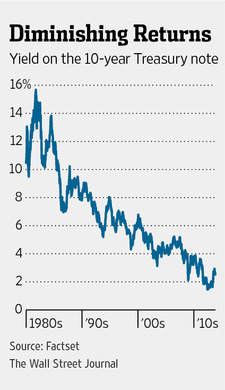
CEDAR RAPIDS, Iowa—About 20 years ago, Steven and Joanne Carfrae, then-owners of a meat-packing plant here, took out a “universal life” insurance policy, naming local charities to receive the future $2 million in proceeds. To their dismay, the couple recently faced a stark choice: put up tens of thousands of dollars to keep the policy alive at its existing face value or reduce the death benefit sharply. They went the latter route and now have a $658,000 policy—meaning their favorite causes will receive $1.3 million less than planned. Read more of this post

Great Investors’ Best Ideas Conference Notes 2013; Notes From Excellence in Investing San Francisco 2013

Thursday, October 31, 2013

Great Investors’ Best Ideas Conference Notes 2013: Price, Akre, Gabelli, Pickens, Russo & More

Below are some brief notes from the 7th annual Great Investors’ Best Ideas Conference in Dallas benefiting the Michael J. Fox Foundation for Parkinson’s Research and the Vickery Meadow Youth Development Foundation.
Notes From Great Investors’ Best Ideas Conference
Michael Price (MFP Investors): He pitched three ideas:  long Hospira (HSP), long Songbird Estates (SBD.LN) and long Dolby Labs (DLB).  HSP has seen value guys buying it, transitioning away from growth investors as the investor base changes.  The company has good free cash flow and he thinks the stock can hit $60.  His thesis on Songbird is a discount to NAV story (around 30%).  Dolby (DLB) has a ton of cash and no debt with huge royalty streams (80% of revenue).  As tablets and PCs continue to grow, they’ll make money. Read more of this post

Test Your Emerging-Markets IQ; Before taking the leap, fund investors should know the territory

Test Your Emerging-Markets IQ

Before taking the leap, fund investors should know the territory

CHANA R. SCHOENBERGER

Nov. 3, 2013 4:16 p.m. ET

As the world’s most advanced economies continue to sputter, investors looking for a brighter picture continue to turn to emerging markets, which are growing faster. How much do you know about emerging markets? Find out by taking this emerging-markets quiz. Investing in these countries can carry significant risks. Political turmoil, uncertain legal systems that may not favor foreign investors, and currency risk are all possible pitfalls. The payoff is a potential for higher returns as these economies expand. Many of these countries have a growing middle class that is clamoring increasingly for consumer goods. Some are also benefiting from high rates of infrastructure spending and from natural resources. Read more of this post

In China’s Xinjiang, poverty, exclusion are greater threat than Islam

In China’s Xinjiang, poverty, exclusion are greater threat than Islam

4:16pm EST

By Michael Martina

URUMQI, China (Reuters) – In the dirty backstreets of the Uighur old quarter of Xinjiang’s capital Urumqi in China’s far west, Abuduwahapu frowns when asked what he thinks is the root cause of the region’s festering problem with violence and unrest. “The Han Chinese don’t have faith, and the Uighurs do. So they don’t really understand each other,” he said, referring to the Muslim religion the Turkic-speaking Uighur people follow, in contrast to the official atheism of the ruling Communist Party. Read more of this post

Emerging Markets Come to Growth Pivot Point; Whether the growth slowdown in emerging markets is cyclical or structural, one thing is certain: Deeper overhauls are a must if a prolonged downturn is to be avoided at all

Emerging Markets Come to Growth Pivot Point

Slump in Developing Nations’ Economies Could Be Cyclical or Due to Structural Problems

TOM WRIGHT

Updated Nov. 3, 2013 7:53 p.m. ET

Is the slowing growth in emerging markets from China to Turkey to Brazil a temporary blip or a harbinger of worse to come? For much of the past decade, these emerging economies expanded swiftly as people shifted from farms to more-productive urban jobs. They bounced back strongly after the global recession as large monetary and fiscal stimulus spending by China and other developing nations helped offset a drop in U.S. demand. The Federal Reserve further bolstered their growth story when it poured cheap credit into these markets by printing money to boost the U.S. economy. Read more of this post

If you’re not “smart,” does that mean you’re “dumb?” Some Indexers Grouse About ‘Smart Beta’ Approaches; Talk of improved index strategies riles some classic index investors

Some Indexers Grouse About ‘Smart Beta’ Approaches

Talk of improved index strategies riles some classic index investors

KAREN DAMATO and ARI I. WEINBERG

Nov. 3, 2013 4:16 p.m. ET

If you’re not “smart,” does that mean you’re “dumb?” That’s the question proponents of classic index investing are asking these days. Index funds aim to provide exposure to the performance—or beta—of any market. But now, new mutual and exchange-traded funds are billing themselves as “smart beta” funds, and some investors and advisers are upset. Their gripe: The term “smart beta” implies that older indexing varieties are, well, not so intelligent. Read more of this post

Fed Gives Banks New Dire Scenarios for 2014 Stress Tests

Fed Gives Banks New Dire Scenarios for 2014 Stress Tests

Lenders including JPMorgan Chase & Co. (JPM) and Citigroup Inc. (C) will have to show they can survive the demise of a trading partner or a plunge in value of high-risk business loans in the 2014 version of U.S. stress tests. The scenarios for the annual tests, outlined by the Federal Reserve in a statement yesterday, reflect some of the most pressing threats seen by regulators as they gauge the ability of the U.S. financial system to withstand economic shocks. Bankers will have to show what would happen to the value of leveraged loans they hold, the impact of another housing bust and how they’d fare if a firm that owes them substantial sums collapses. Read more of this post