India Shoots for Mars

India Shoots for Mars

India is often accused of not asserting itself in world affairs, of being unfocused, introverted, unrealistic or just nonaligned. That may be true, but when it comes to space, India’s ambitions aren’t at all modest — and they just got bigger. On Nov. 5, the Indian Space Research Organization successfully put into Earth’s orbit an indigenous, unmanned spacecraft, the Mangalyaan (“Mars-craft”), which on Nov. 30 will begin a nine-month journey toward Mars. Read more of this post

Red Tape Holding Geothermal Back in Race to Replace Coal in Indonesia

Red Tape Holding Geothermal Back in Race to Replace Coal

By Dion Bisara on 1:34 pm November 7, 2013.
The government needs to streamline regulations and provide financial incentives for investors to boost development of geothermal energy, an industry expert has said. “Government is the single prime mover to accelerate geothermal progress,” said deputy chairman of the Indonesia Geothermal Association Sanusi Satar to reporters on Wednesday. Read more of this post

Vote-buying and ballot fraud are voters’ chief concerns about next year April’s general elections in Indonesia

Election Fraud Worries Eligible Voters: Study

By Jakarta Globe on 8:30 am November 7, 2013.
Vote-buying and ballot fraud are voters’ chief concerns about next year’s general elections, a new study by the People’s Voter Education Network has revealed. Thirty-four percent of the public were worried about the two points People’s Voter Education Network (JPPR) deputy coordinator Masykurudin Hafidz told the Jakarta Globe on Wednesday. Read more of this post

Bumi Proposes Separation From Indonesia’s Bakrie Family

Bumi Proposes Separation From Indonesia’s Bakrie Family

BEN OTTO

Updated Nov. 7, 2013 9:51 p.m. ET

JAKARTA—London-listed coal company Bumi BUMI.LN +4.79% PLC has proposed the company’s separation from Indonesia’s influential Bakrie family after months of wait, setting a shareholder vote for Dec. 4. The company said in a press release dated Thursday that shareholders would vote to sell a 29.2% stake in one of Indonesia’s largest coal companies, the Bakries’ flagship entity PT Bumi ResourcesBUMI.JK +1.18% for $501 million, thus ending a relationship with the Bakries that went sour over issues of corporate governance. Read more of this post

Chaos is everywhere—here’s how to accept it

Chaos is everywhere—here’s how to accept it

By Vickie Elmer 5 hours ago

Count on chaos to wear you down until you make it your ally—or at least a comfortable companion in your work and life. That’s the message from Bob Miglani, author of the new book Embrace the Chaos, which is subtitled “How India Taught Me to Stop Overthinking and Start Living.” Miglani, who has worked at Pfizer for 20 years, has plenty of experience with chaos, much of it from trips back to India for business or to see family. Often, he was left feeling stressed by the country’s chaos, noise, poverty, and crowded streets as well as his own expectations. Yet major changes and frequent uncertainty show up in almost every corner of the world, including most offices. Read more of this post

Why Is Resilience So Hard?

Why Is Resilience So Hard?

by Steven Snyder  |   12:00 PM November 6, 2013

Resilience has long been touted as an essential capability for bouncing back from leadership setbacks. Earlier this year, Rosabeth Moss Kanter advanced the conversation with an excellent article on the topic. Yet despite the overwhelming consensus and supporting evidence that resilience is vital for success in today’s business environment, the truth remains: resilience is hard. It requires the courage to confront painful realities, the faith that there will be a solution when one isn’t immediately evident, and the tenacity to carry on despite a nagging gut feeling that the situation is hopeless. In an attempt to better understand the struggle-recover process in writing my book, Leadership and the Art of Struggle, I spoke with extraordinary leaders across sectors and industries, all of whom had faced an array of challenges, setbacks, and adversity. As I listened to their stories, I began to realize why so many executives struggle with resilience. Each of the leaders I interviewed has been thrown off balance, in one way or another, by his or her ordeal. This state of imbalance manifested in a variety of ways. Some experienced anger and even rage, projecting the blame outward. Others became depressed and filled with self-doubt. Still others suffered physical symptoms, like a disruption in sleep patterns. One female executive told me: “My hair started falling out. I didn’t realize it was stress. All I knew was I could see my scalp in the mirror when I brushed my teeth.” If left unchecked, this condition of imbalance can undermine a leader’s functioning at a crucial time, making a bad situation even worse, and all but eliminating the ability to act with resilience. Anger can turn into vengeful behavior further compounding the problem by destroying relationships critical for success. Self-doubt can inhibit the proactive behaviors necessary for renewal, recovery, and advance. This risk is compounded if the leader is not aware that he or she is out of balance, as is often the case. Read more of this post
How Ethical Bean Coffee is using technology to be even more ethical

How Ethical Bean is using technology to be even more ethical

Armina Ligaya | 04/11/13 | Last Updated: 01/11/13 8:52 AM ET

1101bean

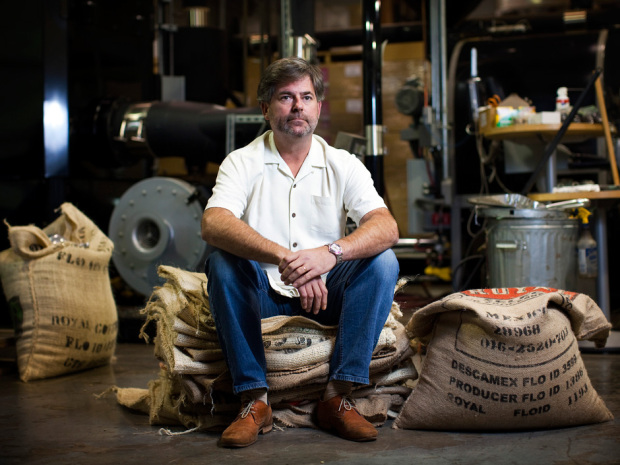
Lloyd Bernhardt, co-founder and chief executive of Vancouver-based Ethical Bean Coffee, says his company, now in its 10th year, is branching out. After establishing a loyal customer base on Canada’s West Coast, the organic, fair trade coffee roaster is setting its sights eastward, as well as south of the border, Mr. Bernhardt says. But it is also looking to technology — his first professional passion, before coffee — to connect its customers with the far-flung, hard-working farmers who grow the beans in places such as Nicaragua and Ethiopia. Mr. Bernhardt spoke with Armina Ligayaabout how Ethical Bean coffee is exploring new markets, with the help of scannable QR codes and mobile phone apps. The following is an edited version of their interview. Read more of this post

Australia’s surfing capital may soon teem with tiny, lethal jellyfish, thanks to warming seas

Australia’s surfing capital may soon teem with tiny, lethal jellyfish, thanks to warming seas

By Gwynn Guilford @sinoceros 6 hours ago

screen-shot-2013-11-05-at-2-40-44-pm screen-shot-2013-11-05-at-2-06-01-pm

Of all the creatures in the world, the Irukandji is among the most fearsome. It’s about as easy to spot as a floating sliver of cellophane. But a mere human brush with these tiny creatures causes hearts to fail and blows out blood vessels in the brain. Even those that survive are racked with suffering so extreme that it’s been given its own name (“Irukandji syndrome”). Fortunately for most, these little guys don’t travel outside a shred of the ocean in northern Australia. Read more of this post

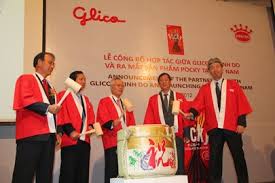
Japan’s Glico pits its popular Pocky against Lotte’s Pepero; Nov. 11 is now considered Pepero day in Korea, on which people exchange the popular snack to show good will or romantic intentions

Glico finds partner for Korean market

Japanese company pits its popular Pocky against Lotte’s Pepero

By PARK TAE-HEE [ojlee82@joongang.co.kr]

Nov 07,2013

download (28)

OSAKA, Japan – In the heart of Osaka, Dotonbori Street can be compared to New York City’s Times Square. One of its main landmarks is a 25-meter (82-foot) electronic display showing a runner coming across the finish line with his arms outstretched. Glico Man, as he is known, has been celebrating his victory in the same spot for nearly eight decades. Glico Man is the symbol of one of Japan’s most famous confectionery companies, which now has big plans to expand its presence in neighboring Korea. In an interview with the JoongAng Ilbo at the company’s headquarters in Osaka late last month, Glico CEO Katsuhisa Ezaki admitted it has taken a long time for the Japanese confectionery company to land in the Korean market despite its geographical closeness.  Read more of this post

Li Ka-shing Sells More Mainland Assets, Eyes Finnish Power Grid

Li Ka-shing Sells More Mainland Assets, Eyes Finnish Power Grid

11-07 10:37 Caijing

The latest sell came as reports say the HK tycoon is interested in purchasing Finland’s electricity distribution work, following a flurry of his investments in Europe.

Li Ka-shing, the richest man in Asia, has sold more of his conglomerate’s assets in the Chinese mainland while on the other hand shows increasing interest in investing in Europe. Changyuan Group, the biggest heat-shrinkable and high-polymer PTC producer in the Chinese mainland, said in a statement on Tuesday that Concord Investment Co., Ltd., its controlling shareholder, a member of Cheug Kong Group has reduced its stake by 5 percent.  Read more of this post

Hezi Leibovich: Life is short, so focus and pull the right levers

Hezi Leibovich Contributor

Hezi Leibovich: Life is short, so focus and pull the right levers

Published 05 November 2013 09:50, Updated 07 November 2013 07:53

We’re on Earth for a very short time and there’s so much to achieve both personally and professionally. Since time is limited and the resources we have to accomplish these achievements are also limited, You need to ask yourself who and what deserves your precious time and resources. It’s important to focus on the people and things that matter and learn to remove the distractions in your life, the time-wasters and things that create noise and stress and add little value to your goals.

Bullseye versus scattergun

A scattergun approach, trying to be all things to all people, only makes you look like a bad shot. For all that effort, you may only get one or two hits and that cost of those hits is high compared to a bullseye approach where you set your sights on a target. Read more of this post

The Four “Cs” of Innovation: cost, convenience, caliber, and creative destruction

NOV 6, 2013

The Four “Cs” of Innovation

Sami Mahroum is Academic Director of Innovation and Policy at INSEAD.

PARIS – Innovation is now widely acknowledged to be a prerequisite for sustainable economic growth. Whether the changes are profoundly disruptive, or merely provide incremental improvements in products, services, or business models, the results boost an economy’s long-run productivity. And innovation is necessary not only for developed economies, but also for emerging markets, which are receiving diminishing returns from simply transposing advanced economies’ best practices. But, while every country needs to innovate, the tried and tested approaches do not work for all markets. Read more of this post

Everything You Think You Know About Thomas Edison Might Be Wrong

Everything You Think You Know About Thomas Edison Might Be Wrong

ALISON GRISWOLD NOV. 6, 2013, 12:53 PM 13,674 8

Thomas Edison did not try 10,000 times before inventing the light bulb, nor did he labor in a dusty workshop by himself. That’s according to David Burkus, author of “The Myths of Creativity,” who says America’s favorite innovation story may have been the result of a tremendous publicity push. In his book, Burkus debunks the popular tale of Edison and what he calls the “lone creator myth.” His claim? That we love the story of the solo-genius, the starving artist, the one brilliant man against the world — even if it’s not always true. Read more of this post

Outsource Your Way to Success: Want to get ahead in life? Pay others to do the boring stuff

November 5, 2013

Outsource Your Way to Success

By CATHERINE RAMPELL

Jon Steinsson and Emi Nakamura do not have enough time to do everything they need to do. They’re recently tenured, highly productive rising stars at Columbia University, as well as parents to an infant. But they have a secret weapon helping them prioritize: Econ 101. One of the oldest, if not entirely intuitive, principles in economics is comparative advantage, developed by the British economist David Ricardo in the early 19th century. As introductory econ students all learn, it explains why countries and companies ought to outsource the production of lower-value goods and services, even if they can produce them more efficiently themselves. Read more of this post

Gerald Ratner – the rise and fall of a rough diamond

November 1, 2013 7:19 pm

Gerald Ratner – the rise and fall of a rough diamond

By Natalie Graham

Gerald Ratner, 63, created a jewellery empire in the 1980s, with 1,500 stores in the UK and 1,000 in the US. Beside Ratners, The Ratners Group consisted of H Samuel, Ernest Jones, and Watches of Switzerland. The entrepreneur is best known for making aspeech at the Institute of Directors in 1991 in which he described one of his products as “total crap”. The remark cost him his business and his job. Before his exit at 43 the company was making profits of £125m a year. Today, he runs the web-based jewellery retail business geraldonline.com and is an after-dinner speaker. Read more of this post

15 Inspirational Books For Entrepreneurs

15 Inspirational Books For Entrepreneurs

NOV. 6, 2013, 5:38 PM 2,049

Every once in a while, you read a book that changes you — inspiring your career, clarifying your goals, challenging your thinking. The right book can give you the courage to start your business, the reality check that you’re not yet ready or the quiet affirmation that you’re not alone in your fears or ambitions. It can set you on your path to success. We asked our expert contributors to name the one book that most influenced and inspired their careers. Their responses ran the gamut from fiction to history to business to self-help books. Here’s a sampling of 15 of our experts on the books that most inspired them and why. Read more of this post

Here’s Why Only Children Are More Successful

Here’s Why Only Children Are More Successful

JENNA GOUDREAU NOV. 6, 2013, 11:32 AM 3,301 2

First-born children perform better in school, have higher IQs, and are more likely seen as high-achieving by their parents, according to a recent study. As the theories go, earlier-born children may be more successful because they get better genes, more parental attention, and more careful parenting. As someone who has no siblings myself, I couldn’t help but wonder: Are “only” children, who are by definition first-born and receive all parental attention, the highest achievers?  Read more of this post

The Biggest Little Secret In Money Management

November 6, 2013

The Biggest Little Secret In Money Management

James Picerno

It happens all the time. A new strategy emerges from the obscure recesses of the research caverns and morphs into an ETF, mutual fund, or a separate account program. Or perhaps it’s outlined on an investor’s blog for all the world to see. Sometimes there are glowing reviews fueled by compelling back-tests. For the most successful strategies that spawn products, there are big inflows of assets. There’s usually plenty of hype too. But when you peel back the details and drill down into the core of the strategy du jour, you’ll typically find a familiar combination of variables: rebalancing with one or more factor tilts. Read more of this post

The Rise and Rise of Yo-Yo Ma

The Rise and Rise of Yo-Yo Ma

11-06 15:53 Caijing

The world’s greatest cellist connects musical traditions from around the world

He has won 16 Grammy Awards,performed for puppets and presidents,and has worked with Bobby McFerrin and the Kalahari Bushmen. He has recorded bluegrass and Baroque, twinned Bach and Kabuki dancing, and saluted Brazil. If it can be done, Yo Yo Ma has done it – and with nothing left to prove, all he can do is break new ground.This month, the living legend comes to Beijing to premiere composer Zhao Lin’s Double Concerto for Cello and Sheng. Another first. Read more of this post

Rich list investing: The top Aussie small cap stocks of the Rich 200

Andrew Heathcote Rich Lists editor

Rich list investing: The top small cap stocks of the Rich 200

Published 06 November 2013 12:19, Updated 07 November 2013 07:53

The BRW Rich 200 are proven stock pickers and many of them have achieved strong gains from small-cap stocks over the past 12 months. In an attempt to provide further insight into the investment preferences of the country’s richest people, BRW has compiled a list of the best-performing small caps buried deep within the Rich 200’s investment portfolios. However, investors should beware before following their lead. The ultra-wealthy buy shares in small companies for many reasons. They may be helping out a friend, trying to learn about a new industry or simply taking a punt with some loose change. Only ASX-listed companies with a market capitalisation of $300 million or less were considered for this list. Many of the companies below have had tumultuous pasts but all are well placed to offer further growth opportunities. Read more of this post

Brett Blundy goes overweight on underwear and buys other half of Bras N Things; His other investments include stakes in homewares chain Adairs, jewellery retailer Diva and tourism venture BridegClimb

Andrew Heathcote Rich Lists editor

Brett Blundy goes overweight on underwear and buys other half of Bras N Things

Published 06 November 2013 10:24, Updated 07 November 2013 07:53

678b7e9c-4671-11e3-aa13-a5e23a2b1e3a_Screen Shot 2013-11-04 at 2.12.20 PM (1)--646x363

Brett Blundy is back in full control of the Bras N Things chain. Singapore resident and Rich 200 list member Brett Blundy has bought back the other half of women’s underwear chain Bras N Things after selling it to private equity investors in 2008. The purchase price is undisclosed, but last year’s annual report shows the business had revenue of $153 million in 2012 and net assets of $127 million. An IPO of Bras N Things was planned in 2011 but never eventuated. It had been expected to raise about $400 million. Read more of this post

Forget the huddled masses: Treating immigrants as a charity case is not working: time to change course

Forget the huddled masses: Treating immigrants as a charity case is not working: time to change course

Nov 9th 2013 |From the print edition

20131109_USD000_0

IMMIGRATION reform in America is stuck. Blame Emma Lazarus, who wrote the 1883 sonnet anointing the Statue of Liberty a “Mother of Exiles”, urging the old world to send “your tired, your poor, your huddled masses yearning to breathe free”.

Lazarus is only accidentally to blame for the partisan deadlock that grips immigration reform, raising the ghastly prospect that a broken system will remain unfixed until after the 2014 mid-term elections, and possibly the presidential contest of 2016. Lazarus wrote her poem to help raise funds for the statue’s pedestal. She ignored the stated purpose of the colossal sculpture (a French-built homage to America’s republican government) focusing instead on her concern over Jewish pogroms in Russia. Her words were almost forgotten, surviving on a plaque on an inner wall of the pedestal. They achieved fame decades after her death, as the statue became associated with the immigration station on Ellis Island and Nazi persecution made refugee policies urgently political. In 1945 the poem, set in bronze, was moved to the statue’s main entrance. Soon afterwards it was put to music by Irving Berlin. Read more of this post

Enabling diabetes patients to sleep soundly; Excess insulin levels can be fatal when they occur at night. NightSense aims to remove the fear

Enabling diabetes patients to sleep soundly

Excess insulin levels can be fatal when they occur at night. NightSense aims to remove the fear.

5 November 13 13:14, Gali Weinreb

Gadi Kan-Tor, Yoav Kan-Tor and Shy Hefetz have developed a number of medical devices in the past, most of which are related to diabetes treatment. Gadi Kan-Tor, who himself suffers from diabetes, served as a volunteer guinea pig for product trials. NightSense, a product that aims to immediately detect sudden drops in blood-sugar levels (hypoglycemia) during the night may be their first product to break through the technological barrier and reach the market. Read more of this post

Henry Blodget: If You Think Twitter’s IPO Price Is Silly, You Don’t Get It

If You Think Twitter’s IPO Price Is Silly, You Don’t Get It

HENRY BLODGET NOV. 6, 2013, 10:59 AM 15,674 28

Twitter’s IPO is ready to price, and, predictably, many pundits are going on about how stupid investors are to buy the stock. Twitter is losing money, these pundits observe. It’s a social network, like the disastrous Facebook. Twitter hasn’t proven anything yet. Twitter investors are so deluded and ridiculous, these pundits roar, that they’ve already agreed to buy Twitter stock at $25 a share! (A $17 billion valuation.) Whatever you do, don’t get taken in by this. Anyone who bashes Twitter because it’s “losing money” or “is like Facebook” or hasn’t “proven anything” is the most dangerous form of market pundit: Articulate enough to sound knowledgeable to someone who knows absolutely nothing, but so unsophisticated that he or she can’t be bothered to ask why some of the smartest investors in the world are so excited about Twitter. In case you’re curious about the latter — why so many smart investors are so willing to pay up for Twitter, and why the stock is likely to trade much higher than the IPO price (probably into the mid $30s or $40s) — here are some of the key points. (And to be super-clear: This isn’t investment advice, and I couldn’t care less if you buy the stock. I in fact think you shouldn’t buy the stock, because I think stock-picking is generally a stupid strategy, especially for individuals. I’m just trying to help you understand why OTHER smart investors are buying the stock).

Why so many smart investors are so excited about Twitter Read more of this post

Twitter isn’t profitable. And neither are these other huge public companies

Twitter isn’t profitable. And neither are these other huge public companies

BY DAVID HOLMES 
ON NOVEMBER 6, 2013

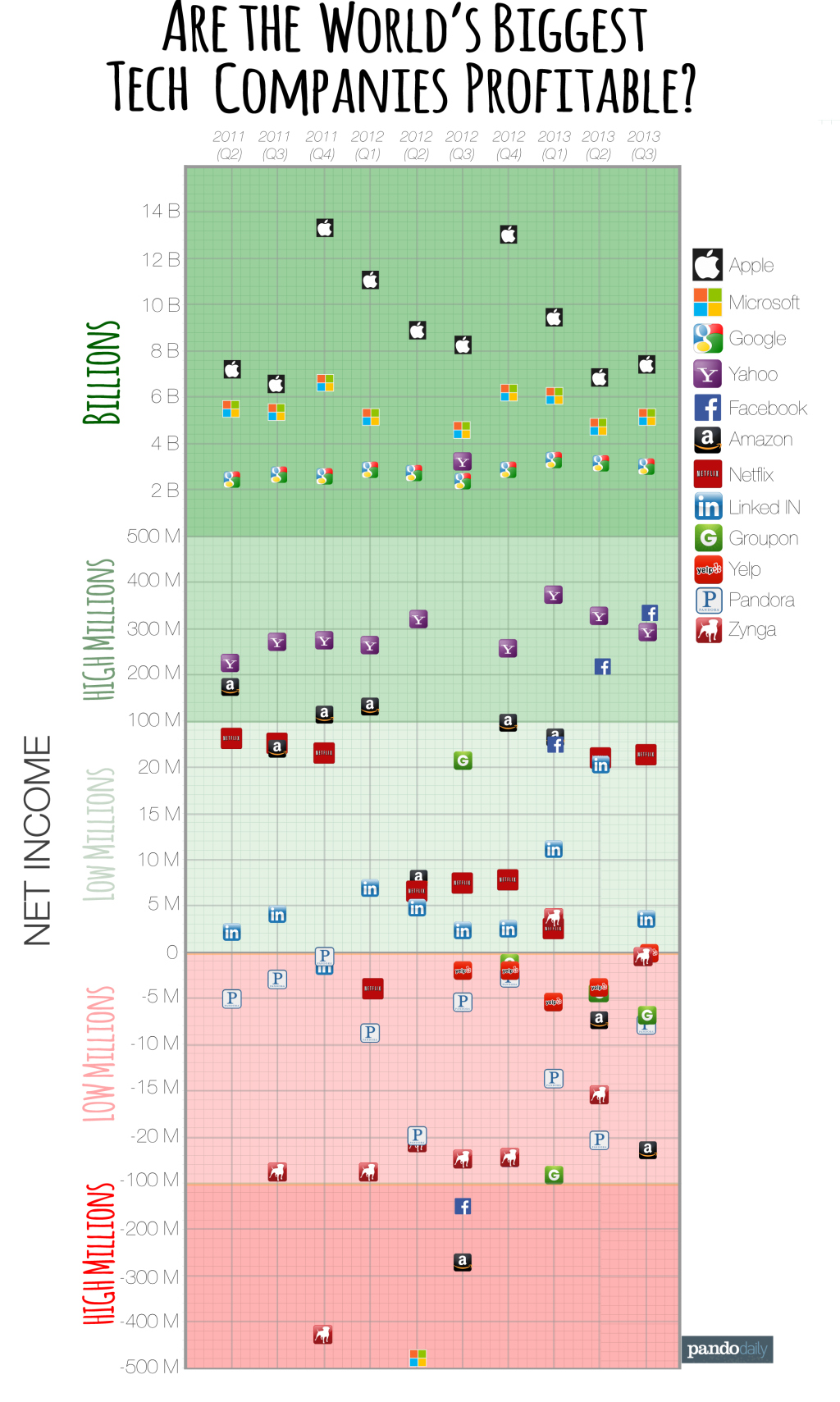
In the weeks leading up to Twitter’s IPO, the biggest critique leveled at the company is its lack of profits. It’s not exactly a frivolous complaint. And today that grievance was aired even louder after news broke that Twitter was likely to price its IPO between $25 and $28 a share, leading to a market value of up to $16 billion. Crazy, right? How can a company be valued so high when it isn’t even, you know, turning a profit? Well, that all depends on how much you expect Twitter to grow in the coming years. Plenty of observers, like Business Insider’s Henry Blodget, think judging a company on current profitability alone is shortsighted, and that Twitter’s projected future growth makes it a bargain at $28 a share. Blodget compares Twitter to LinkedIn, another social network operating at a loss at the time of going public that’s been consistently profitable now for the past 10 quarters. If nothing else, Twitter’s lack of profitability hardly makes it unique among giant tech companies. In the graphic below, NYU’s Simran Khosla charts the net income of 12 big public companies over the past ten quarters. Some, like Apple, never posted a loss during this period. Others, like Pandora, have almost never been profitable during this time. That means that if Twitter does begin to turn a profit by 2015, as analyst reports compiled by Bloomberg predict, it will still be ahead of plenty of other hyped public companies:

flightless-birds-copy2Profitable2 copy

Twitter: It can help overthrow dictators. But can it make money?

Sure, Twitter has great power and reach, but can it make money? Wall Streeters are concerned

By Associated Press, Published: November 6

NEW YORK — It can help overthrow dictators. But can it make money? Protesters famously used Twitter to organize during the Arab Spring three years ago. President Barack Obama announced his 2012 re-election victory using the short messaging service. Lady Gaga tweets. So does the pope. But for all its power and reach, Twitter gushes losses — $65 million in the third quarter, nearly three times more than it lost a year ago. Read more of this post

How your accounting software could convince your bank to give you a loan: Intuit CEO explains

Michael Bailey Deputy editor

How your accounting software could convince your bank to give you a loan: Intuit CEO explains

Published 07 November 2013 11:08, Updated 07 November 2013 12:12

Accounting software vendors must tread carefully in the era of big data – the information they collect is highly private – however Intuit, the provider of Quickbooks, has launched a division where it claims customers’ books can help them get business loans from otherwise unwilling banks. Read more of this post

China Premier Li Keqiang: “Stirring up vested interests is more difficult than stirring up one’s soul”; In China, Gov’t and Business Go Together Like Horse and Carriage – Sort of

11.07.2013 19:10

Closer Look: In China, Gov’t and Business Go Together Like Horse and Carriage – Sort of

It’s love, one entrepreneur says, but not marriage, and making progress on improving the relationship will be tricky

By staff reporter Gao Yu

(Beijing) – Premier Li Keqiang met with scholars and entrepreneurs on October 31 in the capital to discuss the economic situation. It was the third such meeting Li has held since taking office in March. Read more of this post

Domestic films set to dominate box office; This year, Chinese films accounted for 58% of box-office revenue, compared with 48.5% in 2012

Domestic films set to dominate box office

Updated: 2013-11-05 10:50

By Huang Ying ( China Daily)

0013729e3c9013e2a36810

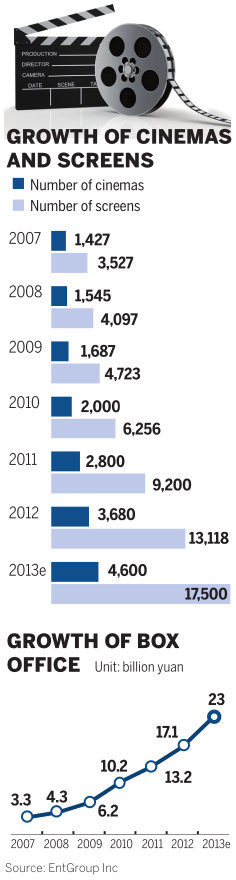
Domestic movies are expected to conquer the Chinese market this year, after being beaten by importedproductions for the first time in four years in 2012, industry observers said. Read more of this post

The debate on lifting equity share control

The debate on lifting equity share control

Updated: 2013-11-07 10:37

By Wayne Xing ( chinaautoreview.com)

This year’s Global Automotive Forum held in Wuhan triggered a heated debate among automotive circles about whether China needs to relax the 50:50 equity control policy over investment by foreign automakers in whole vehicle assembly plants. Read more of this post