Risk Calculator for Cholesterol Appears Flawed; The calculator appears to greatly overestimate risk, so much so that it could mistakenly suggest that millions more people are candidates for statin drugs

November 17, 2013

Risk Calculator for Cholesterol Appears Flawed

By GINA KOLATA

Last week, the nation’s leading heart organizations released a sweeping new set of guidelines for lowering cholesterol, along with an online calculator meant to help doctors assess risks and treatment options. But, in a major embarrassment to the health groups, the calculator appears to greatly overestimate risk, so much so that it could mistakenly suggest that millions more people are candidates for statin drugs. Read more of this post

Meet 2014’s Blockbuster Drugs

Meet 2014’s Blockbuster Drugs

November 14, 2013

These five medicines are predicted to be big moneymakers:

GA101
Roche’s (RHHBY) experimental leukemia drug beat the company’s top seller, Rituxan, in a trial that may position it as the older treatment’s heir. Annual revenue is forecast to reach $1.4 billion in 2018, based on a Bloomberg survey of six analysts. Read more of this post

Medical Device Makers Look East

Medical Device Makers Look East

By Bruce Einhorn November 14, 2013

Like a lot of people in the medical-device business, Larry Jasinski built his career in Massachusetts. Now he spends much of his time in Israel. Last year the former Boston Scientific (BSX) exec became chief executive officer of Argo Medical Technologies, a 42-person startup in Yokneam Illit, Israel. Argo’s main product is the ReWalk, an exoskeleton for helping paraplegics walk again. The company’s research facility is at a Yokneam industrial park, which Jasinski says has become a center for health-care innovation. “Everybody here is a medical-device company,” he says. In Israel, “we are on the cusp of a golden age of medical-device investment,” says Jonathan Medved, founder and CEO of Jerusalem-based OurCrowd, a crowdfunding site that has invested in Argo. “People sense this is where the money is.” Read more of this post

Kidney Artery Stents Fail to Provide Greater Heart Help

Kidney Artery Stents Fail to Provide Greater Heart Help

A procedure to clear and prop open clogged kidney arteries didn’t offer a cardiovascular benefit to patients more than drug therapy, researchers said, underscoring the need to use medicines first to reduce heart disease. The study released today builds on two previous trials that also found the procedure known as renal stenting was no better than aggressive drug therapy. Doctors cited flaws in the original research and continued to perform the procedures since clogged renal arteries have been linked to high blood pressure, kidney damage and long-term complications. Read more of this post

Hospitals Try Yogurt to Prevent Infections in Patients; For people on antibiotics, probiotics can stymie a common, virulent bug

Hospitals Try Yogurt to Prevent Infections in Patients

For people on antibiotics, probiotics can stymie a common, virulent bug

LAURA LANDRO

Nov. 17, 2013 4:07 p.m. ET

At Holy Redeemer Hospital in Meadowbrook, Pa., a worrisome trend emerged in 2011: an uptick in cases of one of the most virulent hospital infections, despite measures to battle the bug by scrubbing surfaces with bleach and isolating affected patients. But the hospital was able to drive down cases last year after adding a new weapon to its arsenal: probiotics, the small organisms that help maintain the natural balance of bacteria in the intestines. Read more of this post

Here’s What Your Operation Will Really Cost; Intermountain Healthcare extends data-driven approach to reducing costs

Here’s What Your Operation Will Really Cost

Intermountain Healthcare extends data-driven approach to reducing costs

MELINDA BECK

Nov. 17, 2013 4:07 p.m. ET

IV-AA518D_RECOR_G_20131113160022

Brent C. James may be starting another medical revolution. As chief quality officer for Intermountain Healthcare, a Salt Lake City-based network of 22 hospitals and 185 clinics in Utah and Idaho, Dr. James has been using electronic records to improve care and cut costs since the 1980s. Read more of this post

Drug companies in Japan invest in curing diseases of the poor

Drug companies in Japan invest in curing diseases of the poor

Nov 16th 2013 |From the print edition

JAPAN’s pharmaceutical firms are an inventive bunch: only the American and British drugs industries produced more new medicines between 2005 and 2008. But their record on healing the diseases of the poor is not so good. The Access to Medicine Foundation, a non-profit group, tracks drug firms’ efforts to serve patients in developing countries; and in its ranking of the 20 biggest ones, Japanese firms occupy four of the bottom six rungs. Read more of this post

Biotech Bubble Watch 2014

Biotech Bubble Watch 2014

November 14, 2013

With valuations at historic highs, the industry’s bull run is looking frothy. Investors should brace for a correction, though not a 2000-like bust.

health_biotechgraphic47_970b

Big Pharma’s Patent Cliff

Big Pharma’s Patent Cliff

November 14, 2013

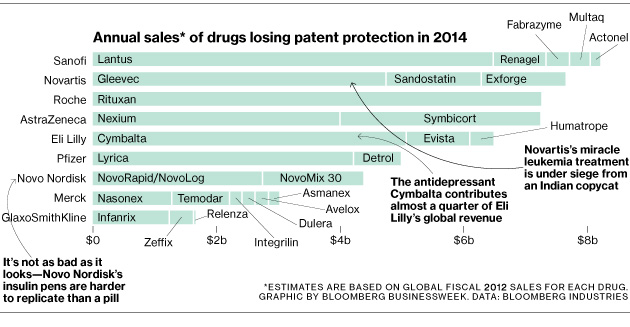
Drugs going off-patent in 2014 contribute just under $50 billion in pharmaceutical industry revenue. Not all products losing protection face imminent competition from generics; biological products and drugs delivered by devices are best poised to extend their money-spinning streak.

health_drugpatentchart447_630

Where does success come from?

Where does success come from?

by Kate Matsudaira, Founder, CTO at PopForms on Oct 25, 2013

You go to meetings. You process your inbox. You might make a presentation here and there. You certainly seem busy. But I bet if I asked your team what it is you do all day long, most of them would say, “I have no idea”. And come to think of it, do you know how exactly they spend every day?
In today’s new generation of tech company, leadership and responsibility is more distributed than ever before. People are expected to get the job done, without someone watching or directing every move all along the way. Teams are focused on results, not roles.
So as leaders in increasingly flat organizations without the traditional hierarchy and process of the past, how can we make sure we are still leading effectively? What’s the balance between too hands-on and too hands-off?
Your job as a leader is to let your team do what they’re good at, but you can only give over autonomy once you’ve given them the tools they need and trust that they can execute without you watching over their shoulder. The talk will cover strategies to help you build trust with your team and set up the right guard rails to loosen your grip on the steering wheel and give people what they want in a leader.

Toy Story: America is still the birthplace of inventions. But for how long?

November 17, 2013

Toy Story

By BILL KELLER

MY model American entrepreneur of the moment is Cheong Choon Ng. He has not attracted a $3 billion bid from Facebook, like the young inventors of the photo-sharing service Snapchat. Wall Street is not cooking up an I.P.O. But Ng is a star in my household. He is the creator of the Rainbow Loom, which in the middle-schooler market is the hottest device not called iSomething. If you have noticed that half the children in America — and a fair number of adults — seem to be sporting bracelets that are braids of brightly colored rubber bands, then you have seen the fruits of the Rainbow Loom. Read more of this post

The Bully Pulpit: Theodore Roosevelt and the Golden Age of Journalism; America’s first muckrakers: A president who saw the benefits of co-operating with the press

America’s first muckrakers: A president who saw the benefits of co-operating with the press

Nov 16th 2013 |From the print edition

The Bully Pulpit: Theodore Roosevelt and the Golden Age of Journalism. By Doris Kearns Goodwin. Simon & Schuster; 928 pages; $40; Viking; £20. Buy fromAmazon.comAmazon.co.uk

THE dance between politicians and the press can appear awkward, largely because both sides want to be the ones who are leading. Doris Kearns Goodwin, a popular scholar of American politics, traces the early days of this fraught negotiation in “The Bully Pulpit”. Here she tells the story of Theodore Roosevelt, America’s 26th president, who at the turn of the 20th century became the first to install a press room in the White House. Savvy and larger than life, he understood the benefits of co-operating with the press. Yet it was the very “muckraking” of these newly powerful journalists that exacerbated tensions within his Republican Party. Read more of this post

Taking Over from an Incompetent Team Leader

Taking Over from an Incompetent Team Leader

by Roger Schwarz  |   2:00 PM November 18, 2013

Becoming the leader of an existing team can be challenging, but taking over from an incompetent leader is more difficult. Incompetent leaders are not only ineffective at achieving the team’s goals. They think and act in ways that detract from and undermine the team’s performance, working relationships, and well-being. Consequently, in addition to forging agreement on the normal issues of mission, goals, and roles, incoming leaders often find their new team in disarray, dealing with conflict and stress. Building a stronger team means addressing these emotionally-laden issues. There are several steps leaders facing this situation can take: Read more of this post

Lincoln’s Gettysburg Address a powerful second act : author

Lincoln’s Gettysburg Address a powerful second act : author

Mon, Nov 18 2013

By Jeffrey B. Roth

GETTYSBURG, Pennsylvania (Reuters) – As Americans on Tuesday mark the 150th anniversary of the Gettysburg Address, which remains one of the best-known pieces of political oratory in the nation’s history, many will likely overlook one small but important detail. Neither President Abraham Lincoln nor his listeners regarded the 272-word tribute to the soldiers who died at the pivotal battle of the U.S. Civil War, famously beginning “Four score and seven years ago,” as the main event on November 19, 1863. Read more of this post

Leonardo Da Vinci’s wacky piano is heard for the first time, after 500 years

Leonardo Da Vinci’s wacky piano is heard for the first time, after 500 years

November 19, 2013 – 11:30AM

NG_Vinciwide4-20131118132723799848-620x349

Take a bow: The viola organista’s strings are played in the same way as a cello. Photo: Tomasz Wiech/AFP

A bizarre instrument combining a piano and cello has finally been played to an audience more than 500 years after it was dreamt up Leonardo da Vinci. Da Vinci, the Italian Renaissance genius who painted the Mona Lisa, invented the ‘‘viola organista’’ – which looks like a baby grand piano – but never built it, experts say. The viola organista has now come to life, thanks to a Polish concert pianist with a flair for instrument-making and the patience and passion to interpret da Vinci’s plans. Read more of this post

Kasparov on India’s Importance to Chess

November 18, 2013, 4:50 PM

Kasparov on India’s Importance to Chess

By Sriram Balasubramanian

Viswanathan Anand, the Indian World Chess Champion and Magnus Carlsen, the current World Number One chess player, are battling it out at the World Chess Championships in Chennai southern India. The score in games stands at 4-2 in favor of Carlsen, who won the two most recent confrontations. The first four games of the championship were drawn. There are six more games to go — including Monday’s game — and the first player to reach 6.5 points will be crowned the new World Chess Champion. Carlsen was once trained by former World Chess Champion, Russian Garry Kasparov. Kasparov, who is now a Russian pro-democracy leader and global human-rights activist, is regarded as one of the greatest players chess has ever seen. He was World Chess Champion for 15 years between 1985 and 2000 in the classical format and retired from the game in March 2005 as the world’s highest rated chess player. He holds the record for the longest time as the Number One rated player in the world, a title he held between 1986 and 2005. Beyond the chess world, he is a political activist in Russia, ran as a candidate in the last Russian Presidential elections, and is a board member of the New York-based Human Rights Foundation and chairman of its international council. He is running to become president of FIDE, the world governing chess body, in 2014 and was in India for part of this year’s championship. In an interview with The Wall Street Journal, he spoke about the championships, the growth of chess in India, the country’s democratic history and the legacy of Viswanathan Anand Edited excerpts: Read more of this post

It’s the root of all evil, after all ; Doctors and lawyers are especially prone to it but everyone is at risk from money addiction

Jingling pockets could bring on a headache

November 20, 2013

David Wilson

Money, money, money – how much do you dwell on the stuff? Excessive desire for money robs people of their humanity, according to the famously frugal Pope, who recently suspended a ”bling bishop” for alleged lavish spending. Addiction to money is widespread, according to personal finance expert Jim Miller. Sufferers rashly prioritise money over options they value more: time with family, exploring their true passions, even having a family, Miller says. Spurred by the belief that money fixes all worries, in their acquisitive zeal they ”stomp on their passions and values”, he says, adding that doctors and lawyers are especially prone to money addiction. Read more of this post

If You’re Going to Change Your Culture, Do It Quickly

If You’re Going to Change Your Culture, Do It Quickly

by Brad Power  |   8:00 AM November 18, 2013

Culture change is a bear. The conventional wisdom is that it takes years to change a culture, defined as the assumed beliefs and norms that govern “the way we do things around here.” And few organizations explicitly use culture as a way to drive business performance, or even believe it could make sense to do so. The logic usually works the other way — make specific changes in processes, and then hope that, gradually, the culture will change. Read more of this post

How to protect yourself from ‘prediction addiction’; “Prediction addiction” is hard-wired into our brains. The most successful investors resist it

How to protect yourself from ‘prediction addiction’

Comment: “Prediction addiction” is hard-wired into our brains. The most successful investors resist it, says Tom Stevenson

By Tom Stevenson

11:43AM GMT 18 Nov 2013

In a few weeks’ time a Christmas tradition as familiar as brandy butter and tinsel will kick off: the annual round of market predictions. It’s a bit of fun and in a year’s time no one will remember anyone’s forecasts. This is just as well because the one really predictable thing is that most of them will turn out to be horribly wrong. Read more of this post

How an Ontario family firm moved beyond making screen door grilles

How an Ontario family firm moved beyond making screen door grilles

Mary Teresa Bitti | 18/11/13 1:27 PM ET

bobpeacock

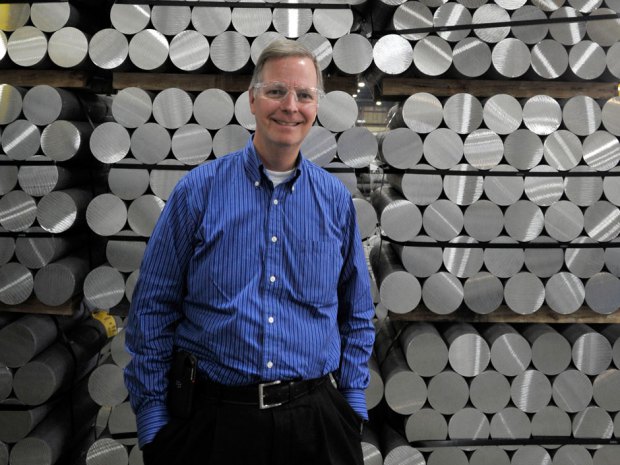
ALMAG Aluminum is celebrating 60 years in business. No easy feat for the Brampton, Ont.-based company considering the province’s manufacturing industry is still recovering from the economic collapse of 2008. Still, the one-time maker of decorative aluminum door grilles used the downturn to create a new strategic growth plan that allowed it to break into the U.S. market and set itself apart as a can-do company ready to take on challenges its competitors won’t. In a wide-ranging interview, second-generation president and CEO Bob Peacock explains the new strategy, what it means for ALMAG and how being a family-owned and operated business has led to the company’s longevity. Here is an edited version of that conversation. Read more of this post

Economics explains our world – but economics degrees don’t; The curriculum is increasingly remote from what the experts now know

November 17, 2013 7:46 pm

Economics explains our world – but economics degrees don’t

By Wendy Carlin

The curriculum is increasingly remote from what the experts now know, says Wendy Carlin

This could be a golden age for economics. Recent advances in theory, economic history and quantitative methods have provided tools to address pressing issues of inequality of opportunity, financial instability and climate change. At airport bookshops, Freakonomics, Why Nations Fail and Irrational Exuberance compete with John Grisham’s latest. Students flock to introductory courses. Read more of this post

Doing successful business in China isn’t about culture

Michael Bleby Reporter

Doing successful business in China isn’t about culture

Published 19 November 2013 10:29, Updated 19 November 2013 13:05

It doesn’t take much to throw a spanner in the works of Chinese negotiations. Just ask Ben Hammond. The chief executive of ASX-listed Centrex Metals – which has sealed three joint-venture deals with Chinese partners to mine iron ore and base metals in South Australia and NSW – has run into plenty of those hurdles. One, he says, is translation errors. Read more of this post

Cyclones and climate change: The new normal? Physics suggests that storms will get worse as the planet warms. But it is too early to tell if it is actually happening

Cyclones and climate change: The new normal? Physics suggests that storms will get worse as the planet warms. But it is too early to tell if it is actually happening

Nov 16th 2013 |From the print edition

WAS typhoon Haiyan the strongest recorded storm to make landfall? Meteorologists will never know. Reliable records go back only a few decades. But it is surely one of them. Besides the devastation and the death toll, one way to assess its potency is to compare it with Katrina, the hurricane that devastated New Orleans in 2005. At its most intense, Haiyan’s peak wind speeds were probably greater than 300kph (190mph). The best estimate for Katrina, when it hit land, is around 200kph. Read more of this post

Cottage industries: Why so many Britons are working from home, and where

Cottage industries: Why so many Britons are working from home, and where

Nov 9th 2013 |From the print edition

20131109_BRM912

IN THEIR medieval heyday places such as Moreton-in-Marsh, a market town in the Cotswolds, hummed with the sound of spinning wheels in household workshops. War and industrialisation killed off that home-grown industry. But now other ones are growing. Read more of this post

Coldblooded Does Not Mean Stupid; Recent research revealing that reptiles’ brains are less primitive than previously thought could offer new insights on cognitive evolution

November 18, 2013

Coldblooded Does Not Mean Stupid

By EMILY ANTHES

Humans have no exclusive claim on intelligence. Across the animal kingdom, all sorts of creatures have performed impressive intellectual feats. A bonobo named Kanzi uses an array of symbols to communicate with humans. Chaser the border collieknows the English words for more than 1,000 objects. Crows make sophisticated tools, elephants recognize themselves in the mirror, and dolphins have a rudimentary number sense. Read more of this post

CFOs Should Step in as Strategic HR Leaders

November 07, 2013

CFOs Should Step in as Strategic HR Leaders

Finance chiefs of growth companies need to direct human resources strategy, says a leading consultant.

Although it falls outside their traditional job description, CFOs of growth companies must often play the role of human resources strategist. The responsibilities related to HR — managing performance, designing the leadership team for the next stage of growth and creating clear objectives for all employees — are just as important as having sufficient liquidity. Read more of this post

Case study: How to keep the energy when your growing company starts moving beyond the mid-market

Case study: How to keep the energy when your growing company starts moving beyond the mid-market

Published 18 November 2013 10:08, Updated 18 November 2013 10:09

Brendan Swift

c6230c18-41ad-11e3-979a-ee7d203b5f47_778749576--646x363

Tom Roche, managing director of SNP Security, says the company excels at embracing technological changes. Photo: Rob Homer

When it comes to security services, SNP Security has its market covered: security officers, mobile patrols, alarm response, disaster-proof monitoring and electronic security form just part of its offering. Read more of this post

Bill Gates Can’t Build a Toilet: High-tech $1,000 bathroom gadgets won’t help the world’s poor

November 18, 2013

Bill Gates Can’t Build a Toilet

By JASON KASS

IN addition to eradicating polio in India and starting the personal computer revolution, the Seattle Superman of our age has managed to make going to the bathroom a cause célèbre. Five years ago, if I’d told people I worked on toilets, they would have surely assumed I was a plumber. Now, they exclaim: “Oh! Isn’t Bill Gates into that?” More than one-third of the world’s population, approximately 2.5 billion people, doesn’t have access to a toilet. The Gates Foundation and a handful of celebrities like Matt Damon deserve credit for putting this sanitation crisis on the map. Read more of this post

Belgian telco chief fired for comparing PM to ‘small child asking when Santa’s coming’

Belgian telco chief fired for comparing PM to ‘small child asking when Santa’s coming’

Jones Hayden and John Martens, Bloomberg News | 18/11/13 10:18 AM ET

Belgacom SA installed interim leadership and began a search for a new chief executive officer after Didier Bellens was fired over comments he made about Prime Minister Elio Di Rupo and the phone company’s dividends. The carrier yesterday put Chairman Stefaan De Clerck and Chief Financial Officer Ray Stewart in charge temporarily while the board comes up with a shortlist of CEO candidates with the help of a headhunter. The roster will go to the government, which owns 53.5% of Belgacom, for a decision. Read more of this post

Bacardi Campaign Focuses on Resilience, Rather Than Rum; A new advertising campaign chronicles the tumult Bacardi has weathered since it was introduced in Cuba in 1862

November 17, 2013

Bacardi Campaign Focuses on Resilience, Rather Than Rum

By ANDREW ADAM NEWMAN

IT is the time of the year when Bacardi typically promotes its recipe for holiday punch, but a new advertising campaign is instead promoting how the rum brand rolls with the punches. The global campaign, “Untameable,” highlights the tumult that Bacardi has faced since its introduction in Cuba in 1862, like a fire in 1880, Prohibition beginning in 1920 in the United States, an earthquake in 1932 that destroyed facilities and the revolutionary government led by Fidel Castro that seized Bacardi’s Cuban assets in 1960. Read more of this post