Dr. Francis Collins: Politics on the Frontier of Science; Major breakthroughs are possible in neuroscience, cancer, AIDS and Parkinson’s—if Congress learns to set priorities

Dr. Francis Collins: Politics on the Frontier of Science

Major breakthroughs are possible in neuroscience, cancer, AIDS and Parkinson’s—if Congress learns to set priorities.

JOSEPH RAGO

Nov. 8, 2013 6:44 p.m. ET

If the early years of the 21st century often feel like a retread of the 1970s—economic anxiety, turmoil overseas, American leaders who don’t seem to understand what the problems are much less how to fix them—the geneticist Francis Collins suggests less dispiriting resemblances. The “arrow of progress that we’re riding in biomedicine” took flight 40 or so years ago but is traveling faster and further now. Read more of this post

Is It OK to Yell at Your Employees?

Is It OK to Yell at Your Employees?

by Michael Schrage  |   12:00 PM November 8, 2013

Steve JobsJeff Bezos. Martha Stewart. Bill Gates. Larry Ellison. Jack Welch. Successful. Visionary. Competitive. Demanding. And each with a well-deserved reputation for raising their voices. They yelled. Yelling was an integral part of their leadership and management styles.

Is that bad? Is that a flaw?

Harvard Business School recently published and popularized a case study of Sir Alex Ferguson, Manchester United’s recently retired manager and the most successful coach in English Premier League history. Ferguson was a fantastic leader and motivator. But Sir Alex was particularly famous for his “hair dryer treatment”: When he was angry with his players, he shouted at them with such force and intensity it was like having a hair dryer switched on in their faces. Read more of this post

Robert Shiller: Is economics a science? Critics of ‘economic sciences’ sometimes refer to the development of a ‘pseudoscience’ of economics, arguing that it uses the trappings of science, like dense mathematics, but only for show

Is economics a science?

Critics of ‘economic sciences’ sometimes refer to the development of a ‘pseudoscience’ of economics, arguing that it uses the trappings of science, like dense mathematics, but only for show

Robert Shiller

theguardian.com, Wednesday 6 November 2013 16.22 GMT

I am one of the winners of this year’s Nobel Memorial Prize in Economic Sciences, which makes me acutely aware of criticism of the prize by those who claim that economics – unlike chemistry, physics, or medicine, for which Nobel prizes are also awarded – is not a science. Are they right? One problem with economics is that it is necessarily focused on policy, rather than discovery of fundamentals. Nobody really cares much about economic data except as a guide to policy: economic phenomena do not have the same intrinsic fascination for us as the internal resonances of the atom or the functioning of the vesicles and other organelles of a living cell. We judge economics by what it can produce. As such, economics is rather more like engineering than physics, more practical than spiritual. Read more of this post

Australis’s blue-chip CEOs win kudos from their peers for their entrepreneurial flair

Leo D’Angelo Fisher Columnist

Blue-chip CEOs win kudos from their peers for their entrepreneurial flair

Published 08 November 2013 12:19, Updated 08 November 2013 14:01

d45dfb14-4813-11e3-bca4-8651e21e9e85_565816877a_6_0_2862300789--646x363

Richard Goyder’s resilience, resolve and purpose are central to the Wesfarmers’ ‘culture of trying to do things the right way’. Photo: Claire Martin

It is often remarked upon that when it comes to running a nimble company that understands its markets, is quick to exploit (or better, still lead) business and commercial trends, embraces change and inspires its employees, entrepreneurs provide the template for big business to follow. Large corporations can be fixed in their ways and changing strategy or approach can be as challenging as growing a third leg. Add to this the fact that large companies have slashed their internal management resources to the bone in a seemingly panicked response to the unpredictable economy, and many big companies simply don’t have the capacity, much less the interest, to create and realise a vision for the future. The prevailing attitude in corporate Australia seems to be: when in doubt, just keep cutting. Which is why AFR BOSS magazine provides some welcome and reassuring news in its annual Most Respected Companies rankings for 2013. The List demonstrates that blue-chip chief executives can be as entrepreneurial as the most audacious and dextrous entrepreneur. More to the point, they understand that the future belongs to those companies that can think and behave entrepreneurially. Read more of this post

The mouthy airline chief who annoyed too many passengers; Ryanair’s polarising public face may now move off the radar

November 8, 2013 7:02 pm

The mouthy airline chief who annoyed too many passengers

By Andrew Parker and Jamie Smyth

Ryanair’s polarising public face may now move off the radar, say Andrew Parker and Jamie Smyth

“Michael. Big bollocks. Loudmouth. You’ll find me not very sensitive.” That is howMichael O’Leary replied to a question from the Financial Times two years ago about how he preferred to be addressed. And this is what the chief executive of Ryanair – arguably Europe’s most reviled airline – said back then about the case for being nicer to its customers: “Couldn’t possibly be nicer … Our service consists of the lowest fare, an on-time flight on a brand-new aircraft. Anything over that: go away,” he declared, amid some trademark expletives. Read more of this post

South Korea’s Spicy Kimchi Index to Rival Big Mac

South Korea’s Spicy Kimchi Index to Rival Big Mac

By Meeyoung Cho on 3:49 pm November 8, 2013.
If the Economist magazine’s Big Mac Index is too fattening, South Korea may have the answer with a Kimchi Index tracking the cost of ingredients in the pungent cabbage dish that is gaining fans worldwide as a healthy “superfood.” Kimchi-making season has just started in the Asian country and a shortage of locally produced cabbage has been enough to trigger hand-wringing editorials and the import of what Koreans regard as inferior Chinese cabbage to make their national dish. South Korea’s agriculture ministry launched the index on Friday, saying it would be published weekly to alert consumers if prices proved to be “seriously volatile.” Read more of this post

Investors’ love of the familiar may be dangerous

November 8, 2013 7:07 pm

Investors’ love of the familiar may be dangerous

By Jonathan Eley

Why did the Royal Mail flotation capture the public imagination in the way it did? The pricing was certainly attractive, the dividends were appealing and the marketing was persuasive – but a new study suggests that brand familiarity was a big factor. When it comes to investing, familiarity breeds fondness, according to research carried out by Investec Wealth & Investment. The wealth manager questioned more than 2,000 people with a propensity to invest and found that over half were more likely to buy shares in well-known companies. A similar proportion said they would continue to hold such shares even if they performed poorly. Read more of this post

Large retail shops change consumers’ shopping pattern; E-Mart, Korea’s largest discount store chain, said its shop in Chang-dong located in the north part of Seoul, will mark its 20th anniversary

Large retail shops change consumers’ shopping pattern

Sohn Dong-woo, Lee Yu-jin

2013.11.08 16:35:00

E-Mart, Korea’s largest discount store chain, said Friday its shop in Chang-dong located in the north part of Seoul, will mark its 20th anniversary next Tuesday.
The 20-year-old retail shop and the advent of followers grew rapidly for a short period, changing the nation’s retail industry and consumers’ shopping practices completely. Large retail shops take up a significant part of Korea’s retail industry. Their market value reaches 38.8 trillion won ($36.44 billion), larger than that of department stores with 29.1 trillion won. The number of such shops amount to 470 in Korea and 627, including those outside Korea.  Read more of this post

122 Korean SMBs to go under restructuring

122 SMBs to go under restructuring

Lee Jin-myung

2013.11.08 15:56:54

South Korea’s 112 small and mid-sized businesses (SMBs) will face restructuring. The Financial Supervisory Service (FSS) along with creditor banks conducted credit risk assessment of 1,502 SMBs with weaker financials Friday and thereby rated 54 companies as grade C, a rating reserved for companies that need workout, and 58 companies as grade D, a rating for those that need to go under court receivership or shut down business. The total number of SMBs subject to restructuring was up 15.5 percent from a year ago to the highest level unseen since 2010.  Read more of this post

Why Has Japan’s Massive Government Debt Not Wreaked Havoc (Yet)?

Why Has Japan’s Massive Government Debt Not Wreaked Havoc (Yet)?

Charles Y. HoriokaTakaaki NomotoAkiko Terada-Hagiwara

NBER Working Paper No. 19596
Issued in October 2013
In this paper, we present data on trends over time in government debt financing in Japan since 2010 with emphasis on the importance of foreign holders and speculate about the determinants of those trends. We find that Japanese government securities were held primarily by domestic holders until recently because robust domestic saving (combined with strong home bias) made it possible for domestic investors to absorb most of the government debt but that foreign holdings of Japanese government securities have increased sharply in recent years, especially in the case of short-term government securities. We show that trends in foreign holdings of Japanese government securities can be explained by conventional economic factors such returns and risks and that the recent surge in foreign holdings of short-term Japanese government securities is attributable to foreign investors in search of a safe haven for their funds in the face of the Global Financial Crisis of 2008-09 precipitated by the Lehman crisis. Our analysis suggests that the surge in foreign holdings of Japanese government securities will subside (in fact, it already has), and this, combined with the projected decline in domestic saving (especially household saving) caused by population aging, will create increasing pressures for fiscal adjustment to reduce her massive government debt. Thus, Japan’s massive government debt has not resulted in high economic costs in the past because of robust domestic saving and a temporary inflow of foreign capital caused by the Global Financial Crisis, but it may have substantial costs in the future as both of these factors become less applicable unless the government debt can be brought under control.

Savings tapped as pay falls: ‘Abenomics’ on notice

Savings tapped as pay falls: ‘Abenomics’ on notice

31% of households lack financial assets

BLOOMBERG

NOV 8, 2013

The share of Japanese households with no financial assets rose to a record high as falling incomes forced people to dig into their savings, highlighting the potential for widening disparities under “Abenomics.” The proportion reached 31 percent, according to a Bank of Japan survey released Thursday in, up from 26 percent a year earlier and the highest since the poll began in 1963. The BOJ surveyed 8,000 households of two or more people aged 20 years or older from June 14 though July 23. Read more of this post

Indonesian finance minister Basri Sees Rupiah Back to 2009 Levels After QE Taper

Basri Sees Rupiah Back to 2009 Levels After QE Taper

By Bloomberg on 5:10 pm November 8, 2013.

chatib

Chatib Basri said the rupiah and bond yields will return to levels seen in 2009 after the Federal Reserve cuts stimulus that has buoyed emerging-market assets. (GA Photo/Defrizal)

Indonesia’s rupiah and bond yields will return to levels seen in 2009 after the Federal Reserve cuts stimulus that has buoyed emerging-market assets, Finance Minister Chatib Basri said. The currency traded at an average of 10,396 per dollar in 2009, compared with 11,408 as of 1:15 p.m. in Jakarta, according to prices from local banks compiled by Bloomberg. Read more of this post

How the Holes in Indonesia’s Safety Nets Hamper Poverty Reduction

How the Holes in Indonesia’s Safety Nets Hamper Poverty Reduction

By IRIN News on 4:24 pm November 8, 2013.

Indonesia’s economy grew by roughly 6 percent in 2013, but its poverty reduction has nearly stalled with almost half the population living in poverty — and experts struggling to identify and serve the neediest among them. “It’s true that [social] targeting is not easy and it’s complicated,” Nina Sardjunani, the Indonesian government’s deputy development planning minister, told IRIN. Read more of this post

Intuitive Surgical Robot Incident Reports Double in Year

Intuitive Surgical Robot Incident Reports Double in Year

The number of adverse incident reports involving Intuitive Surgical Inc.’s (ISRG) robots more than doubled this year, according to U.S. regulators who also released a physician survey showing no consistent training exists for the complex machines. The Food and Drug Administration received 3,697 adverse reports through Nov. 3, compared with 1,595 in 2012. The surge, though, doesn’t necessarily mean the rate has changed, said William Maisel, with the FDA’s device unit. Rising robot use and recent media reports and recalls may have spurred public attention, he said. The reports, from the company and medical professionals, are largely unverified by the agency. Read more of this post

Ms Lei Jufang, billionaire founder of Shenzhen-listed Cheezheng has ridden the stunning success of her traditional Chinese medicine (TCM) firm

LEI JUFANG: Tycoon’s Traditional Recipe For Riches

Written by Andrew Vanburen (China Correspondent)

lei_montage

Saturday, 09 November 2013 09:01Cheezheng Tibetan Medicine Chairperson Ms. Lei Jufang has a net worth of over one billion usd.Photos: imageschina, richonline
MS. LEI JUFANG, chairperson of Shenzhen-listed Cheezheng, has ridden the stunning success of her traditional Chinese medicine (TCM) firm to the tune of a net worth of over one billion usd.
Born in 1955 in the northwestern Chinese province of Gansu, one of the PRC’s poorest, Ms. Lei nevertheless has gradually risen to become one of the country’s wealthiest women. Gansu Province is renowned as a source for wild medicinal herbs used in traditional Chinese medicine – a geographic factor which influenced the billionaire’s business direction later in life. In 1995, she founded Cheezheng Tibetan Medicine (SZA: 002287) in Linzhi, Tibet and currently serves as the TCM firm’s chairperson, owning 81% of its issued shares. Read more of this post

Luxury brands follow wealthy customers

November 8, 2013 9:04 pm

Luxury brands follow wealthy customers

By Rachel Sanderson

Call it the year of transition. A slowing in the Chinese luxury goods market, returning confidence among US buyers, the growing power of tourist shoppers and a relentless incursion from the digital world – from online shopping to smart watches – are all shaking up the industry of watches and jewellery. The cue for change came from Richemont, the industry’s bellwether. Johann Rupert, its billionaire tycoon owner, chose this year to take a sabbatical after a quarter of a century running the group whose other brands include Cartier and Van Cleef & Arpels. Read more of this post

Lululemon’s failure to communicate; Without Christine Day as the face of the company, Lululemon will struggle to control Wilson and his unpredictable mouth from smearing its image. Better education will decrease product complaints, but a brand associated with a polarizing, unfiltered leader can quickly lose its appeal

Lululemon’s failure to communicate

By Colleen Leahey, Reporter November 8, 2013: 4:46 PM ET

With a wildcard founder and complex offerings, the company struggles to win over the crop of haters that arose after last spring’s product recall. FORTUNE — Thursday, Lululemon (LULU) founder and chairman Chip Wilson blamed his company’s customers for the retailer’s product issues. “Quite frankly some women’s bodies just actually don’t work for it,” he said on Bloomberg TV, referring to sheerness and pilling in Lululemon’s famed yoga pants. Read more of this post

Alibaba Builds a ‘Black Friday’ for China; It’s the Biggest Online Shopping Day in the World. And It’s in China, Not the U.S. Taobao and Tmall account for more than half of all parcel deliveries in China

Alibaba Builds a ‘Black Friday’ for China

It’s the Biggest Online Shopping Day in the World. And It’s in China, Not the U.S.

JURO OSAWA

Updated Nov. 8, 2013 7:13 p.m. ET

BF-AG182_ALIBAB_G_20131108181803

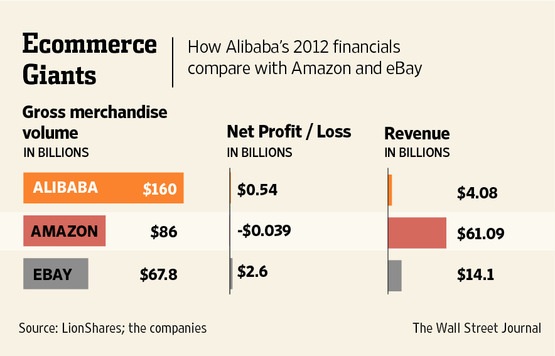
In the U.S., it takes Thanksgiving, plus the approach of the year-end holidays, to trigger the biggest shopping weekend of the year. In China, all it takes is a sale by Alibaba. Every Nov. 11, millions of Chinese shoppers flock to the e-commerce websites operated by Alibaba Group Holding Ltd. They spend more on those sites during that one day of discounts than Americans do on all online retailers on Black Friday and Cyber Monday combined. Read more of this post

Shanghai raised the minimum down payment required for buyers of a second home to 70 percent from 60 percent as house prices in China’s financial hub surge

Shanghai Raises Home Down-Payment Requirement as Prices Jump

Shanghai raised the minimum down payment required for buyers of a second home to 70 percent from 60 percent as house prices in China’s financial hub surge. Counties and municipal departments should take measures to ensure the city’s annual price-control target is met, according to a statement on the local housing bureau’s website. The city also tightened the qualifications required for non-local home buyers and will increase residential land supplies, according to the statement. Read more of this post

History Suggests China Plenum Reforms Will Be Limited

History Suggests China Plenum Reforms Will Be Limited

By Bill Powell on 4:04 pm November 8, 2013.

Shanghai. If history is any guide, the next wave of Chinese reform is likely to be smaller and slower than before. As President Xi Jinping and other Communist Party leaders gather at the weekend for a landmark conclave, foreign investors hoping that wide-ranging reforms will follow should consider that previous such meetings have shown a pattern of diminishing returns. Read more of this post

Chinese Industrialization and its Discontents

Chinese Industrialization and its Discontents

BARRY EICHENGREEN

NOV 8, 2013

TOKYO – As the Third Plenum of the 18th Central Committee of the Chinese Communist Party convenes in Beijing, China stands at a crossroads. Its recent growth record is stupendous; no country in history can match it. But China’s economic imbalances are also stupendous. The country has sustained its output growth by investing fully one-half of GDP, though no country can productively invest more than a third of national income for an extended period. Household consumption accounts for only one-third of GDP, compared to two-thirds in a normal economy. Read more of this post

Chinese Attacks Ignite Terrorism Debate; Tiananmen Square, Central China Violence Provoke Different Set of Reactions; “The government ought to contemplate the source of these conflicts. That’s more important than arresting and executing

Chinese Attacks Ignite Terrorism Debate

Tiananmen Square, Central China Violence Provoke Different Set of Reactions

JOSH CHIN

Nov. 8, 2013 3:32 p.m. ET

BEIJING—Two deadly attacks in China in the weeks leading up to a much-anticipated leadership meeting have ignited debate around the thorny question of what China considers to be terrorism. State media said the culprit in the latest attack, in which homemade explosives detonated outside a Communist Party building in central China, was “dissatisfied with society.” Meanwhile, officials and state media have said a suicide attack last week at Beijing’s Tiananmen Square was the work of terrorists. Read more of this post

China Can’t Be a Global Innovation Leader Unless It Does These Three Things

China Can’t Be a Global Innovation Leader Unless It Does These Three Things

by Anil Gupta and Haiyan Wang  |   1:00 PM November 8, 2013

When the Chinese Communist Party’s central committee wraps up the Third Plenum on November 12, 2014, a shift from efficiency to innovation will likely be one of the major planks in its vision for China.  The government’s imperatives are clear: It wants to double incomes by 2020 in the face of a declining population of working-age; an appreciating currency, and, relative to other emerging economies, high and rising wages.  Promoting innovation is also one of the eight key reform priorities in the “383” plan being circulated by the State Council’s Development Research Center. Read more of this post

Can Malaysian-listed China firms buck their bearish trend? When an entire group of stocks are under water that the investors will wonder about the issues dragging their investments down.

Updated: Saturday November 9, 2013 MYT 7:04:24 AM

Can China firms buck their bearish trend?

BY GURMEET KAUR AND YVONNE TAN

china trading

WHEN a stock trades below its initial public offering (IPO) price, investors may shrug it off and say the fault lies with the company or its valuations. It is when an entire group of stocks are under water that the investors will wonder about the issues dragging their investments down. That, in a nutshell is the story of China companies listed on Bursa Malaysia. All stocks except XiDeLang Holdings Ltd (XDL) are trading below their IPO price and questions are plentiful when one tries to understand why that is the case. Read more of this post

A Chinese City Seeks to Turn Migrants Into Urbanites; Tongling’s Recipe for Growth: Giving Rural Workers Urban Benefits

A Chinese City Seeks to Turn Migrants Into Urbanites

Tongling’s Recipe for Growth: Giving Rural Workers Urban Benefits

BOB DAVIS

Nov. 8, 2013 7:01 p.m. ET

TONGLING, China—Tongling, a copper-mining center since the Ming dynasty, is running low on ore. The Yangtze River city wants to turn itself into a manufacturing center, but it lacks a critical ingredient: a steady supply of factory workers. So it is doing what many places in China are unwilling to do. It is inviting migrants and their families to settle, giving them the same rights to education, health care and housing as locals, and even letting émigrés from China’s villages retain their exemption from China’s notorious one-child policy, so they can have a second child. Read more of this post

Pension lessons from Down Under

November 8, 2013 7:11 pm

Pension lessons from Down Under

By Josephine Cumbo

Australia may pack less punch on cricket pitches and rugby fields these days, but when it comes to pensions, Aussies still reign supreme. Their national “superannuation” scheme, known locally as “super”, is the envy of the world. As many countries, including the UK, beginto tackle their pension savings crisis, Australia can quite comfortably boast that nearly 12m of its 23m citizens have a workplace pension pot, and are on course for a decent retirement. Read more of this post

UN Says Meth Boom Sweeping Asia

UN Says Meth Boom Sweeping Asia

By Agence France-Presse on 1:48 pm November 8, 2013.
Bangkok. The United Nations on Friday sounded the alarm over record seizures of methamphetamine across much of Asia as the illegal drug floods streets and clubs. Last year 227 million methamphetamine pills were seized in East and Southeast Asia — up 59 percent from the year before and a more than seven-fold increase compared with 2008, the United Nations Office on Drugs and Crime (UNODC) said. Read more of this post

A Beer by the Sensor; An Indiana start-up showcased technology this week meant to help bars and restaurants — and maybe even patrons — keep track of the beer remaining in a keg

NOVEMBER 8, 2013, 2:38 PM

A Beer by the Sensor

By MICHAEL ROSTON

07bits-beertech-articleInline-v2

SteadyServ, an Indiana-based company, is a recent entrant in the technology industry’s desire to serve up what we want to drink whenever we want to drink it. The much-hyped Internet of Things may someday arrive as promised. While we wait, maybe we should grab a pint of good beer? That is where new technology from an Indiana start-up firm could come in handy. The company, SteadyServ Technologies, showcased technology this week to help bars and restaurants — and maybe even patrons — keep track of the beer remaining in a keg. Read more of this post

DuPont, the most valuable U.S. chemical company, is collaborating with Deere to sell software intended to boost crop yields, a move that may challenge Monsanto as it expands into the same area

DuPont Joins Deere on Software in Challenge to Monsanto

DuPont Co. (DD), the most valuable U.S. chemical company, is collaborating with Deere & Co. (DE) to sell software intended to boost crop yields, a move that may challenge Monsanto Co. (MON) as it expands into the same area. DuPont’s Pioneer seed unit will combine its Field360 software with Wireless Data Transfer technology from Deere, the world’s largest maker of agricultural equipment. Uploading data from the field as it’s collected can help growers make better decisions on seeds, fertilizer and other inputs, Wilmington, Delaware-based DuPont said today in a statement. Read more of this post

HTC can learn from Xiaomi’s success in mobile internet era

HTC can learn from Xiaomi’s success in mobile internet era

Su Yi-yi and Staff Reporter

2013-11-09

Chinese budget smartphone maker Xiaomi, which has been in business for just over three years, has outpaced Taiwan’s HTC to take the fifth spot in China’s smartphone market behind Samsung, Apple, Nokia and Huawei. HTC’s market value has declined by at least 80% since 2011 and the company must now assess how best to project its unique qualities amid global competition. HTC must also find ways to adapt to the current trends of the global mobile internet market and how it can interact with younger and trendier consumer groups. Read more of this post