Sources for founders’ secret-sauce ideas; Anne Wood got the idea for the Teletubby look after seeing astronauts in a museum display of space exhibits
June 16, 2014 Leave a comment
Last updated: June 10, 2014 4:24 pm
Sources for founders’ secret-sauce ideas
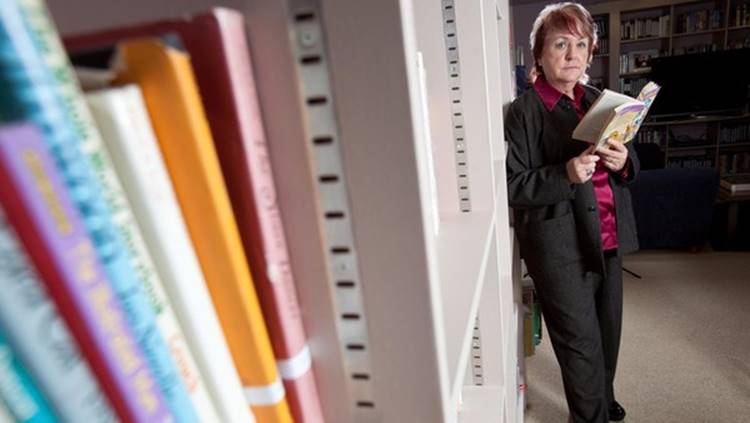
Eureka moment: Anne Wood got the idea for the Teletubby look after seeing astronauts in a museum display of space exhibits
How does an entrepreneur get inspiration? The challenge is not to come up with just one idea but the next one and the next to take a business forward, whether for another product, a new market or an adjustment to a basic service. We asked entrepreneurs to share their sources of new thinking.
Out and about
The founders of Innocent Drinks, the smoothie company, got their first inspiration for the business when snowboarding in the Swiss Alps. In Twitter lore, Jack Dorsey hit upon the concept of Twitter while in a café near a children’s playground in San Francisco’s South Park.
Richard Hamnett, co-founder and chief technology officer of a call tracking software business, Response Tap, likes “hurtling down a mountain bike trail” in search of creative ideas. He walks in the hills outside Manchester to get away from his office in the city.
“It means I can look at the situation from a different perspective, consider the idea and then get straight back to business when I can.”
Antony Tinker, founder of an executive training business, Its Leadership, starts each project by taking a walk with the client, in the countryside or in central London on the banks of the Thames.
It was on a stroll through one of London’s royal parks that he and a client were inspired by the Albert Memorial. The way this ostentatious Victorian monument to the prince consort was constructed with Albert at the centre surrounded by representations of British industries and colonies made them think about the places the client’s company was based and “how people looked at things differently depending where they sat”, Mr Tinker says. “I had never looked at the Albert Memorial before.”
Imitation over invention
Entrepreneurs are often copycats rather than innovators. Serial founder Oli Barrett argues that the best business ideas are copied from other people. His contribution, he says, is to tweak a concept to make it a bigger commercial proposition. His ideas range from a moneymaking contest for British schoolchildren, called Make Your Mark With a Tenner, to introducing speed networking to the UK.
He came up with the idea for Tenner, which aims to give school children a taste of entrepreneurship, after giving a talk in a school: “I picked up a newspaper, and read about a vicar who had handed his congregation £10 each to raise church funds. I wondered what would happen if we gave 10,000 school pupils a tenner.” Seven years, and hundreds of thousands of £10 notes later, the programme is still going.
Mr Barrett reads a lot in search of ideas: “So much of business is about problems worth solving and if there’s one thing which newspapers do well, it’s highlight problems.” He likes: The Week, a weekly digest of newspaper articles, because of the breadth of coverage; obituaries for reading about inspirational figures; Campaign for brand news; and Third Sector magazine (“because I love connecting people from businesses and causes”).
He also uses social networks and Google searches to do this. For instance, a search of Twitter for phrases similar to “this is incredible” or “this is genius” may reveal what concepts or products are getting people excited.
“Some people just have a habit of sharing great stuff,” he says, naming @BrainPicker, @SteveCase, @LettersOfNote and @RobynScott as some of his top follows on Twitter.
Make unusual connections
Meeting people face to face is still Mr Barrett’s preferred way of gaining inspiration. Having organised many speed-networking events, he says the best occur when participants bring a guest whose working life is completely different: “A police officer, a dentist, a teacher. That’s when my brain really starts firing.”
Anne Wood, founder and creative director of Ragdoll Productions, says the launch in 1998 of the children’s television hit Teletubbies was based on 30 years of experience, first as a teacher and then in children’s book publishing.
“If you are engaged in work with children, your inspiration comes from observing what they pay attention to.” But she also has “eureka” moments. It was while looking at the space exhibits at the Smithsonian Institution in Washington DC that Ms Wood hit on the idea of presenting the Teletubby characters as technological babies. “Men walking on the moon had the same shape as babies in nappies,” she says.
Listen to clients
Andy Gent, co-founder of tax software business Arkk Solutions, says an excellent idea for a new product came after a meeting with a customer, who “asked on the way to the lift if we could assist them in some regulatory filing. Of course we said yes, then we googled the idea in the cab on the way back to the office,” says Mr Gent. “That product had sales of £500,000 in the first six months, from a blank sheet of paper, and has opened the door to a whole new industry for our business. Clients to take up this new product have included Schroders, BlackRock, Zurich and AIB,” he adds.
Get annoyed
New Zealand-born Dale Murray quit a senior executive post in television to co-found Omega Logic, which introduced mobile phone top-ups to the UK. Within five years the business had annual revenue of £450m.
The idea for top-ups arose during a chat about the shortcomings of the IT industry between Ms Murray and her co-founders one night over evening drinks. “I am one of those annoying people who can’t go into a restaurant without listing all the things I would improve,” she says. “If you are critical of something, follow that up by creatively constructing ideas to improve it. It’s having the guts to go and do it that’s the hard part.”
Now a founder-turned-investor in entrepreneurial businesses, Ms Murray looks for ideas on websites devoted to start-ups and tech, such as: RealBusiness, Elite Business, Startups.co.uk, Fresh business thinking, BusinessZone.co.uk, Techcrunch, Centre forentrepreneurs.org and Greatbusiness.gov.uk. On Twitter, she likes: @brenthoberman, @guyrigby, @entmagazine, @jamescaan and @inc.
Lara Morgan, whose first venture was luxury toiletries supplier Pacific Direct, is preparing to launch a non-liquid fragrances range called
Scentered, which aims to overcome the problems of air passengers travelling with bottles of liquids. “Sometimes you want to solve a problem you have,” she says. “The idea is there but then it is about sense checking whether it will work in practice.” Too many people do not ditch dud ideas. “If you do think you have got an innovation, you need to ask strangers, rather than friends, whether it will sell well. How many friends are going to tell you you are an idiot?”
Seeking inspiration
● Subscribe to entrepreneur magazines, such as Inc and Fast Company.
● Watch TED talks on YouTube.
● Read academic research. The Kauffman Foundation in the US is a source of articles and newsletters for business owners. You can see what other entrepreneurs are up to.
● Subscribe to entrepreneurship websites. Springwise.com looks out for example for smart new business ideas and seeks to deliver inspiration to entrepreneurs via email.
● Attend events at public libraries. The British Library’s Business and IP Centre runs seminars and one-to-one sessions for aspiring entrepreneurs.
● Follow The Archers, a BBC radio soap of ordinary “farming folk” that has become a national institution for listeners and with a wide cast of small-business owners.
● Attend founders’ events, such as Like Minds and the Do Lectures.
● Keep a notebook. Draw your ideas to think differently.
 About bambooinnovator
 Bamboo Innovator