Traders face brunt of environmental push on palm oil; The palm oil market is facing a shake-up as leading agri commodities traders and large consumer groups negotiate contracts that must ensure the environmental credentials
June 16, 2014 Leave a comment
Last updated: June 10, 2014 10:59 pm
Traders face brunt of environmental push on palm oil
By Emiko Terazono
Is your toothpaste contributing to deforestation? Not for much longer, as the drive to ensure palm oil is sustainably produced gathers pace.
The palm oil market is facing a shake-up as leading agricultural commodities traders and large consumer groups negotiate contracts that must ensure the environmental credentials of the commodity.
The most widely used vegetable oil in the world, palm oil is used in everything from Gillette shaving cream and Oreo cookies to Colgate toothpaste. But its production has been mired in controversy, blamed for deforestation, threatening endangered species and robbing indigenous people of their land.
Mondelez International, the confectionery group that owns Cadbury chocolate, last week became the latest consumer company to commit to ensuring its suppliers are sourcing sustainable palm oil.
The company said it wanted a collaborative approach, adding that it would prioritise suppliers that meet its policy and would require suppliers to achieve traceability by the end of 2015. “We need to make sure that the supply chain joins up all the way,” said Jonathan Horrell, director of sustainability at Mondelez.
Over the past six months, a slew of large consumer groups, including Procter & Gamble, Mars, Unilever and Kellogg have announced detailed plans to buy only forest-friendly palm oil and ensure traceability within their supply chains.
But commodities traders are concerned about the onus on palm oil traceability being placed on them. The crux of the issue will be how various players in the supply chain, as well as consumers, share the costs.
“The big brands cannot bulldoze their suppliers to do this [ensure traceability of supplies] without paying for it,” says one commodities trading executive.
Most large agricultural traders, including ADM, Bunge, Cargill and Louis Dreyfus, deal in palm oil, alongside Singapore-based Wilmar, the biggest, controlling about 45 per cent of the global production and trade.
The complicated process of refining palm fruit into oil means the middle men need to record and control the sourcing of palm oil. The processors also need to ensure that certified oil is kept separate along the supply chain. This pushes up the price and traders fear it will put pressure on already thin trading margins in a competitive market.
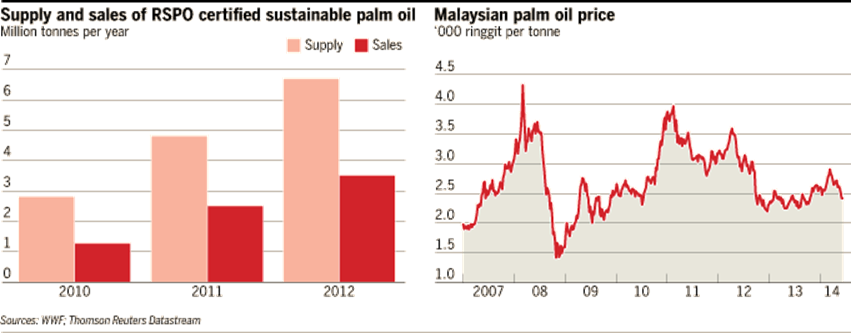
In 2013, 8.2m tonnes, or 15 per cent, of the world’s palm oil was certified sustainable, up from 4.8m, or 10 per cent, in 2011. But the premiums on the certified commodity have meant only half of that was actually sold, says the WWF.
Everybody is trying to extract the best price from their suppliers
– Fiona Wheatley, Marks and Spencer
This is because many of the companies that report 100 per cent certified standards may still be using physical palm oil that is grown unsustainably. Under the current certification agreement, buyers can purchase certificates from approved producers under a “book and claim” system, which is cheaper than buying forest-friendly palm oil.
According to the wildlife organisation, the premiums on the book and claim certificates cost up to $10 a tonne over the market price – currently about Mayalsian ringgit 2,400 ($749) a tonne – compared with $50 for segregated certified palm oil.
Talks over palm oil procurement are likely to add to the already fraught supplier-client relationship. “We’re always going to have battles about price and that’s not just about palm oil. Everybody is trying to extract the best price from their suppliers,” said Marks and Spencer’s Fiona Wheatley at a conference hosted by the Roundtable on Sustainable Palm Oil last week.
The recent traceability announcements follow the international outcry last year when smoke from fires on Sumatra island, caused by “slash and burn” palm oil farming, covered Singapore and parts of Indonesia and Malaysia, the two leading growers of palm.
Amid the push to increase more physical certified oil, trading houses are also facing pressure to come up with detailed policies. Wilmar was the first commodity trader that pledged forest-friendly sourcing of the palm oil, announcing its policy last December. Singapore-based Golden Agri followed in February.
Pat Venditti of Greenpeace says: “We need to get the commitments from the traders. They are the interface between the producers and the consumer companies, and have the greatest leverage on the system.”
He says the trading houses were key to the “Soya Moratorium” in Brazil, where they agreed not to allow any soyabeans produced from newly deforested areas to enter their supply chain.
Alan Knight, corporate sustainability expert who has worked with UK DIY retailer B&Q and brewer SABMiller, says commodities traders should be “the gate keepers” for sustainable palm oil trading. That way, end users do not need to worry about whether they are buying sustainable oil and the growers will not have to compete with non-sustainable competitors, he says.
 About bambooinnovator
 Bamboo Innovator