Kirsten Han: “Joseph Stiglitz’s Singapore is hardly the one I grew up in; Perhaps the real Singapore, too, could learn a few lessons from Stiglitz’s Singapore.”

Joseph Stiglitz’s Singapore is hardly the one I grew up in

By Kirsten Han — 7 hours ago

Kirsten Han is currently a graduate student in journalism at Cardiff University in Wales. She was born and raised in Singapore.

Joseph E. Stiglitz may be a brilliant economist, but familiar with Singapore he is not.

This fact could not be more glaring than in his piece in the New York Times urging the United States to emulate the tiny city-state. His description paints Singapore as practically utopian: the rich willingly contribute to help the poor, everyone puts money aside to pay for healthcare and retirement, and the government makes sure that workers are not disadvantaged by cunning employers.

The policies and measures praised sound good in theory, but don’t actually work that way in reality. As a matter of fact, the issues singled out by Stiglitz—wages, the Central Provident Fund (CPF), housing and labour relations—are the very things keeping Singaporeans up at night.

Singapore is far from being an equal society. When considered in the global context, Singapore cannot be considered a society with “fewer economic disparities.” Its Gini coefficient, which measures inequality, is the second highest among developed countries. Read more of this post

1,000-year-old Chinese bowl bought for US$3 at a garage sale in New York and sold for US$2.2mil

Updated: Wednesday March 20, 2013 MYT 9:12:44 AM

1,000-year-old Chinese bowl bought for US$3 and sold for US$2.2mil

bowl-auction-sothbey-latest

This handout photo obtained courtesy of Sotheby’s shows a small Chinese pottery bowl that started as a $3 tag sale only to turn into a massive windfall that sold for $2.23 million during an auction at Sotheby’s on March 19, 2013 in New York. – AFP

NEW YORK: A 1,000-year-old Chinese bowl that was bought for US$3 at a garage sale in New York state sold for more than US$2.2 million at an auction on Tuesday. An unnamed New York family bought the “Ding” bowl, which is from the Northern Song Dynasty, for no more than $3 in 2007 and displayed it on a mantelpiece with no idea as to its real worth, Sotheby’s said. After consulting with experts, the owners consigned the bowl for auction. Sotheby’s estimated it would sell for $200,000 to $300,000. London dealer Giuseppe Eskenazi paid $2,225,000 including commission for the bowl, which measures just over five inches (12.7 cm) in diameter, at the auction in New York City. Sotheby’s said the only known bowl of the same form, size and almost identical decoration has been in the collection of the British Museum in London for more than 60 years. – Reuters

How Fair are the Valuations of Private Equity Funds? Investors should be extremely wary of basing investment decisions on the returns – especially IRRs – of the current fund.

How Fair are the Valuations of Private Equity Funds?

Tim Jenkinson University of Oxford – Said Business School; Centre for Economic Policy Research (CEPR); European Corporate Governance Institute (ECGI)

Miguel Sousa University of Oxford – Said Business School; School of Economics and Management, University of Porto

Rüdiger Stucke University of Oxford – Said Business School

February 27, 2013

Abstract: 
The ultimate performance of private equity funds is only known once all investments have been sold, and the cash returned to investors. This typically takes over a decade. In the meantime, the reported performance depends on the valuation of the remaining portfolio companies. Private equity houses market their next fund on the basis of these interim valuations of their current fund. In this paper we analyze whether these valuations are fair, whether the extent of conservative or aggressive valuations differ during the life of the fund, and at what stage interim performance measures predict ultimate performance. This paper is the first to use the quarterly valuations and cash flows for the entire history of 761 fund investments made by Calpers – the largest U.S. investor in private equity. Our main findings are as follows. First, over the entire life of the fund we find evidence that fund valuations are conservative, and tend to be smoothed (relative to movements in public markets): valuations understate subsequent distributions by around 35% on average. We find a significant jump in valuations in the fourth-quarter, when funds are normally audited. Second, the exception to this general conservatism is the period when follow-on funds are being raised. We find that valuations, and reported returns, are inflated during fundraising, with a gradual reversal once the follow-on fund has been closed. Third, we find that the performance figures reported by funds during fund-raising have little power to predict ultimate returns. This is especially true when performance is measured by IRR. Using public market equivalent measures increases predictability significantly. Our results show that investors should be extremely wary of basing investment decisions on the returns – especially IRRs – of the current fund.

Information Flows in Dark Markets: Dissecting Customer Currency Trades

Information Flows in Dark Markets: Dissecting Customer Currency Trades

Lukas Menkhoff Leibniz Universitaet Hannover – Department of Economics; CESifo (Center for Economic Studies and Ifo Institute for Economic Research)

Lucio Sarno City University London – Sir John Cass Business School; Centre for Economic Policy Research (CEPR)

Maik Schmeling City University London – Sir John Cass Business School

Andreas Schrimpf Bank for International Settlements (BIS) – Monetary and Economic Department

March 5, 2013

Abstract: 
We study the information in order flows of different customer segments in the world’s largest over-the-counter market, the foreign exchange market. The analysis draws on a unique dataset covering a broad cross-section of currency pairs and distinguishing trades by key types of foreign exchange end-users. We find that order flows are highly informative about future exchange rates and provide significant economic value for the few large dealers who have access to these flows. Moreover, customer groups systematically engage in risk sharing with each other and differ markedly in their predictive ability, trading styles, and risk exposure.

Largest pension fund considers dumping active management

Largest pension fund considers dumping active management

CalPERS’ review keeps pressure on from passive funds

By Jason Kephart

Mar 19, 2013 @ 1:35 pm (Updated 3:46 pm) EST

In the latest sign of the apocalypse for active management, the largest pension fund in the United States is mulling a move to an all-passive portfolio.

The California Public Employees Retirement System’s investment committee is evaluating whether the fees it pays its active managers are worth it or if paying less fees for passive management will lead to better long-term results, according to sister publication Pensions & Investments.

The pension fund, commonly referred to as CalPERS, oversees about $255 billion in assets, more than half of which already is invested in passive strategies.

The critique of active management is part of a review of the fund’s investment beliefs, which began yesterday, P&I said.

At the heart of the review of active management is whether taking the trouble to pick the right managers is worth it. Read more of this post

Canada Pension Plan Investment Board (CPPIB) laments dearth of investments for pension funds’ ‘patient capital’; “How can we think and act long term when the world around us is caught up in this ‘myopia of the moment’?

CPPIB laments dearth of investments for pension funds’ ‘patient capital’

19 March 2013

Author: Jonathan Williams

GLOBAL – The short-termist focus of governments and investors is creating problems for pension funds to invest their “patient capital”, the head of the CAD172bn (€130bn) Canada Pension Plan Investment Board (CPPIB) has said.

Mark Wiseman, chief executive and president of CPPIB, said the focus on the short term – due to shorter election cycles, quarterly profit reports and a “revolving door” of chief executives within listed companies – was causing problems, and that there was a need for longer-term thinking.

During a speech to the Canadian Australian Chamber of Commerce in Sydney, he asked: “How can we think and act long term when the world around us is caught up in this ‘myopia of the moment’?

“All market participants – be they investors or governments – desperately need a long-term lens,” he added. “While we may discuss practical, actionable items for reform, I am convinced that, unless we first address this short-term, structural paradigm, we will fail to create a policy environment that supports fundamental and lasting change.” Read more of this post

Malaysian PM Najib Sees Early Achievement of Mahathir Vision: Southeast Asia

Najib Sees Early Achievement of Mahathir Vision: Southeast Asia

Malaysian Prime Minister Najib Razak said the nation may reach high-income status two years ahead of target, as he seeks to convince voters of his economic achievements before elections due within weeks.

Gross national income could rise to $15,000 per capita in 2018, earlier than a target of 2020, Najib said in a televised speech late yesterday. The measure has increased 49 percent since 2009, to $9,970 last year, the government estimates. Najib also pledged to give annual cash handouts to low-wage earners.

“The time has come for Malaysians to make a decision and I hope you make the right choice,” said Najib, 59, without indicating when the election will be held. He must dissolve parliament by April 28 and hold a vote by the end of June.

Najib, who inherited a country in recession when he replaced Abdullah Ahmad Badawi as leader in 2009, is focusing voters on his efforts to boost investment and improve incomes as he seeks a popular mandate for the first time. The ruling National Front coalition won the last election in 2008 by its narrowest margin in more than five decades, prompting Abdullah to hand over the leadership mid-term. Read more of this post

Leveraged Asian Investors May Spur Bond Price Slump: Barclays

Leveraged Asian Investors May Spur Bond Price Slump: Barclays

Wealthy Asian investors who’ve borrowed against their houses to buy bonds may find themselves among forced sellers if interest rates rise, spurring a price slump in vulnerable securities, according to Barclays Plc.

U.S. dollar-denominated notes sold by more than 20 companies including Olam International Ltd. and Henderson Land Development Co. are some of those most exposed if private bank clients move money out of the fixed-income market, Barclays said in a research note dated March 14. Private banks hold 15 percent to 20 percent of total corporate bonds in Asia and as much as 30 percent of high-yield, or junk, notes.

Low borrowing costs have been one of the main factors driving the strong demand for Asia credit and many high net worth investors went further into debt to buy the securities, according to the report. In the past six months, equities have generated solid returns while credit has lagged, creating a risk fund flows will rotate out of bonds in a quest for higher returns and compound the price slump.

“U.S. rates are already beginning to rise, albeit gradually, and leveraged lending could be scaled back if risk committees begin to focus on the quality of such lending,” according to analysts led by Krishna Hegde, Barclays’ Singapore- based head of Asia credit research. Furthermore, any sharp or sustained sell-off in Treasuries would impact bond prices and raise borrowing costs. Considering most private bank investors don’t hedge rates, “this is an important risk factor,” they wrote. Read more of this post

Bharti Airtel, India’s biggest wireless company, plunged after a court ordered billionaire Chairman Sunil Mittal to appear in court in a case regarding the purchase of airwaves causing the government a loss of about 8.46 billion rupees ($156 million).

Bharti Shares Plunge After Chairman Ordered to Appear in Court

Bharti Airtel Ltd. (BHARTI), India’s biggest wireless company, plunged the most in seven months after a court ordered billionaire Chairman Sunil Mittal to appear in court in a case regarding the purchase of airwaves. Shares fell 4.6 percent to 293.40 rupees in Mumbai, the most since Aug. 9. Bharti has been charged with purchasing second generation spectrum in excess of the government’s 4.4 megahertz limit, said Judge O. P. Saini at the court in New Delhi, where the company is based. “We will fight this charge sheet,” Bharti said in an e- mailed statement. The mobile-phone carrier said the charge was “an attempt to tarnish” its reputation. If the charges against Bharti are proven, the government may take away the excess airwaves, according to Harit Shah, analyst at Mumbai-based Nirmal Bang Institutional Equities. In a separate case, the company, which has seen its debt increase more than sixfold since 2010, has also been asked to pay a fine of 3.5 billion rupees ($64 million) for violating its third- generation phone services license agreement. Bharti has challenged the order in court. “This will be a disaster, not just for Bharti, but for the industry and the country,” said Shah, who recommends investors sell the stock. “Bharti has a lot of expenses coming their way and being stripped of this excess spectrum and stuck with a fine won’t help their case.” To contact the reporters on this story: Pratap Patnaik in New Delhi at ppatnaik2@bloomberg.net; Kartikay Mehrotra in New Delhi at kmehrotra2@bloomberg.net

Updated March 19, 2013, 9:53 a.m. ET
Court Summons Bharti Chairman in Telecom Case

NEW DELHI–An Indian court Tuesday asked Bharti Airtel Ltd. 532454.BY -4.74%Chairman Sunil Mittal and some former executives of a company now owned byVodafone Group VOD.LN +1.19% PLC to appear before it to face criminal charges in a case related to alleged irregularities in the allocation of telecom bandwidth in 2002.

India’s Central Bureau of Investigation had in December registered initial charges of criminal conspiracy and criminal misconduct against these companies. According to the federal agency, former Telecom Secretary Shyamal Ghosh conspired with then-Telecom Minister Pramod Mahajan to allot spectrum at lower prices to these companies, causing the government a loss of about 8.46 billion rupees ($156 million). Read more of this post

Warren East, who led ARM Holdings from start-up to near monopoly designer of smartphone chips, with its processors at the heart of Apple’s iPhone and Samsung’s Galaxy, is to step down as chief executive after 12 years. A pound invested in the company’s shares 10 years ago would be worth about 18 pounds now, and the company itself is valued at nearly 13 billion pounds ($19 billion).

ARM’s CEO Warren East to step down after 12 years

10:32am EDT

By Rosalba O‘Brien and Paul Sandle

ARM CEO East speaks during a Samsung Electronics keynote address at the CES in Las VegasARM

LONDON (Reuters) – Warren East, who led ARM Holdings from start-up to near monopoly designer of smartphone chips, with its processors at the heart of Apple’s iPhone and Samsung’s Galaxy, is to step down as chief executive after 12 years.

Group president Simon Segars will replace 51-year-old East from July, the British company said on Tuesday.

Since East, an engineer, joined in 1994, ARM has evolved from one processor product line to be the dominant player in mobile computing, providing microprocessors that run nearly all the world’s smartphones, and around a third of all consumer devices.

“After you’ve been doing it for 12 years you do get a bit tired (…) and think ‘Maybe that’s a bit of a brake on the business and somebody else should have a go’,” he told Reuters.

ARM licenses its processor designs to chipmakers including Apple, Samsung, Qualcomm and Texas Instruments. Its low-power processors have enabled it to dominate mobile computing, leaving rival Intel far behind in the sector.

In Cambridge, ARM has been at the heart of the so-called ‘Silicon Fen’, a cluster of high-tech firms at the southern tip of the English Fenland, about an hour’s drive north of London. Founded in 1990, ARM now employs 2,300 people, with 2013 revenues forecast at around $1.03 billion.

“We’ve built a global company based here in the UK, proving it can be done in technology, and I intend to do a bit more of that,” said East, who eschews the casual clothes and colorful style of California’s Silicon Valley in favor of smart suits and a sober manner.

East, whose total pay including share awards and long-term incentives was 7.6 million pounds in 2012, said it was too early to talk about his next move, but that another executive role was unlikely in the short term.

A pound invested in the company’s shares 10 years ago would be worth about 18 pounds now, and the company itself is valued at nearly 13 billion pounds ($19 billion). Read more of this post

Incheon named World’s Best Airport for eighth time; The process of departure takes only 19 minutes and arrival 12 minutes, far quicker than the global standard of 69 minutes and 45 minutes.

Incheon named best airport for eighth time

Wednesday, Mar 13, 2013

img_visual incheonbest

Mr Hong-Yeol Choi, VP Marketing at Incheon International Airport (left) receives the World’s Best Airport Award from Mr Edward Plaisted, Chairman of SKYTRAX (right), during the World Airport Awards held at Passenger Terminal EXPO in Vienna.

By Lee Ji-yoon
The Korea Herald/Asia News Network
Wednesday, Mar 13, 2013

KOREA – Incheon International Airport said Tuesday it won the World’s Best Airport title again this year for the eighth consecutive time.

The non-profit Airport Council International conducted a survey of 350,000 passengers over the past year and Incheon Airport earned the highest scores in service quality.

The airport also topped two other categories – best airport in Asia-Pacific and best among those with 25-40 million users annually.

It is unprecedented for an airport to win the industry’s top honour eight times, officials said. Read more of this post

KOREA: THE IMPOSSIBLE COUNTRY, by Daniel Tudor, charts the improbable rise of South Korea from the devastation of war and impoverishment to rapid development and prosperity

The rising of a nation

BY JEFF KINGSTON

MAR 17, 2013

KOREA: THE IMPOSSIBLE COUNTRY, by Daniel Tudor. Tuttle, 2012, 320 pp., $22.95 (hardcover)

This superb book charts the improbable rise of South Korea from the devastation of war and impoverishment to rapid development and prosperity, and from brutal dictatorship to the most vibrant democracy in Asia. It is “impossible” in terms of its economic and political achievements, “the most unlikely and impressive story of national building of the last century,” Daniel Tudor writes.

The Korean War (1950-53) claimed the lives of 3 million people, including 2.5 million Korean civilians, at a time when the combined population of the entire peninsula was only 30 million. In the mid-1950s GDP per capita was less than $100 and the average life span was 54 years old, compared to $32,000 and 79 as of 2012. This phoenix-like rise from the ashes was based on hard work, sacrifice and extensive state support for industry. The economy was foundering until Park Chung Hee (the current president’s father) took over in a coup in 1961 and ruled with an iron fist until gunned down by the head of the KCIA intelligence service in 1979. He is credited with the “miracle on the Han,” the era of phenomenal economic growth that was largely based on nurturing national champions. Famously, Park called businessmen “corrupt swine,” but enriched those who did his bidding.

Samsung, the star of Korea Inc., accounts for 20 percent of GDP and has a stake in virtually all market sectors where there are profits to be made, from Apple-beating mobile phones and Sony-trumping electronics to resorts, real estate, insurance and shipbuilding. This “ginormous” influence is a mixed bag; there is intense pride that a Korean firm has taken on the world’s best firms and won, but Koreans are ambivalent about its stifling omnipresence and political influence at home. Journalists criticize the behemoth at their peril as Tudor explains that libel laws in South Korea stack the deck and even if scandalous allegations are proven true, damages are awarded if the court decides that reputations have been sullied. So much for freedom of the press.

Tudor provides a primer in Korean history then launches into the modern era by examining the role of shamans and the spiritual world. He wryly compares English teachers to shamans, noting that both are paid relatively large sums of money based on an exaggerated faith in their powers.

South Korea’s problems are so similar to Japan’s that many passages read as if the country names are interchangeable. Korea has a higher suicide rate, a similarly low birth rate, a rapidly aging society, wealth without prosperity, growing disparities and just like Japan over one-third of the workforce is hired on fixed term contracts as nonregular workers with low pay, few benefits and no job security. But the differences are also stark as South Korean firms and their government adjusted quickly to changing global markets while Japan, Inc. appears relatively stodgy and complacent. Read more of this post

Taxation to be introduced for China’s e-commerce industry

Taxation to be introduced for China’s e-commerce industry

Staff Reporter 2013-03-19

China’s State Administration of Taxation announced measures for the administration of online invoices on March 7, which include a trial electronic invoicing system. The measures will come into effect from April 1.

The measures are seen by many as a step towards taxing the country’s emerging e-commerce industry, reports Time Weekly in Guangzhou.

The weekly quotes sources saying that online shops which make more than 240,000 yuan (US$38,000) a year will be required to pay taxes. Read more of this post

Causes and Consequences of Disaggregating Earnings Guidance

Causes and Consequences of Disaggregating Earnings Guidance

Baruch Lev  New York University – Stern School of Business

Benjamin N Lansford affiliation not provided to SSRN

Jennifer Wu Tucker affiliation not provided to SSRN

January/February 2013
Journal of Business Finance & Accounting, Vol. 40, Issue 1-2, pp. 26-54, 2013 

Abstract: 
Whether managers should provide earnings guidance, especially quarterly guidance, has been a hotly debated policy issue. Influential organizations have urged firms to stop providing earnings guidance to reduce earnings fixation and short‐termism in the capital markets. Little attention has been paid to an alternative proposal: instead of ceasing earnings guidance, companies could provide disaggregated earnings guidance. No archival evidence exists regarding the determinants of disaggregated earnings guidance and its effects on the firm and its information environment. We find that once managers provide guidance, the decision to disaggregate this guidance is primarily driven by demand‐and‐supply factors that exhibit little change from year to year rather than by strategic factors. We find more timely analyst forecast revisions (with no compromise of forecast accuracy), a greater magnitude of revisions, and a larger reduction in analyst disagreement for disaggregating firms than for non‐disaggregating firms. These findings suggest that disaggregation enriches a firm’s information environment. We also find that disaggregation helps managers align analyst expectations with their own, but firms are punished by investors for providing multiple performance targets but missing them.

Real and Accrual Earnings Management and IPO Failure Risk

Real and Accrual Earnings Management and IPO Failure Risk

Mohammad Alhadab University of Leeds – Leeds University Business School (LUBS)

Iain Clacher University of Leeds – Leeds University Business School (LUBS)

Kevin Keasey University of Leeds – Division of Accounting and Finance

February 26, 2013

Abstract: 
This paper analyzes the relationship between real and accrual earnings management activities and IPO failure risk. Recent research shows that IPO firms manage earnings upward around the offer year utilizing real and accrual earnings management activities (e.g., Wongsunwai, 2012) and that these activities have severe negative consequences for future stock returns and operating performance (e.g., Cohen and Zarowin, 2010; Kothari et al., 2012). Thus, we predict IPO firms that engaged in higher levels of real and accrual earnings management will exhibit a higher probability of failure and lower survival rates. We test this hypothesis based on a sample of 570 IPO firms that went public over the period 1998-2008. We find evidence that IPO firms manipulate earnings upward utilizing real and accrual earnings management around the IPO. We also find that IPO firms with higher levels of real and accrual earnings management during the IPO year have a higher probability of IPO failure and lower survival rates in subsequent periods.

Agencies warn of global TB “powder keg”, funding gap; In some countries, including regions of Russia, up to 35 percent of new cases are multi-drug resistant

Agencies warn of global TB “powder keg”, funding gap

Mon, Mar 18 2013

By Kate Kelland and Stephanie Nebehay

LONDON/GENEVA (Reuters) – Deadly strains of tuberculosis that are resistant to multiple drugs are spreading around the world, and authorities urgently need another $1.6 billion a year to tackle them, global health officials said on Monday.

Donors should step up with “significant funding” to help experts track down all existing cases and treat the most serious ones, the World Health Organization (WHO) and the Global Fund to Fight AIDS, TB and Malaria said in joint statement.

Margaret Chan, WHO director general, said nearly 4 percent of people newly infected with TB worldwide were resistant to multiple drugs from the start – signaling that resistant forms of the disease were being transmitted directly from person to person.

In some countries, including regions of Russia, up to 35 percent of new cases are multi-drug resistant.

“This gives you an idea of powder keg we are sitting on,” Chan told a news briefing in Geneva, where both agencies are based. Read more of this post

Samsung Preparing Wristwatch as It Races Apple for Sales

Samsung Preparing Wristwatch as It Races Apple for Sales

Samsung Electronics Co. (005930) is developing a wristwatch as Asia’s biggest technology company races against Apple Inc. (AAPL) to create a new industry of wearable devices that perform similar tasks as smartphones.

“We’ve been preparing the watch product for so long,” Lee Young Hee, executive vice president of Samsung’s mobile business, said during an interview in Seoul. “We are working very hard to get ready for it. We are preparing products for the future, and the watch is definitely one of them.” Read more of this post

Earthquakes and the Mind-Bending Laws of Markets; Power laws are immensely important for proper risk management, for assessing the likelihood of large market upheavals

Earthquakes and the Mind-Bending Laws of Markets

Like the devastating Japanese earthquake of 2011, the stock market crash of Oct. 19, 1987, came as a total shock to most people. Yet the crash wasn’t entirely without warning. Five days before, the Dow Jones Industrial Average dropped 95 points, which was then an all-time record. Two days later, it closed down another 108 points. Just like others crashes — 1929, for example — and all major earthquakes, the 1987 crash was preceded by significant rumblings.

The comparison of tectonic and market shocks goes far beyond metaphor and analogy. Consider, for example, how much the prices of stocks and other financial instruments change over a certain time interval — say a few minutes, a single day, or a week. In the early 1960s, French mathematician Benoit Mandelbrot carried out a landmark study of such changes in the prices of cotton and found that the statistics of large market returns follow an inverse power law very much like the Gutenberg-Richter law for earthquakes. More than 30 years later, physicists found that this law-like pattern holds for intervals varying from a second up to a month and in different kinds of markets — stocks, foreign exchange, futures — as well as in many different countries. Read more of this post

China’s Tallest Tower Builder Assures Quality Amid Sand Scandal

China’s Tallest Tower Builder Assures Quality Amid Sand Scandal

China State Construction Engineering Corp. (601668), which is building the country’s tallest tower, said materials used in all its projects meet quality standard as the southern city of Shenzhen conducted inspections on builders.

Samples from buildings, including the 660-meter Ping An Finance Center due to be completed in 2015, were tested, according to Shenzhen’s Housing and Construction Bureau. The industrywide inspection in the city last week followed a China Central Television newscast on March 14 that investigated the use of substandard concrete by some developers in Shenzhen that used low-quality sea sand instead of river sand. Read more of this post

Singapore’s property trusts, the second-best performers in Asia in the past year, may have to diversify funding sources as they aren’t prepared for an “interest rate shock,” according to Fitch Ratings.

Singapore REITs to Vary Funds on Interest Rates: Southeast Asia

Singapore’s property trusts, the second-best performers in Asia in the past year, may have to diversify funding sources as they aren’t prepared for an “interest rate shock,” according to Fitch Ratings.

The city’s real estate investment trusts or REITs have been increasing short-term debt with record-low interest rates, according to Johann Kenny, director of corporates at Fitch. They face refinancing risks when borrowing costs rise, and may be pushed to sell assets or shares to boost their funding, he said.

“Singapore REITs are not really well equipped to withstand an interest rate shock,” Kenny said in a phone interview from Sydney yesterday. “When a rating agency looks at a company, we look at the long-run average through the cycle of the interest rate environment and we don’t see the current low interest rates as a sustainable model from a macro-economic perspective.”

Singapore REITs, the biggest fundraisers in the city’s initial public offering market in the past year, had relied on short-term debt to reflect the length of commercial leases, Kenny said. Their funding costs in the past six years don’t reflect the challenges in a “normalized” interest rate scenario, he said. Read more of this post

Indian gold funds are shrinking as investors in the biggest bullion- consuming nation follow billionaire George Soros in pulling money from products backed by the precious metal.

India Gold ETF Sales Mimic Soros as Goldman More Bearish

Indian gold funds are shrinking for the first time since June as investors in the biggest bullion- consuming nation follow billionaire George Soros in pulling money from products backed by the precious metal.

Exchange-traded funds in gold saw outflows of 80 million rupees ($1.5 million), data from the Association of Mutual Funds in India show. Investments in sovereign-debt funds rose by 4.46 billion rupees, the sixth straight month of inflows. Gold prices in India have slid 4.3 percent this year, while rupee bonds returned 2.7 percent, the second-highest gains in Asia.

“Globally we are seeing a decelerating gold trend, and overweight investors will be adjusting asset allocations,” Lakshmi Iyer, Mumbai-based head of fixed income and products at Kotak Mahindra Asset Management Co., which oversees about $6 billion of assets, said in a March 14 telephone interview. “We should see some interest-rate easing over the next two or three quarters,” encouraging people to seek capital gains in bonds, she added.

Soros cut his holdings in SPDR Gold Trust, the largest exchange-traded gold product, by 55 percent last quarter, and Goldman Sachs Group Inc. predicts the metal’s 12-year rally will end as a U.S. economic recovery gathers momentum. The Reserve Bank of India will lower its benchmark repurchase rate to 7.50 percent from 7.75 percent today, according to 30 of 35 economists in a Bloomberg survey. Five predict no change. Read more of this post

Quest Diagnostics’ 5-in-1 Demential Test May Help Rule Out Alzheimer’s

Quest 5-in-1 Demential Test May Help Rule Out Alzheimer’s

As Baby Boomers age, those everyday questions of life — Where are the car keys? What was her name again? — are increasingly followed by another: Can this be Alzheimer’s disease?

Today, Quest Diagnostics Inc. (DGX), in the midst of a company reorganization that seeks to cut costs and boost revenue with improved service, will introduce a panel of tests at the American Academy of Neurology meeting that combines five screens into one to pinpoint potentially treatable conditions.

The concept is that, by simplifying the process and making it more accessible, an increasing number of family doctors will use the test and, in some rare cases, ease the mind of patients by ruling out Alzheimer’s.

“It’s sort of a simple idea, but dementia is a common presentation to primary-care doctors,” said Joseph Higgins, medical director for Quest’s neurology unit, in a telephone interview. “Sometimes they’re at a loss for what type of blood test to perform. This panel puts them all together in one place, with one report.”

Quest, the biggest U.S. operator of medical labs, could use a boost. Its sales have come under pressure as hospitals have sought fewer tests and reimbursement has become more stringent, said Frank Morgan, an analyst with RBC Capital Markets. Read more of this post

Alzheimer’s Kills More in U.S. as Advocates Seek Funding

Alzheimer’s Kills More in U.S. as Advocates Seek Funding

Deaths linked to Alzheimer’s have increased in the last decade while those for stroke, breast cancer and HIV have dropped, said researchers calling for more funding for the memory-robbing disease.

Without treatment breakthroughs, the number of people in the U.S. ages 65 and older whose memories and personalities are claimed by the disease will more than double to 13.8 million in 2050, according to a report released today by the Alzheimer’s Association.

The U.S. in recent years has taken action to address a looming public health crisis tied to the aging of the Baby Boomers, the generation born from 1946 to 1964. While the National Alzheimer’s Project Act was signed into law in January 2011 to coordinate efforts to treat and prevent Alzheimer’s, funding hasn’t caught up, advocates and researchers said. Read more of this post

Drug-Resistant Tuberculosis Spreads as $1.6 Billion Needed

Drug-Resistant Tuberculosis Spreads as $1.6 Billion Needed

Low and middle-income countries need an additional $1.6 billion a year to fight tuberculosis, threatening progress made against the world’s second-deadliest infectious disease, health officials said.

About $3.2 billion will be spent annually through 2016 combating the disease in 118 such nations and $4.8 billion is needed, the World Health Organization and the Global Fund to Fight AIDS, Tuberculosis and Malaria said in a joint statement today. The additional funds may enable treatment for 17 million people and save 6 million lives from 2014 to 2016, they said.

Tuberculosis killed 1.4 million people in 2011, the two Geneva-based organizations said. Among infectious diseases, only AIDS killed more. While TB can be cured with antibiotics, strains of the bacterium that resist most drugs afflict about 630,000 people globally, threatening to undermine a target of halving the TB death rate between 1990 and 2015.

“If we don’t act now, our costs could skyrocket,” Mark Dybul, the Global Fund’s executive director, said in the statement. “It is invest now or pay forever.” Read more of this post

Delhi needs to sell the idea of the market; Indians say their country ‘grows at night while the government sleeps’, writes Gurcharan Das

March 18, 2013 7:01 pm

Delhi needs to sell the idea of the market

By Gurcharan Das

Indians say their country ‘grows at night while the government sleeps’, writes Gurcharan Das

When the Indian government presented its budget last month, the people were expecting giveaways, subsidies and bribes for votes. But it turned out to be a surprisingly responsible settlement that capped the fiscal deficit at 4.8 per cent of economic output. It was a sensible budget, but it will not get India growing again.

Meanwhile, the day before the budget, Sugata Mitra, a researcher at Newcastle University, won the TED (Technology, Entertainment and Design conference) prize of $1m to run Schools in the Cloud from India. The scheme aims to empower teachers and parents towards self-directed learning by children.

To Indians, the contrast between the budget and the prize confirms their perception of the country’s “bottom-up” success, driven by people, in contrast to China’s “top-down” success, induced by state investment. Prosperity is spreading, despite appalling governance in the world’s biggest democracy. Read more of this post

Baby-shaped pears freak out shoppers at Beijing supermarket; “It’s obvious that the pears were grown in a mold to control their shape.”

Baby-shaped pears freak out shoppers at Beijing supermarket

Staff Reporter

2013-03-19

406186ecb7a612a8b68e0f-150653_copy1

Baby-shaped pears: marketing ploy or mythical fruit? (Internet Photo)

A photo posted on China’s Twitter-like Sina Weibo shows a box of pears for sale at a supermarket where the fruits resemble a human baby, with face and all, reports the Chinese-language Beijing Morning News.

Netizens said they thought the pears looked creepy and felt as though the “babies” could open their eyes at any time.

“I saw scary pears today at Sam’s Club (supermarket). I felt they were interesting, so I took a photo of them and uploaded it on Sina Weibo. A box cost 20 yuan (US$3),” said a netizen surnamed Wang. Read more of this post

Chinese Operator Saw Losses in Text & Voice Businesses, Worried About Tencent’s WeChat

Chinese Operator Saw Losses in Text & Voice Businesses, Worried About WeChat

By Tracey Xiang on March 18, 2013

Last week rumors circulated that the big three Chinese operators were in talks with Tencent about WeChat’s snatching their text and voice businesses. One rumor went as far as the big three were going to charge WeChat users separately or even Tencent, WeChat’s parent company. Tencent denied the latter.

But what’s true is China Mobile, one of the three, acknowledged threat from WeChat. President of China Mobile, Li Yue, talked on a couple of occasions that their conventional telecom businesses were suffering the consequences of the rise of over-the-top services, especially WeChat. The carrier saw losses in text messages, local and international calls in terms of both usage and revenue.

Data sales cannot compensate for the loss in text messages.

China Mobile saw the annual revenue from text messages decreased by 2.2 billion yuan ($35mn) , 5%, year-over-year as of 2012, according to the the annual earnings results released last week. The ARPU reached the lowest in the past five years.

Although its mobile Internet business increased 54% with a 188% increase in data sales, it seems not enough to compensate for the loss in text messages. The company could make one hundred yuan from 1000 test messages but no more than ten yuan if those messages were sent out through WeChat, Li Yue said at the press conference after the earnings release. Read more of this post

Oh, the joys of screwing up: People (and companies) learn best by accelerating the failure cycle, not by avoiding it

Oh, the joys of screwing up

March 18, 2013: 11:46 AM ET

People (and companies) learn best by accelerating the failure cycle, not by avoiding it.

By Jeff DeGraff

(TheMIX) — Innovation poses two problems for most leaders, given the way they are trained to think. First, its value diminishes over time; it goes sour, like milk. This year’s “must-have” gadget will end up in a landfill next Christmas or at least be overwritten by version 2.0.

Second, innovation only pays off in a future for which you presently have no data. As Kierkegaard put it “Life can only be understood backwards; but it must be lived forwards.”

So, you can’t answer the two questions that will determine the value of your clever initiative: How much? How fast? The speed and magnitude of an innovation is situational. If you don’t time the market right, anticipate the new breakthrough tech, or if you sell your product in the wrong color, you’re out. And there is that other little challenge of having competitors, known and otherwise, conspiring to cut you off at the pass.

A leader who is in denial about this uncertainty might collect excessive data, a passive aggressive form of resistance, instead of launching a wide array of experiments that will accelerate the path to failure and provide real information.

Leaders ought to focus on the highly ambiguous situations where uncertainty not only elicits new ideas but provokes new ways of thinking. Artists call this sensation defamiliarization — meaning seeing common things in uncommon ways.

A company’s culture, competencies, and practices will largely determine the vision, values, goals and even processes it pursues. Sure, your team did that assessment of personality types at your last leadership retreat but, when push comes to shove, everyone needs to do things the right way: your way, your boss’ way, your client’s way. Forget the breakthroughs that come from the tension of accepting diverse approaches to solve problems. It’s time to get with the program. You don’t have time, money, or patience for this constructive conflict nonsense.  Read more of this post

As Crop Prices Surge, Investment Firms and Farmers Vie for Land

March 18, 2013

As Crop Prices Surge, Investment Firms and Farmers Vie for Land

By JULIE CRESWELL

From the potato fields of Michigan to the high prairies of Kansas, farmers are receiving record prices for their land — but economists and banking regulators warn that this boom, like so many before it, could end badly.

Across the American heartland, farmland prices are soaring. In places like Waco, Neb., and Chickasaw County, Iowa, where the boom-and-bust cycle of farming reaches deep into the psyche, some families are selling the land that they have worked for generations, to cash in while they can.

Behind the rush is the age-old driver of farm booms: high crop prices. Corn, in particular, has been soaring, reflecting demand overseas and, domestically, for ethanol. High prices mean good profits for farmers, and many are using their growing incomes to bid for land. Sensing opportunity, investment firms are buying, too. David Taylor, of Oskaloosa, Kan., said he was saddened to sell his family’s farm but that the prices were too good to resist. Four generations had planted corn and soybeans on the 146-acre spread. But after living through the Midwest farm crisis of the 1980s, when land values plunged, and realizing that his children would not follow in his footsteps, he sold the farm at auction in December.

“I bawled like a baby,” Mr. Taylor, 59, said. His crop-producing fields sold for $10,100 an acre. Read more of this post

A Plan to Chart Heart Risk in 1 Million Adults in Real Time; Researchers will marshal the power of smartphones and other personal technologies in an effort to develop new strategies for preventing and managing heart disesase

March 18, 2013, 6:54 p.m. ET

A Plan to Chart Heart Risk in 1 Million Adults in Real Time

By RON WINSLOW

PJ-BN188_HEARTB_G_20130318152919

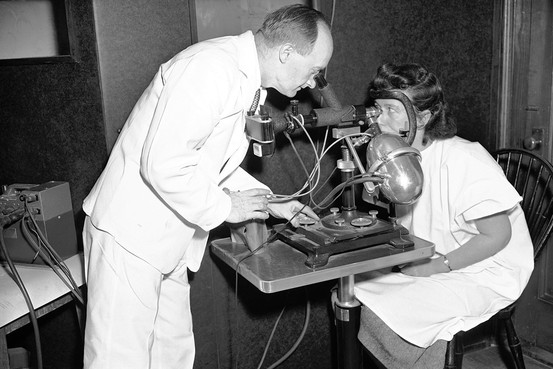
Where It All Started: Patricia McNamara sits for a test in 1952 as part of the Framingham Heart Study. The Health eHeart Study hopes to build off the advances made by that 65-year-old program, which continues today.

Researchers are launching a major study that will marshal the power of smartphones and other personal technologies in an effort to develop new strategies for preventing and managing heart disease.

The project, called the Health eHeart Study, will use tools such as smartphone apps, sensors and other devices to gather data on a wide variety of measures associated with cardiovascular health—including blood pressure, physical activity, diet and sleep habits—all in real time.

The study aims to enroll up to one million participants. Researchers will sift through the huge, accumulating banks of data, looking for patterns that might give advance warning of a heart attack or predict the onset of a dangerous irregular heart beat. Read more of this post