It’s Easy to Forget About Risk in a Stable Market
June 6, 2014 Leave a comment
It’s Easy to Forget About Risk in a Stable Market
By CARL RICHARDSJUNE 2, 2014
Stability itself is destabilizing.
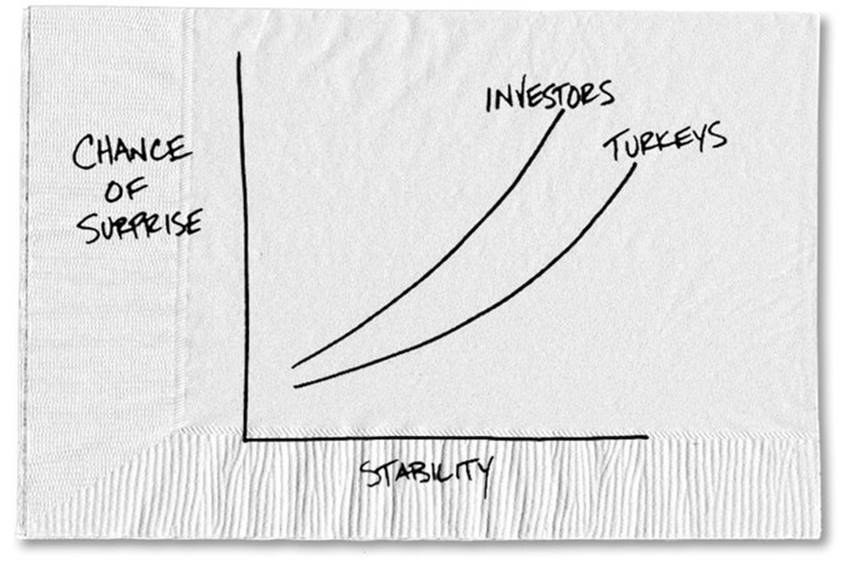
This is one of the defining ideas of the economist Hyman Minsky. And it matters because when we have periods of relative stability or happy results in the stock market (like now), we start to tell ourselves little stories. For example, we might believe that the stock market will behave like a bank certificate of deposit but pay us double-digit returns year after year.
We forget what normal market risk feels like, and we get comfortable with more and more risk. That makes it easier to borrow more money, because it’s all good. We say, “Risk? What risk?” as we move more of our 401(k) allocation into the stock market.
Forgetting about risk and pain is a wonderful human trait. Without this amazing ability, I doubt there would be many families with more than one child, and I’m certain that very few people would sign up for a second marathon. Forgetting pain has been good for us as a species, but it’s bad for us as investors.
As a result of forgetting our most recent investing pain in 2008-9, we see things like:
- Serious interest in penny stocks
- Retail investors setting new trading records
- Greece issuing bonds worth 3 billion euros with yields of just 4.95 percent — and investors buying it all
- People saying REITs and utilities are substitutes for bonds
- Volatility hitting almost historic lows, with the Volatility Index (VIX) dropping to 11.36 in May
- Housing in expensive areas selling like crazy
Then, there are the advisers who are trying to convince clients to get back into stocks even though many indexes posted enormous gains in 2013. According to Doug Wolford, the president and chief operating officer of Convergent Wealth Advisors, this resistance comes from “recessionary post-traumatic stress.”
Even those who are supposed to be professionals aren’t behaving very well.The Wall Street Journal analyzed the top bond funds, and it found “among the 10 largest U.S. bond funds at the end of 2013, the four with the fastest growth in assets since 2008 held an average 20 percent of their investments in bonds rated below investment grade, also known as junk bonds.”
According to Jeffrey Gundlach of the DoubleLine Total Return Bond Fund, “Who wants an index fund that yields 2 percent?” Mr. Gundlach said that investors “want exposure to these high-yield distressed securities, and they’ve become comfortable with what we’re doing.”
Does this sound at all familiar to anyone? It sounded really familiar to Charlie Henneman from the CFA Institute. In a Twitter exchange on the topic, Mr. Henneman said, “Haven’t you heard? The real risk is missing the rally. It’s incredible we’re back at this place.”
So here we are again, lulled into thinking everything is fine. The things we used to see as risky suddenly look really attractive, and the only risk we do see is the possibility of missing the rally we expect to continue.
We’ve gotten so comfortable with the current stability — while remaining obsessed with our rate of return — that we’re treating risk like it no longer matters. And the crazy thing is it’s true. Risk doesn’t matter — until things change.
And change they will.
I’m reminded of Nassim Taleb’s story about the turkey in his book, the Black Swan. For a turkey, life seems pretty good. Like clockwork, a kind man comes by every day to feed him. It becomes a stable pattern for the turkey. The turkey has no reason to believe anything will change. But then one day, instead of food, the kind man has an ax. Surprise! Things suddenly change for the turkey.
At the moment, a lot of us are acting like turkeys. But there’s one key difference. We shouldn’t be surprised when a seemingly stable pattern suddenly changes. Of course, it won’t surprise me if that’s exactly what happens. Things will change, and people will be shocked when the new normal comes to an end.
I’m not predicting that we’re in for another series of events like in 2009, but I am suggesting that now would be a good time to stick with a disciplined approach to our finances. It means doing simple things like staying diversified and rebalancing, even though it’s not cool. It means being conservative in our spending and taking on as little debt as possible. And it means remembering that at some point, risk will return, and the stories will switch from how boringly stable the markets are to how wildly volatile they’ve become.
There is one prediction I’m prepared to make. At that moment, when markets swing from stable to volatile, I’m pretty sure the past pain of too much risk will come rushing back. Then, we’ll swear (again) to never get lulled into thinking risk has disappeared, at least until the next time.
Carl Richards is a financial planner in Park City, Utah, and is the director of investor education at the BAM Alliance. His book, “The Behavior Gap,” was published in 2012. His sketches are archived on the Your Money page.
 About bambooinnovator

