Some Traders Looking to Move Metal Out of China’s Port of Qingdao; Sources Say Metal Owners Are Inquiring About Moving Metal to Korea or Taiwan

Some Traders Looking to Move Metal Out of China’s Port of Qingdao

Sources Say Metal Owners Are Inquiring About Moving Metal to Korea or Taiwan

TATYANA SHUMSKY

June 10, 2014 7:14 p.m. ET

Metal warehouse operators in South Korea and Taiwan are receiving inquiries about moving metal held in the Chinese port of Qingdao to their facilities in the wake of an investigation into irregularities at the port, according to people at three warehouse companies. Read more of this post

Volatility Traders Have More to Fear than Fear Itself

Volatility Traders Have More to Fear than Fear Itself

SPENCER JAKAB

June 10, 2014 4:45 p.m. ET

The latest big worry to hit markets is an unusual one: calm. With stock prices high and various gauges of risk low, investors appear to have thrown caution to the wind.

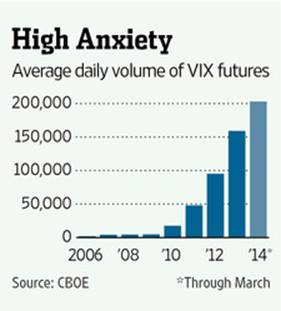
That isn’t entirely true, though. Exchange-traded notes that profit handsomely from market-shaking events have boomed since the financial crisis. But they have two big shortcomings: They may not work as designed in another financial crisis since their value depends on the bank backing them. And due to the way the products work, anyone holding these for the long term will inevitably see their value erode.

image001-3 image002-1

Futures contracts linked to market volatility were pioneered by the Chicago Board Options Exchange CBOE -2.20% in 2004, offering a way for professional investors to hedge the risk of stock-market swings. The more accessible notes that opened bets on the CBOE’s Volatility Index, or VIX, only began after the 2008 crisis. Read more of this post

Modi Turns to the Supply Side; The Indian leader’s plan to boost growth and contain inflation

Modi Turns to the Supply Side

The Indian leader’s plan to boost growth and contain inflation.

Updated June 10, 2014 6:25 p.m. ET

Indian President Pranab Mukherjee presented the new government’s policy address Monday on behalf of incoming Prime Minister Narendra Modi, as prescribed by the British tradition for opening parliament. While the occasion favors pomp over substance, the speech confirmed that India may be at a historic turning point: Mr. Modi is suggesting that he wants to lead nothing less than a supply-side revolution. Read more of this post

Global Hunger for Protein Fuels Food-Industry Deals; Consumers from Beijing to Boston are gobbling up more meat and dairy products, fueling multibillion-dollar mergers in the food industry and reshaping global agriculture

Global Hunger for Protein Fuels Food-Industry Deals

JACOB BUNGE

Updated June 10, 2014 8:00 p.m. ET

Consumers from Beijing to Boston are gobbling up more meat and dairy products, fueling multibillion-dollar mergers in the food industry and reshaping global agriculture.

This intensifying appetite for protein is one of the main forces driving Tyson Foods Inc. TSN -3.81% ‘s planned $7.7 billion acquisition of Hillshire Brands Co.HSH -0.15% Read more of this post

MSCI Removes Korea, Taiwan From Developed-Market Consideration

MSCI Removes Korea, Taiwan From Developed-Market Consideration

Both Countries Are Two of Biggest in Emerging-Markets Index

NICOLE HONG and GREGOR STUART HUNTER

Updated June 10, 2014 6:32 p.m. ET

For now, you can keep counting South Korea and Taiwan as emerging markets.

Financial index provider MSCI Inc. MSCI -0.27% said late Tuesday that it will remove the nations from consideration for inclusion in its developed-market index. The two countries are currently the second- and third-largest components in MSCI’s Emerging Markets Index behind China, making up 27% of the index. Investors closely scrutinize the indexing decisions because they can trigger some funds to buy or sell assets. Read more of this post

Taxi Drivers Plan Big Protests in Europe Against Uber; Planned Demonstrations in London, Madrid, France, Berlin Highlight Challenges Facing Uber and Its Peers

Taxi Drivers Plan Big Protests in Europe Against Uber

Planned Demonstrations in London, Madrid, France, Berlin Highlight Challenges Facing Uber and Its Peers

LISA FLEISHER

Updated June 10, 2014 7:43 p.m. ET

LONDON—Taxi drivers planned to turn a handful of European city centers into giant parking lots Wednesday, protesting the mobile car-hailing services of Uber Technologies Inc. and others. Read more of this post

How Come Brazil Isn’t Excited Yet? From Rio to São Paulo, the Country Is Surprisingly Subdued on the Eve of the World Cup

How Come Brazil Isn’t Excited Yet?

From Rio to São Paulo, the Country Is Surprisingly Subdued on the Eve of the World Cup

ROGERIO JELMAYER, LUCIANA MAGALHAES and LORETTA CHAO

June 10, 2014 7:28 p.m. ET

Most of the national soccer teams have arrived. Gaggles of journalists from Russia to Japan prowl the cities. Brazilian workers are hastily putting the finishing touches on the stadiums. But just two days before the World Cup opens here on Thursday, one crucial thing was missing: atmosphere. Read more of this post

SingTel to Buy Two Digital Ad Companies for $359M

SingTel to Buy Two Digital Ad Companies

SingTel to Buy U.S.-Based Companies for $359 Million

P.R. VENKAT

June 10, 2014 9:00 p.m. ET

SINGAPORE— SingTelZ74.SG 0.00% Southeast Asia’s largest telecommunications company, will buy two U.S.-based digital advertising companies for $359 million, as it seeks to expand its footprint in the highly lucrative digital ad market. Read more of this post

Giant Japanese Fund Set to Invest More in Stocks, Foreign Bonds

Giant Japanese Fund Set to Invest More in Stocks, Foreign Bonds

World’s Largest Pension Fund Likely to Announce Increase in Autumn; Move Could Send Billions Into New Markets

ELEANOR WARNOCK

image001-1

Updated June 10, 2014 6:54 p.m. ET

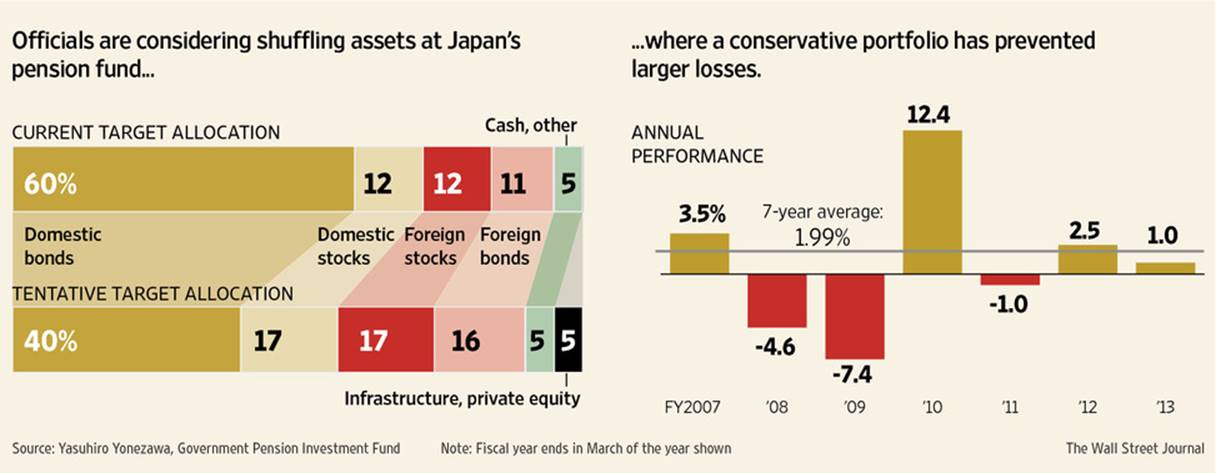
TOKYO—Japan’s $1.26 trillion public pension fund will likely announce a boost to stock and foreign-bond investments in early autumn, the head of its investment committee said Tuesday, potentially sending tens of billions of dollars into new markets. Read more of this post

The Nasty, Brutish Life of the Modern Mutual Fund Manager

The Nasty, Brutish Life of the Modern Mutual Fund Manager

It’s become one of the toughest sells of a fund manager: pay a fee to underperform the rest of the market.

Over the last three years, S&P calculates almost four in five domestic stock fund managers failed to beat broader indexes. Outdoing the market’s never been easy, especially after trading costs and fees. Now, more individual and institutional investors are concluding that active managers aren’t worth those extra fees. Last year, according to Cerulli Associates, $3.4 billion flowed into active funds, while index-based strategies pulled in more than $60 billion.

Read more of this post

When things go wrong, the natural reaction is to hide from investors. Don’t, says Neil Williams, CFO of accounting software developer Intuit

June 4, 2014

CFO.com | US

Intuit CFO: A Difficult Message Calls for Special Delivery

When things go wrong, the natural reaction is to hide from investors. Don’t, says Neil Williams, CFO of accounting software developer Intuit.

Neil Williams

In the world of corporate finance, bad news can hit at any time. As much as we are trained to prepare, there will always be difficult situations that need to be addressed, and as CFO, it’s usually my job to be the bearer of bad news to the CEO, the board of directors and investors. While it’s never fun to deliver bad news, especially to the disappointment of investors, I learned early in my career that facing issues head-on is the best way to manage them, and that proactive communications about financial issues builds credibility and successful long-term relationships. Read more of this post

LBOs Face Their Day of Reckoning; With the Energy Future Holdings bankruptcy, leveraged buyouts now represent 31 percent of all bond and institutional loan defaults since 2007

June 4, 2014

CFO.com | US

LBOs Face Their Day of Reckoning

With the Energy Future Holdings bankruptcy, leveraged buyouts now represent 31 percent of all bond and institutional loan defaults since 2007.

Vincent Ryan

Is the hangover from the leveraged buyout boom that took place prior to the financial crisis finally here? The bankruptcy filing of Energy Future Holdings has not only raised high-yield default rates for U.S. companies; it also means there have now been 10 LBO-related company defaults in 2014, one shy of the total for 2013. Read more of this post

Singapore Joins China With Dangerous Debt Level, GMT Says

Singapore Joins China With Dangerous Debt Level, GMT Says

Singapore companies’ indebtedness has swelled to the most in Asia after China and India as the city-state’s economic growth slows, according to GMT Research Ltd.

Leverage among the Southeast Asian nation’s corporates is following counterparts in the two larger economies to a level considered a “danger threshold,” Gillem Tulloch, founder of the Hong Kong-based researcher, said in an interview yesterday. Debt rose to six times the amount of operating cash flow in 2013 for non-financial Singaporean companies, from 5.1 times in 2012, a report by GMT Research shows.

Read more of this post

Samsung IPOs to finance Lee’s succession plans

Samsung IPOs to finance Lee’s succession plans

Wednesday, Jun 04, 2014

Park Hyong-ki and Kim Young-won

The Korea Herald/Asia News Network

The planned initial public offerings of Samsung Everland and Samsung SDS will allow Samsung Group chairman Lee Kun-hee’s three children to secure capital worth some 5 trillion won ($4.9 billion) to inherit wealth and ownership of Lee’s business empire. Read more of this post

Digitizing the consumer decision journey; In a world where physical and virtual environments are rapidly converging, companies need to meet customer needs anytime, anywhere

Digitizing the consumer decision journey

In a world where physical and virtual environments are rapidly converging, companies need to meet customer needs anytime, anywhere. Here’s how.

June 2014 | byEdwin van Bommel, David Edelman, and Kelly Ungerman

Many of the executives we speak with in banking, retail, and other sectors are still struggling to devise the perfect cross-channel experiences for their customers—experiences that take advantage of digitization to provide customers with targeted, just-in-time product or service information in an effective and seamless way. Read more of this post

The hidden cost of Gangnam Style: What humanity could achieve if it weren’t galloping in front of computer screens

The hidden cost of Gangnam Style

Jun 3rd 2014, 13:23 by by G.S. and G.D.

What humanity could achieve if it weren’t galloping in front of computer screens

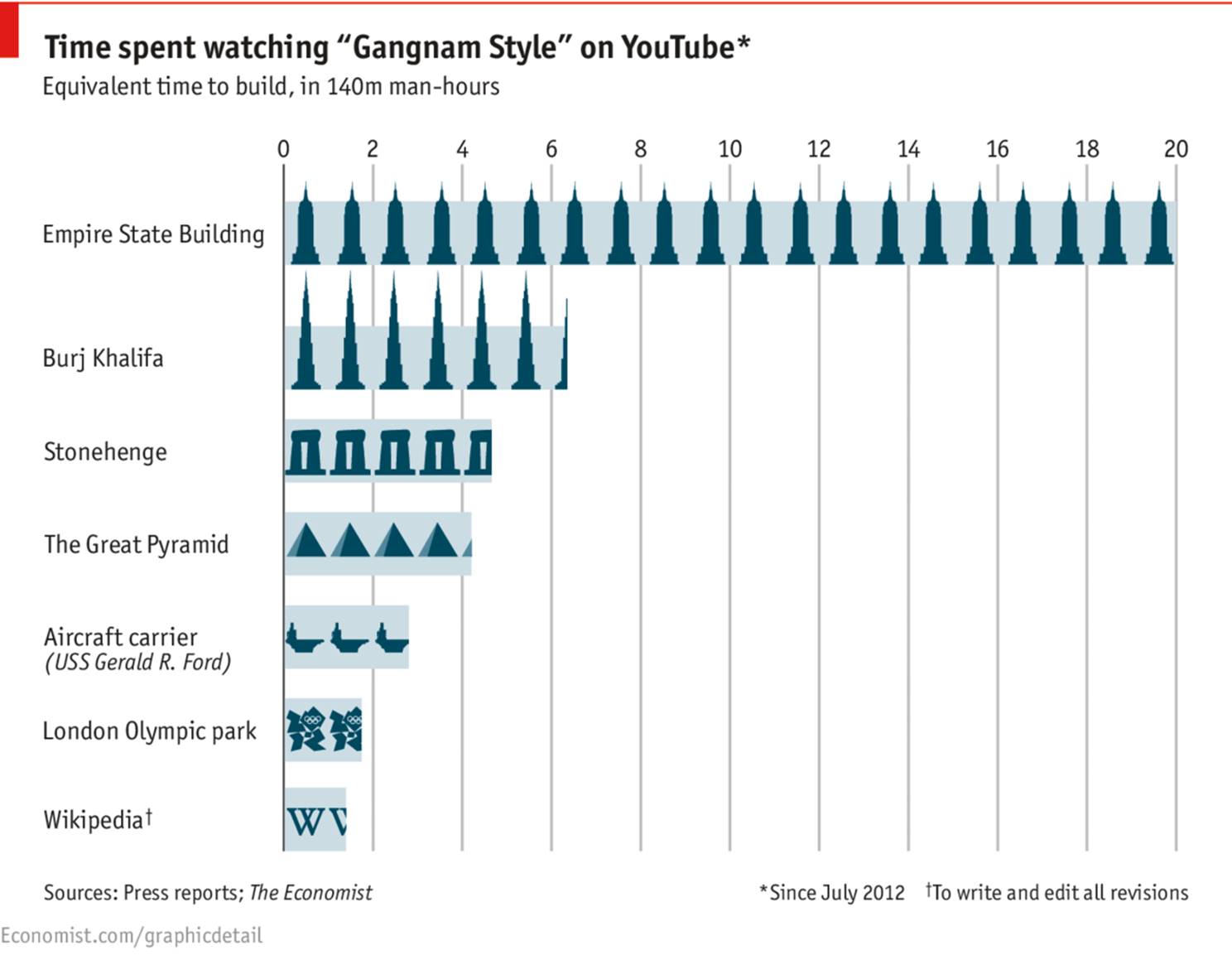
THE loony music video “Gangnam Style” surpassed two billion views on YouTube this week, making it the most watched clip of all time. At 4:12 minutes, that equates to more than 140m hours, or more than 16,000 years. What other achievements were forgone in the time spent watching a sideways shuffle and air lasso? It took 50m man-hours to complete the “supercarrier” USS Gerald Ford last year. Had people not been watching PSY—the South Korean pop star who released the song in July 2012—they could have constructed three such ships. Alternatively they could have built more than four Great Pyramids of Giza, or another Wikipedia, or six Burj Khalifas in Dubai (the world’s tallest building). The song’s nearest rival is Justin Bieber’s “Baby”, at a paltry one billion views. The opportunity cost of watching PSY’s frivolity is huge, but humanity has at least been entertained.


image001

7 Highlights From Malcolm Gladwell’s Reddit ‘Ask Me Anything’

7 Highlights From Malcolm Gladwell’s Reddit ‘Ask Me Anything’

RICHARD FELONI STRATEGY  JUN. 4, 2014, 5:47 AM

Just about anything author and journalist Malcolm Gladwell has to say is interesting, even if you disagree with him.

He went on Reddit on Monday for anAsk Me Anything session to answer users’ questions, respond to critics, and offer insight into the way he thinks.

Here’s a look at the highlights:

On the “10,000 Rule,” which, as defined in “Outliers,” states that 10,000 hours of practice is required to achieve mastery: Read more of this post

Here’s How You Negotiate With The Chinese

Here’s How You Negotiate With The Chinese

CONTRIBUTOR YOUR SAY  JUN. 4, 2014, 4:14 PM

It doesn’t take an economics expert to know that China is one of the global powerhouses for conducting business in.

This post is built on top of a previous article, How To Improve Your Negotiation Skills And Get Better Deals Off Suppliers. While that post offers basic negotiation skills, this article explores in-depth and detailed ‘rules’ to take note of when you negotiate with business owners in China.    Read more of this post

Infosys Comeback Seen as Having a Long Way to Go

Infosys Comeback Seen as Having a Long Way to Go

Ex-Chairman’s Return Brings a Vision and Boost, But Executives Leave and Growth is Slow

DHANYA ANN THOPPIL

June 10, 2014 11:04 a.m. ET

BANGALORE, India—One year after coming out of retirement to try to revive revenue growth at Indian IT outsourcing company Infosys Ltd. 500209.BY +1.78% ,N.R. Narayana Murthy still has a long way to go, analysts and investors say. Read more of this post

Bankers Focus on Trading Firm in Search for Metals Used as Collateral; Western Bank Executives Say They Made Loans to Entities Linked to Qingdao-Based Decheng Mining

Bankers Focus on Trading Firm in Search for Metals Used as Collateral

Western Bank Executives Say They Made Loans to Entities Linked to Qingdao-Based Decheng Mining

image001

ENDA CURRAN

June 10, 2014 12:26 p.m. ET

Bankers in China are focusing on the actions of a commodities-trading firm as they scramble to find metals they believed were backing loans but which appear to have been used as collateral multiple times. Read more of this post

China Now Has More Millionaires Than Any Country but the U.S.

Jun 10, 2014

China Now Has More Millionaires Than Any Country but the U.S.

There are now more millionaires in China than in Japan, as the wealthiest Chinese reaped huge returns from shadow-banking-related financial products, a new study revealed.

China had 2,378,000 millionaire households in 2013, a rise of 82% from the previous year and almost double the 1,240,000 millionaire households in Japan, according to the Boston Consulting Group Global Wealth 2014 report unveiled on Tuesday. Read more of this post

Amazon.com plans to launch a marketplace for local services, a broad term that encompasses anything from babysitters to handymen to birthday clowns

Amazon.com plans local services marketplace this year – sources

5:21pm EDT

By Deepa Seetharaman

SAN FRANCISCO (Reuters) – Amazon.com Inc later this year plans to launch a marketplace for local services, a broad term that encompasses anything from babysitters to handymen to birthday clowns, beginning with a single market, several people familiar with the matter said. Read more of this post

Oracle’s Ellison debuts “in-memory” technology for faster databases in speeding up data analysis

Oracle’s Ellison debuts technology for faster databases

2:39pm EDT

By Noel Randewich

REDWOOD CITY California (Reuters) – Oracle Corp (ORCL.N: QuoteProfileResearch,Stock Buzz) Chief Executive Larry Ellison on Tuesday launched “in-memory” technology for speeding up data analysis in a bid to beef up demand for his company’s software products. Read more of this post

China’s Rehypothecation Scandal In One Chart

China’s Rehypothecation Scandal In One Chart

Tyler Durden on 06/10/2014 13:51 -0400

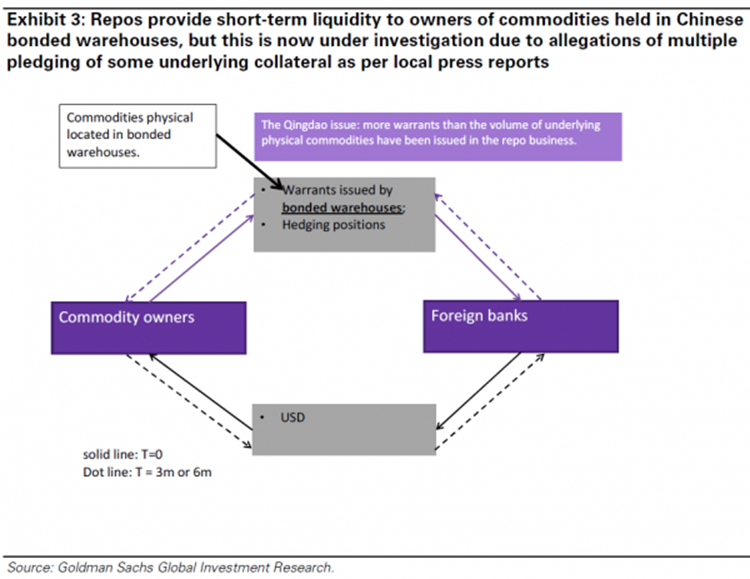
Remember how small Greece was and how it wasn’t relevant to US stocks… until suddenly it got close to breaking up the EU and the world’s markets slumped. Remember how small subprime was? Remember how Lehman was not a ‘big’ bank? We hear the same “why would that impact us?” chatter now about the China rehypothecation scandal and we suspect the outcome will be just as dramatic a “whocouldanode” moment for many. The problem, as this chart so simply explains, is “more warrants than the volume of the underlying physical commodities have been issued in the repo business” and that is a problem for every foreign bank that was tempted into China’s carry trade (which is “every” bank).

Simply put – the collateral that I promised you on my loan… I also promised to between 10 and 30 other people… but we’re good right?

image001 Read more of this post

15 Quotes From The Founding Fathers About Economics, Capitalism And Banking

15 Quotes From The Founding Fathers About Economics, Capitalism And Banking

Tyler Durden on 06/10/2014 20:35 -0400

Submitted by Michael Snyder of The Economic Collapse blog,

Why have we turned our backs on the principles that this nation was founded upon?  Many of those that founded this nation bled and died so that we could experience “life, liberty and the pursuit of happiness”.  And yet we have tossed their ideals aside as if they were so much rubbish.  Our founders had experienced the tyranny of big government (the monarchy) and the tyranny of the big banks and feudal lords, and they wanted something very different for the citizens of the new republic that they were forming.  They wanted a country where private property was respected and hard work was rewarded.  They wanted a country where the individual was empowered, and where everyone could own land and start businesses.  They wanted a country where there were severe restrictions on all large collections of power (government, banks and corporations all included).  They wanted a country where freedom and liberty were maximized and where ordinary people had the power to pursue their dreams and build better lives for their families.  And you know what?  While no system is ever perfect, the experiment that our founders originally set up worked beyond their wildest dreams.  But now we are killing it.  Why in the world would we want to do that? Read more of this post

Disaggregating Operating and Financing Activities: Implications for Forecasts of Profitability

Disaggregating Operating and Financing Activities: Implications for Forecasts of Profitability

Adam M. Esplin 

University of Alberta – Department of Accounting

Max R. Hewitt 

Indiana University – Kelley School of Business – Department of Accounting

Marlene Plumlee 

University of Utah – School of Accounting

Teri Lombardi Yohn 

Indiana University – Kelley School of Business – Department of Accounting
October 20, 2012
University of Alberta School of Business Research Paper No. 2014-09
2014, Review of Accounting Studies, 19 (1): 328-362 

Abstract: 
Researchers, practitioners, and standard setters emphasize the importance of disaggregating financial statements into operating and financial activities. However, there is a lack of research demonstrating that this disaggregation improves forecasts of profitability. In this study, we consider whether and when the operating/financial disaggregation improves forecasts of profitability. Contrary to the use of an ‘aggregate’ forecasting approach by most related prior research, we first show that the operating/financial disaggregation only provides forecast improvement over a benchmark model incorporating aggregate information when the ‘components’ forecasting approach is used. We also compare the operating/financial disaggregation to the unusual/infrequent disaggregation currently required by U.S. GAAP. We find that the operating/financial disaggregation yields less accurate forecasts than the unusual/infrequent disaggregation. However, when using the ‘components’ forecasting approach, we find that the co bination of both disaggregations improves forecasts of profitability. Finally, we document that the incremental usefulness of the operating/financial disaggregation relative to a benchmark model incorporating aggregate information is a function of growth and accounting conservatism. Overall, our study provides timely evidence concerning how analysts and investors might best use the operating/financial disaggregation for forecasting profitability.


Everything Science Knows About Hangovers-And How to Cure Them

Everything Science Knows About Hangovers—And How to Cure Them

BY ADAM ROGERS

05.20.14  |

Good morning, sunshine! You are so screwed.

The light coming in through the window is so … there. You’d kill for a glass of water but die if it came with food. Your guts are in full rebellion; whatever happens next is going to happen in the bathroom. You have at least a couple of the following symptoms: headache, malaise, diarrhea, loss of appetite, fatigue, nausea, the shakes. You might also be dehydrated and feel generally slow—a little stupider, a little less coordinated. Read more of this post

Thin Capitalization Rules and Multinational Firm Capital Structure

Thin Capitalization Rules and Multinational Firm Capital Structure

Jennifer L. Blouin 

University of Pennsylvania – Accounting Department

Harry Huizinga 

Tilburg University – Center for Economic Research (CentER); Centre for Economic Policy Research (CEPR)

Luc Laeven 

International Monetary Fund (IMF); Centre for Economic Policy Research (CEPR)

Gaetan Nicodeme 

Université Libre de Bruxelles (ULB) – Solvay Brussels School of Economics and Management
February 2014
CEPR Discussion Paper No. DP9830

Abstract: 
This paper examines the impact of thin capitalization rules that limit the tax deductibility of interest on the capital structure of the foreign affiliates of US multinationals. We construct a new data set on thin capitalization rules in 54 countries for the period 1982-2004. Using confidential data on the internal and total leverage of foreign affiliates of US multinationals, we find that thin capitalization rules affect multinational firm capital structure in a significant way. Specifically, restrictions on an affiliate’s debt-to-assets ratio reduce this ratio on average by 1.9%, while restrictions on an affiliate’s borrowing from the parent-to-equity ratio reduce this ratio by 6.3%. Also, restrictions on borrowing from the parent reduce the affiliate’s debt to assets ratio by 0.8%, which shows that rules targeting internal leverage have an indirect effect on the overall indebtedness of affiliate firms. The impact of capitalization rules on affiliate leverage is higher if their application is automatic rather than discretionary. Furthermore, we show that thin capitalization regimes have aggregate firm effects: they reduce the firm’s aggregate interest expense bill but lower firm valuation. Overall, our results show than thin capitalization rules, which thus far have been understudied, have a substantial effect on the capital structure within multinational firms, with implications for the firm’s market valuation.

 

Corporate Scandals and Household Stock Market Participation

Corporate Scandals and Household Stock Market Participation

Mariassunta Giannetti 

Stockholm School of Economics; Centre for Economic Policy Research (CEPR); European Corporate Governance Institute (ECGI); Swedish House of Finance

Tracy Yue Wang 

University of Minnesota – Twin Cities – Carlson School of Management
January 16, 2014
European Corporate Governance Institute (ECGI) – Finance Working Paper No. 405/2014

Abstract: 
We show that after the revelation of corporate fraud in a state, the equity holdings of households in that state decrease significantly both in the extensive and the intensive margins. Using an exogenous shock to fraud detection and exogenous variation in households’ lifetime experiences of corporate fraud, we establish that the impact of fraud revelation in local companies on household stock market participation is causal. Even households that did not hold stocks in the fraudulent firms decrease their equity holdings, and all households decrease their holdings in fraudulent firms as well as non-fraudulent firms. As a consequence of the decrease in local households’ demand for equity, firms headquartered in the same state as the fraudulent firms experience a decrease in valuation and in the number of shareholders.


Pension reforms gather pace as demands grow

Pension reforms gather pace as demands grow

Tuesday, June 10, 2014 – 22:59

Jamie Lee

The Business Times

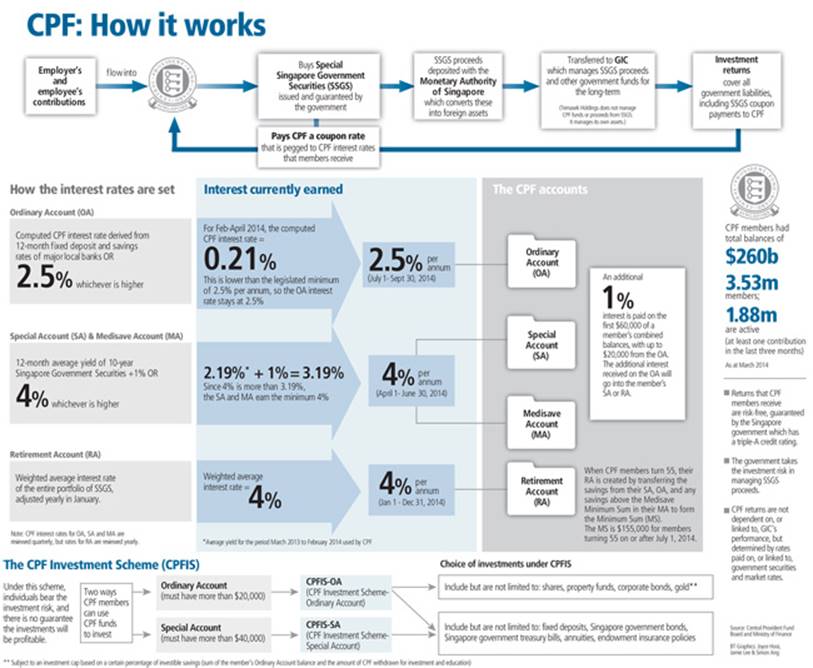
SINGAPORE – The search for retirement adequacy is a global one – the raging debate over Singapore’s Central Provident Fund (CPF) system comes amid recent reviews of pension systems by countries around the world that underscore themes of risk and return, personal responsibility, and macroeconomic prudence.

In Asia, Europe and the US, pension systems have been put in focus.

image001-4

Japan this week completed a review of its public pension fund – the world’s largest – and is expected to boost returns by raising the risk taken by its nearly 130 trillion yen (S$1.59 trillion) pension fund. Read more of this post